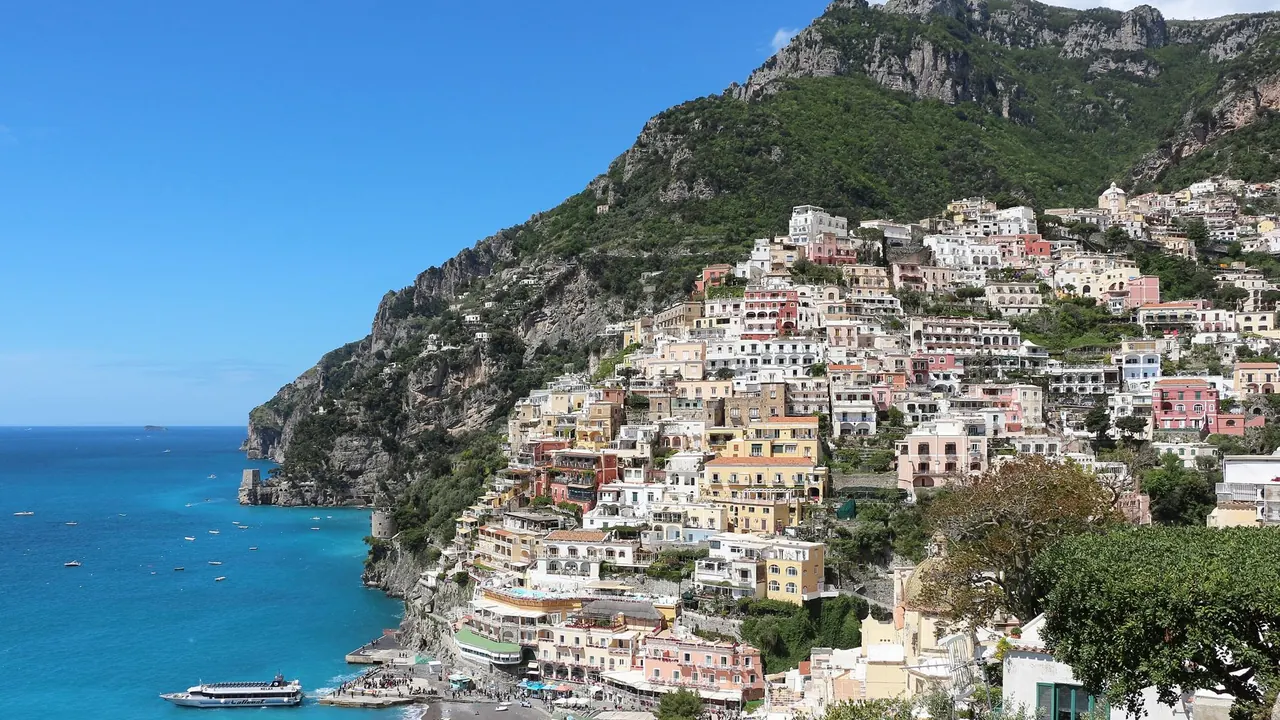
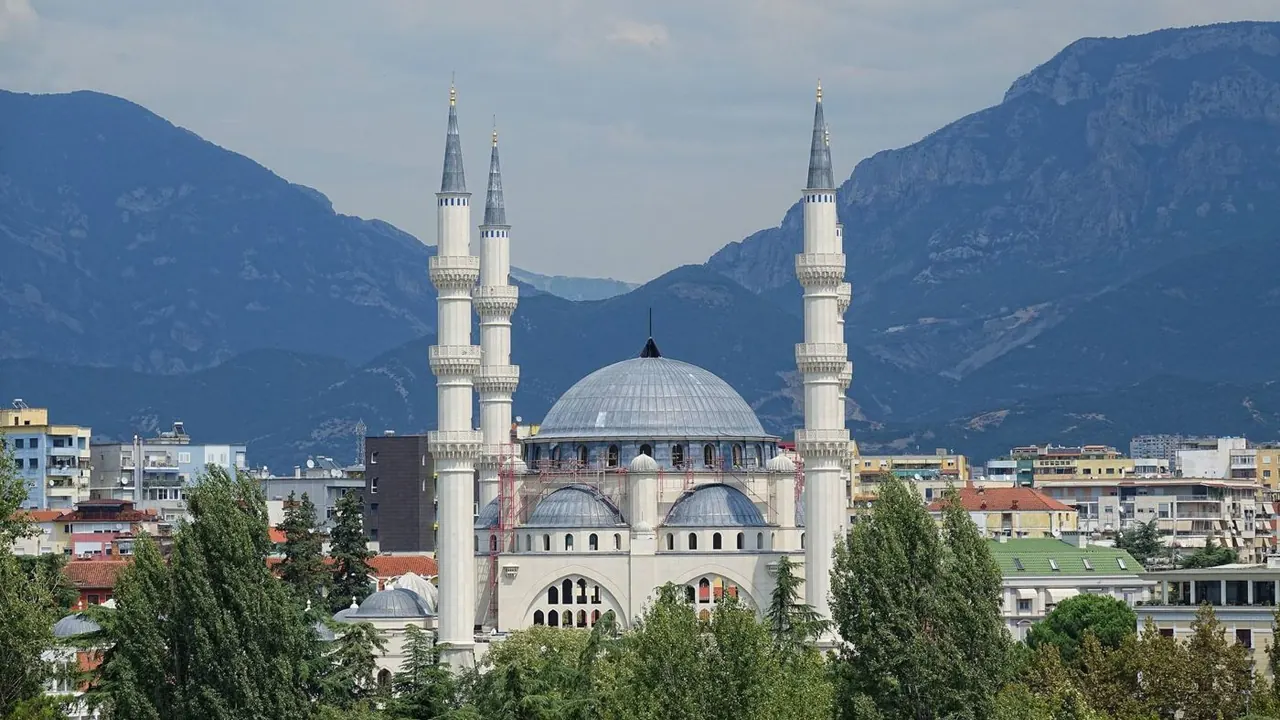
Photos: Positano by Bernard Gagnon, CC BY 4.0, cropped; Tirana by Bjørn Christian Tørrissen, CC BY-SA 4.0, cropped.
Positano or Tirana?
Our verdict in twelve categories, each scored against the same fixed benchmark cities, and the climate month by month, so you can choose for your trip.
Choose Positano for
- beaches
- day trips
- nature and the outdoors
Positano is for a trip built around the sea and the view. You swim off steep pebble beaches, take boats along the cliffs to Capri and the Amalfi towns, walk the Path of the Gods and linger over lunch on terraces above the water. It suits couples and travellers with a generous budget who want quiet evenings, can manage a town made of stairs, and see the town as a setting to enjoy rather than a list of sights.
Choose Tirana for
- prices
- nightlife
- culture and sights
Tirana offers city life rather than scenery. Blloku's bars stay full past midnight, Bunk'Art and the House of Leaves lay out the communist past, and Berat and Kruja make easy day outings. Meals of farm cooking and long coffees cost a fraction of what the Amalfi Coast charges. Go if you want an inexpensive, sociable city break, and treat the sandy beach at Durrës as a day out, not the main reason for the trip.
Scoreboard
Twelve categories on one fixed scale from 0 to 100. The shaded stretch is the gap between the two.
Your match
Pick a travel style or drag the sliders, and both match scores follow your weighting.
Wins on beaches and day trips with your weighting.
Wins on prices and nightlife with your weighting.
What matters to you?
Category by category
What the scores mean for a trip.
Beaches & swimming
Positano is built on the sea. Spiaggia Grande lies right below the houses and Fornillo is a short cliff walk away, with Arienzo, Laurito and other coves reached by stairway or boat. The water is clear and deep blue, though the shore is steep, coarse pebble and packed by mid-morning in high summer.
From Tirana the sea is a separate outing. Durrës is under an hour away and has long, shallow sandy beaches that are easier for children, but they are lined with hotels and beach clubs and the water is cloudier near the port. Albania's famous clear coves in the south are too far away to visit from Tirana.
Food & drink
Tirana gives you more variety and more everyday eating. You get flaky byrek from corner bakeries in the morning, fërgesë and slow-baked lamb at taverns around Blloku and the Pazari i Ri, and farm restaurants in the hills that serve what grows around them. The coffee habit and the raki after dinner are part of daily life, though there is little fine dining.
Positano's food is narrower but beautifully placed. Clams, grilled fish, scialatielli and lemon desserts are eaten on terraces over the sea, and much of what you pay for is the view. Menus repeat one another, there is almost no street food, and many kitchens close through the winter.
Culture & sights
Neither city is a museum destination, but Tirana gives you more to visit. The communist era is told vividly at the Bunk'Art bunkers and the former secret police building, and Skanderbeg Square brings together the mosaic-fronted history museum and the painted Et'hem Bey Mosque. Two days covers it all.
In Positano, the main sight is the town itself, a stack of pastel houses below the majolica dome of Santa Maria Assunta, with a Roman villa preserved under the church. That takes a couple of hours. For serious history you go to Pompeii or Naples.
Nightlife
Tirana has a real night out. Blloku, once the closed quarter of the communist leaders, is packed with lounge terraces, cocktail bars and small clubs where a young local crowd dresses up and stays out late. Larger clubs near the Grand Park lake go on into the early hours.
Positano's evenings are about aperitivo with a view and a long dinner. A few bars near the beach and one cave club at the end of Spiaggia Grande make up the whole summer scene, and even that fades once the season ends. It is ideal for couples and too thin for anyone who wants to go out properly.
Nature & outdoors
Positano has the more spectacular landscape. The Lattari mountains drop straight into the sea, and the Path of the Gods runs along the cliffs above lemon terraces with Capri on the horizon. Steep trails climb through chestnut woods to ridges over 1,000m, and you can kayak to grottoes and the Li Galli islets.
Tirana's outdoors are greener and closer to ordinary city life. The cable car lifts you onto Mount Dajti for forest trails and views across the plain, and the Grand Park is good for an easy walk or run. The turquoise Bovilla reservoir and the hikes around Gamti are within reach for a day.
Day trips
Positano has some of the best day trips in southern Italy. Ferries reach Amalfi, Ravello and Capri, while Pompeii, Herculaneum and Paestum are all manageable in a day. The drawback is that boats mostly stop outside the season and the coast road is slow.
Tirana's outings are good too, but they mean more time on the road. Kruja's castle and bazaar are close, and Berat's white Ottoman houses, Shkodra's lakeside castle and Apollonia are each about two hours away by car, minibus or tour.
Good for families
Tirana is the easier choice with children, though neither city does much for them. Children are welcome in cafés late into the evening, and the Grand Park playgrounds, the Dajti cable car and the open space of Skanderbeg Square make good outings. Heavy traffic and broken pavements make pushing a buggy tiring.
Positano is almost all stairs, so a pushchair is useless, and the beaches shelve steeply. Older children who love swimming and boats will be happy there, but families with toddlers will struggle.
Getting around
Tirana's centre is flat and compact. Most of the sights, Blloku and the market are within a twenty-minute walk of each other, and cheap taxis cover the outlying places. There is no metro, the buses are confusing, and crossing busy roads takes care.
In Positano, every walk means hundreds of steps. One local bus loops up the only road, and buses along the coast fill up and crawl in summer. Ferries are the easiest way to reach the next towns, and a car is more trouble than it is worth.
Shopping & style
Positano has the more distinctive shopping. Its lanes are lined with boutiques selling the loose white linen and printed resort wear known as moda Positano, along with sandals made to fit while you wait and hand-painted ceramics. It is all one look, though.
Tirana's best buys are found at the Pazari i Ri market: cheese, honey, raki, felt hats and filigree silver. Beyond that, fashion means international chains in the malls and a few boutiques around Blloku.
Affordability
This is where the two differ most. Tirana is one of the cheapest capitals in Europe. Meals, local wine, taxis and museum entry hardly dent a budget, and even the smart Blloku bars cost less than in most other European cities.
Positano is one of the most expensive places to stay in Italy, and sea-view rooms, beach loungers, terrace dinners and boat transfers all add up. Staying in Praiano or Sorrento, or going in May or October, cuts the cost a lot.
Live music & performing arts
Tirana has a regular stage. The National Theatre of Opera and Ballet on Skanderbeg Square puts on opera, ballet and concerts through the season, and summer adds open-air festivals. The range is still limited, and spoken theatre is in Albanian.
Positano itself has only a few summer concerts in churches and squares. Its best evening out is along the coast at Ravello's classical music festival, with concerts on a terrace high above the sea.
Wellness & relaxation
Positano is the better place to slow down. Its upscale hotels have spas and pools cut into the cliff, and long lunches overlooking the sea are restful in themselves. Go in May, June or late September, because July and August bring crowds and noise.
Tirana's calm comes from its coffee terraces and the evening xhiro stroll. Its spa options are mostly hotel facilities, and the simple sulphur springs at Llixha are about an hour away. Traffic noise fills much of the centre, so the Grand Park and the slopes of Dajti are where you go for quiet.
When should you go?
Pick your month. The climate figures are measured averages, not a forecast.
Positano in July
Tirana in July
Daytime high, °C
Rainfall in the month, mm
Where the figures come from
Positano's temperatures are measured 25 km from the centre, at Capri.
Positano has no rain gauge within 25 km of the centre, so its rainfall comes from a gridded climate dataset read at the city rather than from a gauge further away.
Positano's sunshine is measured 59 km from the centre, at Grazzanise.
Temperature and rainfall are climate normals, averaged over the years shown. Positano: 2005-2025 (sunshine 1991-2020, rainfall 1991-2020) normals, Capri (25.3 km from centre). Tirana: 1961-1990 normals, Tirana (3 km from centre).
Positano is a summer and shoulder-season place. The sea is warm enough for swimming from June to early October and reaches about 26°C in August. July and August are the driest and sunniest months, though at around 30°C the climbs through town are hard work at midday. May, June and September are the best balance for walking and swimming together. Rain sets in from October and peaks at about 127mm in November, when ferries and many kitchens close.
Tirana follows a similar pattern but runs hotter in summer and wetter in winter. July and August reach about 31°C on the inland plain, which is too hot for comfortable sightseeing in the afternoon, though it is the right time for a swim at Durrës. Spring and late September into October are the best months for walking the city and Mount Dajti. November is the wettest month at around 172mm, and the winter months there are greyer than on the Amalfi Coast.
Which traveller are you?
For a beach and sun trip, Positano is the clear choice. You swim straight from town at Spiaggia Grande and Fornillo in clear, deep water, and boats run to coves along the coast. From Tirana, the crowded sand at Durrës is only a day out.
On a food and nightlife trip, Tirana wins. Blloku has a whole grid of cocktail bars and clubs that stay busy late, while the restaurants serve tavë kosi, byrek and food from the hill farms. Positano has aperitivo, one cave club and much the same seafood menu everywhere.
On a tight budget, go to Tirana. Meals, raki, taxis and central hotels all cost little by European standards. Positano is among the most expensive places in Italy, and beach loungers, sea-view rooms and boat transfers all push the cost up.
Before you go
| Measure | Positano | Tirana |
|---|---|---|
| Official language | Italian | Albanian |
| Currency | Euro (EUR) | Lek (ALL) |
| Sockets | CFL230 V, 50 Hz | CF220 V, 50 Hz |
| Driving side | Right | Right |
| Time zone | UTC+1, UTC+2 in summer | UTC+1, UTC+2 in summer |
| Emergency number | 112 | 112 |
| Elevation | 142 m | 110 m |
| Main airport | Naples International Airport (NAP)33 km from centre131 non-stop destinations | Tirana International Airport Mother Teresa (TIA)13 km from centre121 non-stop destinations |
| Public holidays this year | 13 days | 14 days |
By the numbers
| Measure | Positano | Tirana |
|---|---|---|
| City population | 3,729 | 389,323 |
| People per km² | 429 | 9,314 |
| Museums within 10 km | 10 | 11 |
| UNESCO World Heritage sites within 50 km | 5 | 0 |
| Swim season, months above 21 °C | 5 months | 5 months |
Where else could you go?
Every comparison below shares a destination with this one, so you can follow Positano or Tirana somewhere new.