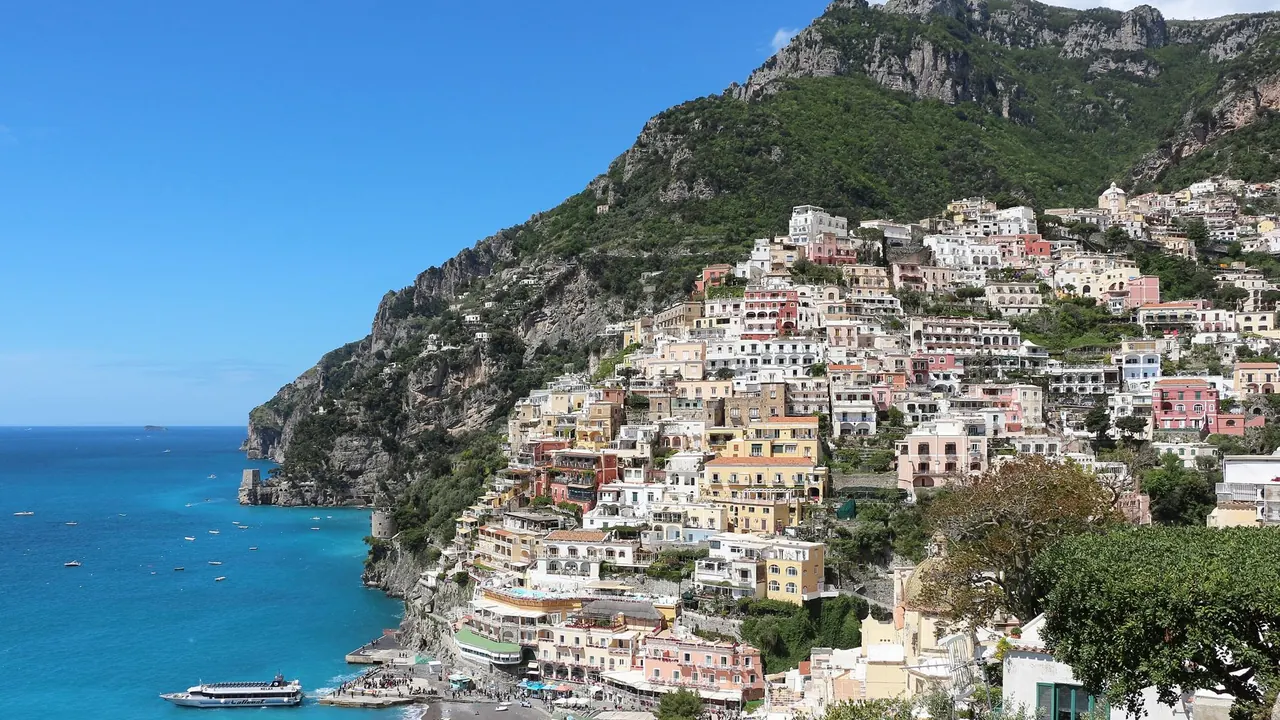
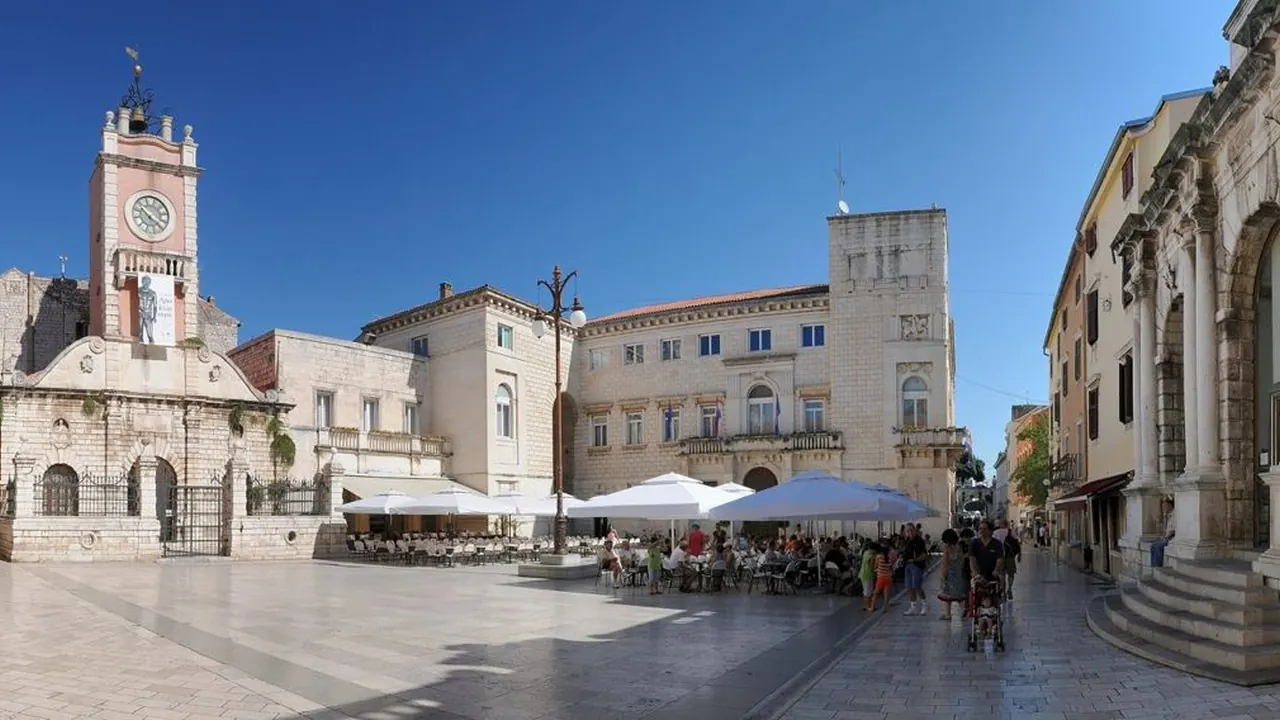
Photos: Positano by Bernard Gagnon, CC BY 4.0, cropped; Zadar by Böhringer Friedrich, CC BY-SA 2.5, cropped.
Positano or Zadar?
Our verdict in twelve categories, each scored against the same fixed benchmark cities, and the climate month by month, so you can choose for your trip.
Choose Positano for
- day trips
- shopping
- wellness
Positano is the choice for a short, indulgent stay built around scenery and the sea. It suits couples who want long lunches on a terrace above the water, a boat to Capri or Amalfi in the morning and a quiet aperitivo at dusk. They need to be ready to climb stairs all day and to pay heavily for the privilege. Its real strength is what lies within a boat ride: Pompeii, Ravello and the rest of the Amalfi Coast.
Choose Zadar for
- prices
- culture and sights
- families
Zadar makes more sense for a longer, more varied and far cheaper trip. Its flat, car-free peninsula holds a Roman forum, a ninth-century church and Venetian walls, so there is a real town to explore. Families with pushchairs manage easily, and the islands, Paklenica and Krka are all within reach. Evenings are livelier too, starting at the Sea Organ at sunset, and a week here costs a fraction of one on the Amalfi Coast.
Scoreboard
Twelve categories on one fixed scale from 0 to 100. The shaded stretch is the gap between the two.
Your match
Pick a travel style or drag the sliders, and both match scores follow your weighting.
Wins on day trips and shopping with your weighting.
Wins on prices and culture and sights with your weighting.
What matters to you?
Category by category
What the scores mean for a trip.
Beaches & swimming
Both towns live by the sea from June to September, and the water is clear and similarly warm in both. In Positano the beach is right under the town: Spiaggia Grande is a steep curve of dark sand and pebbles lined with loungers, Fornillo is a cliff walk away, and boats run to coves along the coast.
Zadar's town swimming is plainer: stone promenade, concrete platforms and pebbles at Kolovare and Borik. Its best sand lies further out, at Nin's shallow beaches and Sakarun on Dugi Otok. So Positano gives you the beach on your doorstep, while in Zadar the best swims take a short trip.
Food & drink
Neither town is a destination for food, and both serve a short list of coastal dishes. Positano's meals are about the setting: clams, scialatielli and lemon desserts on a terrace over the sea, with a few hotel dining rooms aiming higher, though many kitchens shut over winter.
Zadar has more everyday eating. There is the fish and produce market by the walls, lamb or octopus cooked under the peka, Pag cheese and pršut, and Maraschino, the cherry liqueur the city made famous.
Culture & sights
Here Zadar is well ahead. In Positano the sight is the town itself, its houses stacked up the ravine around the majolica dome of Santa Maria Assunta, plus the painted Roman villa beneath the church. A morning covers it all.
Zadar fills two days. Its walled peninsula has the Roman forum, the round Church of St Donatus, the UNESCO-listed Venetian fortifications and the Land Gate. Small but good museums of ancient glass and archaeology add to that, as do the Sea Organ and the Greeting to the Sun on the waterfront.
Nightlife
Zadar offers more after dark, though neither is a party town. Positano's evenings are aperitivo with a view and a long dinner. A few bars near the beach and a dressy club in a cave at the end of Spiaggia Grande make up most of the scene, and it fades once the season ends.
Zadar's summer nights begin at sunset by the Sea Organ and move on to café-bars along Kalelarga and terrace bars on the walls. For real clubbing, Zrće on Pag is about an hour away.
Nature & outdoors
Both are excellent for the outdoors, but in different ways. Positano's landscape is the more concentrated drama. The Lattari mountains fall straight into the sea, the Path of the Gods runs past the town's own upper hamlet, and kayaks follow the cliffs to grottoes and the Li Galli islets.
Zadar is a base for a much wider spread of landscapes: Paklenica's gorges and climbing routes, sailing among the bare Kornati islands, Telašćica's salt lake, and the waterfalls of Krka and Plitvice. Most of these need a car or a boat to reach.
Day trips
Positano has the stronger list. Amalfi, Ravello and Capri are all a ferry ride away, Pompeii and Herculaneum can be reached via Sorrento, and the temples at Paestum make a longer outing. Ferries mostly stop out of season, though, and the coast road is slow.
Zadar's outings are good but more spread out. Šibenik's hillside old town is about an hour away, Nin is close by, and Split and Trogir make long days. Most of these trips work best with a hire car or an organised excursion.
Good for families
Zadar is much the easier town with children. Positano is built of stairs, so pushchairs are no use, and its beaches shelve quickly. There is nothing for children beyond the sea and boat trips, which suits older children better than toddlers.
Zadar's old town is flat and car-free, and its promenade suits scooters. Children love the Sea Organ and the tiles that light up after dark, and Nin's shallow sandy beaches are ideal for small swimmers.
Getting around
Getting about takes far less effort in Zadar. In Positano every short walk means hundreds of steps, one local bus loops the upper road, coast buses crawl in summer, and ferries from the main beach, mostly in season, are the easiest way out.
You can walk across Zadar's peninsula in a quarter of an hour on level paving, and ferries to the islands leave from its edge. Only the national parks and the wider coast really call for a car or an organised excursion.
Shopping & style
Positano wins here because it has a style of its own. Its lanes sell moda Positano linen and printed resort wear, sandals made to measure, ceramics and lemon soaps, though it is all one look.
Zadar's shopping is mostly about local products: Maraschino, Pag cheese and lace, olive oil and figs from the market by the walls. Kalelarga has jewellers and chain stores for everything else.
Affordability
The gap is widest in where you sleep. In high summer a sea-view room in Positano costs more than in most European capitals. In Zadar a private apartment is good value outside July and August, although rooms on the peninsula climb steeply in high season. Eating follows the same split: every terrace in Positano charges for the view, while Zadar's konobas and bakeries stay fair and only the main old town streets push prices up.
The ways to save also differ. In Positano you sleep somewhere else, in Praiano or Sorrento, come in by bus or ferry, and aim for May or October. In Zadar you can stay in town and simply avoid the peak months, and cheap ferries and buses keep getting around inexpensive. In both places boat trips are where the bill grows, and in Zadar national park entry adds to it.
Live music & performing arts
Neither town offers much, but Zadar has more on its own doorstep. Positano has only occasional summer concerts in churches and squares. For more, you travel to Ravello's terrace festival or to Naples for opera.
Zadar's Musical Evenings in St Donatus bring early and chamber music to the ninth-century church each summer. Add klapa singing in the squares and a small national theatre staging Croatian drama.
Wellness & relaxation
Positano is the more pampering place to unwind. Its upscale hotels have spas and pools cut into the cliff, and a slow terrace afternoon over the sea is a restorative pleasure in itself, though the crowds and stairs of high summer wear on you.
Zadar's spas are mostly hotel ones at Borik, plus the mud of the lagoon at Nin. Its calm comes instead from long café mornings and the sunset ritual on the Sea Organ steps.
When should you go?
Pick your month. The climate figures are measured averages, not a forecast.
Positano in July
Zadar in July
Daytime high, °C
Rainfall in the month, mm
Where the figures come from
Positano's temperatures are measured 25 km from the centre, at Capri.
Positano has no rain gauge within 25 km of the centre, so its rainfall comes from a gridded climate dataset read at the city rather than from a gauge further away.
Positano's sunshine is measured 59 km from the centre, at Grazzanise.
Zadar has no rain gauge within 25 km of the centre, so its rainfall comes from a gridded climate dataset read at the city rather than from a gauge further away.
Temperature and rainfall are climate normals, averaged over the years shown. Positano: 2005-2025 (sunshine 1991-2020, rainfall 1991-2020) normals, Capri (25.3 km from centre). Zadar: 1999-2020 (rainfall 1991-2020) normals, Zadar / Zemunik (9.9 km from centre).
Both towns follow the same Mediterranean pattern: dry, hot summers, a sea warm enough for swimming from June to September, and wet weather from autumn through winter. Positano is the gentler of the two, in summer and winter alike. Its sea reaches about 26°C in August and stays swimmable into early October, a little longer than Zadar's, and July is its sunniest month. Zadar gets hotter, around 31°C in July and August, which makes midday walking on the peninsula hard work. Its winters are also noticeably colder.
The rain comes back at much the same time in both. Positano's September is already as damp as its spring, and Zadar's is wetter still, at about 100mm. By October both towns are equally wet, and November is Positano's wettest month. For walking and sightseeing, May and June suit both best, with early September a good second before the autumn rains set in.
Which traveller are you?
For a culture and arts trip, Zadar is the clear choice. Its walled peninsula packs in the Roman forum, St Donatus, the cathedral bell tower and the glass museum, with summer concerts in the old church. Positano's sights take a couple of hours.
On a trip on a tight budget, Zadar is far easier. Private apartments, inexpensive ferries and fair konoba meals keep costs reasonable. Positano ranks among Italy's dearest places to stay, and loungers, terraces and boats all add to the bill.
For a shopping trip, Positano has the edge. Its lanes down to the beach are full of moda Positano linen, sandals cut to fit while you wait and hand-painted ceramics. Zadar offers Pag lace, Maraschino and a market, but little fashion.
Before you go
| Measure | Positano | Zadar |
|---|---|---|
| Official language | Italian | Croatian |
| Currency | Euro (EUR) | Euro (EUR) |
| Sockets | CFL230 V, 50 Hz | CF230 V, 50 Hz |
| Driving side | Right | Right |
| Time zone | UTC+1, UTC+2 in summer | UTC+1, UTC+2 in summer |
| Emergency number | 112 | 112 |
| Elevation | 142 m | 5 m |
| Main airport | Naples International Airport (NAP)33 km from centre131 non-stop destinations | Zadar Airport (ZAD)10 km from centre66 non-stop destinations |
| Public holidays this year | 13 days | 14 days |
By the numbers
| Measure | Positano | Zadar |
|---|---|---|
| City population | 3,729 | 70,779 |
| People per km² | 429 | - |
| Museums within 10 km | 10 | 1 |
| UNESCO World Heritage sites within 50 km | 5 | 2 |
| Swim season, months above 21 °C | 5 months | 4 months |
Where else could you go?
Every comparison below shares a destination with this one, so you can follow Positano or Zadar somewhere new.