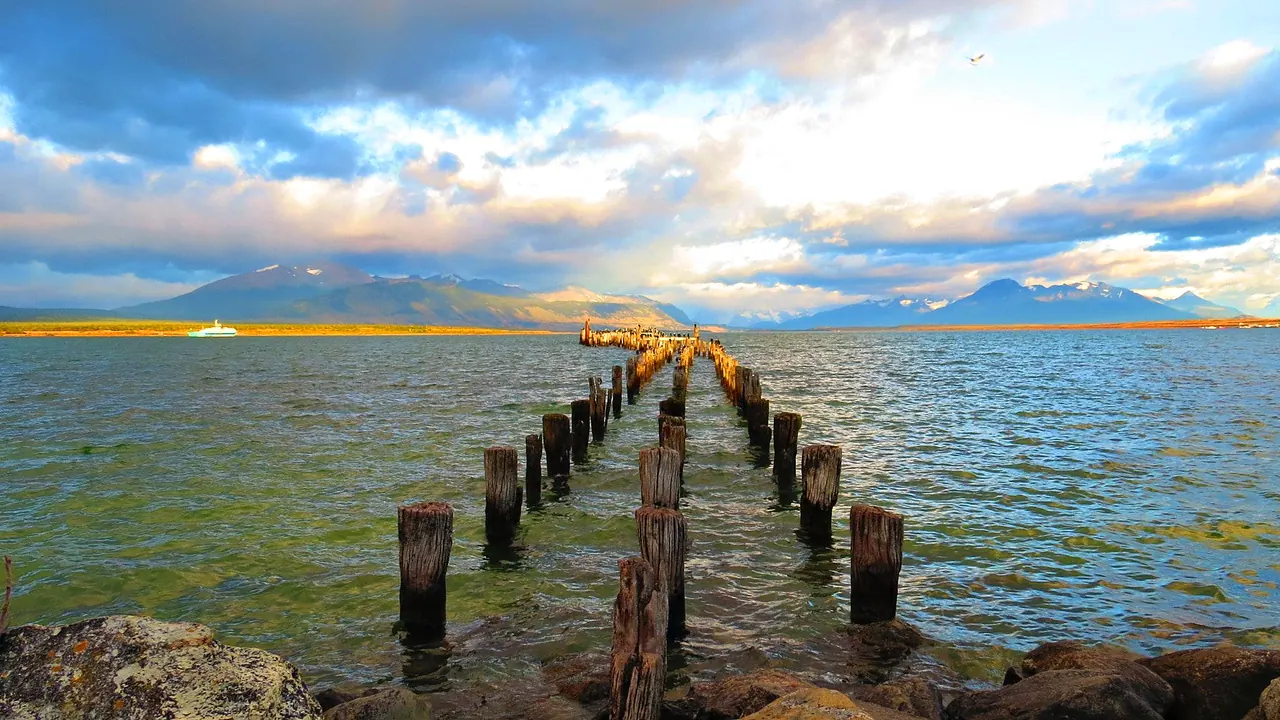
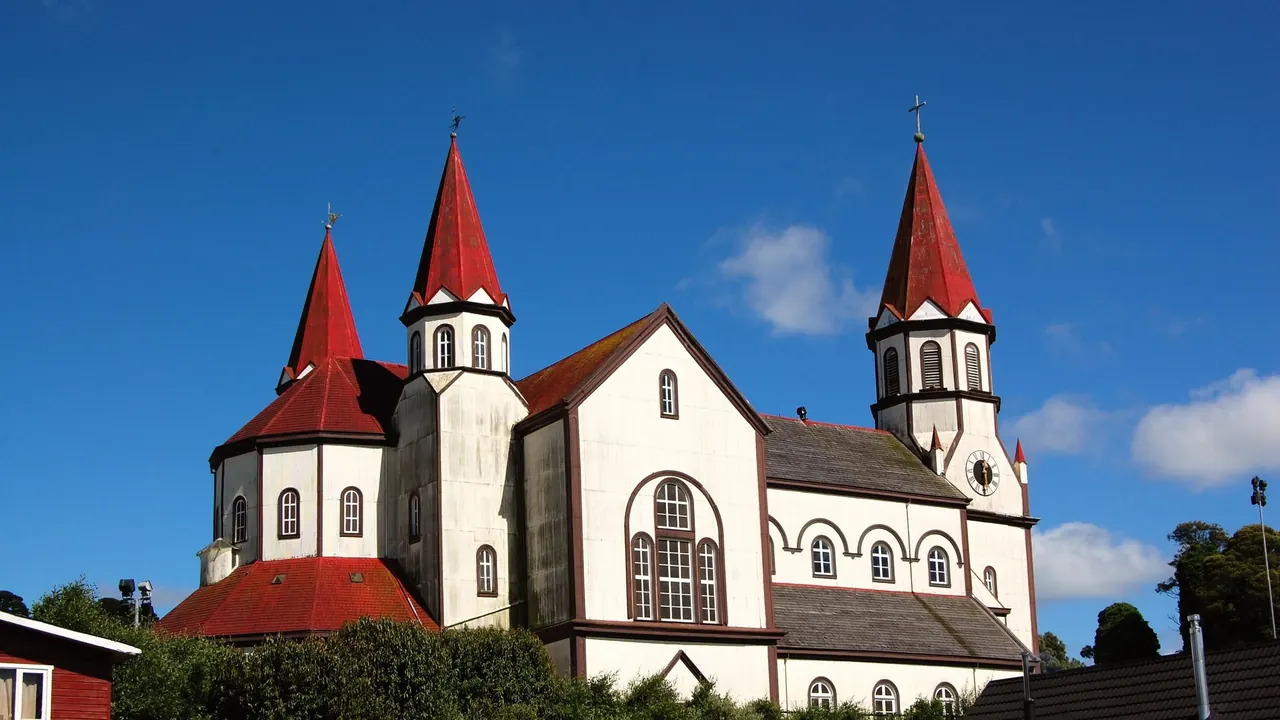
Photos: Puerto Natales by Rosario Nieto Chadwick, CC BY 3.0, cropped; Puerto Varas by Guillermo Villegas B., CC BY-SA 3.0, cropped.
Puerto Natales or Puerto Varas?
Our verdict in twelve categories, each scored against the same fixed benchmark cities, and the climate month by month, so you can choose for your trip.
Choose Puerto Natales for
- nature and the outdoors
Puerto Natales is for travellers who have come to the end of the continent for one thing: Torres del Paine. If your trip is built around the W or O trek, glacier boats on the fjords and the chance of a puma on the steppe, this is the base to choose. The town is a place to sleep, eat lamb and drink a local beer between days in the mountains. It offers little else, and it is often windy and costly.
Choose Puerto Varas for
- day trips
- beaches
- live music and the arts
Puerto Varas makes a rounder trip. The volcano scenery is almost as striking, but around it you get rafting and lake swims, hot springs within an hour, concerts in Frutillar and a ferry to Chiloé. It is the better pick for families, couples who want rest as well as hiking, and anyone who would rather move around a region than commit to a single park.
Scoreboard
Twelve categories on one fixed scale from 0 to 100. The shaded stretch is the gap between the two.
Your match
Pick a travel style or drag the sliders, and both match scores follow your weighting.
Wins on nature and the outdoors with your weighting.
Wins on day trips and beaches with your weighting.
What matters to you?
Category by category
What the scores mean for a trip.
Beaches & swimming
Neither town is a beach destination, but only Puerto Varas offers a swim at all. Its lake has a town beach and black-sand shores at Frutillar and Ensenada, and on a warm summer afternoon the fresh water is cool but bearable.
Puerto Natales faces a cold fjord, with gravel and rock along the shore and water that stays near 8°C. The waterfront is for a windy walk, and a hotel pool is the only place to swim.
Food & drink
Both towns roast lamb over an open fire and pour local craft beer, but Puerto Varas has more to eat. Its German heritage adds berry kuchen made with raspberries and murta, and the southern coast brings smoked salmon, mussels and curanto. The Angelmó market in Puerto Montt is close by for a proper seafood lunch.
Puerto Natales has a few surprisingly ambitious kitchens and excellent king crab, but the choice is narrow. There is no market culture, and in winter much of it shuts.
Culture & sights
Neither town takes long to see, but Puerto Varas has more character in its streets. The steep-roofed, shingled houses of the German settlers line a walking route above the lake, topped by the Black Forest-style wooden church of the Sagrado Corazón. Frutillar fills in the rest of the settlers' story.
Puerto Natales has brightly painted corrugated-iron houses, a modest museum on the Aónikenk, Kawésqar and sheep-farming eras, and the Bories cold-storage plant just outside town. It all fits into an afternoon.
Nightlife
Both are early-night towns with no clubs, and the difference is in the mood. In Puerto Natales, evenings revolve around trekkers comparing routes over a pint before a dawn bus to the park. Puerto Varas has lakefront pubs that stay busy in high summer, plus a casino, and Puerto Montt is twenty minutes away for anyone who still wants to go out.
Nature & outdoors
Torres del Paine is ice and granite on a scale the lake district cannot quite match. Beyond Puerto Natales, the towers and the horns of the Cuernos rise over turquoise lakes, glaciers pour off the Southern Ice Field, and condors and pumas share the steppe with guanacos. The W and O treks are the great draw, and boats from the town pier reach the Balmaceda and Serrano glaciers. The drawbacks are a season that runs only from October to April and wind strong enough to stagger you.
Puerto Varas offers gentler, greener country and more ways to spend a day in it. Osorno's snow cone rises across Lake Llanquihue, the Petrohué River runs over black lava in turquoise rapids, and boats cross Lago Todos los Santos. There is also rafting, fly fishing, the rainforest of Cochamó and skiing in winter. The drawback here is rain, which can keep the volcano in cloud for days.
Day trips
Puerto Varas is far better placed for outings to other towns. Frutillar, with its settler museum and concert hall, is half an hour along the shore. Puerto Octay keeps its old timber square, and Puerto Montt's harbour is close. Chiloé makes a long day, or better an overnight, for its forts, museums and churches.
From Puerto Natales, almost every excursion leads into wilderness. The Bories plant and the Milodón Cave are the only nearby stops with human interest. Punta Arenas and El Calafate are too far away to see properly in a day.
Good for families
Both towns are small and safe, and neither has anything built for children. Puerto Varas suits a wider range of ages: lake beaches in summer, boat trips on Todos los Santos and short, easy paths to the Petrohué falls.
Puerto Natales asks more of young legs. The giant sloth at the Milodón Cave and the flamingos and guanacos along the park road are fun, but the long drives, hard trails and relentless wind suit active families with older children.
Getting around
The real difference starts once you leave town, and Puerto Natales makes that harder. Its coaches mainly carry trekkers to the gates of Torres del Paine in season, and inside the park a catamaran and shuttles connect the trailheads. Services dwindle in winter. To see several parts of the park in one day you need a guided excursion or your own wheels, driven carefully over long gravel stretches in the wind.
Puerto Varas is better connected all year. Minibuses follow the main roads to Puerto Montt, Frutillar, Ensenada and Petrohué, and the airport at Puerto Montt is a short ride away. Both centres are easy on foot, although in Puerto Varas some streets climb steeply from the lake.
Shopping & style
Shopping is small-scale in both towns, with a little more to browse in Puerto Varas. Its craft shops sell jams, chocolate, smoked produce and wood carvings, and the larger Angelmó market in Puerto Montt has Chiloé wool and weaving. Puerto Natales is mostly gear shops and supermarkets for stocking up before the trail, plus some sheepskin, knitwear and lapis lazuli.
Affordability
Neither is cheap by Chilean standards, but Puerto Varas is easier on the budget. Local buses, set lunches and simple guesthouses are reasonably priced, and staying in Puerto Montt or travelling in spring or autumn saves more.
In Puerto Natales, almost everything is shipped in, and rooms are scarce in summer. The real costs come with Torres del Paine, where park entry, transfers, refugios and glacier boats quickly add up.
Live music & performing arts
Here Puerto Varas has a real asset. Half an hour away in Frutillar, the Teatro del Lago stands over the water and stages classical music, opera and dance through the year, and the Semanas Musicales festival fills the summer. Puerto Natales has nothing comparable: at most a guitarist in a bar, or folk dancing at a local festival.
Wellness & relaxation
Puerto Varas is the better place to slow down. Its volcanic ground feeds open-air thermal pools at Ralún and the Cochamó estuary, and the older resort at Puyehue, all a drive away, while lakefront hotels add spas.
Puerto Natales has no bathing tradition. Unwinding means a hot tub or sauna at an upscale lodge, or a quiet evening watching the light change over the sound.
When should you go?
Pick your month. The climate figures are measured averages, not a forecast.
Puerto Natales in July
Puerto Varas in July
Daytime high, °C
Rainfall in the month, mm
Where the figures come from
Puerto Natales has no weather station within reach, so its figures come from a gridded climate model rather than a measured record, and read a broad area rather than one spot.
Temperature and rainfall are climate normals, averaged over the years shown. Puerto Natales: 1991-2020 normals, TerraClimate 4 km grid at the town, no weather station within 90 km. Puerto Varas: 1991-2020 normals, Puerto Montt (13.8 km from centre).
Both towns are at their best in the southern summer, from December to March, but in different ways. Puerto Natales stays cool all year, with highs of about 17°C at best in January and February and only around 6°C in midwinter. Rainfall is light in every month. The real problem is the wind, and from May to September the park is hard to reach and the town goes quiet. October to April is the season, and the shoulder months bring cooler days without much extra rain.
Puerto Varas is milder, reaching about 19°C in midsummer and staying above 10°C even in winter, but it is far wetter. Rain climbs from autumn to a peak of about 215mm in June, and the grey months hide the volcano for days at a time. January and February are the sunniest and driest months, and the only time the lake, at around 16°C, is warm enough for a brisk swim. Winter suits skiing on Osorno rather than sightseeing.
Which traveller are you?
For an outdoors trip, Puerto Natales is the stronger pick if you want big multi-day trekking. The towers and glaciers of Torres del Paine are about two hours away, and glacier boats leave from the town pier. Puerto Varas suits those who prefer rafting, volcano hikes and variety.
On a culture and arts trip, Puerto Varas wins comfortably. Its German timber houses are on the doorstep, and you can catch a concert at the Teatro del Lago in Frutillar or cross to Chiloé's UNESCO-listed wooden churches. Puerto Natales offers one small museum and an old cold-storage plant.
For a relaxing and wellness trip, Puerto Varas is clearly better. There are lakeside walks, afternoons over kuchen, and open-air hot springs at Ralún and Puyehue among the rainforest. In Puerto Natales, rest means a lodge sauna after a hard day on the trail.
Before you go
| Measure | Puerto Natales | Puerto Varas |
|---|---|---|
| Official language | Spanish | Spanish |
| Currency | Chilean Peso (CLP) | Chilean Peso (CLP) |
| Sockets | CL220 V, 50 Hz | CL220 V, 50 Hz |
| Driving side | Right | Right |
| Time zone | UTC-3 | UTC-4, UTC-3 in summer |
| Emergency number | Police 133/134, ambulance 131, fire 132 | Police 133/134, ambulance 131, fire 132 |
| Elevation | 3 m | 56 m |
| Main airport | President Carlos Ibáñez International Airport (PUQ)181 km from centre7 non-stop destinations | El Tepual International Airport (PMC)17 km from centre5 non-stop destinations |
| Public holidays this year | 16 days | 16 days |
By the numbers
| Measure | Puerto Natales | Puerto Varas |
|---|---|---|
| Population | 21,477 | 26,172 |
| People per km² | - | 4,026 |
| Museums within 10 km | 0 | 2 |
| UNESCO World Heritage sites within 50 km | 0 | 0 |
| Swim season, months above 21 °C | - | None |
Where else could you go?
Every comparison below shares a destination with this one, so you can follow Puerto Natales or Puerto Varas somewhere new.
- Barilochevs Puerto Varas
- El Calafatevs Puerto Natales
- Ushuaiavs Puerto Natales
- Santiagovs Puerto Varas
- Valparaisovs Puerto Varas
- Vina del Marvs Puerto Varas