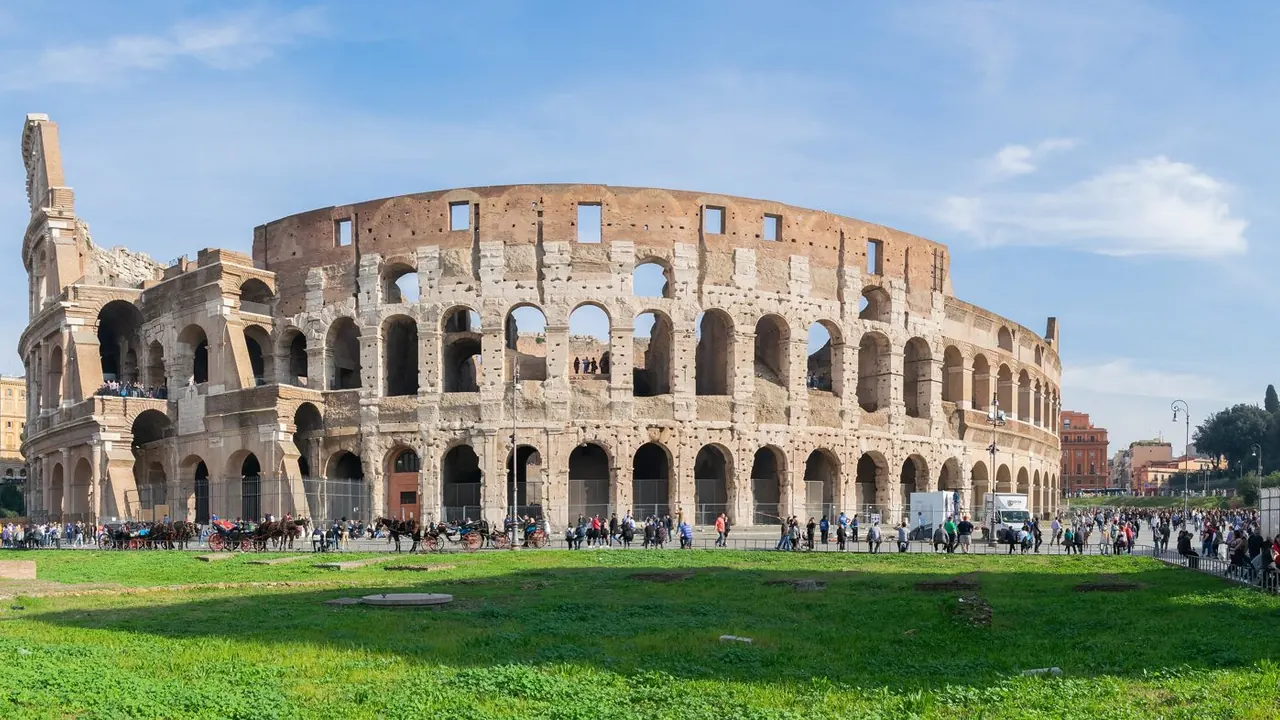
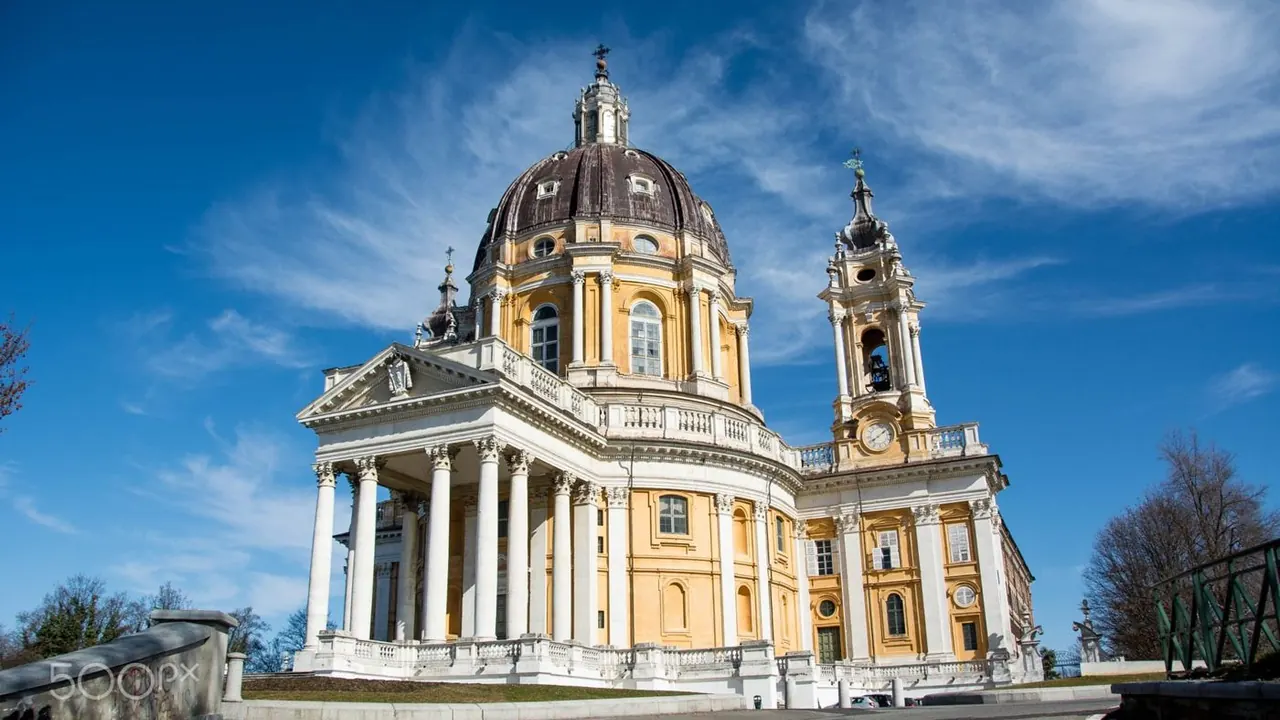
Photos: Rome by Tournasol7, CC BY-SA 4.0, cropped; Turin by Konstantin Dacosta, CC BY 3.0, cropped.
Rome or Turin?
Our verdict in twelve categories, each scored against the same fixed benchmark cities, and the climate month by month, so you can choose for your trip.
Choose Rome for
- beaches
- culture and sights
- shopping
Rome is the choice for a first great Italian city trip. Nowhere else puts the Colosseum, the Pantheon, the Vatican and the Baroque piazzas within a morning's walk of each other. The day trips to Tivoli, Ostia Antica and the Etruscan tombs give it even more ancient history, and the sea at Ostia is close enough for a summer afternoon. Come for history, art and long evenings outdoors in Trastevere, and accept higher room prices and tiring, crowded streets as part of the deal.
Choose Turin for
- nature and the outdoors
- prices
- getting around
Turin suits travellers who want an Italian city that is easier to live in for a week. It costs less, is flat and arcaded, has thinner crowds and is kinder to children. Its real strength lies outside the city: the Alps for hiking and skiing are about an hour away, and the Langhe wine country is a short drive south. Pick it for Piedmontese food and wine, the Egyptian Museum and mountain days, not for beaches or a long list of famous sights.
Scoreboard
Twelve categories on one fixed scale from 0 to 100. The shaded stretch is the gap between the two.
Your match
Pick a travel style or drag the sliders, and both match scores follow your weighting.
Wins on beaches and culture and sights with your weighting.
Wins on nature and the outdoors and prices with your weighting.
What matters to you?
Category by category
What the scores mean for a trip.
Beaches & swimming
Rome has a real if modest option. Ostia's dark volcanic sand is about half an hour away by suburban train, and Fregene is more relaxed. The water is warm in high summer, though rarely clear, and the beaches fill with Romans at weekends.
Turin has no sea within easy reach. The Ligurian Riviera is nearly two hours away, so locals cool off at small lakes such as Avigliana instead. If a swim matters to your trip, only Rome lets you fit one into an ordinary day.
Food & drink
Both cities eat very well, but in different ways. Rome's strength is plain trattoria cooking and street food. Think carbonara and cacio e pepe, Jewish-style artichokes in the Ghetto, supplì and pizza al taglio, and offal dishes in Testaccio, all with modest local wine.
Turin's cooking is richer and more exact: agnolotti del plin, vitello tonnato, autumn white truffles from the Langhe, and Barolo on every wine list. It is also the home of vermouth, the aperitivo, gianduja and bicerin. Turin is the better city for wine and sweet things, Rome the better one for eating on the go.
Culture & sights
This is where Rome pulls far ahead. It has the Forum, the Palatine, the Pantheon and the Colosseum, Bernini's and Borromini's piazzas and churches, and then the Vatican Museums, the Sistine Chapel and the Borghese. A week still leaves things out.
Turin is rewarding on a smaller scale. The Museo Egizio is world class, and the Savoy palaces, the Shroud's cathedral and the Cinema Museum inside the Mole are well worth seeing. Its industrial story at the Lingotto and its contemporary art at Rivoli give it a character of its own. Two or three days cover the essentials.
Nightlife
Rome has a little more going on, and most of it happens outdoors. Trastevere's lanes stay crowded with wine drinkers late into the night, and Monti, San Lorenzo and Pigneto each draw a different crowd. Clubbing is a minor part of the scene in both cities.
Turin's evenings centre on the aperitivo, then move to the bars of the Quadrilatero Romano and the pavements of San Salvario, with the Murazzi by the Po in summer. It is sociable but quieter, especially outside university term.
Nature & outdoors
Turin has the Alps on its doorstep. The Gran Paradiso's ibex and high trails, ski touring in the Susa valley and the Via Lattea slopes are all about an hour away, and closer in there are the Superga hills and the Mandria forest.
Rome's green spaces are gentler and more historic: the villa parks and the Appian Way, where a bike ride passes tombs and aqueducts. The crater lakes of the Alban Hills are close by, but real mountains take about ninety minutes, and summer heat limits what you can do outdoors.
Day trips
Both make excellent bases, and Rome has the edge in range. Ostia Antica, Hadrian's Villa and Villa d'Este at Tivoli, the Etruscan tombs of Tarquinia, cliff-top Orvieto and Civita di Bagnoregio are all close by, and fast trains reach Florence and Naples in about ninety minutes.
Turin's days out are more about landscape and wine. There are Barolo and Barbaresco in the Langhe, truffles at Alba and Slow Food at Bra, with the Sacra di San Michele on its rock and Milan an hour away by train.
Good for families
Turin is the easier city with children. Its centre is flat, the arcades give shade and shelter, crowds are light, and the glass lift through the Mole, the car museum and the Egyptian mummies keep older children interested. A large open-habitat zoo park at Cumiana is within a short drive.
Rome has gladiators, catacombs, the Bioparco in Villa Borghese and daily gelato. But the long queues at the big sights, the cobbles that are hard on pushchairs, the heavy traffic and the summer heat make each day more tiring for parents.
Getting around
Turin is simpler to navigate. The centre is a flat grid with kilometres of arcades, the walk from Porta Nuova to the Mole and the river is straightforward, and a driverless metro line runs out to Lingotto.
Rome's centre is just as walkable, and the streets between the Colosseum, the Pantheon and Trastevere are half the pleasure. Still, the cobbles, scooters and heat wear you down, and the metro hardly reaches the historic core, which leaves you relying on slow buses and trams.
Shopping & style
Rome is the stronger shopping city, especially for fashion. The big Italian houses line Via Condotti and the streets around the Spanish Steps, and Monti adds independent designers and vintage. Porta Portese is a huge Sunday flea market, and leather and handmade shoes are good buys.
Turin has luxury labels under the arcades of Via Roma and a monthly Gran Balon flea market. What it does best is food to take home: chocolate, gianduiotti, truffles, cheese and Piedmontese wine. Serious designer shoppers will find its range thin.
Affordability
Turin is noticeably cheaper. Central hotels are fairly priced for most of the year, an aperitivo spread can replace dinner, and transport costs little. Spending only climbs with fine dining and the truffle season.
In Rome, accommodation drives the cost. Central rooms are small, expensive and scarce in spring and autumn, and the Vatican, the Colosseum and the Borghese all charge substantial entry fees. Free drinking fountains and churches full of art help, as does staying outside the centre.
Live music & performing arts
The two are broadly level, and each even has a Renzo Piano concert hall. Rome's standout is summer opera among the ruins of the Baths of Caracalla, along with the Santa Cecilia orchestra and frequent sacred music in its churches.
Turin offers a steadier year-round programme instead: a full season at the Teatro Regio, the RAI National Symphony Orchestra, and festivals of jazz and electronic music. In both cities theatre is in Italian, so visitors mostly stick to music.
Wellness & relaxation
Neither city has a living bathing culture, so in both, wellness inside the city means hotel spas. Rome's thermal water is nearer, though. The springs at Bagni di Tivoli are just outside the city, and there are free hot pools around Viterbo.
Turin makes up for its distant spas, about two hours away at Acqui Terme or in the Aosta valley, with a calmer everyday pace. Unhurried cafés, arcades and the Po riverside are a gentler setting than Rome's noisy, scooter-filled centre.
When should you go?
Pick your month. The climate figures are measured averages, not a forecast.
Rome in July
Turin in July
Daytime high, °C
Rainfall in the month, mm
Where the figures come from
Rome's sunshine is measured 31 km from the centre, at Vigna Di Valle.
Turin has no rain gauge within 25 km of the centre, so its rainfall comes from a gridded climate dataset read at the city rather than from a gauge further away.
Temperature and rainfall are climate normals, averaged over the years shown. Rome: 1991-2020 normals, Roma / Ciampino (15.1 km from centre). Turin: 1991-2020 normals, Torino / Caselle (15.4 km from centre).
Rome is the warmer city for most of the year, and the two are level only in April. Its summers are long, dry and very sunny. July and August reach about 31°C, which makes midday sightseeing hard work, but the sea at Ostia warms to around 25°C and is good for swimming from June to September. May and late September are the best months for walking the city. The rain sets in from October and is heaviest in November, and winter is mild but often grey.
Turin has a more continental climate. Its winters are clearly colder, with January highs of around 7°C, though December to February are fairly dry, and its summers are a little less fierce than Rome's. Rain falls mainly from late spring through autumn. May is wet, and September to November is the wettest stretch, building to about 127mm in November. June and July are the most reliable months for the city and the hills, warm with lighter rain. Winter suits skiers heading for the Alps more than people who want to walk the streets.
Which traveller are you?
On a culture and arts trip, Rome wins easily. Ancient ruins, early Christian mosaics, Caravaggios in side chapels, the Vatican Museums and the Borghese Gallery make up a depth of sights that Turin's fine Egyptian Museum and Savoy palaces cannot match.
For an outdoors trip, Turin is the better base. The Gran Paradiso, the Susa valley and the slopes around Sestriere are about an hour away, good for hiking in summer and skiing in winter. Rome's Appian Way and Alban Hills are pleasant but much gentler.
On a tight budget, Turin goes further. Central rooms are fairly priced, a generous aperitivo can stand in for dinner, and Porta Palazzo market feeds you cheaply. In Rome, small central rooms and the big entry fees soon eat into a budget.
Before you go
| Measure | Rome | Turin |
|---|---|---|
| Official language | Italian | Italian |
| Currency | Euro (EUR) | Euro (EUR) |
| Sockets | CFL230 V, 50 Hz | CFL230 V, 50 Hz |
| Driving side | Right | Right |
| Time zone | UTC+1, UTC+2 in summer | UTC+1, UTC+2 in summer |
| Emergency number | 112 | 112 |
| Elevation | 21 m | 239 m |
| Main airport | Rome–Fiumicino Leonardo da Vinci International Airport (FCO)23 km from centre242 non-stop destinations | Turin Airport (TRN)14 km from centre65 non-stop destinations |
| Public holidays this year | 13 days | 13 days |
By the numbers
| Measure | Rome | Turin |
|---|---|---|
| City population | 2,748,109 | 841,600 |
| People per km² | 2,135 | 6,474 |
| Museums within 10 km | 178 | 72 |
| UNESCO World Heritage sites within 50 km | 7 | 4 |
| Swim season, months above 21 °C | 5 months | - |
Where else could you go?
Every comparison below shares a destination with this one, so you can follow Rome or Turin somewhere new.