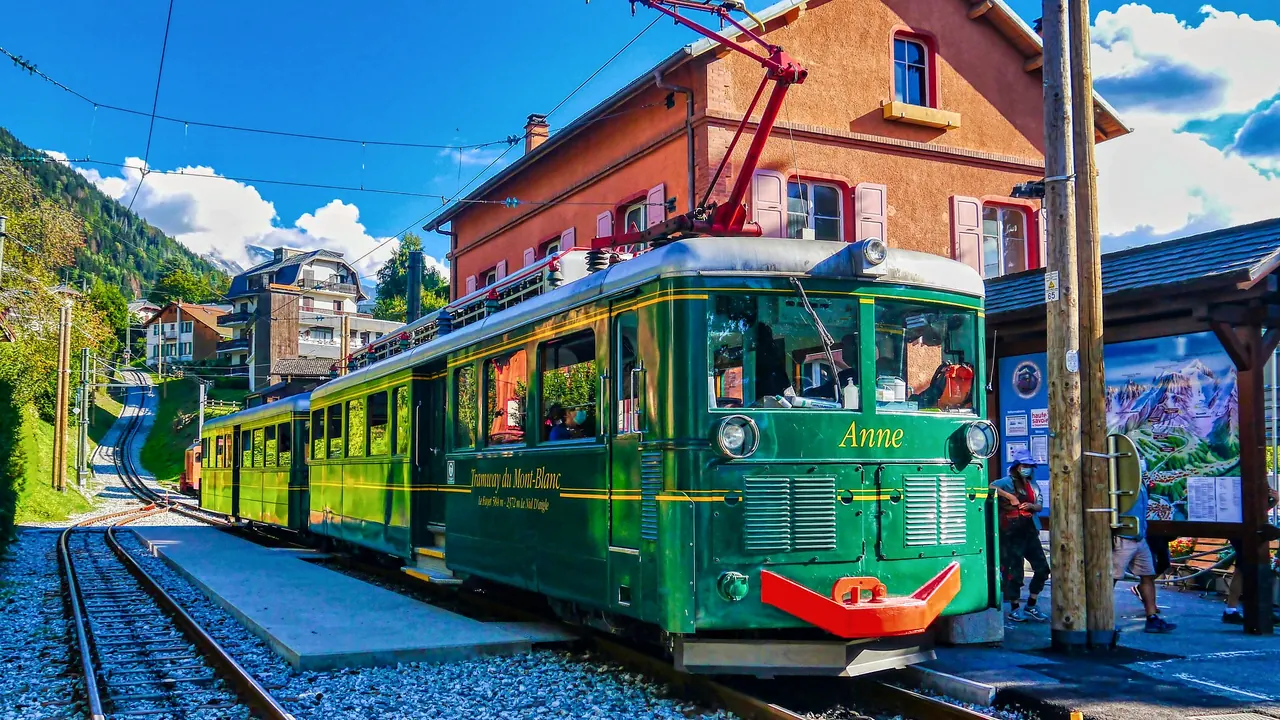
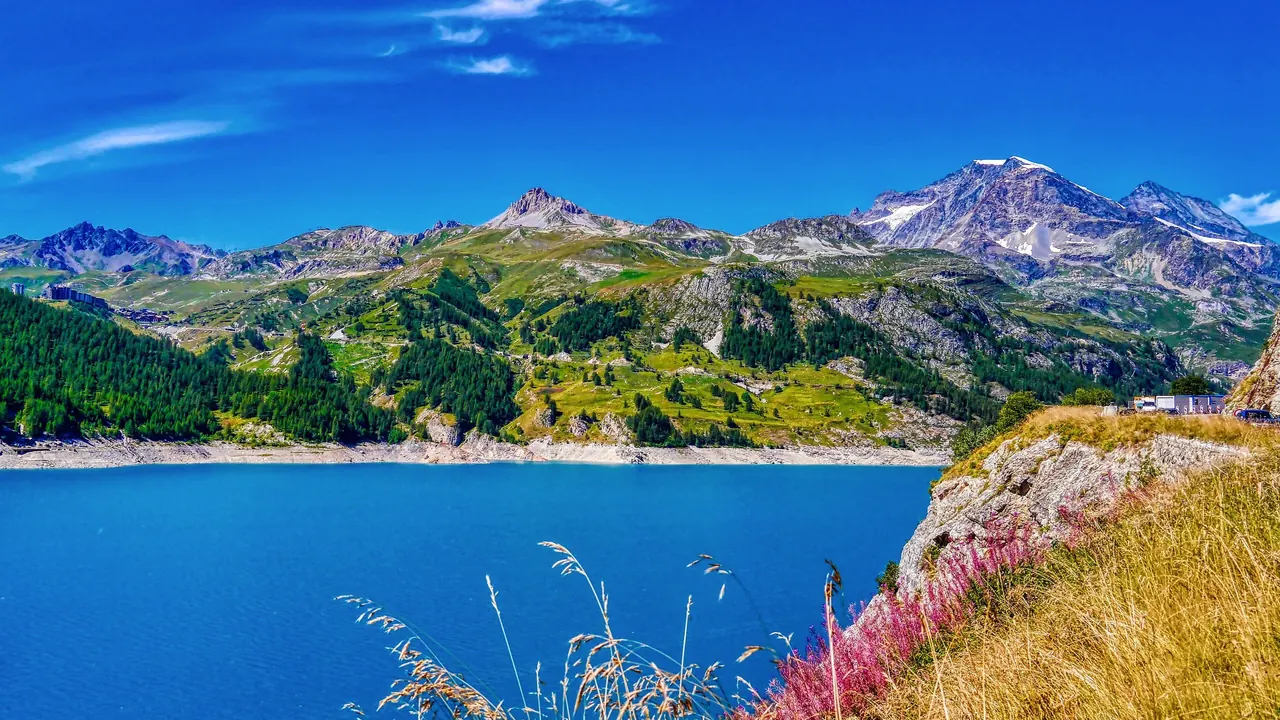
Photos: Saint-Gervais-les-Bains by Zairon, CC BY-SA 4.0, cropped; Tignes by Zairon, CC BY-SA 4.0, cropped.
Saint-Gervais-les-Bains or Tignes?
Our verdict in twelve categories, each scored against the same fixed benchmark cities, and the climate month by month, so you can choose for your trip.
Choose Saint-Gervais-les-Bains for
- day trips
- wellness
- prices
Saint-Gervais suits travellers who want the mountains at a gentler pace, with more to do off them. The thermal baths at Le Fayet, the Plateau d'Assy church decorated by Chagall and Matisse, and easy outings to Chamonix, Annecy, Geneva or Italy fill the days around the walking and skiing. It is also the less costly base of the two.
Choose Tignes for
- nightlife
- getting around
- food and drink
Tignes is the pick for a high-altitude ski trip with a loud après-ski scene. It sits far higher, its slopes join Val d'Isère in one vast, snow-sure domain, and free shuttles and ski-in, ski-out apartments make the resort simple to use once you arrive. Expect to pay more and to find little beyond the mountains.
Scoreboard
Twelve categories on one fixed scale from 0 to 100. The shaded stretch is the gap between the two.
Your match
Pick a travel style or drag the sliders, and both match scores follow your weighting.
Wins on day trips and wellness with your weighting.
Wins on nightlife and getting around with your weighting.
What matters to you?
Category by category
What the scores mean for a trip.
Beaches & swimming
Neither is a beach destination, and in both swimming is a summer extra rather than a reason to go. Saint-Gervais has the gentler water. Lac de Passy on the valley floor warms to about 22°C in July and August, with lawns, a sandy edge and Mont Blanc reflected in it, and the beaches of Lake Annecy are about an hour's drive away.
Tignes swims at altitude. Its lake has a small sandy shore and a supervised area in high summer, but the snowmelt rarely gets past 16°C, so a dip is brief. Most visitors use the lagoon pool and slides at the indoor aquatic centre instead, whatever the season.
Food & drink
Both serve the same Savoyard staples of fondue, raclette and tartiflette made with Beaufort and Reblochon, and neither is a place to travel to for the food. What differs is where you eat. Saint-Gervais has chalet restaurants, mountain huts and a weekly market for tasting the local cheeses, and Megève's more refined restaurants are a short drive away.
Tignes is better for long terrace lunches on the slopes, and Le Lac and Val Claret have pizzerias, burger places and crêperies. Many of them close outside the ski and summer seasons.
Culture & sights
Saint-Gervais has more to see, though a day covers it. Its hillside centre keeps a baroque church and Belle Époque villas from its spa years. Just outside town are the baroque chapel of Notre-Dame-de-la-Gorge and the Plateau d'Assy church decorated by Chagall, Matisse and Léger.
Tignes was built from scratch in the 1960s and 1970s as functional apartment blocks. Its heritage is the story of the old village drowned by the Chevril dam, recalled by the mural on the dam wall, along with a few chapels in the lower hamlets.
Nightlife
Tignes is where the evenings happen. In the ski season, après-ski starts with music on the mountain terraces and moves on to the bars of Val Claret and Tignes Le Lac. Small clubs stay open well after midnight for a young crowd drinking beer and shots. Summer evenings are calmer, and between seasons the resort largely shuts.
Saint-Gervais is a family and spa resort that goes quiet after dinner. There is some après-ski near the lifts in winter, and anyone who wants a late night drives to Chamonix.
Nature & outdoors
Both are outstanding mountain bases, and the difference is in the kind of mountain. Saint-Gervais lies right below Mont Blanc. The Tramway du Mont-Blanc climbs to the Nid d'Aigle beside the Bionnassay glacier, the Tour du Mont Blanc passes through the commune, and the skiing, linked with Megève, runs through woods facing the massif.
Tignes is built at about 2,100m, with the Grande Motte glacier above it and the Vanoise National Park on its doorstep. Its lifts join Val d'Isère in one of the largest ski areas in the Alps. The pistes are higher and more snow-sure, there is big off-piste terrain, and the season opens in autumn on the glacier.
Day trips
Saint-Gervais is far better placed for days out. Chamonix is half an hour away on the Mont Blanc Express, and Annecy and Geneva are each about an hour by car. The Mont Blanc tunnel puts Courmayeur and Roman Aosta within easy reach for a day in Italy.
Tignes sits at the head of a long valley. Apart from neighbouring Val d'Isère, the choices are Tarentaise places such as Bourg-Saint-Maurice, Conflans and Beaufort. Aosta is about two hours away, and only in summer, when the Little St Bernard Pass is open.
Good for families
Both suit families who spend their days outside, and neither has a zoo, theme park or much else made for children. Tignes is easier for a ski week with small children. The beginner slopes are beside the villages, many apartments are ski-in, ski-out, and the aquatic centre is there for white-out days, though the altitude and cold can tire the youngest.
Saint-Gervais makes the better summer choice, with the rack railway ride, easy walks to alpine pastures and valley lakes with lawns. Its steep climb between Le Fayet and the centre is hard work with a pushchair.
Getting around
Once you are there, Tignes is the simpler place to get around. Free shuttles and the lifts link its villages, and in winter many guests ski from their door. Getting there is the hard part, since the nearest station is at Bourg-Saint-Maurice, about forty minutes below.
Saint-Gervais has its own station at Le Fayet, with trains up the Chamonix valley. The town is split in two by a steep climb, though, and Megève, the Montjoie valley and many trailheads really need a car.
Shopping & style
Neither is a place to go shopping. Both have ski and outdoor gear shops and delicatessens selling Beaufort, charcuterie and Savoie wine. Saint-Gervais adds a weekly market, with Megève's boutiques a short drive away and Annecy or Geneva for real choice. Tignes has supermarkets for self-catering guests and mountain honey to take home.
Affordability
Saint-Gervais is easier on the budget. It has more family hotels and self-catering apartments than its smarter neighbours, although lift passes and the school vacation weeks still carry resort prices.
Tignes is expensive in winter, with lift passes, ski lessons and slope-side lunches all adding up. Self-catering and the early and late season weeks are the usual ways to keep costs down. Summer is cheaper there, but eating out stays expensive all year.
Live music & performing arts
Neither has a theatre or concert hall programme worth planning a stay around, and the live music differs in tone. Saint-Gervais has occasional open-air concerts and church recitals in summer, with Geneva or Annecy for opera and orchestral music. In Tignes, live music means bands in après-ski bars, DJs on the terraces and free concerts during resort events.
Wellness & relaxation
Saint-Gervais is the stronger choice, because it has real thermal water on the spot and Tignes does not. The baths at Le Fayet serve people taking a medical cure as well as day visitors, so the treatments go well beyond a hotel sauna. Beyond that one establishment, though, there are only hotel spas, so a longer stay means coming back to the same baths.
In Tignes, wellness is spread around the resort, with the spa, hammam and massage at the aquatic centre and pools and treatment rooms in the larger hotels and apartment residences. For mineral springs the nearest option is Brides-les-Bains, about an hour down the valley. Summer is the better season to unwind there, when the lakeside is calm and the resort slows down.
When should you go?
Pick your month. The climate figures are measured averages, not a forecast.
Saint-Gervais-les-Bains in July
Tignes in July
Daytime high, °C
Rainfall in the month, mm
Where the figures come from
Saint-Gervais-les-Bains's temperatures are measured 60 km from the centre, at Geneve-Cointrin.
Saint-Gervais-les-Bains's station stands 151 m below the city centre, so the centre is likely a little cooler than the figures say.
Saint-Gervais-les-Bains has no rain gauge within 25 km of the centre, so its rainfall comes from a gridded climate dataset read at the destination rather than from a gauge further away.
Tignes has no weather station within reach, so its figures come from a gridded climate model rather than a measured record, and read a broad area rather than one spot.
Temperature and rainfall are climate normals, averaged over the years shown. Saint-Gervais-les-Bains: 1991-2020 normals, Geneve-Cointrin (59.8 km from centre). Tignes: 2001-2020 normals, NASA POWER reanalysis grid, no weather station within 90 km.
Saint-Gervais sits much lower and is warmer than Tignes in every month. Highs reach about 27°C in July, which is warm enough for Lac de Passy and comfortable for walking. June to September is the long, sunny stretch for hiking. Rain falls steadily all year and is heaviest in early winter, at about 135mm in December, and November and December are also the darkest months.
Tignes stays cold for most of the year. Highs are below freezing from December to March, around -4°C in January, so the snow stays reliable for skiing. Even July only reaches about 18°C, which is fine for hiking but cool for a lake swim. May is the wettest month, at about 103mm, and spring and late autumn are the quiet months between the two seasons.
Which traveller are you?
For a food and nightlife trip, Tignes is the clear choice in winter. Both serve similar Savoyard food, but Tignes adds long lunches on slope-side terraces and an après-ski scene in Val Claret and Le Lac that runs past midnight. Saint-Gervais sleeps after dinner.
On a trip on a tight budget, Saint-Gervais goes further. Its family hotels and self-catering apartments cost less than winter stays in Tignes, the quiet months between seasons are clearly cheaper, and trains from Le Fayet reach Chamonix without a car.
For a relaxing and wellness trip, Saint-Gervais wins easily. Its thermal baths at Le Fayet offer pools of mineral water and an outdoor soak beneath snowy slopes, and the evenings are quiet. Tignes has saunas and a hammam, but its days run from early lifts to late bars.
Before you go
| Measure | Saint-Gervais-les-Bains | Tignes |
|---|---|---|
| Official language | French | French |
| Currency | Euro (EUR) | Euro (EUR) |
| Sockets | CE230 V, 50 Hz | CE230 V, 50 Hz |
| Driving side | Right | Right |
| Time zone | UTC+1, UTC+2 in summer | UTC+1, UTC+2 in summer |
| Emergency number | 112 | 112 |
| Elevation | 571 m | 1,440 m |
| Main airport | Geneva International Airport (GVA)60 km from centre150 non-stop destinations | Geneva International Airport (GVA)105 km from centre150 non-stop destinations |
| Public holidays this year | 11 days | 11 days |
By the numbers
| Measure | Saint-Gervais-les-Bains | Tignes |
|---|---|---|
| Population | 5,755 | 1,919 |
| People per km² | 90 | 24 |
| Museums within 10 km | 2 | 0 |
| UNESCO World Heritage sites within 50 km | 1 | 0 |
Where else could you go?
Every comparison below shares a destination with this one, so you can follow Saint-Gervais-les-Bains or Tignes somewhere new.
- Val d'Isèrevs Tignes
- Megèvevs Saint-Gervais-les-Bains
- Chamonixvs Saint-Gervais-les-Bains
- Flainevs Saint-Gervais-les-Bains
- Les Arcsvs Tignes
- La Rosièrevs Tignes