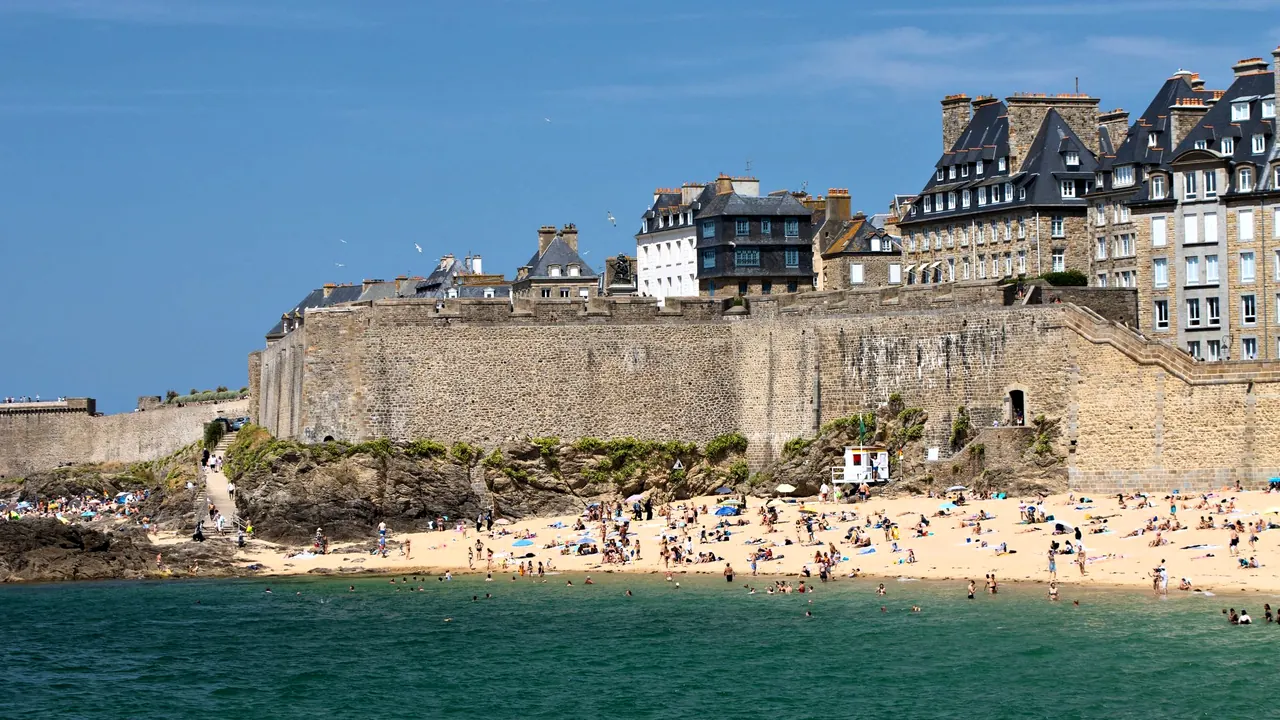
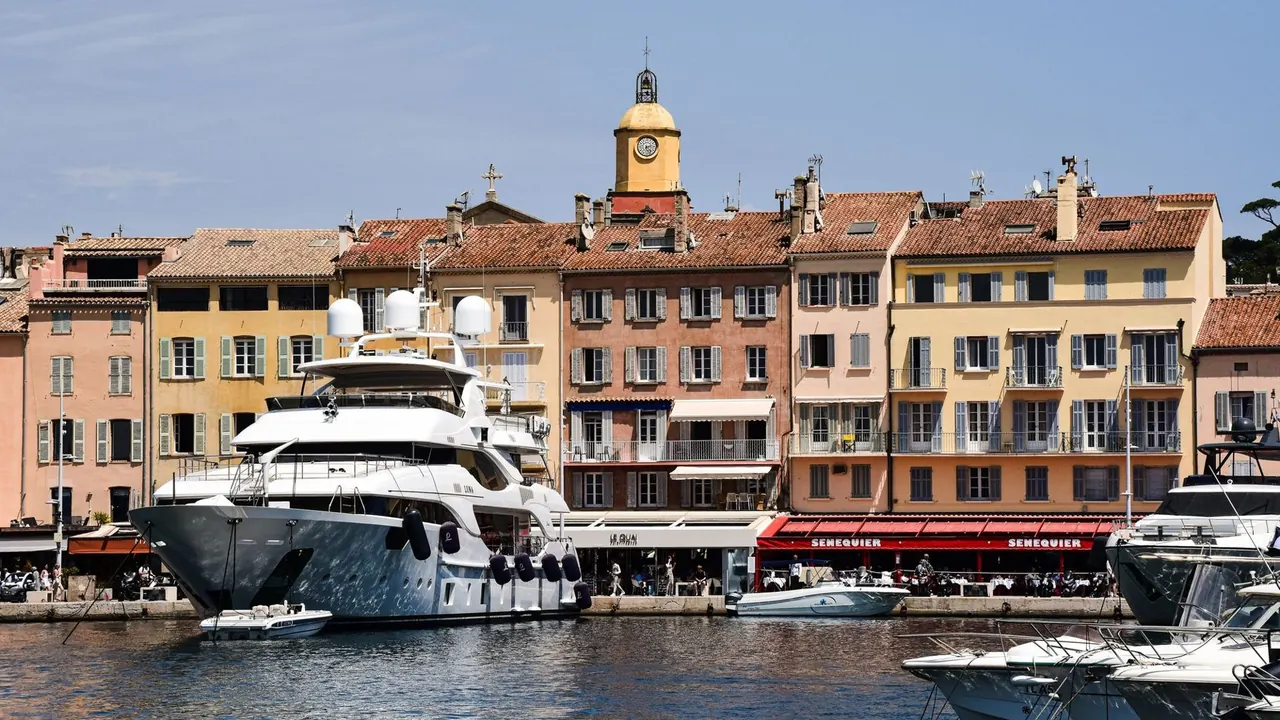
Photos: Saint-Malo by Efrem Efre, Pexels License; Saint-Tropez by AXP Photography, Pexels License.
Saint-Malo or Saint-Tropez?
Our verdict in twelve categories, each scored against the same fixed benchmark cities, and the climate month by month, so you can choose for your trip.
Choose Saint-Malo for
- prices
- getting around
- families
Saint-Malo suits travellers who want an easy-going French seaside town with plenty within reach. The walled town, the huge tides and the coastal path fill the days, Mont-Saint-Michel, Dinan and Rennes are close, and direct trains from Paris make it simple to get to. It is the better choice for families, for anyone watching their spending and for a quiet seawater break outside the summer.
Choose Saint-Tropez for
- nightlife
- beaches
- shopping
If you want sun, a warm sea and some glamour, choose Saint-Tropez. Its summers are hotter and much sunnier, Pampelonne is a far better beach for swimming, and the beach clubs, harbour terraces and luxury boutiques give it a nightlife and shopping scene that Saint-Malo, a Breton town of granite and galettes, cannot match. Be ready for high prices and summer traffic.
Scoreboard
Twelve categories on one fixed scale from 0 to 100. The shaded stretch is the gap between the two.
Your match
Pick a travel style or drag the sliders, and both match scores follow your weighting.
Wins on prices and getting around with your weighting.
Wins on nightlife and beaches with your weighting.
What matters to you?
Category by category
What the scores mean for a trip.
Beaches & swimming
Saint-Malo's beaches start at the foot of the ramparts. There is the long Sillon sand, the tidal pool at Bon-Secours, and at low tide you can walk out to the island forts. But the Channel stays cold even in high summer, so a beach day here is more about sand and sea air than swimming.
Saint-Tropez is the stronger choice for a beach vacation. Pampelonne has about 5km of fine sand and much warmer, clearer water, and there are quieter coves at Escalet and Gigaro further south. The catch is that the best sand lies out on the Ramatuelle side rather than in town.
Food & drink
The two are equally good for eating, but the food is very different. Saint-Malo means Breton everyday food: galettes with dry cider, salted-butter caramel and oysters eaten by the harbour wall at Cancale. The best meals are in Saint-Servan rather than the crêperies inside the walls, which are aimed at tourists.
Saint-Tropez is about Provençal long lunches with rosé, bouillabaisse and the market on the Place des Lices. Its hotel dining rooms are better at the top end, but simple, good-value food is harder to find, and much of the town closes in winter.
Culture & sights
Saint-Malo has a little more to see, though most of it is townscape. You can walk the full circuit of the ramparts, visit the cathedral and the castle keep, cross at low tide to Chateaubriand's grave on the Grand Bé, and look at the shipowners' country houses outside town.
Saint-Tropez has the better single collection, the pointillist and Fauvist paintings in the Musée de l'Annonciade. Add the citadel's maritime museum and the lanes of La Ponche, and you have seen most of it in a day.
Nightlife
In summer Saint-Tropez is far more of a party town. Afternoon beach-club parties at Pampelonne lead to champagne on the harbour terraces and then to clubs that stay open until dawn, though the style is moneyed, with dress codes and table service, and it all ends by October.
Saint-Malo's evenings are pubs, wine bars and Irish-style bars inside the walls, livelier with sailors in July and August and quiet early the rest of the year. Clubbing means going to Rennes.
Nature & outdoors
Both are good for outdoor trips, but the landscapes are very different. At Saint-Malo the draw is the tides, some of the largest in Europe, and the GR34 path towards Pointe du Grouin and Cap Fréhel. The long, windy beaches suit kitesurfing, and the Rance estuary is good for kayaking. Inland the country is flat.
Saint-Tropez has warmer water for diving and snorkelling off rocky points, the wild capes of Camarat and Taillat, the wooded hills of the Massif des Maures, and the national park islands of Port-Cros and Porquerolles. In summer, fire risk closes some trails.
Day trips
Saint-Malo is the better base for day trips. Mont-Saint-Michel is about an hour away, medieval Dinan and the Belle Époque villas of Dinard are closer still, Rennes is an easy train ride, and summer ferries go to Jersey.
From Saint-Tropez the outings are pleasant but smaller: the hilltop villages of Ramatuelle and Gassin, the canals of Port Grimaud, wine estates and a day on Porquerolles. All of them depend on roads that jam badly in July and August.
Good for families
Saint-Malo is the easier place to bring children, because the whole vacation can happen on foot. The sand starts below the walls, low tide turns the beaches into huge open playgrounds, and the short boat to Dinard feels like an expedition. The catch is the water. The Channel is bracing for small swimmers, and the tide comes in fast enough that an adult has to keep an eye on the time.
Saint-Tropez is the other way round. Its sea is warm, and the shallow, gently shelving sand at Pampelonne and Gigaro is ideal for toddlers. But those beaches are a drive out of town, and the resort around them is built for adults with money to spend. It works as a week of swimming, but not as a town for children to explore.
Getting around
Saint-Malo is much easier to reach and to get around. Its station has direct high-speed trains to Paris and Rennes, the promenade links the walled town to the beach on foot, buses cover the town and a passenger boat crosses to Dinard. You will need a car for the countryside.
Saint-Tropez is small enough to walk, but it has no railway, and the main beaches are several kilometres out of town. The single road along the gulf jams for hours in summer, which is why the boats from Sainte-Maxime and Port Grimaud are often the best way in.
Shopping & style
Shopping in Saint-Malo mostly means Breton goods to take home. You will find striped sailor tops, oilskins, faience, salted butter and caramels, plus a few galleries and the produce markets inside the walls and in Saint-Servan. For fashion or department stores, you have to go to Rennes.
For a town of its size, Saint-Tropez has far more shopping. The big fashion houses open summer shops in the lanes behind the port and around the Place de la Garonne, next to resort labels and jewellers, and Tropézienne leather sandals are still stitched by hand in workshops in the old town. The market on the Place des Lices adds linen, baskets and pottery, though many shops close for the winter.
Affordability
Saint-Malo costs much less, although rooms by the beach are still expensive in July and August. Galettes, set lunches and local buses keep daily spending modest, and spring and autumn are good value.
Saint-Tropez is among the most expensive places to stay on the Mediterranean. Rooms, loungers, harbourside meals and even a coffee on the port cost a lot, and taxis and parking add more. Many visitors stay inland or across the gulf and picnic from the market.
Live music & performing arts
Neither town has much in the way of live performance, but Saint-Malo has a bit more. Its town theatre runs a small season, there are organ concerts in the cathedral, and three festivals stand out: La Route du Rock for indie music, Étonnants Voyageurs for books and Quai des Bulles for comics.
Saint-Tropez offers open-air summer concerts on the citadel and the Bravade procession each May, and little else. For opera, Rennes is much easier to reach from Saint-Malo than Toulon or Nice is from Saint-Tropez.
Wellness & relaxation
Saint-Malo is a classic French thalassotherapy town. A large seawater spa stands on the Sillon seafront, and outside August long low-tide walks followed by heated sea pools make for a restful break.
Saint-Tropez has no bathing tradition of its own, only the polished spas of luxury hotels, which are mostly for their guests. It becomes truly calm only in May, June and September, with slow lunches and pétanque under the plane trees.
When should you go?
Pick your month. The climate figures are measured averages, not a forecast.
Saint-Malo in July
Saint-Tropez in July
Daytime high, °C
Rainfall in the month, mm
Where the figures come from
Saint-Malo has no rain gauge within 25 km of the centre, so its rainfall comes from a gridded climate dataset read at the city rather than from a gauge further away.
Saint-Malo's sunshine is measured 68 km from the centre, at Rennes.
Saint-Tropez has no rain gauge within 25 km of the centre, so its rainfall comes from a gridded climate dataset read at the city rather than from a gauge further away.
Saint-Tropez's sunshine is measured 62 km from the centre, at Nice.
Temperature and rainfall are climate normals, averaged over the years shown. Saint-Malo: 2002-2020 (sunshine 1991-2020, rainfall 1991-2020) normals, Dinard (7.9 km from centre). Saint-Tropez: 1999-2020 (sunshine 1991-2020, rainfall 1991-2020) normals, Le Luc (24.2 km from centre).
Saint-Malo is a summer destination, but a mild one. Highs reach only about 22°C in July and August and the sea peaks at around 18°C, so beach days are fresh and breezy rather than hot. It never gets too hot for walking the ramparts, and late spring and September are pleasant too. From October the rain builds, late autumn and winter are the wettest and greyest months, and the days are cool and short.
Saint-Tropez is much hotter and sunnier all year. July and August reach about 32°C with almost no rain, which is ideal for a sea at around 24°C but hard work for midday walks on the coast path. June and September still give warm swimming with gentler heat, and spring is the best time for walking. Autumn is the wet season here, and November is by far the rainiest month.
Which traveller are you?
On a beach and sun trip, Saint-Tropez is the clear pick. Pampelonne's long stretch of pale sand, its warm clear water and the reliable summer sunshine beat Saint-Malo's wide but chilly Channel beaches, where most people take a quick swim and then sit on the sand.
On a family trip with children, Saint-Malo works better. The ramparts, the tidal pool at Bon-Secours, the walks out to the island forts and the Grand Aquarium keep children busy, while Saint-Tropez is geared to adults and is expensive and jammed with traffic in summer.
For a trip on a tight budget, Saint-Malo is far easier. Galettes with cider, fair set lunches and cheap local buses keep costs down, whereas Saint-Tropez is so expensive that budget travellers usually sleep across the gulf and come over for the day.
Before you go
| Measure | Saint-Malo | Saint-Tropez |
|---|---|---|
| Official language | French | French |
| Currency | Euro (EUR) | Euro (EUR) |
| Sockets | CE230 V, 50 Hz | CE230 V, 50 Hz |
| Driving side | Right | Right |
| Time zone | UTC+1, UTC+2 in summer | UTC+1, UTC+2 in summer |
| Emergency number | 112 | 112 |
| Elevation | 0 m | 0 m |
| Main airport | Rennes-Saint-Jacques Airport (RNS)68 km from centre15 non-stop destinations | Nice-Côte d'Azur Airport (NCE)64 km from centre130 non-stop destinations |
| Public holidays this year | 11 days | 11 days |
By the numbers
| Measure | Saint-Malo | Saint-Tropez |
|---|---|---|
| City population | 47,439 | 3,582 |
| People per km² | 1,296 | 320 |
| Museums within 10 km | 3 | 4 |
| UNESCO World Heritage sites within 50 km | 2 | 0 |
| Swim season, months above 21 °C | None | 3 months |
Where else could you go?
Every comparison below shares a destination with this one, so you can follow Saint-Malo or Saint-Tropez somewhere new.
- Cannesvs Saint-Tropez
- Antibesvs Saint-Tropez
- Nicevs Saint-Tropez
- Monacovs Saint-Tropez
- Aix-en-Provencevs Saint-Tropez
- Marseillevs Saint-Tropez