Photos: Salerno by Leandro Neumann Ciuffo, CC BY 2.0, cropped; Split by Bernard Gagnon, CC BY-SA 4.0, cropped.
Salerno or Split?
Our verdict in twelve categories, each scored against the same fixed benchmark cities, and the climate month by month, so you can choose for your trip.
Choose Salerno for
- day trips
- prices
- shopping
Salerno suits the traveller who wants a sensible, affordable base for one of Europe's richest stretches of country. From here Pompeii, Paestum, the Amalfi Coast and Naples are all easy days out, the food is southern Italian cooking at its most honest, and rooms cost far less than in the cliff villages nearby. The town itself is pleasant rather than spectacular, so it is a good pick for people who plan to be out exploring most days.
Choose Split for
- culture and sights
- nightlife
- beaches
Split is the better choice when the city itself is the attraction. You sleep, eat and drink inside a Roman emperor's palace, and you can walk from the old town to a swim in clear water, so a short stay with no excursions still feels full. Summer evenings are livelier and the islands are a ferry ride away. In return, high-season prices are steeper and the food is more uneven than in Salerno.
Scoreboard
Twelve categories on one fixed scale from 0 to 100. The shaded stretch is the gap between the two.
Your match
Pick a travel style or drag the sliders, and both match scores follow your weighting.
Too close to call, level with your weighting
Wins on day trips and prices with your weighting.
Wins on culture and sights and nightlife with your weighting.
What matters to you?
Category by category
What the scores mean for a trip.
Beaches & swimming
Salerno's own beaches are grey sand beside a working port. They are fine for a quick dip, but you would not spend a day there. For a proper beach day you need a short trip, either south to the long sandy shore towards Paestum, with lidos and pine woods, or west to the clear water of the pebbly Amalfi coves.
Split gives you better swimming without leaving town. Bačvice, a shallow sandy bay a few minutes from the palace, is where locals gather, and the pine-shaded coves around Marjan offer deeper, clearer water. Most of the rest of the shore is pebble or concrete platforms, and it fills up in midsummer.
Food & drink
Salerno eats better, mostly because some of Italy's best produce comes from just outside town. Buffalo mozzarella eaten the same day it is made, colatura from Cetara, wood-fired pizza and lemon pastries make even a cheap meal memorable, and the old town's trattorias and friggitorie are reliable.
Split's Dalmatian cooking has its own pleasures: grilled fish, black risotto, pašticada and peka baked under an iron bell, with Plavac Mali or Pošip to drink. It is more hit and miss, as many menus inside the palace are aimed at a summer crowd, and the best meals mean seeking out konobas in Varoš.
Culture & sights
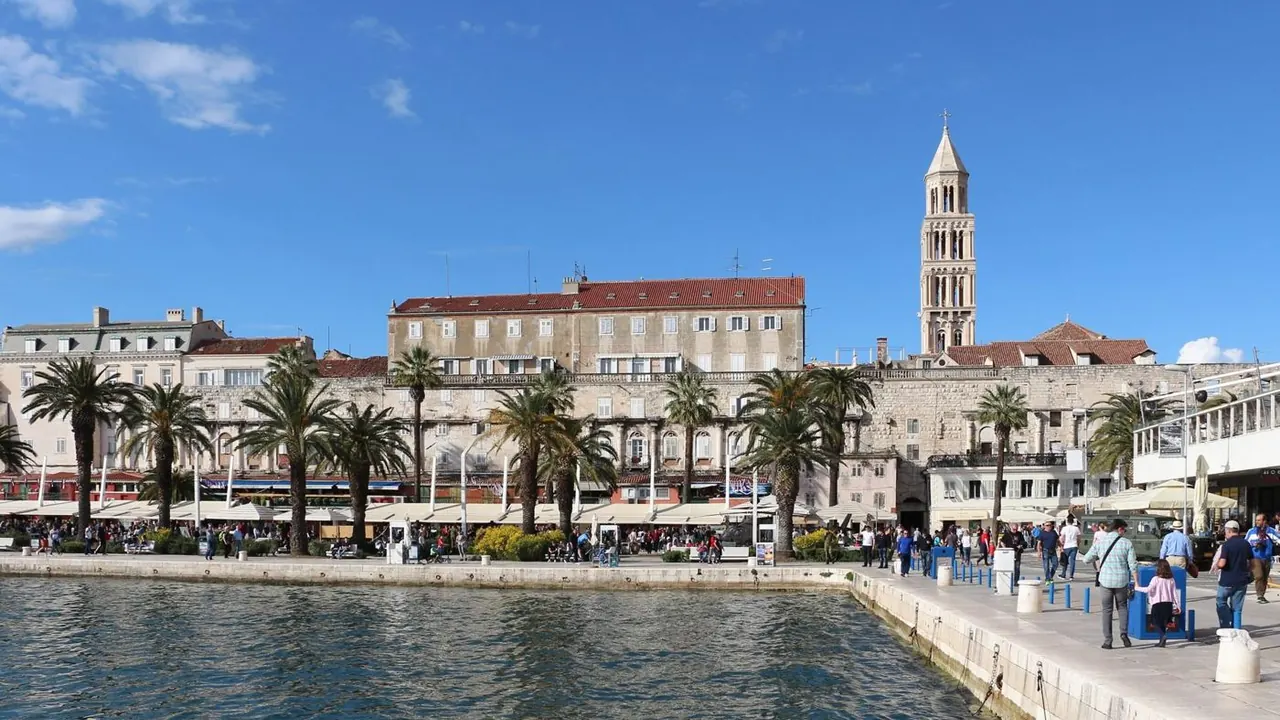
Split has the more remarkable sight. Diocletian's Palace is not a ruin to visit but the old town itself, with medieval houses built into Roman walls, the Peristyle, and a cathedral that began as the emperor's tomb. The Meštrović Gallery adds a fine museum on the slopes of Marjan.
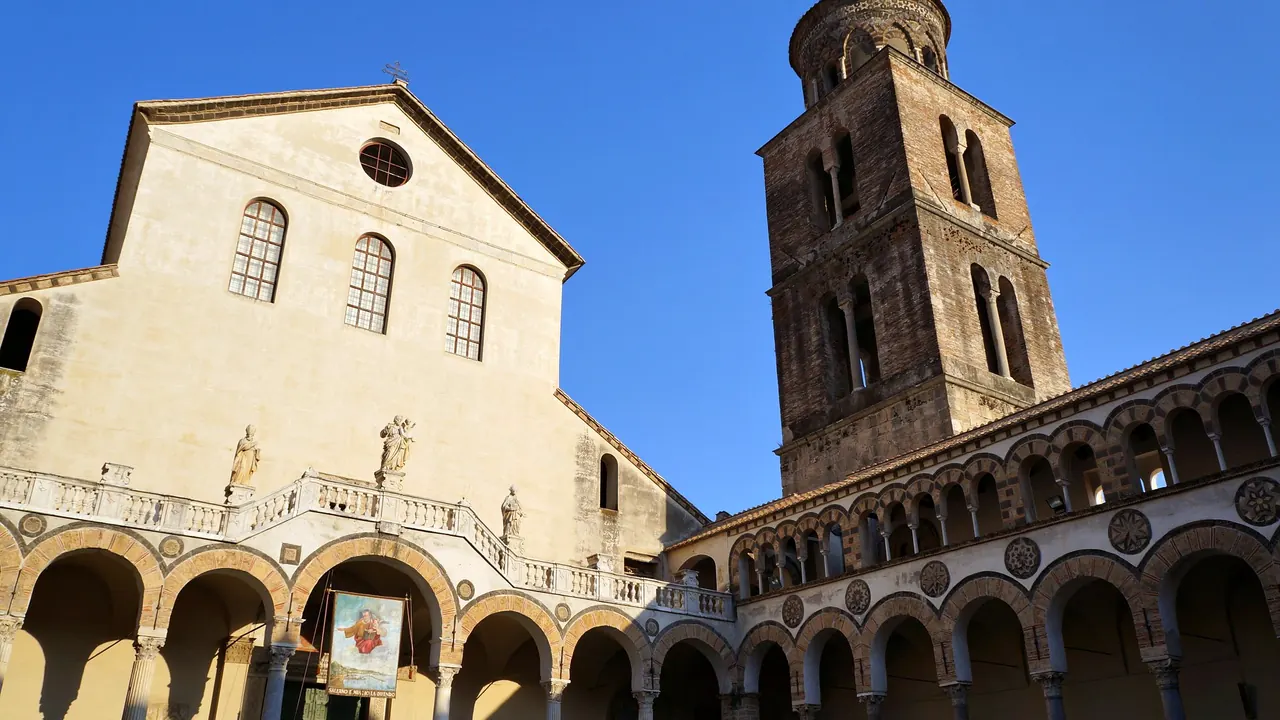
Salerno's heritage is medieval and quieter: a Norman cathedral holding the relics of Saint Matthew, the medicinal Giardino della Minerva tied to Europe's first medical school, and the Arechi Castle above the gulf. It is well worth a day, but the region's great classical sites lie outside the city.
Nightlife
In summer Split offers the fuller night out. Bars fill the palace's stone alleys and stairways until late, and the beach bars and clubs around Bačvice run into the early hours. From October to May, though, it shrinks to a handful of bars.
Salerno's evenings are smaller and more local: young crowds drinking outside wine bars around Largo Campo and Via dei Mercanti, and the passeggiata on the seafront. There is no clubbing to speak of, and a big night means the train to Naples.
Nature & outdoors
Both have superb landscapes, but of different kinds. Salerno's is the Amalfi Coast, with limestone cliffs, terraced lemon groves and old mule tracks such as the Path of the Gods. To the south, the Cilento park offers wooded hills and wild headlands, though most of it requires leaving the city.
Split's outdoors starts closer to town, with Marjan's pine forest a walk from the palace. Further out are ridge hikes on Mosor and Biokovo, rafting and canyoning on the Cetina at Omiš, and Krka's waterfalls. It is also better suited to island sailing.
Day trips
This is where Salerno pulls clearly ahead. Pompeii and the Greek temples of Paestum are each about half an hour away by train, and Naples and Herculaneum are not much further. In season, ferries run to Amalfi and Positano, and Ravello's villas are a short bus ride up the hill from Amalfi. Few bases put so many world-famous places within easy reach, and a week can be filled without repeating a trip.
Split's day trips are good but more spread out. Trogir and Šibenik have UNESCO-listed old towns, Salona and Klis are close by, and the ferries to Hvar, Brač and Vis turn a day out into island-hopping. Out of season, these trips take more planning.
Good for families
Neither city is built around children, and both work in a simple way. Salerno's strength is its long, flat, car-free seafront with playgrounds, the shallow sandy beaches to the south and the Luci d'Artista Christmas lights in winter. The downsides are an old town of steps and carsickness on the Amalfi roads.
Split offers a compact centre, Bačvice for paddling, Marjan for running about in the shade, and a ferry ride that children often love most. Polished stone steps make the palace hard work with a pushchair.
Getting around
Both centres are easy on foot. The difference is how you leave them. Salerno runs on rail, with direct regional trains to Naples, Pompeii and Paestum, plus a short metro line and summer ferries along the coast. The castle needs a bus.
Split's core is a fifteen-minute walk end to end, and the ferry port, bus station and railway station share the harbour. Local buses are basic, so islands and coastal towns are easier to reach than inland trailheads without a car.
Shopping & style
Salerno is the better place for shopping, though neither is a reason to come. Corso Vittorio Emanuele is a long pedestrian street of Italian chains, and the distinctive buys are local: Vietri majolica, limoncello and colatura from Cetara.
Split's palace shops lean heavily towards souvenirs, lavender and ties. The Pazar market by the east gate, with figs, honey, brandies and olive oil, is the most rewarding browse.
Affordability
Salerno is the cheaper stay. It is a working city with prices set for locals, which makes it a sensible base for an expensive coast, with modest rooms, everyday trattorias and inexpensive trains. The costs that add up are summer ferries, lido sunbeds and entry fees at the big archaeological sites.
Split costs noticeably more in July and August. Rooms near the old town and fish sold by weight on the Riva then cost what they would in a large Western European city. In May, June or late September, rooms are much cheaper and the gap with Salerno narrows considerably.
Live music & performing arts
The two are broadly level, with different strengths. Salerno's is the Teatro Verdi, a gilded opera house modelled on the San Carlo with a proper season of opera, concerts and ballet, plus the cliff-top Ravello Festival within reach in summer.
Split's best moments are outdoors and local: the Summer Festival staging opera in the palace's Peristyle, and klapa harmony singing echoing in the domed vestibule. Outside summer its calendar is thin.
Wellness & relaxation
Salerno is the one with real thermal water within reach: the open-air sulphur pools of Contursi Terme, about an hour inland. In town, rest means a sunset walk along the palm-lined promenade and quiet mornings in the upper lanes, away from the traffic of the port roads.
Split has no springs. Its version of rest is fjaka, the local habit of hour-long coffees on the Riva and empty afternoons in Marjan's pine woods. In midsummer the old town stays loud until late, and for real calm you have to go out to an island.
When should you go?
Pick your month. The climate figures are measured averages, not a forecast.
Salerno in July
Split in July
Daytime high, °C
Rainfall in the month, mm
Where the figures come from
Salerno's temperatures are measured 71 km from the centre, at Grazzanise.
Salerno has no rain gauge within 25 km of the centre, so its rainfall comes from a gridded climate dataset read at the city rather than from a gauge further away.
Temperature and rainfall are climate normals, averaged over the years shown. Salerno: 1991-2020 normals, Grazzanise (71.3 km from centre). Split: 1991-2020 normals, Split / Marjan (0.9 km from centre).
The two share a very similar summer. Both reach about 31°C in July and August, which is too hot for long afternoons of sightseeing, and both are at their driest then. The sea is warm enough for easy swimming from June to September. Salerno's water peaks at about 26°C, with Split's a degree or so cooler, and Split gets a little more sunshine through the summer.
The rain is where they part. Salerno turns wet sooner and harder. October already brings about 123mm, and November is the wettest month at about 154mm, so its best walking weather is May and the second half of September. Split's autumn is drier, and October is still a good month for exploring on foot there, though its winter runs a couple of degrees cooler than Salerno's.
Which traveller are you?
On a beach and sun trip, Split is the better choice. You can walk from the old town to a swim at Bačvice or the coves around Marjan in clear water, and the islands are an easy ferry ride away. Salerno's own beaches are grey sand near a working port.
For a trip on a tight budget, Salerno is the better choice. Rooms cost much less than on the Amalfi Coast, trattorias and pizzerias charge local prices, and cheap regional trains reach Pompeii and Paestum. Split in July and August costs about as much as a large Western European city.
On a culture and arts trip, Split's centre is the bigger sight in itself. Diocletian's Palace is a lived-in Roman monument with the cathedral in the emperor's mausoleum. Salerno's medieval cathedral and old town fill a day, and its great ancient sites lie outside the city.
Before you go
| Measure | Salerno | Split |
|---|---|---|
| Official language | Italian | Croatian |
| Currency | Euro (EUR) | Euro (EUR) |
| Sockets | CFL230 V, 50 Hz | CF230 V, 50 Hz |
| Driving side | Right | Right |
| Time zone | UTC+1, UTC+2 in summer | UTC+1, UTC+2 in summer |
| Emergency number | 112 | 112 |
| Elevation | 4 m | 0 m |
| Main airport | Naples International Airport (NAP)46 km from centre131 non-stop destinations | Split Saint Jerome Airport (SPU)12 km from centre69 non-stop destinations |
| Public holidays this year | 13 days | 14 days |
By the numbers
| Measure | Salerno | Split |
|---|---|---|
| City population | 127,186 | 160,577 |
| People per km² | 2,123 | - |
| Museums within 10 km | 9 | 11 |
| UNESCO World Heritage sites within 50 km | 5 | 4 |
| Swim season, months above 21 °C | 5 months | 4 months |
Where else could you go?
Every comparison below shares a destination with this one, so you can follow Salerno or Split somewhere new.