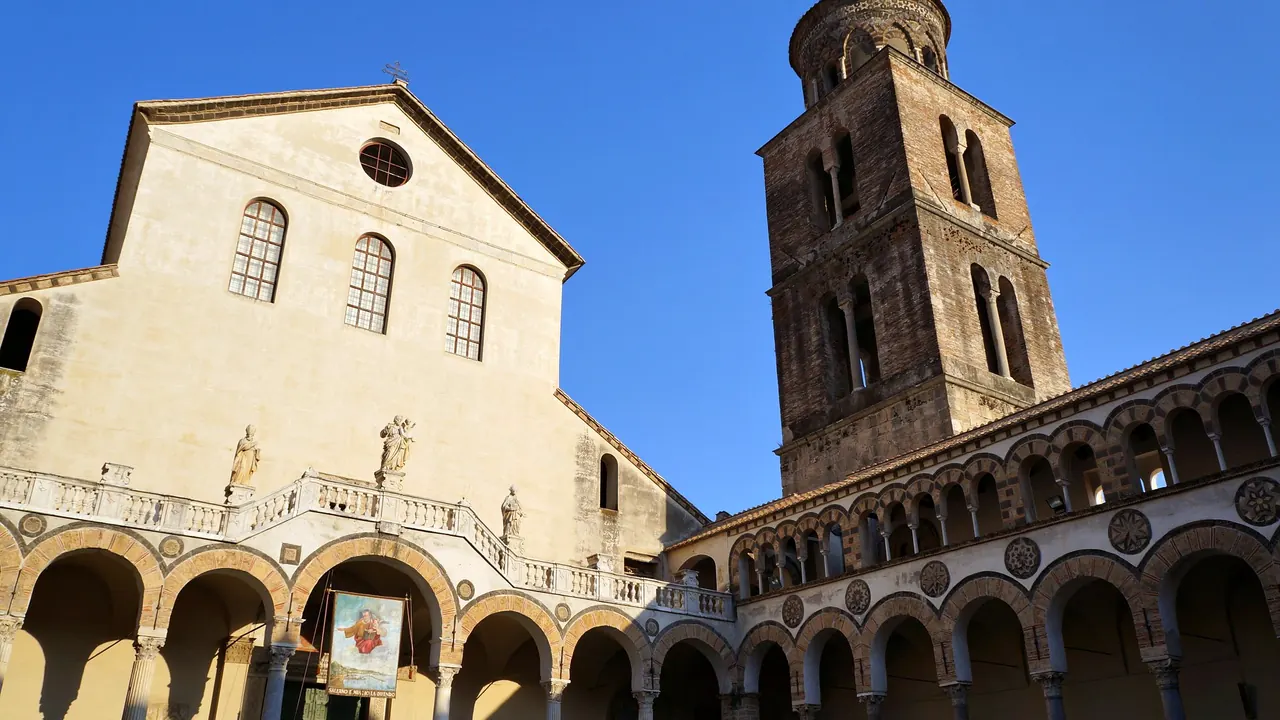
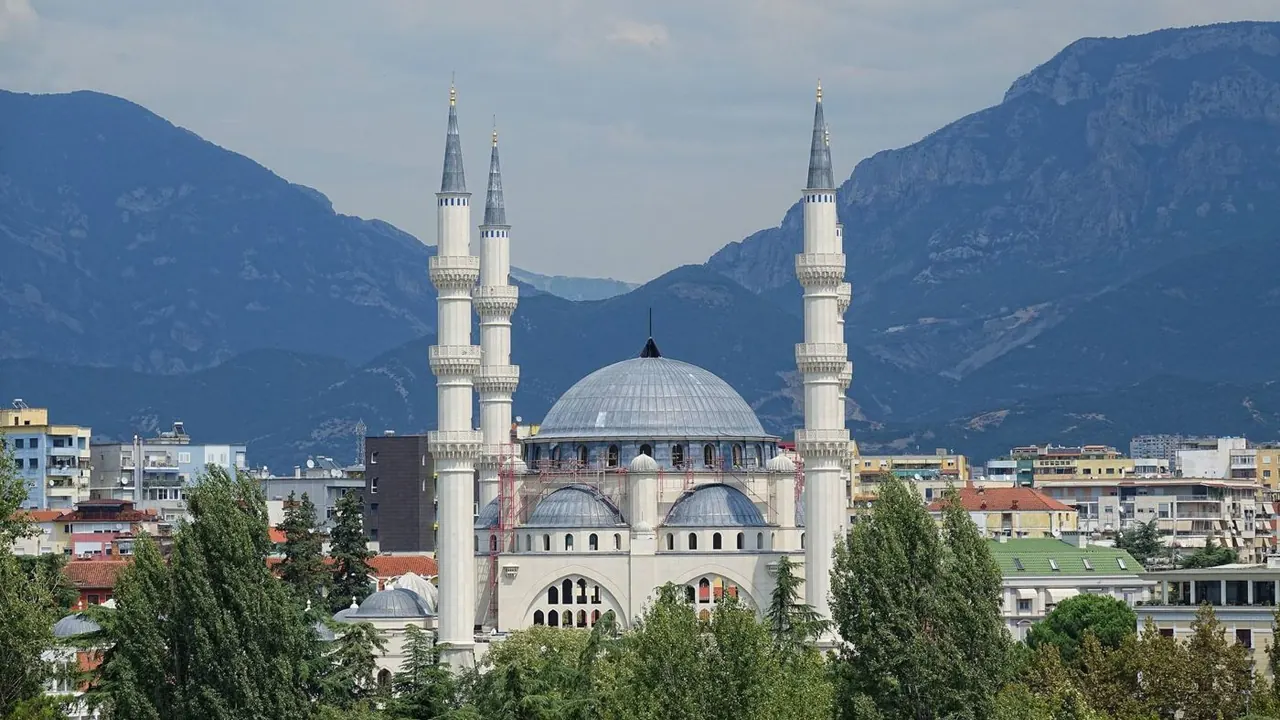
Photos: Salerno by Leandro Neumann Ciuffo, CC BY 2.0, cropped; Tirana by Bjørn Christian Tørrissen, CC BY-SA 4.0, cropped.
Salerno or Tirana?
Our verdict in twelve categories, each scored against the same fixed benchmark cities, and the climate month by month, so you can choose for your trip.
Choose Salerno for
- day trips
- beaches
- nature and the outdoors
Salerno is the better choice for a trip built around the region rather than the city. Paestum and Pompeii are a short train ride away, ferries cross to Amalfi and Positano, and wide sandy beaches and cliff paths are close by. Add Campanian seafood and fresh buffalo mozzarella, and it suits sightseers, families and anyone who wants sea and history in one stay.
Choose Tirana for
- nightlife
- prices
Tirana makes more sense if money matters and you want lively evenings. It is the cheaper place to spend a week, Blloku's terraces and bars stay full long after midnight, and its communist-era bunkers and the House of Leaves tell a story no Italian city can. The sea is a side trip, so come for the city, Mount Dajti and days out to Berat and Kruja.
Scoreboard
Twelve categories on one fixed scale from 0 to 100. The shaded stretch is the gap between the two.
Your match
Pick a travel style or drag the sliders, and both match scores follow your weighting.
Wins on day trips and beaches with your weighting.
Wins on nightlife and prices with your weighting.
What matters to you?
Category by category
What the scores mean for a trip.
Beaches & swimming
Salerno lives by the sea. Its grey-sand city beaches are fine for a quick dip, and the better swimming is close at hand: kilometres of wide sand and pine woods towards Paestum, or the bright pebbly coves of Cetara and the Amalfi Coast by ferry.
Tirana is inland, so a swim means the trip to Durrës, under an hour away. There you get a long, shallow sandy beach lined with hotels and packed on summer weekends. Albania's famous clear coves around Ksamil are a separate journey of many hours.
Food & drink
Salerno has the edge because its best ingredients come from right next door. Mozzarella from the buffalo farms near Paestum is eaten the day it is made, colatura comes from Cetara, and the city's tables are full of fried seafood, clams and sfogliatelle.
Tirana's cooking is earthier and rooted in the farm: tavë kosi, fërgesë, morning byrek and grilled meat. Its best meals are often at farm restaurants in the hills outside the city. It is satisfying and honest, but there is less variety, and long terrace coffees and raki matter as much as the food.
Culture & sights
Each city's own sights fill a day or two, but they come from very different centuries. Salerno is medieval. Its Norman cathedral holds Saint Matthew's relics in the crypt, the Giardino della Minerva recalls Europe's first medical school, and the Lombard castle looks down on stepped lanes that keep their old fabric.
Tirana's story is the twentieth century. Bunk'Art and the House of Leaves bring the communist years vividly to life, and Skanderbeg Square, the Et'hem Bey Mosque and the Pyramid frame the centre. Salerno's old town has more historic texture to wander, which gives it a slight lead.
Nightlife
Tirana is the livelier place after dark. Blloku, once sealed off for the communist elite, is a grid of cocktail bars, lounge terraces and small clubs where dinner starts late and the streets stay full past midnight. Bigger clubs by the Grand Park lake carry on later still, and dressing up is part of the evening.
Salerno's evenings are gentler. Young locals gather outside wine bars in the lanes around Largo Campo and Via dei Mercanti, and the seafront fills with people strolling with gelato. For real clubbing you go to Naples or to the summer venues along the coast.
Nature & outdoors
Salerno has one of Europe's great coastlines on its doorstep. Limestone cliffs, lemon terraces and mule tracks such as the Path of the Gods and the Valle delle Ferriere lie just to the west, and the wild Cilento park lies to the south. Boat trips and kayaking add a sea-level view.
Tirana's strength is how close its mountain is. The Dajti cable car rises from the city's edge into beech and pine forest, and Bovilla's turquoise reservoir and the Gamti trails are within an hour. The Albanian Alps, though, need several days.
Day trips
This is where the two differ most. From Salerno, Paestum's Greek temples and Pompeii are each about half an hour by train, ferries reach Amalfi and Positano, and Naples, Herculaneum, Ravello and Caserta are all easy outings without a car.
Tirana has fine destinations around it, from Skanderbeg's castle at Kruja to Ottoman Berat and the ruins of Apollonia. Most of them are around two hours away by road, though, and you need a minibus, a tour or a hire car. Each one takes a full day, and you will fit fewer into a week.
Good for families
Salerno is easier with children. The flat, car-free seafront has playgrounds and gardens, the sandy beaches to the south are shallow, and in winter the Luci d'Artista light displays are a treat. The steep old town and winding Amalfi roads are the drawbacks.
In Tirana, families tend to stick to the Grand Park, the Dajti cable car and the open space of Skanderbeg Square. Beyond those there is a small zoo and a beach an hour away. Heavy traffic and broken pavements make pushing a buggy hard work.
Getting around
Both centres are walkable. Salerno has the better links beyond that: a strip from the station to the old town that you can cover on foot, regional trains straight to Pompeii and Paestum, and summer ferries along the coast that avoid the crowded roads.
Tirana's flat centre puts Blloku, the square and the market within twenty minutes' walk. But there is no metro or tram, buses are hard to work out, and taxis are the usual way to Bunk'Art or the cable car. Assertive drivers make crossing wide roads a matter of care.
Shopping & style
Salerno offers a bit more, mainly because of what is made nearby. It has a long pedestrian high street, painted majolica from Vietri, limoncello from the coast and colatura from Cetara. Naples is close for anything bigger.
In Tirana, the market stalls around Pazari i Ri are the main attraction, selling cheese, honey, raki and herbs. Felt hats and filigree silver can be found there and in Kruja's bazaar. The rest is malls and chain stores.
Affordability
Tirana is the cheaper stay by a clear margin. Everyday meals, coffee, local wine, taxis and museum tickets cost very little, and central mid-range hotels are good value. Even the smarter Blloku cocktail bars are modest by European standards.
Salerno is good value for its area, since rooms cost far less than in the cliff villages along the coast. In high summer, though, ferry fares, lido sunbeds and entry to the big archaeological sites mount up.
Live music & performing arts
Each city has a single main stage for opera, but Salerno offers more around it. The gilded Teatro Verdi runs a season of opera, ballet and concerts that draws audiences from across the region. In summer, the Ravello Festival's concerts on terraces above the sea make a memorable evening, and Naples is close by.
Tirana's National Theatre of Opera and Ballet on Skanderbeg Square makes for an easy night out. Plays are in Albanian, though, and the country's UNESCO-listed iso-polyphonic singing is rarely performed in the capital.
Wellness & relaxation
Neither city is a spa destination. Both have sulphur springs about an hour away, Contursi Terme for Salerno and the plainer Llixha for Tirana. In both cities, treatments mean a hotel spa.
What makes Salerno a little more restful is the sea itself, with a palm-lined promenade for slow walks at sunset. Tirana's calm comes from long coffees on terraces and the evening stroll, but traffic noise fills the centre, and you need the Grand Park or Dajti's forest to escape it.
When should you go?
Pick your month. The climate figures are measured averages, not a forecast.
Salerno in July
Tirana in July
Daytime high, °C
Rainfall in the month, mm
Where the figures come from
Salerno's temperatures are measured 71 km from the centre, at Grazzanise.
Salerno has no rain gauge within 25 km of the centre, so its rainfall comes from a gridded climate dataset read at the city rather than from a gauge further away.
Temperature and rainfall are climate normals, averaged over the years shown. Salerno: 1991-2020 normals, Grazzanise (71.3 km from centre). Tirana: 1961-1990 normals, Tirana (3 km from centre).
The two cities share almost the same temperatures through the year. Both reach about 31°C in July and August, which is too hot for long sightseeing on foot, and both are at their best for walking in May, late September and October. The difference is the rain. Salerno has a properly dry summer, with around 30mm a month from June to August, while Tirana stays showery for longer and its summer is less reliable early on. From October both turn wet, and Tirana's November, at about 172mm, is the soggiest month either city has.
For swimming, Salerno's sea is warm enough from June to September and peaks at about 26°C in August. The Adriatic off Durrës, Tirana's nearest coast, follows much the same curve. Tirana actually gets a little more summer sunshine, but its winter is greyer, with noticeably darker Decembers than Salerno.
Which traveller are you?
On a beach and sun trip, Salerno wins easily. It sits on the sea, with long sandy lidos towards Paestum and clear Amalfi coves a ferry ride away. From Tirana the beach means a crowded day at Durrës.
For a culture and arts trip, Salerno is the stronger base. Its Norman cathedral and the Teatro Verdi are in town, and Pompeii and Paestum are close by train. Tirana's Cold War sites are gripping, but the city's own heritage runs out quickly.
On a trip on a tight budget, Tirana goes further. Meals, raki, taxis and museum tickets cost very little, and central hotels are good value. In summer, Salerno's ferries, lido sunbeds and archaeological site fees add up.
Before you go
| Measure | Salerno | Tirana |
|---|---|---|
| Official language | Italian | Albanian |
| Currency | Euro (EUR) | Lek (ALL) |
| Sockets | CFL230 V, 50 Hz | CF220 V, 50 Hz |
| Driving side | Right | Right |
| Time zone | UTC+1, UTC+2 in summer | UTC+1, UTC+2 in summer |
| Emergency number | 112 | 112 |
| Elevation | 4 m | 110 m |
| Main airport | Naples International Airport (NAP)46 km from centre131 non-stop destinations | Tirana International Airport Mother Teresa (TIA)13 km from centre121 non-stop destinations |
| Public holidays this year | 13 days | 14 days |
By the numbers
| Measure | Salerno | Tirana |
|---|---|---|
| City population | 127,186 | 389,323 |
| People per km² | 2,123 | 9,314 |
| Museums within 10 km | 9 | 11 |
| UNESCO World Heritage sites within 50 km | 5 | 0 |
| Swim season, months above 21 °C | 5 months | 5 months |
Where else could you go?
Every comparison below shares a destination with this one, so you can follow Salerno or Tirana somewhere new.