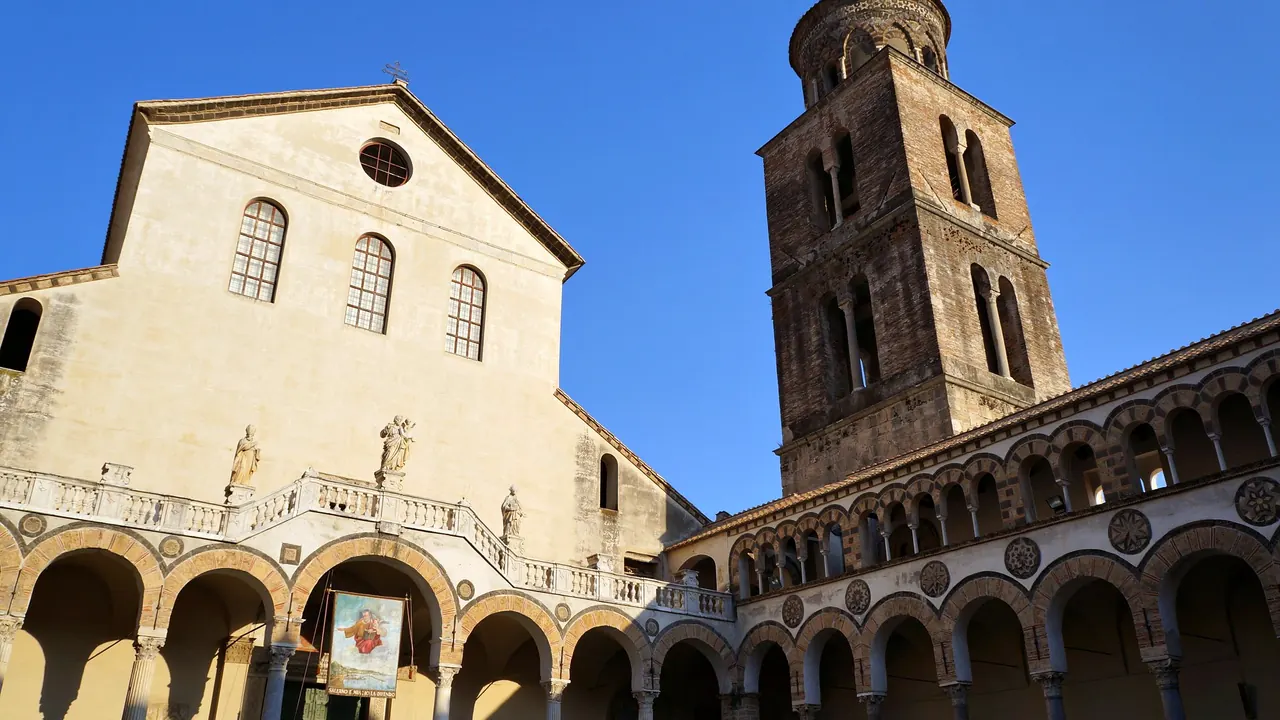
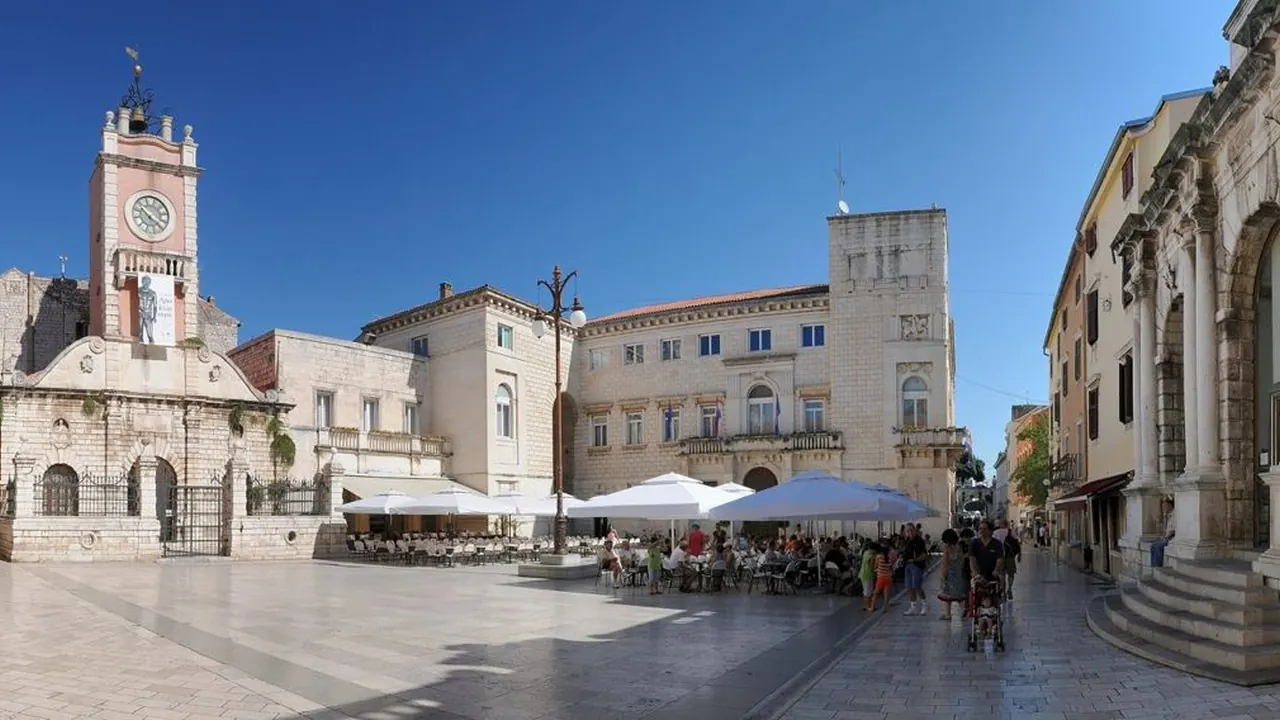
Photos: Salerno by Leandro Neumann Ciuffo, CC BY 2.0, cropped; Zadar by Böhringer Friedrich, CC BY-SA 2.5, cropped.
Salerno or Zadar?
Our verdict in twelve categories, each scored against the same fixed benchmark cities, and the climate month by month, so you can choose for your trip.
Choose Salerno for
- day trips
- food and drink
- shopping
Salerno suits travellers who want to see a great deal of southern Italy from one sensible base. Pompeii, Paestum, the Amalfi Coast and Naples are all a train or ferry ride away, and the city itself rewards you with excellent everyday Campanian food, an opera house and lower prices than the cliff villages nearby. It is the better pick for a sightseeing-heavy trip where the evenings are spent eating well.
Choose Zadar for
- beaches
- culture and sights
- nature and the outdoors
Zadar is the better choice for a sea-focused summer. You can swim in clear water straight off the old town's promenade, catch island ferries from the harbour edge, and reach Paklenica, Kornati and Krka for hiking, sailing and waterfalls. Its compact walled peninsula, with Roman ruins and the Sea Organ, is easy to explore in a couple of days, and it suits people who are happy with simple Dalmatian food and a slow pace.
Scoreboard
Twelve categories on one fixed scale from 0 to 100. The shaded stretch is the gap between the two.
Your match
Pick a travel style or drag the sliders, and both match scores follow your weighting.
Wins on day trips and food and drink with your weighting.
Wins on beaches and culture and sights with your weighting.
What matters to you?
Category by category
What the scores mean for a trip.
Beaches & swimming
Zadar is the better place to swim. The water along its riviera is clear enough that locals dive in from the promenade on the peninsula's western side, and Kolovare and Borik are within easy reach. Both are pebble or concrete platforms rather than sand. Salerno's city beaches are grey sand, but the water near the port is not as clean, so they are better for a quick dip than a long swim.
In both cities the best beaches are a short trip out of town. From Salerno that means the long lido-lined sands towards Paestum or the bright pebble coves of the Amalfi Coast. From Zadar it means Nin's shallow sandy bays or a ferry to the islands.
Food & drink
Salerno eats far better. It sits among some of Italy's best produce: buffalo mozzarella made that morning on the plain towards Paestum, colatura from Cetara and Amalfi lemons. The old town has friggitorie and trattorias serving fried seafood and pasta with clams, and pastry shops selling sfogliatelle.
Zadar's Dalmatian cooking is good on its own terms, with grilled fish, peka-cooked octopus or lamb, and Pag cheese with pršut. Most konobas serve much the same menu, though. Its own speciality is Maraschino liqueur, and the morning market by the walls is the best food experience in town.
Culture & sights
Zadar packs more into a short walk. On its walled peninsula, the open Roman forum, the round ninth-century St Donatus and the Venetian gates are all within a few minutes of each other, and the Museum of Ancient Glass is worth a visit. The Sea Organ adds a modern sight that people remember.
Salerno's heritage is medieval and more scattered. The Norman cathedral, with Saint Matthew's crypt, is the highlight, followed by the Minerva garden with its links to Europe's first medical school and the Arechi Castle high above the gulf. The great ancient sites of the region are outside the city.
Nightlife
Neither city is a clubbing destination, and evenings out are similar in scale. The difference is the season. Salerno's old town lanes around Largo Campo and Via dei Mercanti fill with young locals on weekend nights all year, and Naples is close for a bigger night out.
Zadar's evenings belong to summer. They start at sunset by the Sea Organ and move on to café-bars on Kalelarga and terraces on the walls. Clubbers go to Zrće on Pag in high summer, and from October to May the town is quiet.
Nature & outdoors
Both are strong outdoor bases, but they offer different landscapes. From Salerno you walk the Amalfi Coast's limestone cliffs on old mule tracks such as the Path of the Gods, with lemon terraces below you, or go south into the wooded Cilento hills.
Zadar has more of the sea and wilder ground. You can sail through the bare Kornati islands, climb rock in Paklenica's gorges, see the waterfalls at Krka, and on a longer day reach Plitvice. It gives Zadar a slight edge for active travellers.
Day trips
This is where Salerno is strongest. The temples at Paestum and the ruins of Pompeii are each about half an hour away by train, ferries cross to Amalfi and Positano, and Naples, Herculaneum and Caserta are easy days out. You could fill a week without ever repeating a type of outing.
Zadar has good outings too. Šibenik's cathedral and Nin's tiny royal church are the best of them, but Split and Trogir make long days, and most trips work best with a car or an organised excursion.
Good for families
Both work well with children, and in neither city is there a zoo or theme park. Zadar's old town is flat and car-free, which is easier with a pushchair than Salerno's stepped lanes. Children also love the Sea Organ and the tiles of the Greeting to the Sun, which light up after dark.
Salerno makes up for its steep old town with its long seafront promenade and playgrounds, and its winter Christmas lights give families a reason to come out of season. Shallow sandy water is a short trip away in both, south of Salerno and at Nin near Zadar.
Getting around
Salerno is easier to travel out of. Its central strip is walkable end to end, and direct regional trains to Naples, Pompeii and Paestum make it easy to explore without a car. In summer, ferries are the sensible way along the Amalfi Coast.
Zadar's flat peninsula takes a quarter of an hour to cross, and island ferries leave from its edge. For the national parks and other towns, though, the regional buses are of little use, and a hire car or tour becomes almost necessary.
Shopping & style
Salerno offers more. Corso Vittorio Emanuele is a long pedestrian street of Italian chains that fills up at passeggiata time. Vietri's hand-painted majolica is just outside town, and Naples is close for a bigger shopping day.
Zadar's shopping goes little beyond Kalelarga's jewellers and souvenir shops. Its best buys are food and craft: Maraschino, Pag cheese and Pag lace, ideally browsed at the market by the walls.
Affordability
Salerno is the cheaper stay. As a working southern Italian city, its trattorias, coffee bars and trains charge local prices, and its rooms cost far less than on the Amalfi Coast it serves as a base for.
Zadar is closer to mid-range Western European prices, though cheaper than the towns further south in Dalmatia. Private apartments are good value outside July and August. In both cities, entry to the big sites, parks and boat trips adds up quickly.
Live music & performing arts
Salerno has a real season. The gilded Teatro Verdi stages opera, concerts and ballet, and in summer the Ravello Festival's cliff-top concerts are an evening's trip away.
Zadar's highlight is the Musical Evenings in St Donatus, chamber and early music in a ninth-century church, along with klapa singing in summer squares. It is memorable, but outside July and August there is little on.
Wellness & relaxation
Neither city has a spa culture, and both rely on hotel spas and an unhurried pace. Salerno has genuine thermal water at Contursi Terme, an hour inland, but its main roads carry port traffic and noise.
Zadar is quieter in itself. Unwinding there means the mineral mud lagoon at Nin and watching the sun go down from the Sea Organ steps, best in the calmer months either side of high summer.
When should you go?
Pick your month. The climate figures are measured averages, not a forecast.
Salerno in July
Zadar in July
Daytime high, °C
Rainfall in the month, mm
Where the figures come from
Salerno's temperatures are measured 71 km from the centre, at Grazzanise.
Salerno has no rain gauge within 25 km of the centre, so its rainfall comes from a gridded climate dataset read at the city rather than from a gauge further away.
Zadar has no rain gauge within 25 km of the centre, so its rainfall comes from a gridded climate dataset read at the city rather than from a gauge further away.
Temperature and rainfall are climate normals, averaged over the years shown. Salerno: 1991-2020 normals, Grazzanise (71.3 km from centre). Zadar: 1999-2020 (rainfall 1991-2020) normals, Zadar / Zemunik (9.9 km from centre).
Salerno and Zadar share almost the same summer, with daytime highs of about 31°C in July and August. That is good beach weather, but hot for walking the streets at midday. Swimming is comfortable in both from June to September. Salerno's sea is a little warmer, reaching about 26°C in August, and stays pleasant for longer into October. Salerno's summers are also long and very sunny. In either city, May and late September are the most comfortable months for sightseeing and hiking.
The two differ most in the cooler half of the year. Salerno stays a few degrees milder in winter, but from October to February it is the wetter city by a clear margin, and November is its rainiest month at about 154mm. Zadar is colder, with January highs near 10°C. Its rain starts sooner, with around 100mm already falling in September, and it peaks in November. Zadar's winter and early spring are noticeably drier than Salerno's, so April is an easier month there for a walking trip.
Which traveller are you?
On a beach and sun trip, Zadar is the better pick. The clear water starts right at the old town's stone edge, and ferries to Ugljan, Pašman and Sakarun's pale sand make each day by the sea different. In Salerno, good swimming nearly always means leaving town first.
For a food and nightlife trip, choose Salerno. Fresh buffalo mozzarella, Cetara's colatura, wood-fired pizza and lemon pastries are far more varied than Zadar's repeated konoba menus, and the lanes around Largo Campo fill with drinkers all year, not just in high summer.
On a trip on a tight budget, Salerno stretches your money further. Its trattorias and bakeries charge local prices, and cheap regional trains reach Pompeii and Paestum without a hire car. In Zadar, prices are closer to Western Europe's, and park fees and boat trips soon mount up.
Before you go
| Measure | Salerno | Zadar |
|---|---|---|
| Official language | Italian | Croatian |
| Currency | Euro (EUR) | Euro (EUR) |
| Sockets | CFL230 V, 50 Hz | CF230 V, 50 Hz |
| Driving side | Right | Right |
| Time zone | UTC+1, UTC+2 in summer | UTC+1, UTC+2 in summer |
| Emergency number | 112 | 112 |
| Elevation | 4 m | 5 m |
| Main airport | Naples International Airport (NAP)46 km from centre131 non-stop destinations | Zadar Airport (ZAD)10 km from centre66 non-stop destinations |
| Public holidays this year | 13 days | 14 days |
By the numbers
| Measure | Salerno | Zadar |
|---|---|---|
| City population | 127,186 | 70,779 |
| People per km² | 2,123 | - |
| Museums within 10 km | 9 | 1 |
| UNESCO World Heritage sites within 50 km | 5 | 2 |
| Swim season, months above 21 °C | 5 months | 4 months |
Where else could you go?
Every comparison below shares a destination with this one, so you can follow Salerno or Zadar somewhere new.