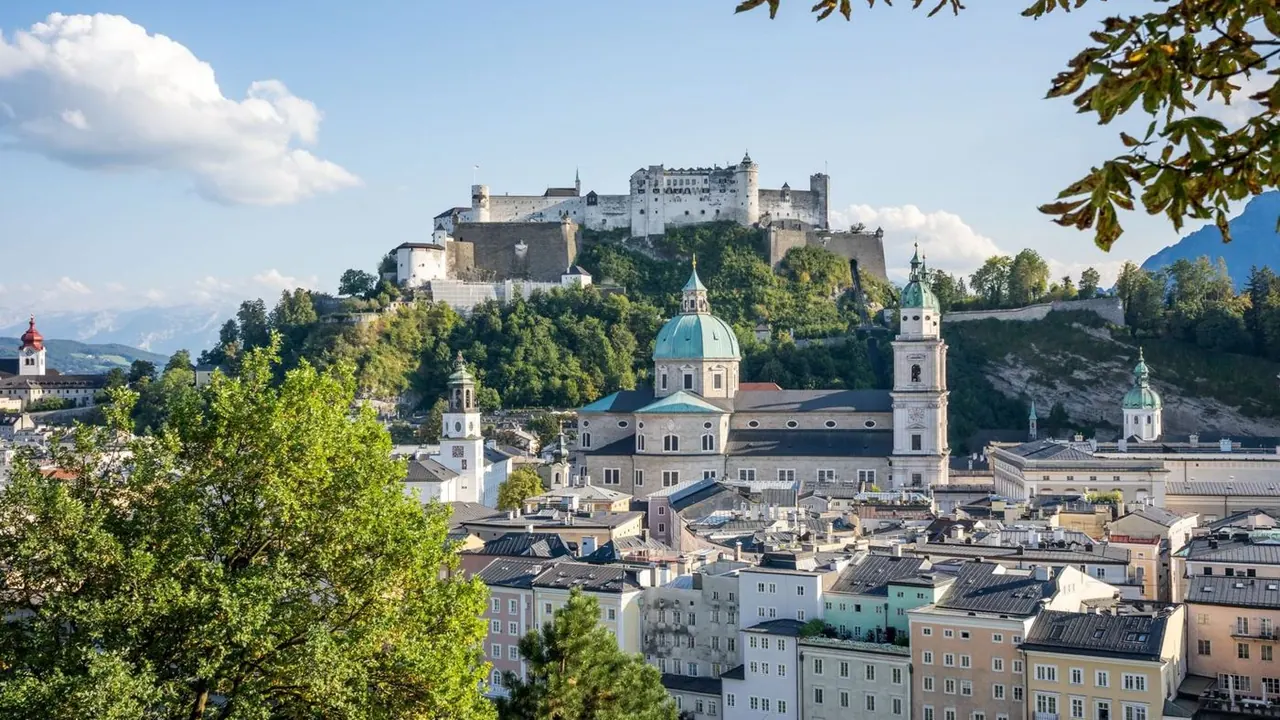
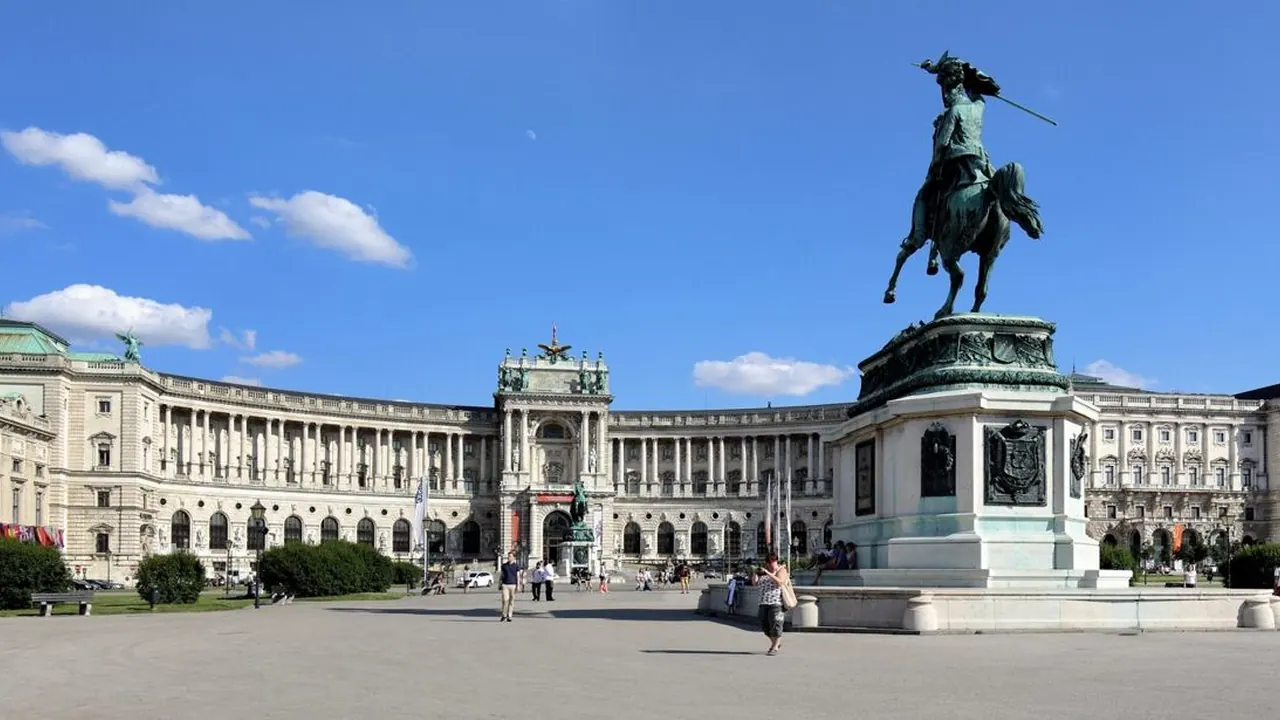
Photos: Salzburg by Leonhard Niederwimmer, Pexels License; Vienna by C.Stadler/Bwag, CC BY-SA 3.0 AT, cropped.
Salzburg or Vienna?
Our verdict in twelve categories, each scored against the same fixed benchmark cities, and the climate month by month, so you can choose for your trip.
Choose Salzburg for
- nature and the outdoors
- beaches
- day trips
Salzburg suits travellers who want the Alps at the door and a small Baroque town to come back to in the evening. The old town, the fortress and the Mozart houses take two or three unhurried days. After that, the trip moves outdoors: cable cars up the Untersberg, swims in the Salzkammergut lakes, Hallstatt and the salt mines. It also suits anyone planning around the summer festival.
Choose Vienna for
- nightlife
- food and drink
- getting around
Vienna is the better choice for a longer stay built on museums, music and eating well. A week goes easily between the Habsburg palaces, Bruegel and Klimt, an opera most nights of the year and wine taverns on the city's own vineyard slopes. It is also easier on families, on evenings out and on the budget, and you get around entirely by U-Bahn and tram.
Scoreboard
Twelve categories on one fixed scale from 0 to 100. The shaded stretch is the gap between the two.
Your match
Pick a travel style or drag the sliders, and both match scores follow your weighting.
Wins on nature and the outdoors and beaches with your weighting.
Wins on nightlife and food and drink with your weighting.
What matters to you?
Category by category
What the scores mean for a trip.
Beaches & swimming
Neither city has sand or sea, but Salzburg has the better swimming. Fuschlsee, Wolfgangsee and Mondsee are clear, green mountain lakes where you get in from jetties, lawns and small pebble shores, with steep hills all around. The catch is that they lie half an hour or more out of town.
Vienna's bathing is less scenic but much closer. You can take the U-Bahn after work to the gravel banks of the Danube Island or the old lidos on the calmer Alte Donau. In both cities the swimming season is the same short stretch of summer.
Food & drink
Both cities serve schnitzel, Tafelspitz and dumplings, but Vienna has more to eat and drink. Its pastry tradition and grand coffee houses are a ritual of their own. Wine is grown inside the city limits, and the Heuriger taverns in Grinzing and Nussdorf pour it beside a cold buffet. Add the Naschmarkt stalls and the late-night sausage stands, and several days of eating never feel repetitive.
Salzburg's strengths are narrower: coffee and cake, the Salzburger Nockerl, and the Augustiner monastery brewery in Mülln, where you can bring your own food into the chestnut garden. Many old-town restaurants serve the same menus to tour groups, so the better meals are in the inns of the outer districts and on the hills.
Culture & sights
Vienna was an imperial capital, and it shows. You get the Hofburg and the Treasury, Schönbrunn with its gardens rising to the Gloriette, and the Ringstrasse's grand public buildings. The museums are among Europe's best: Bruegel at the Kunsthistorisches, Klimt at the Belvedere, Schiele at the Leopold. Jugendstil and Otto Wagner add a second great era, and all of it easily fills a week.
Salzburg is smaller and more of a piece. The prince-archbishops' Baroque cathedral, the Residenz and the arcaded squares sit below the Hohensalzburg fortress, with the Mozart houses and the catacombs of St Peter close by. It is a lovely ensemble that you can see properly in two or three days.
Nightlife
Vienna is the place for a night out. The bars and small clubs under the Gürtel railway arches stay open late, the Bermuda Triangle is the old-town drinking quarter, and in summer deckchair bars line the Danube Canal. In winter you can buy tickets to one of the formal balls held in palaces and grand halls.
A Salzburg evening is usually a concert, dinner and a litre mug at a long table in a beer hall, and the old town is quiet by midnight. Rudolfskai has student pubs during term, but anyone wanting clubs takes the train to Munich.
Nature & outdoors
Salzburg has real mountains on its doorstep. Wooded ridges rise inside the centre itself, a cable car climbs the Untersberg to about 1,800m, and the Gaisberg is used for hiking and paragliding. The Salzkammergut lakes are good for sailing and paddling, and Berchtesgaden National Park and the Königssee lie just over the border.
Vienna's green spaces are gentler. The beech-covered Vienna Woods, vineyard trails up to the Kahlenberg, the Prater meadows and the floodplain forest of the Donau-Auen are pleasant for walks and flat cycling. For proper alpine terrain, though, you have to travel about 90 minutes to the Rax and Schneeberg.
Day trips
Both cities have plenty of good day trips, with Salzburg slightly ahead, and the trips are different in character. From Salzburg the outings are about scenery and salt. Hallstatt sits on its lakeshore below a prehistoric mine, Hallein lets you go down into the mine itself, and there are the fortress at Werfen and the lake villages of St Wolfgang and St Gilgen. Munich is also an easy rail trip, but a car helps with the lakes.
Vienna's day trips lean towards history and wine, and all of them work by train or boat. You can sail down the Danube to Bratislava, see Melk abbey and Dürnstein in the Wachau, visit Haydn's Eisenstadt or spend a slow day in the wine villages of the Neusiedler See. Each city is too far from the other for a comfortable day out.
Good for families
Salzburg has only a few family sights, but they stick in the memory. Children usually love the trick fountains at Hellbrunn, which soak visitors without warning. The marionette theatre, Haus der Natur and the funicular up to the fortress fill out the rest of a short stay. Further out, the salt mines have wooden miners' slides and boat rides on underground lakes. There is no theme park, though, and two or three days covers it all.
Vienna can keep children busy for a week. The dinosaurs and meteorites at the Natural History Museum and the hands-on Technical Museum mean a wet day is never wasted. Schönbrunn's grounds add a maze, every district has parks and playgrounds, and in summer the Danube Island makes an easy swimming outing. Only the formal coffee houses and long concerts ask more patience than small children have.
Getting around
Vienna is easier, because one ticket covers five U-Bahn lines, a dense tram network and buses. The U-Bahn runs all night at weekends, and transport reaches everything from Schönbrunn to the vineyard villages. You will never want a car.
Salzburg's centre is small enough that you hardly need transport. The main sights are all within about fifteen minutes' walk of each other, and trolleybuses cover the rest. Once you head for the lake villages, though, the regional buses are slow, which is why so many visitors hire a car for that part of the trip.
Shopping & style
Vienna has the wider choice. The Kohlmarkt and Graben carry the international luxury houses, Mariahilfer Strasse is where locals buy everyday fashion, and the side streets of Neubau have independent designers. Augarten porcelain and fine glassware are the gifts to take home.
Salzburg's shopping is narrower but has a clear speciality in Tracht. Workshops around the old town make dirndls and loden jackets to measure, and they share Getreidegasse's wrought-iron guild signs with chain stores and souvenir shops. The Advent market on Domplatz and the farmers' market by the Andräkirche are the other highlights.
Affordability
Neither city is cheap, but Vienna is easier on the wallet. Hotels are reasonable for a capital outside the ball and Christmas market weeks, and set lunches, sausage stands and Heuriger buffets keep everyday meals affordable. Palace gardens and many churches are free, and opera standing places cost little.
Salzburg costs a lot for a town its size, and the summer festival and Advent make rooms and restaurant tables scarce as well as dearer. The usual ways to save are staying across the river or in the suburbs, eating at the outer-district inns and buying a city card.
Live music & performing arts
Vienna has music every night of the year. The State Opera stages a different work on most evenings, with standing places that anyone can afford. The Vienna Philharmonic plays in the Golden Hall of the Musikverein, the Burgtheater is one of the great German-language stages, and the Boys' Choir sings Sunday Mass in the Hofburg chapel.
Salzburg's music is concentrated into its festivals. In summer you can hear opera in the Felsenreitschule, a riding school carved into the cliff, and see Jedermann performed in front of the cathedral, alongside performers of the first rank. Mozart Week and the Easter Festival add two more seasons. Tickets need booking well ahead, and between festivals the city settles into Mozarteum concerts and chamber recitals for visitors.
Wellness & relaxation
Salzburg's warm water is all outside the city. Bad Reichenhall, twenty minutes across the German border, built its spa on salt-water brine. The Gastein valley, an hour and a half south, has radon springs and Belle Époque spa hotels, and the hotels by the Salzkammergut lakes offer saunas and spa stays. In town there is the Paracelsus Bad, whose pool looks out on the Kapuzinerberg, and the woods of the Mönchsberg go quiet once the day-trippers leave.
Vienna has springs inside its own limits. Therme Wien in Oberlaa is a large complex of thermal pools, the Amalienbad has an ornate Art Deco sauna hall, and Baden's sulphur baths, in use since Roman times, are half an hour away. Rest here is more a matter of city habits: a long coffee-house afternoon, a walk through the palace gardens, an evening at a vineyard tavern.
When should you go?
Pick your month. The climate figures are measured averages, not a forecast.
Salzburg in July
Vienna in July
Daytime high, °C
Rainfall in the month, mm
Temperature and rainfall are climate normals, averaged over the years shown. Salzburg: 1991-2020 normals, Salzburg (3.4 km from centre). Vienna: 1991-2020 normals, Wien / Hohe Warte (4.7 km from centre).
Salzburg is warmest from June to August, with highs around 25°C. This is the window for swimming in the Salzkammergut lakes, but it is also the wettest part of the year. Heavy rain runs from May right through August, with about 168mm in June. For mountain walks and long days on foot, April, September and early October are better: mild, noticeably drier than midsummer and still warm enough for the ridges. From December to February highs sit around 3°C, and snow often reaches the town.
Vienna follows the same broad calendar but runs a little warmer, about 27°C in July and August, and is much drier, with no month much above 80mm of rain. It also gets clearly more sunshine through the summer, so the Danube bathing season is more reliable, and the city never gets too hot for walking. April to June and September are the most comfortable months for the streets. Winter is as cold as Salzburg's, but grey rather than snowy.
Which traveller are you?
On an outdoors trip, Salzburg is the clear pick. Limestone ridge walks from the Untersberg cable car, paragliding off the Gaisberg, Berchtesgaden and the Königssee half an hour away and ski areas within an hour's drive all beat the gentle Vienna Woods.
For a food and nightlife trip, Vienna wins. It has Beisl taverns, Heuriger wine gardens inside the city and late sausage stands, then bars under the Gürtel arches and on the Danube Canal. Salzburg's evenings tend to end in a beer hall well before midnight.
On a family trip with children, Vienna offers more and is easier to handle. There are Schönbrunn Zoo, the Prater rides, the shark tanks at Haus des Meeres and the ZOOM children's museum, and the trams take prams. Salzburg's cobbled lanes are hard going with a pushchair.
Before you go
| Measure | Salzburg | Vienna |
|---|---|---|
| Official language | German, Austrian Sign Language | German, Austrian Sign Language |
| Currency | Euro (EUR) | Euro (EUR) |
| Sockets | CF230 V, 50 Hz | CF230 V, 50 Hz |
| Driving side | Right | Right |
| Time zone | UTC+1, UTC+2 in summer | UTC+1, UTC+2 in summer |
| Emergency number | 112 | 112 |
| Elevation | 424 m | 151 m |
| Main airport | Salzburg Airport (SZG)3 km from centre64 non-stop destinations | Vienna International Airport (VIE)18 km from centre202 non-stop destinations |
| Public holidays this year | 16 days | 16 days |
By the numbers
| Measure | Salzburg | Vienna |
|---|---|---|
| City population | 155,021 | 2,028,289 |
| People per km² | 2,360 | 4,890 |
| Museums within 10 km | 38 | 152 |
| UNESCO World Heritage sites within 50 km | 3 | 4 |
Where else could you go?
Every comparison below shares a destination with this one, so you can follow Salzburg or Vienna somewhere new.
- Hallstattvs Salzburg
- Bratislavavs Vienna
- Brnovs Vienna
- Munichvs Salzburg
- Innsbruckvs Salzburg
- Grazvs Vienna