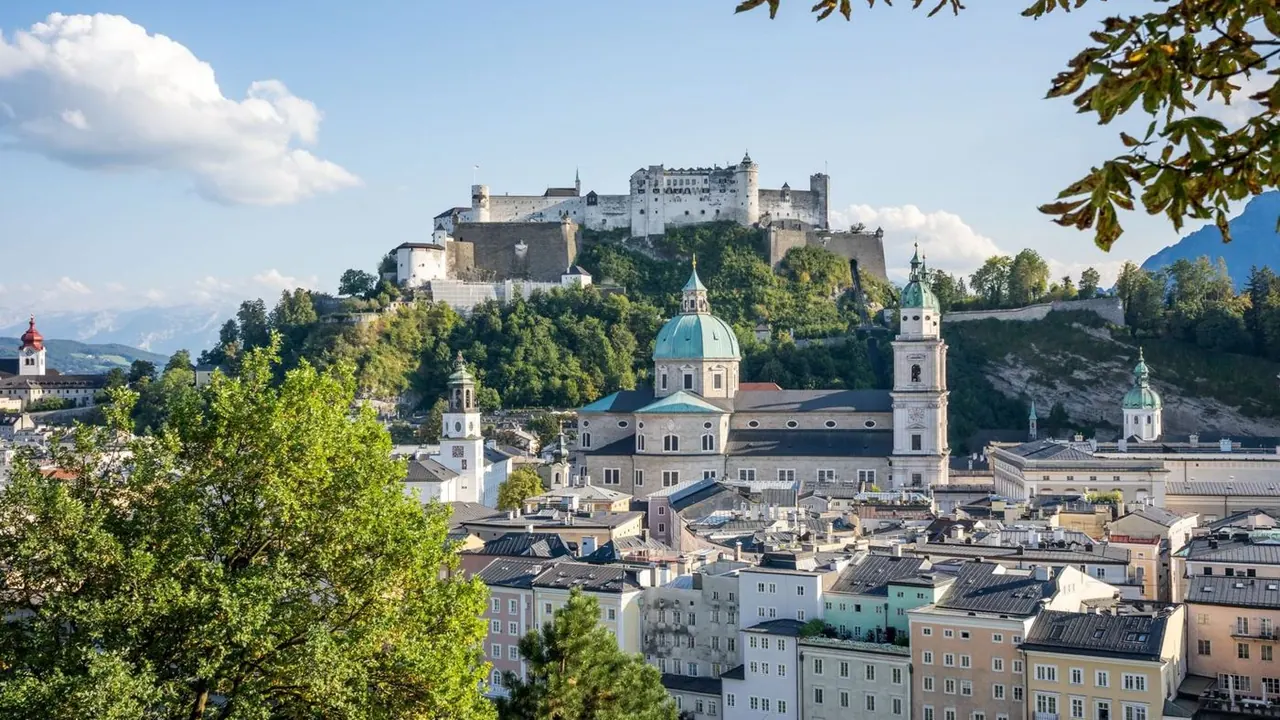
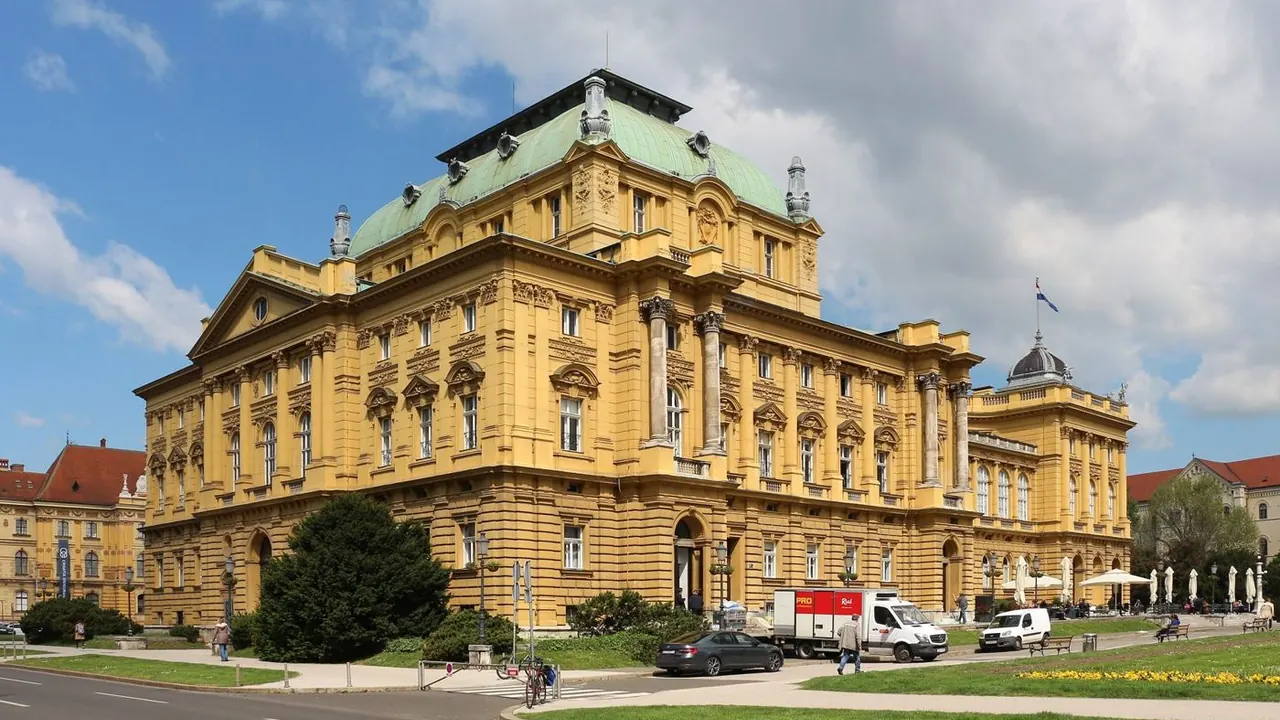
Photos: Salzburg by Leonhard Niederwimmer, Pexels License; Zagreb by Bernard Gagnon, CC BY-SA 4.0, cropped.
Salzburg or Zagreb?
Our verdict in twelve categories, each scored against the same fixed benchmark cities, and the climate month by month, so you can choose for your trip.
Choose Salzburg for
- live music and the arts
- beaches
- nature and the outdoors
Salzburg suits travellers who want a compact Baroque old town, classical music of real standing and the Alps on the doorstep. The fortress, cathedral and Mozart houses fill two or three days on foot. The Salzkammergut lakes, Hallstatt and Berchtesgaden can then fill the rest of a week with mountain and lakeside outings. It is the more expensive of the two, and it goes quiet early in the evening.
Choose Zagreb for
- prices
- nightlife
- food and drink
If you want a cheaper, more sociable city where the evenings carry on, Zagreb is the better choice. Café terraces, Dolac market and the bars of Tkalčićeva give it the livelier everyday life, and a comfortable stay costs noticeably less. Its sights are good rather than grand, and the country around it is gentle green hills rather than high mountains.
Scoreboard
Twelve categories on one fixed scale from 0 to 100. The shaded stretch is the gap between the two.
Your match
Pick a travel style or drag the sliders, and both match scores follow your weighting.
Wins on live music and the arts and beaches with your weighting.
Wins on prices and nightlife with your weighting.
What matters to you?
Category by category
What the scores mean for a trip.
Beaches & swimming
Neither city is a beach destination, but Salzburg has the better swimming. Fuschlsee, Wolfgangsee and Mondsee are less than an hour away. Their clear green water is entered from lawns and wooden jetties below steep hills, so a hot day can become a scenic afternoon out.
Zagreb's swimming is closer to the centre but plainer. Lake Jarun is a former gravel pit with pebbly shores and rowing lanes, and Bundek is smaller. The Adriatic is two hours' drive away, so sea and sand mean adding a separate stop on the coast.
Food & drink
Both cities serve hearty Central European cooking, but Zagreb eats a little better day to day. Dolac market sets the rhythm each morning, and štrukli and Zagorje sausages are easy to find. Wines from Plešivica and Slavonia fill the glasses on the Lower Town café terraces.
Salzburg is at its best with coffee and cake in the old coffee houses, or beer from wooden barrels at the Augustiner monastery brewery in Mülln. Many old-town restaurants serve the same tourist menus at high prices, so the better schnitzel and Kasnocken are found in the inns of the outer districts and on the hills.
Culture & sights
Salzburg has the more striking heritage. Its old town is a single UNESCO-listed Baroque ensemble built by the prince-archbishops, with the cathedral, the Residenz and Mozart's birthplace a few minutes apart. Hohensalzburg looks down on it all from the cliff.
Zagreb's appeal is quieter and split in two: the medieval Upper Town with St Mark's tiled roof and the Stone Gate, and the Austro-Hungarian Lower Town around the Green Horseshoe. Its museums are good rather than famous, from the Mimara to the Museum of Broken Relationships. Mirogoj cemetery is the sight most visitors remember.
Nightlife
Zagreb is clearly the better city for a night out. Café-bars switch from coffee to drinks as the evening goes on, Tkalčićeva fills with terraces, and in summer the crowd moves out to the lakeside clubs at Jarun. Students keep alternative venues going through the year.
A Salzburg evening is a concert, a late dinner and a litre mug in a beer hall, and the old town is quiet by midnight. Rudolfskai has a few student pubs that stay open later, but anyone looking for clubs takes the train to Munich.
Nature & outdoors
Salzburg is the clear winner for outdoor travellers, because the Alps begin at the city limits. The Untersberg cable car climbs to about 1,800m for ridge walks, and the Gaisberg is used for paragliding. The Salzkammergut lakes offer sailing and paddling, the Königssee is half an hour away, and the big ski areas are about an hour's drive.
Zagreb's countryside is gentler. Medvednica's beech woods and mountain huts start at the edge of the city, Maksimir park has lakes and oak woods, and the Sava embankments suit cyclists. Plitvice's waterfalls are the big draw, but they are two hours' drive away.
Day trips
Salzburg has the stronger choice of day trips, led by Hallstatt on its narrow lakeshore. You can go down into salt mines at Hallein and Berchtesgaden, see the clifftop fortress at Werfen, or take the train to Munich in about an hour and a half. A hire car makes the lake villages much easier to reach.
Zagreb's excursions are pleasant but less famous. To the north, Zagorje has Trakošćan castle and Marija Bistrica's pilgrimage church, Varaždin has a Baroque centre, and Samobor is known for its cream cake. Ljubljana makes a long day out.
Good for families
Salzburg has more to keep children busy. The trick fountains at Hellbrunn soak unsuspecting visitors, the zoo is next door, and Haus der Natur is hands-on. Just outside the city, the salt mines have wooden miners' slides and boat rides on underground lakes. The steep cobbled lanes are hard work with a pushchair, though.
Zagreb is the easier city to push a buggy around, with a flat Lower Town and trams that take pushchairs. The Technical Museum's old trams and planes, the zoo in Maksimir and summer afternoons at Jarun fill a few relaxed days. Neither city has a theme park.
Getting around
Both cities are easy to get around, and their main sights are within a short walk. In Salzburg, trolleybuses do the work instead of trams, and the flat riverside paths make cycling easy. Trains run to Munich and Vienna, but the slow regional buses push many visitors into a car for the lakes.
Zagreb runs on a dense web of blue trams, and a very short funicular saves the climb to the Upper Town. Trams do slow in rush-hour traffic. You only need a car for the Zagorje castles and Plitvice.
Shopping & style
Salzburg has slightly more worth shopping for. Getreidegasse's wrought-iron guild signs make even the chain shops look good, and the city is a real place to buy Tracht, with dirndls and loden jackets made to measure. In Advent, the Christmas market on Domplatz is one of the oldest in the region.
Shopping in Zagreb is everyday. Ilica is lined with chains and some local fashion. The souvenirs worth taking home are red licitar hearts, neckties and Plešivica wine, and Britanski trg has a Sunday flea market. Neither city has much luxury shopping.
Affordability
Zagreb costs a good deal less. Central apartments, trams, museums and market food are all reasonably priced. Only the upmarket restaurants and the best hotels reach Western European levels.
Salzburg is expensive all year, and rooms and restaurant tables become scarce and costly during the summer festival and Advent. Staying across the river, eating in the outer beer halls and buying a city card keep the costs down.
Live music & performing arts
Salzburg is in another league for classical music. In summer, the Salzburg Festival fills the Felsenreitschule and the Grosses Festspielhaus with leading performers, and Jedermann is played in front of the cathedral. Mozart Week and the Easter Festival add two more seasons, and the Mozarteum and the Marionette Theatre keep music going all year.
Zagreb has a solid season of its own, with opera and ballet at the Croatian National Theatre and the Zagreb Philharmonic at Lisinski. It also has more jazz and rock, including open-air courtyard concerts and a summer festival at Jarun. Much of the spoken theatre is in Croatian, however.
Wellness & relaxation
Salzburg is better placed for spa days. The Paracelsus Bad has saunas and a pool in the city park, the brine spa town of Bad Reichenhall is about twenty minutes away, and the Gastein valley's thermal springs and Belle Époque hotels make a longer excursion.
Zagreb's own options are mostly hotel wellness floors. Its thermal pools are in the Zagorje resorts of Tuheljske and Stubičke Toplice, about an hour north. Both cities are slow-paced, but Zagreb relaxes over coffee on café terraces, while Salzburg relaxes in its gardens and on wooded ridges.
When should you go?
Pick your month. The climate figures are measured averages, not a forecast.
Salzburg in July
Zagreb in July
Daytime high, °C
Rainfall in the month, mm
Temperature and rainfall are climate normals, averaged over the years shown. Salzburg: 1991-2020 normals, Salzburg (3.4 km from centre). Zagreb: 1991-2020 normals, Zagreb / Gric (0.6 km from centre).
Both cities have cold winters, but their summers differ. Salzburg peaks at about 25°C in July and August, which is comfortable for walking the old town. Summer is also its wettest season, with around 168mm of rain in June, so warm days often come with heavy showers. Lake swimming in the Salzkammergut runs from June to early September. In winter, daytime highs sit just above freezing and snow often reaches the town, which suits Advent but makes sightseeing chilly.
Zagreb is hotter, drier and sunnier in summer. July reaches about 29°C, and summer rainfall is closer to 90mm a month. On the hottest afternoons, Lake Jarun is more pleasant than the steep Upper Town cobbles. Zagreb's wetter spell comes in autumn, from September to November. For walking either city, May and September are the most comfortable months, and Salzburg stays a few degrees cooler all year round.
Which traveller are you?
On an outdoors trip, Salzburg is far the stronger choice. Paths run along the Mönchsberg in the city itself, and the Untersberg cable car lifts you onto limestone ridges, with Berchtesgaden close by. Zagreb's Medvednica offers pleasant but gentler forest walking.
For a food and nightlife trip, Salzburg gives you cake in a coffee house and a litre mug in a beer hall, then a quiet old town by midnight. Zagreb wins: Dolac market in the morning, štrukli for lunch, then the Tkalčićeva terraces late into the night.
On a tight budget, Salzburg works if you spend your days outdoors, on the Mönchsberg paths and in the Mirabell gardens, with your own picnic in the Augustiner beer garden. Zagreb goes much further, with Upper Town lanes, Mirogoj's arcades and afternoons by Lake Jarun.
Before you go
| Measure | Salzburg | Zagreb |
|---|---|---|
| Official language | German, Austrian Sign Language | Croatian |
| Currency | Euro (EUR) | Euro (EUR) |
| Sockets | CF230 V, 50 Hz | CF230 V, 50 Hz |
| Driving side | Right | Right |
| Time zone | UTC+1, UTC+2 in summer | UTC+1, UTC+2 in summer |
| Emergency number | 112 | 112 |
| Elevation | 424 m | 127 m |
| Main airport | Salzburg Airport (SZG)3 km from centre64 non-stop destinations | Zagreb Franjo Tuđman International Airport (ZAG)11 km from centre64 non-stop destinations |
| Public holidays this year | 16 days | 14 days |
By the numbers
| Measure | Salzburg | Zagreb |
|---|---|---|
| City population | 155,021 | 767,131 |
| People per km² | 2,360 | - |
| Museums within 10 km | 38 | 27 |
| UNESCO World Heritage sites within 50 km | 3 | 0 |
Where else could you go?
Every comparison below shares a destination with this one, so you can follow Salzburg or Zagreb somewhere new.