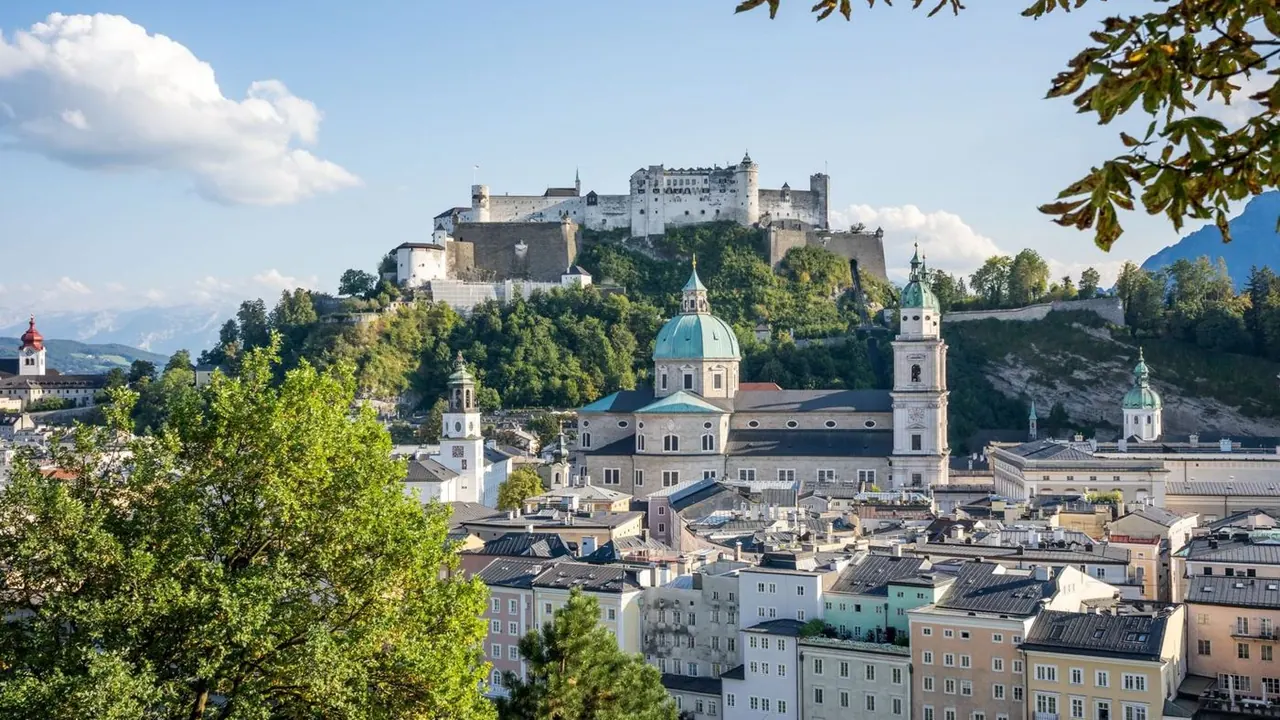
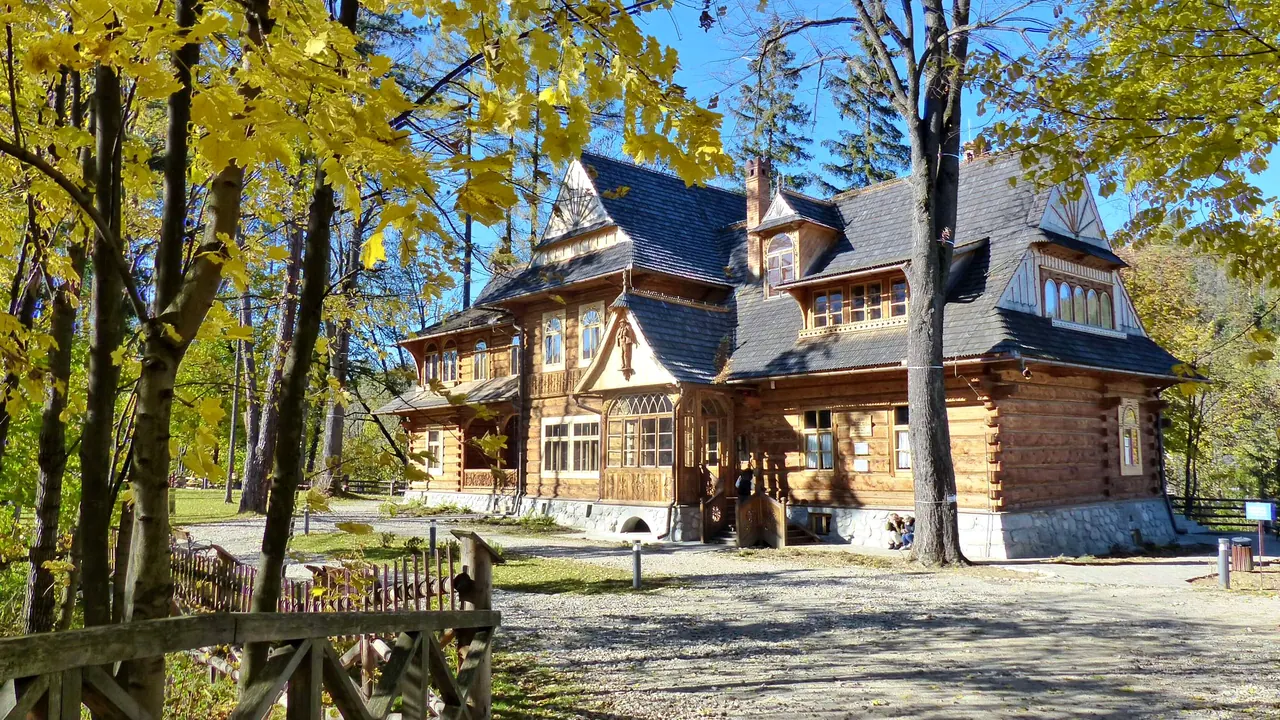
Photos: Salzburg by Leonhard Niederwimmer, Pexels License; Zakopane by Wojciech Grzegorz Domagała, CC BY-SA 4.0, cropped.
Salzburg or Zakopane?
Our verdict in twelve categories, each scored against the same fixed benchmark cities, and the climate month by month, so you can choose for your trip.
Choose Salzburg for
- live music and the arts
- culture and sights
- beaches
Salzburg is the better pick for travellers who want music, architecture and a polished small city with the Alps close by. The prince-archbishops' Baroque old town, the fortress and the festival halls are all a short walk apart. Hallstatt, the Salzkammergut lakes and Munich fill the days beyond. It costs more, and the evenings end early.
Choose Zakopane for
- prices
- wellness
- nightlife
When the mountains themselves are the reason for the trip and the budget matters, Zakopane makes more sense. The Tatra trails start where the streets end, and the steaming thermal pools in the nearby villages are the usual way to finish a day of hiking or skiing. Guesthouses and inn meals cost far less than in the Alps. The town's own sights take a day, so treat it as a base for the outdoors rather than for sightseeing.
Scoreboard
Twelve categories on one fixed scale from 0 to 100. The shaded stretch is the gap between the two.
Your match
Pick a travel style or drag the sliders, and both match scores follow your weighting.
Wins on live music and the arts and culture and sights with your weighting.
Wins on prices and wellness with your weighting.
What matters to you?
Category by category
What the scores mean for a trip.
Beaches & swimming
Neither town has a beach, but Salzburg at least has real summer swimming. Fuschlsee, Wolfgangsee and Mondsee are clear green lakes in the Salzkammergut, under an hour away. In July and August their water is pleasantly warm, and you get in from lawns and wooden jetties.
Zakopane has almost nothing like this. Swimming is banned in the Tatra lakes, and the reservoir at Czorsztyn, an hour's drive away, has only a few modest bathing spots. Most visitors swim in the heated thermal pools instead, which at least works in winter as well.
Food & drink
The two are close, and both serve hearty mountain food with a narrow range. Salzburg's strengths are its coffee houses with cake and the monastery beer garden at Mülln, where you bring your own food. It also has a few serious fine-dining kitchens nearby.
Zakopane's cooking is smokier and rougher: grilled oscypek with cranberry jam from street stalls, sauerkraut soup and lamb in timber inns, often with fiddlers playing. In both places the main tourist strip, Salzburg's old town or Krupówki, serves the dullest meals, and the better food is in the outer inns.
Culture & sights
Salzburg has far more to see. Its old town is a complete Baroque ensemble of cathedral, Residenz and arcaded squares, with one of Europe's largest medieval fortresses above it. Add Mozart's two houses, the catacombs of St Peter and the palace at Hellbrunn nearby, and it fills two or three days well.
Zakopane's heritage is smaller and more particular. It centres on the wooden Zakopane style, seen at Villa Koliba and the Jaszczurówka chapel, along with the Tatra Museum and the carved grave markers in the old cemetery on Kościeliska Street. One day covers it.
Nightlife
Zakopane has the livelier nights, though only at certain times. On winter weekends and in the ski season, the pubs, dance clubs and rowdy inns along Krupówki fill with groups of friends, and New Year's Eve there is a big national event.
Salzburg's evenings tend to be a concert, dinner and a litre of beer in a hall full of locals. The old town is quiet by midnight, and anyone wanting clubs takes the train to Munich.
Nature & outdoors
Both are excellent mountain bases, and the difference is in the kind of mountain. Zakopane sits under the granite Tatras, with cirques and glacial lakes, the walk to Morskie Oko, the climb to Rysy and the chained Orla Perć ridge. The popular trails get very crowded in high season.
Salzburg offers more variety than raw height. It has the Untersberg cable car and limestone ridges, sailing and paddling on the Salzkammergut lakes, and the Königssee in Berchtesgaden. For skiers, Salzburg's bigger resorts an hour away outclass Zakopane's short slopes.
Day trips
Salzburg has more within easy reach. Hallstatt's lakeside village and prehistoric salt mine, the imperial spa town of Bad Ischl, the cliff fortress at Werfen and Berchtesgaden's salt works all fit into a day, and Munich is an easy train ride away.
Zakopane's best outings are Kraków and the Wieliczka salt mine, two hours away on a busy road, plus the painted wooden church at Dębno and Spiš Castle across the Slovak border. Weekend traffic can make any of these journeys much longer.
Good for families
Both work well with children, but in different ways. Salzburg suits families who like sights: the trick fountains at Hellbrunn, the zoo beside them, the hands-on Haus der Natur, the marionettes, and the miners' slides in the salt mines nearby.
Zakopane is for families who like to play outdoors. There is the summer toboggan run on Gubałówka, flat valley trails for pushchairs, sledging and nursery slopes in winter, and thermal water parks for wet days.
Getting around
Getting around is easier in Salzburg. The main sights are about fifteen minutes' walk apart, trolleybuses reach Hellbrunn and the Untersberg, and trains run straight to Munich and Vienna. Only the lake villages really call for a car.
Zakopane's minibuses to Kuźnice and the valley entrances make reaching the trails without a car easy. The hard part is getting there: the road from Kraków jams badly at peak times, and the train winds slowly through the hills.
Shopping & style
Salzburg offers more to shop for. It has the guild-signed lane of Getreidegasse, made-to-measure dirndls and loden jackets, regional cheese at the Andräkirche farmers' market, and one of the region's best-known Christmas markets on Domplatz.
Zakopane's shopping is mostly souvenirs. Its good side is the craft market below Gubałówka, with sheep's-wool sweaters, sheepskins, carved boxes and wheels of oscypek.
Affordability
Salzburg is the dearer of the two, though planning makes a real difference. Rooms in and around the old town stay costly in every season, but the traditional inns and beer halls of the outer districts feed you for noticeably less than the centre. A city card bundles the buses with the fortress and most museums, and staying across the river or in the suburbs and riding in by trolleybus is how most visitors keep the bill down.
Zakopane is cheaper in any season, and it is at its cheapest in spring and autumn, when the guesthouses are quiet and easy to book. Its own peaks are the catch: over Christmas, New Year, the winter school breaks and long summer weekends, rooms fill early and cost noticeably more, so a trip at those times needs booking well ahead.
Live music & performing arts
For classical music, Salzburg is in a different league. The summer festival fills the Grosses Festspielhaus and the Felsenreitschule with world-class opera and orchestras, and Mozart Week and the Easter Festival add two more seasons. Outside the festivals, the Mozarteum and the Landestheater keep a steady programme.
Zakopane's live culture is folk rather than classical. Highland string bands play in the inns, the small Witkacy Theatre puts on plays, and in August the mountain folklore festival fills the streets with dancers.
Wellness & relaxation
Zakopane is the better place to unwind, thanks to the hot water under the Podhale valley. Several thermal complexes, at Chochołów, Białka Tatrzańska and elsewhere, are within half an hour, and their outdoor pools face the peaks. The town centre itself is noisy in high season, though.
Salzburg's calm comes from its quiet gardens, river paths and coffee houses once the day-trippers leave, plus the Paracelsus Bad in the city park. For real spa bathing you have to travel out, to Bad Reichenhall or the Gastein valley.
When should you go?
Pick your month. The climate figures are measured averages, not a forecast.
Salzburg in July
Zakopane in July
Daytime high, °C
Rainfall in the month, mm
Where the figures come from
Zakopane has no rain gauge within 25 km of the centre, so its rainfall comes from a gridded climate dataset read at the city rather than from a gauge further away.
Zakopane's sunshine is measured 34 km from the centre, at Poprad / Tatry.
Temperature and rainfall are climate normals, averaged over the years shown. Salzburg: 1991-2020 normals, Salzburg (3.4 km from centre). Zakopane: 1999-2020 (sunshine 1991-2020, rainfall 1991-2020) normals, Zakopane (0.2 km from centre).
Both towns are at their best from June to September, and both take their heaviest rain in those same months: about 168mm falls on Salzburg in June and 176mm on Zakopane in July. Salzburg is the warmer of the two. Summer highs of around 25°C suit walking the old town and make the Salzkammergut lakes swimmable from June to early September. Zakopane stays a few degrees cooler, at around 21°C, which is better for long hikes, and its summer months are a little sunnier.
Zakopane is the colder town in winter, with January highs near 0°C. That is right for skiing, sledging and the steaming outdoor thermal pools, but bitter for strolling. Salzburg's winter is milder, though slightly wetter, so December and January suit coffee houses and concerts more than long walks. In both places spring and autumn are cooler and noticeably drier than summer.
Which traveller are you?
On a culture and arts trip, Salzburg wins easily. It has a UNESCO-listed Baroque old town, Mozart's houses and the Hohensalzburg fortress, plus a year of festival opera and concerts that Zakopane's folk music and small theatre cannot match.
For a trip on a tight budget, Zakopane is much kinder. Family guesthouses, filling inn meals, minibuses to the trailheads and national park entry all cost little, while Salzburg is expensive for its size, particularly around the festival and the Advent markets.
On a relaxing and wellness trip, choose Zakopane. Several geothermal pool complexes lie within half an hour of town, with outdoor water steaming under the Tatras. Salzburg has one public bath and quiet gardens, and its serious spa towns are a drive away.
Before you go
| Measure | Salzburg | Zakopane |
|---|---|---|
| Official language | German, Austrian Sign Language | Polish |
| Currency | Euro (EUR) | Zloty (PLN) |
| Sockets | CF230 V, 50 Hz | CE50 Hz |
| Driving side | Right | Right |
| Time zone | UTC+1, UTC+2 in summer | UTC+1, UTC+2 in summer |
| Emergency number | 112 | 112 |
| Elevation | 424 m | 837 m |
| Main airport | Salzburg Airport (SZG)3 km from centre64 non-stop destinations | Kraków John Paul II International Airport (KRK)87 km from centre132 non-stop destinations |
| Public holidays this year | 16 days | 14 days |
By the numbers
| Measure | Salzburg | Zakopane |
|---|---|---|
| City population | 155,021 | 25,770 |
| People per km² | 2,360 | 306 |
| Museums within 10 km | 38 | 18 |
| UNESCO World Heritage sites within 50 km | 3 | 2 |
Where else could you go?
Every comparison below shares a destination with this one, so you can follow Salzburg or Zakopane somewhere new.
- Hallstattvs Salzburg
- Krakowvs Zakopane
- Munichvs Salzburg
- Innsbruckvs Salzburg
- Cesky Krumlovvs Salzburg
- Cortina d'Ampezzovs Salzburg