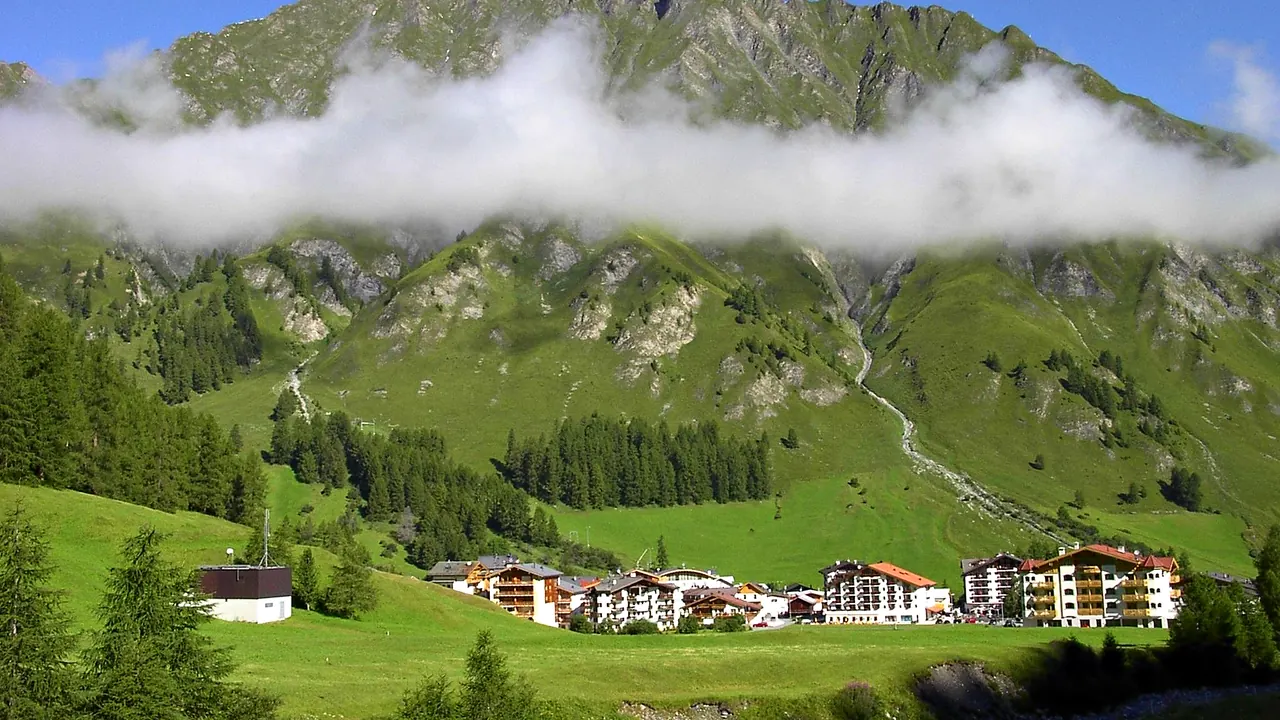
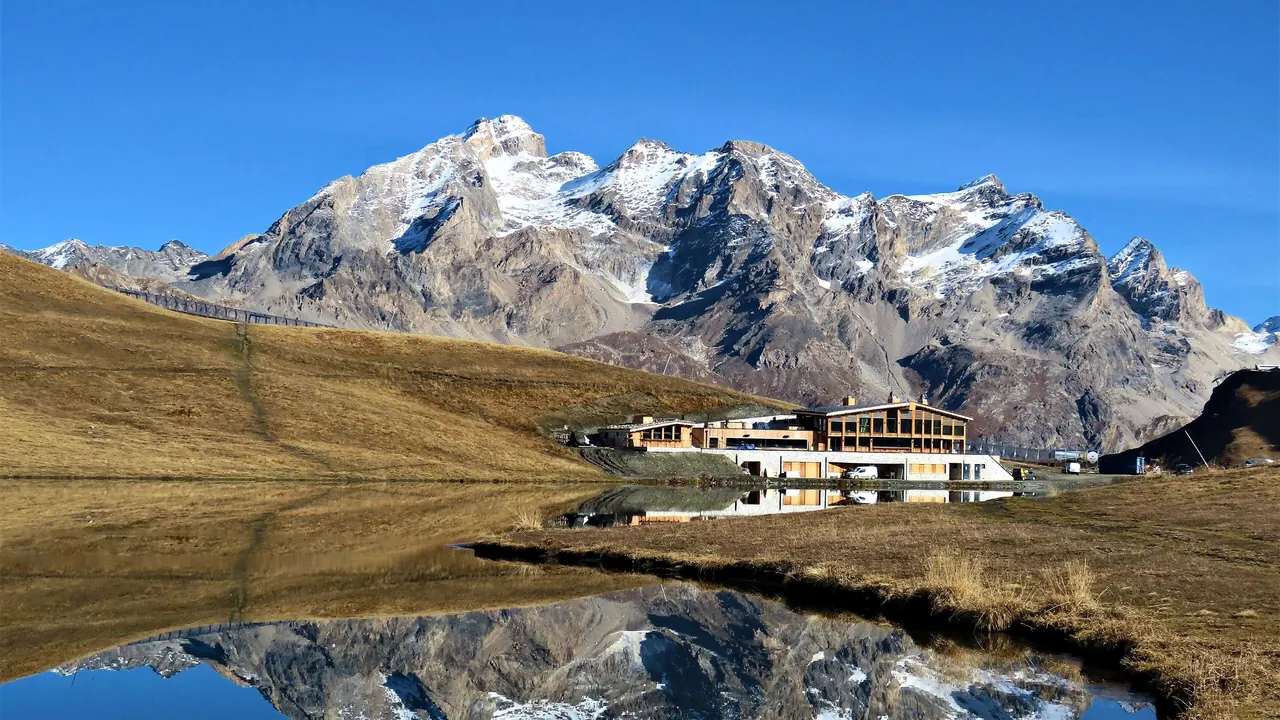
Photos: Samnaun by Rene Nueesch, CC BY 3.0, cropped; Val d'Isère by Rémih, CC BY-SA 4.0, cropped.
Samnaun or Val d'Isère?
Our verdict in twelve categories, each scored against the same fixed benchmark cities, and the climate month by month, so you can choose for your trip.
Choose Samnaun for
- shopping
- day trips
- wellness
Samnaun suits skiers who would rather end the day in a sauna than on a dance floor. Evenings are quiet, the hotels lean towards half board and families, and the bill comes out a little gentler. It also has two things Val d'Isère lacks: duty-free shops and painted Engadine villages, abbeys and castles within reach by car. Pick it if you want a calm week in the mountains with some shopping and sightseeing along the way.
Choose Val d'Isère for
- nightlife
- food and drink
- getting around
Val d'Isère is the choice when the skiing itself comes first. You get higher and steeper terrain, glacier snow late into spring, and the Olympic face to test yourself on. Après-ski runs from table-dancing on the slopes to basement clubs, and the evening food is better, with a few celebrated kitchens. It costs more, but in a car-free village where you walk to dinner, that is the trade most of its visitors want.
Scoreboard
Twelve categories on one fixed scale from 0 to 100. The shaded stretch is the gap between the two.
Your match
Pick a travel style or drag the sliders, and both match scores follow your weighting.
Too close to call, 1 point apart
Wins on shopping and day trips with your weighting.
Wins on nightlife and food and drink with your weighting.
What matters to you?
Category by category
What the scores mean for a trip.
Beaches & swimming
Neither village has a beach, so swimming happens indoors in both. In Samnaun, that means the village leisure pool, whose slides make it a rainy-afternoon outing for children. In Val d'Isère, it means the sports centre pool. In midsummer the brave can also try snowmelt-cold Lac de Tignes over the ridge, which is more open water than Samnaun's small Alpine lakes really offer.
Food & drink
Val d'Isère eats noticeably better. Its Savoyard staples are built around Beaufort cheese, and mountain terraces turn lunch into half the ski day. In the evening a handful of serious kitchens, some among the most celebrated in the French Alps, sit alongside wine bars pouring Savoie whites.
Samnaun's meals are mostly hotel half board and hut food. That means capuns, pizokel, rösti and Tyrolean dishes from across the border, all filling and none of it a reason to travel. The valley's real strength is in its bottles, since the duty-free shops stock far more wine and spirits than its restaurants serve.
Culture & sights
Both are places you visit for the mountains, and neither will fill a day of sightseeing. What there is differs in kind. Samnaun's interest lies in its story: a valley so isolated that it was left outside Swiss customs in 1892, with modest chapels and old timber farmhouses among the hotels. Val d'Isère has one real sight, the Baroque altarpiece of Saint-Bernard-de-Menthon, plus the stone and larch hamlets of Le Fornet. Ski fans will also want to see the Bellevarde face, where the 1992 Olympic downhill was raced.
Nightlife
Val d'Isère is one of the Alps' great resorts for going out. Après-ski starts mid-afternoon with dancing on tables in the slope-side restaurants. It then moves to packed village bars and a couple of basement clubs that stay open into the early hours, at their busiest over Christmas, New Year and February.
Samnaun winds down early. After the après-ski at the lift bases there are a few hotel bars and the odd small club on peak weekends. Ischgl's famous party scene lies at the other end of the shared ski area, but after the lifts close it is a long drive round through Austria.
Nature & outdoors
Both open straight onto huge ski areas, but Val d'Isère's terrain is bigger and wilder. With Tignes it climbs to peaks above 3,000m, with the steep Olympic Face de Bellevarde, serious off-piste and glacier skiing on the Pissaillas and Grande Motte. In summer the Vanoise National Park, with its ibex and chamois, and the Col de l'Iseran climb draw walkers and cyclists.
Samnaun's cross-border network with the Paznaun is among the largest in the Alps, with long runs above the treeline and the double-decker cable car from Ravaisch. Its appeal is space and quiet. Summer trails follow the Swiss-Austrian border, and the Swiss National Park is about an hour's drive away.
Day trips
Samnaun is far better placed for days out, and it stays that way in winter. In under an hour by car you reach the sgraffito-painted villages of Guarda and Sent and Tarasp Castle on its rock. Across the Reschen Pass are walled Glurns, Marienberg Abbey and the UNESCO-listed convent at Müstair.
In Val d'Isère, the high passes close for the ski season, so winter outings mean heading back down to Bourg-Saint-Maurice and the Tarentaise villages. Summer opens the way to Bonneval-sur-Arc over the Iseran, and to Roman Aosta about two hours away in Italy.
Good for families
Val d'Isère is the better-organised choice for a skiing family. Ski schools teach in several languages from preschool age, there are fenced snow gardens, and childcare often comes with the chalet or hotel. Its sports centre adds an ice rink and a climbing wall to the pool.
Samnaun works well on a smaller scale. Nursery slopes are close to the village, the valley is safe and quiet, and the leisure pool with slides covers bad-weather afternoons. The long, winding approach road is harder on children prone to car sickness, and there is less to do away from the snow.
Getting around
Val d'Isère is the easier of the two to arrive at and move around. Free shuttles run the length of the village from La Daille to Le Fornet, lifts start from several points, and a railway station lies about an hour down the valley at Bourg-Saint-Maurice.
Samnaun's hamlets are linked by local buses along a single road, and Samnaun Dorf and Compatsch are easy to walk. Reaching the valley is the harder part. There is no railway, the postbus from Scuol takes over an hour, and the road in comes via Austria, so a car matters more here.
Shopping & style
Here Samnaun has the clear lead. As a duty-free enclave, its main street is lined with shops selling Swiss watches, jewellery, perfume, spirits, chocolate and ski clothing, often below the usual Swiss and Austrian prices. Coachloads of shoppers come over from the Tyrol for it, though the shops are all international brands rather than local crafts.
Val d'Isère's shops are mostly for skiers: rental, boot-fitting and some upmarket mountain-wear boutiques. The things most worth taking home are the Beaufort, charcuterie and Savoie wine from its delicatessens.
Affordability
Neither is cheap, but Samnaun is a little kinder to the wallet. Its room rates are gentler than in Switzerland's most fashionable resorts, half board helps, and duty-free fuel and alcohol trim the extras. Val d'Isère is among the costliest places in the Alps for a winter week, with chalets, lessons and drinks priced for a well-off international crowd. Self-catering, January weeks or a summer visit make the cost easier to bear.
Live music & performing arts
There is no stage or concert hall in either valley, so live music is part of the après-ski in both. Samnaun has the odd brass band, and big open-air concerts mark the start and end of the season on the shared slopes. Val d'Isère relies on cover bands and DJs in its bars, with occasional open-air events in the village during the season.
Wellness & relaxation
Samnaun is the better place to slow down. Outside the main ski weeks the valley is quiet, most bigger hotels have saunas, and the public pool has its own sauna area. For a proper soak, the mineral springs and spa baths of Scuol are under an hour away.
Val d'Isère has smart hotel and chalet spas with hammams and massage rooms, plus a public spa at the sports centre. Still, a winter week there is set by early lifts and late après-ski. It is calmest in early summer and September, and there are no thermal springs nearby.
When should you go?
Pick your month. The climate figures are measured averages, not a forecast.
Samnaun in July
Val d'Isère in July
Daytime high, °C
Rainfall in the month, mm
Where the figures come from
Samnaun has no rain gauge within 25 km of the centre, so its rainfall comes from a gridded climate dataset read at the destination rather than from a gauge further away.
Val d'Isère has no weather station within reach, so its figures come from a gridded climate model rather than a measured record, and read a broad area rather than one spot.
Temperature and rainfall are climate normals, averaged over the years shown. Samnaun: 1991-2020 normals, Passo Resia / Resia Pass (16.3 km from centre). Val d'Isère: 2001-2020 normals, NASA POWER reanalysis grid, no weather station within 90 km.
Samnaun is the milder of the two in winter. Its January highs stay just above freezing, while Val d'Isère sits around -4°C. Both have snow from late autumn into spring, and Samnaun's slightly softer days make March good for walking between the hamlets as well as for skiing. Val d'Isère's season runs from late November into early May. Its glaciers keep the top of the ski area wintry after the valley has thawed, so it is the safer bet for skiing late in the season.
Samnaun is also warmer in summer, reaching about 21°C in July against 18°C. It is clearly wetter, though, with around 118mm of rain that month against 79mm. Neither is ever too hot for walking. July to September is the time for high trails in both, and for the Col de l'Iseran and the Vanoise from Val d'Isère. The awkward times are the thaw in May and early June, when the lower slopes have melted, the high paths are still under snow and the rain picks up. October and early November are the other gap, after summer has ended and before the winter snow has settled.
Which traveller are you?
For a food and nightlife trip, Val d'Isère is far ahead. Savoyard cooking, Beaufort-rich dishes and a few acclaimed kitchens feed you well. Après-ski then runs from slope-side parties to village bars and late basement clubs. Samnaun is mostly half board and quiet by late evening.
On a shopping trip, Samnaun is the obvious pick. Its duty-free main street sells watches, perfume, spirits and outdoor clothing, often below the usual Swiss prices. Val d'Isère's shops are mostly ski kit, with delicatessens for cheese and wine to take home.
For a relaxing and wellness trip, Samnaun is the calmer place. It has hotel saunas, slow evenings and the mineral baths of Scuol under an hour away. Val d'Isère's hotel spas are good, but a winter week there is busy and social.
Before you go
| Measure | Samnaun | Val d'Isère |
|---|---|---|
| Official language | French, German, Italian, Romansh | French |
| Currency | Swiss Franc (CHF) | Euro (EUR) |
| Sockets | CJ230 V, 50 Hz | CE230 V, 50 Hz |
| Driving side | Right | Right |
| Time zone | UTC+1, UTC+2 in summer | UTC+1, UTC+2 in summer |
| Emergency number | 112 | 112 |
| Elevation | 1,846 m | 1,785 m |
| Main airport | Innsbruck Airport (INN)82 km from centre40 non-stop destinations | Geneva International Airport (GVA)111 km from centre150 non-stop destinations |
| Public holidays this year | 9 days | 11 days |
By the numbers
| Measure | Samnaun | Val d'Isère |
|---|---|---|
| Population | 773 | 1,567 |
| People per km² | 14 | 17 |
| Museums within 10 km | 1 | 0 |
| UNESCO World Heritage sites within 50 km | 1 | 0 |
Where else could you go?
Every comparison below shares a destination with this one, so you can follow Samnaun or Val d'Isère somewhere new.
- Tignesvs Val d'Isère
- Les Arcsvs Val d'Isère
- Val Cenisvs Val d'Isère
- La Rosièrevs Val d'Isère
- La Plagnevs Val d'Isère
- Courchevelvs Val d'Isère