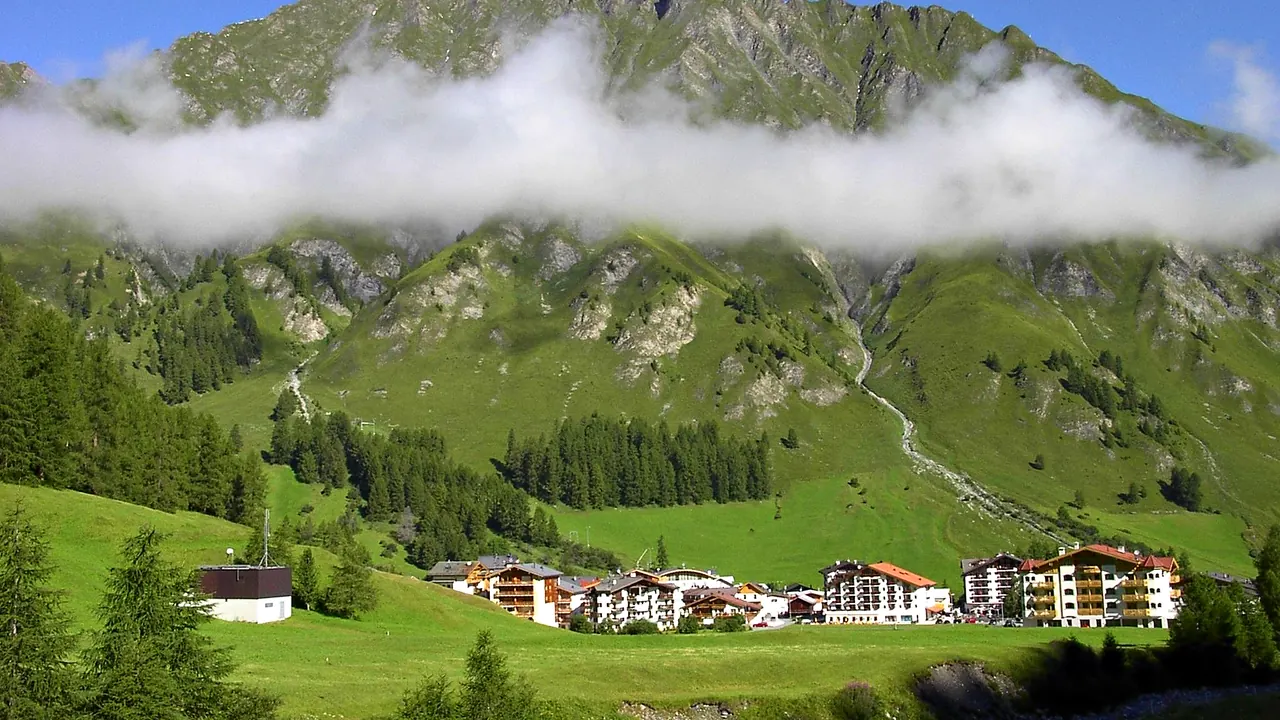
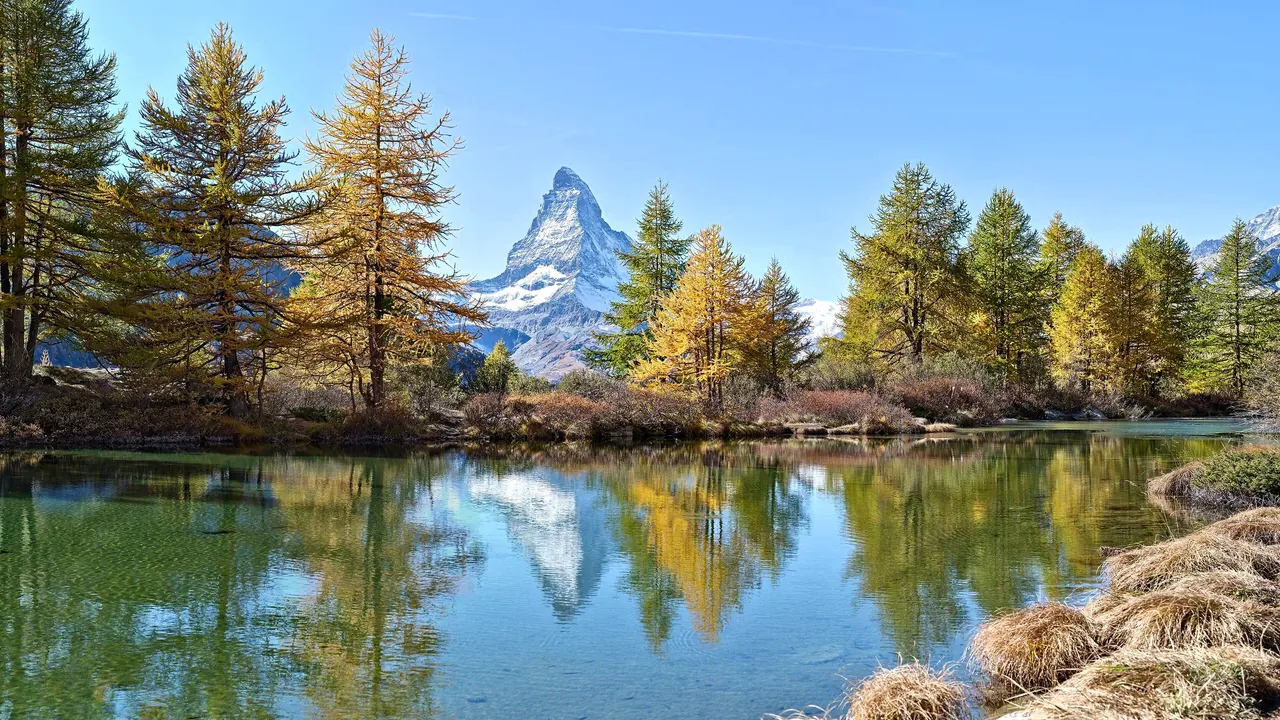
Photos: Samnaun by Rene Nueesch, CC BY 3.0, cropped; Zermatt by Roy Egloff, CC BY-SA 4.0, cropped.
Samnaun or Zermatt?
Our verdict in twelve categories, each scored against the same fixed benchmark cities, and the climate month by month, so you can choose for your trip.
Choose Samnaun for
- shopping
- prices
- day trips
Samnaun suits skiers and summer walkers who want a big lift network without the price tag and polish of Switzerland's most famous resorts. It is quieter, a little less punishing on the wallet, and its duty-free main street turns spirits, perfume, watches and a full tank of fuel into part of the trip. With a car, it also opens up the painted villages of the Lower Engadine and the abbeys across the Reschen Pass.
Choose Zermatt for
- getting around
- food and drink
- nature and the outdoors
Zermatt is for travellers who want the mountains at their most dramatic and are prepared to pay for it. The Matterhorn stands over the village, lifts climb above 3,800m, and the car-free streets make every lift station a short walk away. It also eats better, has a small mountaineering heritage worth a morning, and its après-ski and two music festivals give evenings more life than Samnaun's.
Scoreboard
Twelve categories on one fixed scale from 0 to 100. The shaded stretch is the gap between the two.
Your match
Pick a travel style or drag the sliders, and both match scores follow your weighting.
Wins on shopping and prices with your weighting.
Wins on getting around and food and drink with your weighting.
What matters to you?
Category by category
What the scores mean for a trip.
Beaches & swimming
Both are high Alpine villages with no beach, and their mountain water is too cold for a real swim. The small difference is that Samnaun has a public indoor leisure pool, while in Zermatt swimming means a hotel pool. The tarns that mirror the Matterhorn are for photographs only.
Food & drink
Zermatt eats noticeably better. Its real strength is the wooden chalets around Findeln, Furi and Zum See, where a long terrace lunch facing the Matterhorn is a highlight of the day. There are also some ambitious kitchens in the village, and Valais wines such as Petite Arvine and Cornalin go with the raclette and air-dried beef.
Samnaun's meals mostly come from hotel half board and slope huts serving capuns, pizokel and Tyrolean dishes, and they are filling rather than memorable. Its more interesting offer is the duty-free bottle shops, which are better for taking drink home than for eating out.
Culture & sights
Neither is a place for sightseeing, but Zermatt at least fills a morning. The Matterhorn Museum tells the story of the 1865 first ascent, the mountaineers' cemetery lies beside the church, and the old larch barns in the Hinterdorf stand on their stone slabs. The Gornergrat cog railway adds a piece of working history.
Samnaun has modest churches and a few old farmhouses spread across its hamlets. Its best story is the 1892 decision that left the valley outside Swiss customs, and you learn that from the shop windows rather than from a museum.
Nightlife
Zermatt has more going on after dark. Slope-side bars fill with ski boots from late afternoon, and a handful of bars and small clubs on the main street stay open past midnight on busy weekends. It is lively and expensive rather than varied.
Samnaun's après-ski starts early and is mostly over by late evening, apart from a few hotel bars and a small club on peak weekends. The famous party resort at the far end of its ski area is a long road trip away once the lifts stop, so it is no help in the evening.
Nature & outdoors
Both are serious mountain destinations, but Zermatt is in a class of its own. The Matterhorn rises right above the streets, dozens of four-thousand-metre peaks and the Gorner Glacier surround the valley, and the lifts reach over 3,800m. Summer skiing on the glacier, the Europaweg suspension bridge and guided ascents set it apart.
Samnaun's strength is size and space rather than drama. Its huge cross-border ski area with Austria's Paznaun has long runs above the treeline, the double-decker cable car rises from Ravaisch, and the summer trails along the border are rarely crowded. The Swiss National Park is within about an hour's drive.
Day trips
Samnaun has more within reach, provided you have a car. The sgraffito villages of Guarda, Sent and Scuol and Tarasp Castle are under an hour away, and across the Reschen Pass lie walled Glurns, Marienberg Abbey and the UNESCO convent at Müstair.
From Zermatt every outing starts with the long train ride down the valley. Sion, with its two castle hills and the Valère basilica, is the best of them, and Brig's Stockalper Palace is closer. Most visitors stay in the mountains instead.
Good for families
Both work for families who ski or hike, and neither has zoos or theme parks. Zermatt has the edge thanks to its car-free streets, where children can walk safely between hotel, ski school and lifts, and the cog railways and glacier gondolas are an adventure in themselves. Keep small children away from the thin air at the 3,000m viewpoints.
Samnaun's advantages are the leisure pool with slides for wet afternoons and hotels used to families on half board. Against that, the winding road in is hard on children who get car sick.
Getting around
Zermatt is far easier to get around. You leave the car at Täsch, take the shuttle train, and from then on the village, the Gornergrat railway, the Sunnegga funicular and the gondolas are all on foot, with smooth rail connections onward across Switzerland.
Samnaun is easy within the valley, with buses along the single road linking the hamlets and lifts. But it is a cul-de-sac without a railway, reached via Austria, and the postbus from Scuol takes over an hour, so most visitors are better off with a car.
Shopping & style
Shopping is one of Samnaun's main reasons to visit. The duty-free strip draws coachloads from the Tyrol for perfume, watches, spirits, tobacco and chocolate, and many visitors fill the tank before leaving, although the stock is all international brands.
Zermatt's main street is aimed at wealthy skiers, with watch and jewellery boutiques, excellent mountaineering outfitters and cowbell souvenirs. Buy your outdoor gear there, but expect few bargains.
Affordability
Neither makes for a cheap week in the mountains, but Samnaun costs clearly less. Its hotels charge Swiss resort rates without the premium of the famous names, and half board settles most of the food bill before you arrive. Duty-free fuel and drink take a little more off, though the room and the ski pass still make up most of the cost.
The biggest difference is the price of a bed. In Zermatt even a simple room in season is priced like a luxury, and the cost keeps going after you leave the hotel. Every day on the mountain, on skis or on foot, starts with a ticket for the cog railway or a gondola, and a long terrace lunch facing the Matterhorn is a treat to plan for. Where half board does the saving in Samnaun, in Zermatt you save by giving things up: cooking in an apartment, or sleeping further down the valley.
Live music & performing arts
Neither village has a theatre or concert hall. Zermatt has two festivals worth timing a visit around: Zermatt Unplugged brings acoustic sets to mountain stages in spring, and a late-summer chamber music festival fills the church with serious classical players. Samnaun relies on brass bands, après-ski performers and the big open-air concerts on the slopes at the opening and close of the winter season.
Wellness & relaxation
Both are good places to rest after exercise rather than spa destinations, and neither has thermal water of its own. Zermatt has a much denser choice of polished hotel spas, some open to non-residents, and its car-free quiet helps, though peak weeks feel active. Samnaun is slower and calmer outside the ski weeks, with simpler hotel saunas and the public pool, and the mineral baths of Scuol are under an hour away.
When should you go?
Pick your month. The climate figures are measured averages, not a forecast.
Samnaun in July
Zermatt in July
Daytime high, °C
Rainfall in the month, mm
Where the figures come from
Samnaun has no rain gauge within 25 km of the centre, so its rainfall comes from a gridded climate dataset read at the destination rather than from a gauge further away.
Zermatt has no weather station within reach, so its figures come from a gridded climate model rather than a measured record, and read a broad area rather than one spot.
Temperature and rainfall are climate normals, averaged over the years shown. Samnaun: 1991-2020 normals, Passo Resia / Resia Pass (16.3 km from centre). Zermatt: 1991-2020 normals, TerraClimate 4 km grid at the town, no weather station within 90 km.
Neither place is a beach destination in any month. They go through the year differently, though. Samnaun's measured days are much milder: highs reach about 21°C in July, so summer hiking is comfortable, but June to August is also its wettest stretch at well over 110mm a month. Zermatt stays far cooler, with summer highs around 14°C and daytime temperatures below freezing from December to February.
For skiing, both give proper winter cold from December to March. Zermatt's rain and snow are more even through the summer, so late June to September is its best window for walking, while November is its wettest month. Samnaun's late spring and early autumn, May and September, offer mild walking days with a little less rain than high summer.
Which traveller are you?
On a shopping trip, Samnaun is the clear pick. Its duty-free main street packs in perfume, watches, chocolate, spirits and ski clothing, often below normal Swiss and Austrian prices, while Zermatt's single street mostly offers luxury boutiques, outdoor gear and souvenirs.
For a trip on a tight budget, neither is cheap, but Samnaun hurts less. Its room rates are gentler, half board keeps meals predictable and fuel and drink cost less. Zermatt sits near the very top of Alpine prices, from beds to lift tickets.
On an outdoors trip, Zermatt wins. The Matterhorn, a ring of four-thousanders, glacier skiing that runs into summer and hiking classics like the Five Lakes walk outclass Samnaun's large but gentler cross-border ski area and border trails.
Before you go
| Measure | Samnaun | Zermatt |
|---|---|---|
| Official language | French, German, Italian, Romansh | French, German, Italian, Romansh |
| Currency | Swiss Franc (CHF) | Swiss Franc (CHF) |
| Sockets | CJ230 V, 50 Hz | CJ230 V, 50 Hz |
| Driving side | Right | Right |
| Time zone | UTC+1, UTC+2 in summer | UTC+1, UTC+2 in summer |
| Emergency number | 112 | 112 |
| Elevation | 1,846 m | 1,624 m |
| Main airport | Innsbruck Airport (INN)82 km from centre40 non-stop destinations | Geneva International Airport (GVA)128 km from centre150 non-stop destinations |
| Public holidays this year | 9 days | 9 days |
By the numbers
| Measure | Samnaun | Zermatt |
|---|---|---|
| Population | 773 | 6,023 |
| People per km² | 14 | 25 |
| Museums within 10 km | 1 | 2 |
| UNESCO World Heritage sites within 50 km | 1 | 2 |
Where else could you go?
Every comparison below shares a destination with this one, so you can follow Samnaun or Zermatt somewhere new.
- Saas-Feevs Zermatt
- Klostersvs Samnaun
- Crans-Montanavs Zermatt
- Verbiervs Zermatt
- Leukerbadvs Zermatt
- Davosvs Samnaun