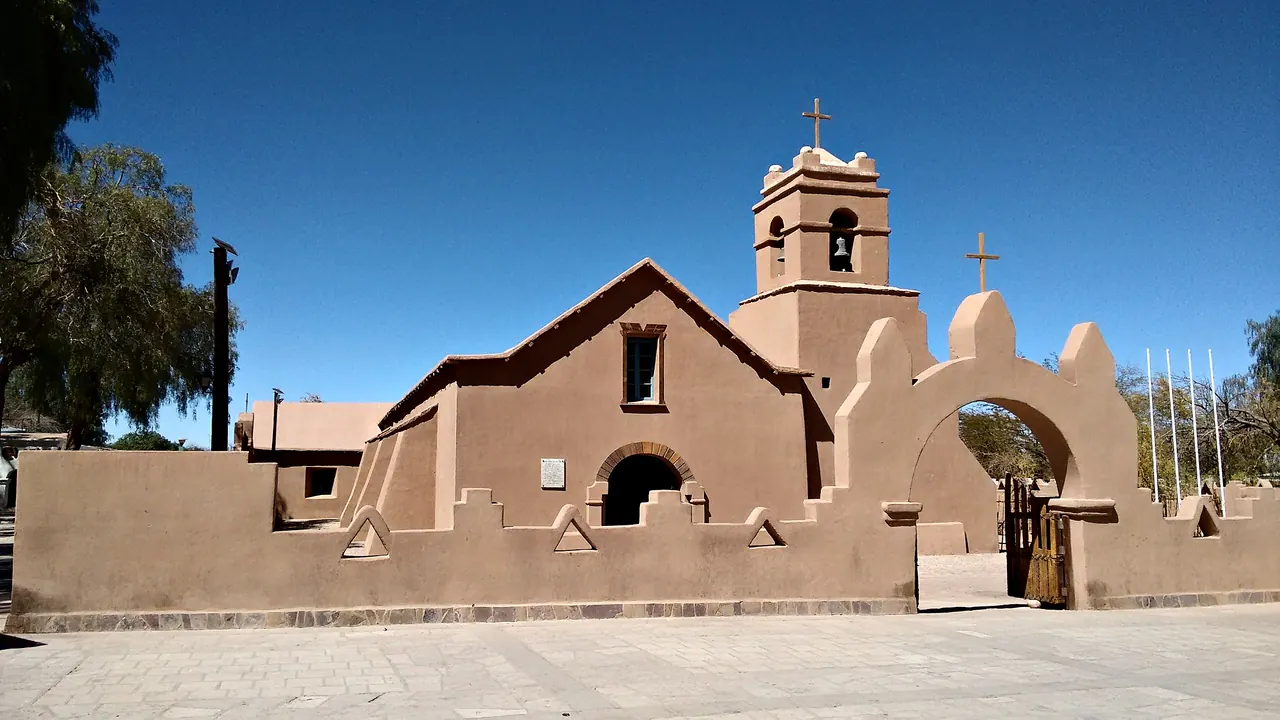
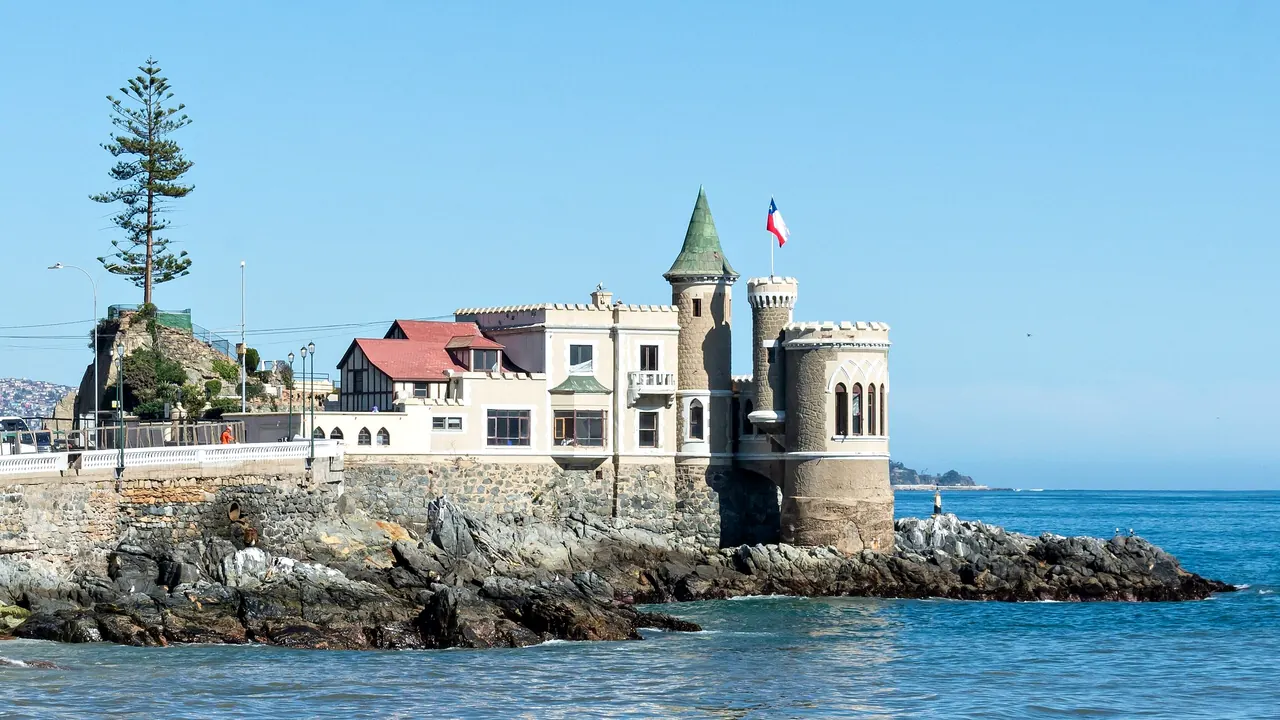
Photos: San Pedro de Atacama by MarcosEscalier, CC BY-SA 4.0, cropped; Vina del Mar by Carlos yo, CC BY-SA 4.0, cropped.
San Pedro de Atacama or Vina del Mar?
Our verdict in twelve categories, each scored against the same fixed benchmark cities, and the climate month by month, so you can choose for your trip.
Choose San Pedro de Atacama for
- nature and the outdoors
- wellness
San Pedro de Atacama is for travellers who want landscape above everything else. Geysers at dawn, flamingo lagoons beneath volcanoes, moon-like valleys you can cycle into and some of the clearest night skies on earth make up the whole trip. Comfort, food and evenings out come a distant second. It suits active adults and older teenagers who will accept early alarms, altitude and a tour-based budget for scenery they will not find elsewhere.
Choose Vina del Mar for
- day trips
- nightlife
- beaches
Viña del Mar is the easier, more sociable choice: a Chilean seaside resort with long promenades, a seafood coast road, summer nights that run until dawn and Valparaíso fifteen minutes away by metro. It works better for families, for anyone who wants to walk out of the hotel and find dinner and a bar, and for travellers who want several towns and a wine valley within reach rather than one extraordinary landscape.
Scoreboard
Twelve categories on one fixed scale from 0 to 100. The shaded stretch is the gap between the two.
Your match
Pick a travel style or drag the sliders, and both match scores follow your weighting.
Wins on nature and the outdoors and wellness with your weighting.
Wins on day trips and nightlife with your weighting.
What matters to you?
Category by category
What the scores mean for a trip.
Beaches & swimming
San Pedro has no beach at all, only an hour floating in the dense, cool salt water of Laguna Cejar or the Baltinache pools, with no shade around you. It is a novelty rather than a beach day, and a lodge pool is the nearest thing to lounging by the water.
Viña del Mar is a proper beach resort, with a string of sandy bays from Caleta Abarca and Las Salinas to the broad, sociable sands of Reñaca. The Humboldt Current keeps the Pacific cold and the surf is often strong, so you sunbathe and take brief dips rather than swimming lazily. Even so, it is the only one of the two where a trip can revolve around the sand.
Food & drink
Viña del Mar eats considerably better. Its strength is Pacific seafood such as congrio, machas and locos, along with the empanada counters on the Concón road and crisp whites from the nearby Casablanca Valley. The centre itself is more ordinary resort fare.
In San Pedro, the Andean touches are the interest: llama, quinoa, chañar and rica-rica in a pisco sour. Still, a village of a few thousand people offers little range, and after a few nights the menus around Caracoles start to blur together.
Culture & sights
Neither is a culture destination, but Viña del Mar offers somewhat more. The Fonck Museum, with its Easter Island moai and Rapa Nui collections, the Belle Époque palaces and the fine arts museum in the Quinta Vergara fill an afternoon. Valparaíso's UNESCO-listed hills are on the doorstep for anything deeper.
San Pedro's heritage is older and rougher: the cactus-wood ceiling of its adobe church, the Pukará de Quitor fortress on its hillside and the ancient round houses of Tulor. They fit into half a day by bike and give a human backdrop to the desert rather than making a reason to come.
Nightlife
This is one of the widest gaps between the two. In January and February Viña del Mar keeps Chilean hours: dinner after nine, bars filling at midnight and Reñaca's clubs going until dawn, with the Art Deco casino adding a touch of old glamour. Things go quiet outside that season, but Valparaíso's bars remain a short ride away.
San Pedro goes to bed early because the geyser tours leave before dawn. A night out there means a pisco sour by a fire pit and then a telescope under the desert sky.
Nature & outdoors
San Pedro de Atacama is in another league. The Valle de la Luna, the flamingo pools of the Salar, the El Tatio geysers above 4,300m and the blue Miscanti and Miñiques lagoons beneath snowy volcanoes amount to some of South America's most remarkable scenery, with world-class stargazing on top. The one constant limit is altitude.
Viña's outdoors are gentler and closer to sea level. You get sea lions and pelicans on the rocks towards Concón, the protected dunes, surfing in a wetsuit and the palm-forest climb in La Campana. All of it is enjoyable, but none of it compares with the desert.
Day trips
Viña del Mar is far better placed. Valparaíso, with its funiculars and Neruda's La Sebastiana, is a short metro ride away. The Casablanca wineries, Isla Negra, the villages of Zapallar and Santiago itself are all manageable in a day.
From San Pedro, nearly every outing is into the landscape rather than to another town. Toconao's white-stone bell tower, the old church at Chiu Chiu and the vast Chuquicamata copper mine are the few real destinations, and Uyuni is a multi-day journey, not a day trip.
Good for families
Viña del Mar is the easier family choice. Chilean families have vacationed there for generations, Las Salinas and Caleta Abarca are calm enough for paddling, and the Quinta Vergara gives children room to run. There are no big attractions built for children, though.
San Pedro suits adventurous teenagers who can sandboard, float in a salt lagoon and look at Saturn through a telescope. For small children, the pre-dawn starts, long minibus rides, altitude above 4,000m and freezing mornings are hard going.
Getting around
In San Pedro, walking covers the village and nothing more. No bus goes to anything you came to see. Each outing means a tour seat, a hire car or, for the closer valleys and ruins, a bicycle and more effort than you might expect. Plan the stay around booked excursions rather than free wandering.
Viña del Mar lets you do far more on your own. The beaches, gardens and shops of the centre are a short stroll apart, and the coastal metro makes Valparaíso as easy to reach as another part of town. Reñaca and Concón are a bus or taxi ride away, which is slow in high summer. You only need a car or a tour for the wine country, Isla Negra and La Campana.
Shopping & style
Shopping is no draw in either place. Viña del Mar does have more of it, with Avenida Valparaíso, large malls carrying chains and craft stalls selling copper and lapis lazuli by the beaches. San Pedro offers only its craft market and the shops on Caracoles, where the useful buy is an alpaca or llama wool layer for the freezing dawn starts.
Affordability
A stay in San Pedro costs more than in most of Chile, because everything is trucked across the desert. Almost every sight also needs a paid tour or a hire car, plus park entry, and even the simple adobe guesthouses are dear for what they offer. Set lunches, self-catering and cycling to the nearby valleys are the main ways to save.
In Viña del Mar, what you pay depends on the calendar. Sea-view rooms climb sharply in January, February and on long weekends. For the rest of the year the same rooms are much easier on a budget, and buses, the metro, set lunches and empanadas keep day-to-day spending modest, so Viña is the cheaper base of the two for most of the year.
Live music & performing arts
Viña del Mar has one event known across the Spanish-speaking world: the February Song Festival in the Quinta Vergara amphitheatre. The Teatro Municipal stages concerts, ballet and theatre the rest of the year.
San Pedro has no stage life to speak of. You might hear panpipes and charango in a restaurant, and costumed troupes dance through the streets at the feast of San Pedro and San Pablo and at Carnival.
Wellness & relaxation
San Pedro has the better restorative experiences. The Termas de Puritama step down a reed-filled canyon at bath-warm temperatures, and the desert lodges offer spas and pools facing the volcanoes. The catch is the trip's own rhythm of early alarms and thin air, so build in rest days.
Viña del Mar has no thermal springs and a sea too cold to linger in, so treatments mean a hotel spa. Its calm comes from long promenade walks and Pacific sunsets outside the summer rush.
When should you go?
Pick your month. The climate figures are measured averages, not a forecast.
San Pedro de Atacama in July
Vina del Mar in July
Daytime high, °C
Rainfall in the month, mm
Where the figures come from
San Pedro de Atacama has no weather station within reach, so its figures come from a gridded climate model rather than a measured record, and read a broad area rather than the city itself.
Vina del Mar has no rain gauge within 25 km of the centre, so its rainfall comes from a gridded climate dataset read at the city rather than from a gauge further away.
Temperature and rainfall are climate normals, averaged over the years shown. San Pedro de Atacama: 1991-2020 normals, TerraClimate 4 km grid at the town, no weather station within 90 km. Vina del Mar: 2010-2025 (rainfall 1991-2020) normals, Viña Del Mar / Montemar (10.8 km from centre).
San Pedro de Atacama barely changes its weather. Days are dry and warm almost all year, peaking around 26°C in December and January and dipping to about 19°C in June and July, which is still comfortable for walking and cycling. The only rain to speak of falls in January and February, when the occasional altiplano storm can cut a mountain excursion short. The mid-year months bring the coldest early starts at altitude, so pack serious layers for the geysers.
Viña del Mar runs to a clear seasonal pattern. December to March is the beach season, with highs around 22°C and almost no rain, although even then the sea only reaches about 17°C. From May to August the coast turns cool, grey and wet, with June the wettest month at roughly 114mm. Spring and autumn are mild and good for promenade walks. For a sun-and-sand stay go to Viña in summer, while San Pedro works whenever you can get there.
Which traveller are you?
On an outdoors trip, San Pedro de Atacama is the clear choice. Salt flats, steaming geyser fields, high lagoons with grazing vicuñas and volcano climbs are all within a morning's drive. Viña's coastal dunes and La Campana's palm forest are pleasant, but on a much smaller scale.
For a food and nightlife trip, Viña del Mar wins easily. Shellfish empanadas and caldillo along the Concón road, Casablanca wines, late summer clubs in Reñaca and Valparaíso's bars next door make for far fuller evenings than a few fire-pit bars in the desert.
On a relaxing and wellness trip, San Pedro has the edge thanks to the Termas de Puritama hot pools, lodge spas facing the volcanoes and slow adobe afternoons. Leave empty days between early tours. Viña offers seafront walks and hotel spas but no bathing tradition.
Before you go
| Measure | San Pedro de Atacama | Vina del Mar |
|---|---|---|
| Official language | Spanish | Spanish |
| Currency | Chilean Peso (CLP) | Chilean Peso (CLP) |
| Sockets | CL220 V, 50 Hz | CL220 V, 50 Hz |
| Driving side | Right | Right |
| Time zone | UTC-4, UTC-3 in summer | UTC-4, UTC-3 in summer |
| Emergency number | Police 133/134, ambulance 131, fire 132 | Police 133/134, ambulance 131, fire 132 |
| Elevation | 2,407 m | 2 m |
| Main airport | El Loa Airport (CJC)86 km from centre3 non-stop destinations | Comodoro Arturo Merino Benítez International Airport (SCL)82 km from centre67 non-stop destinations |
| Public holidays this year | 16 days | 16 days |
By the numbers
| Measure | San Pedro de Atacama | Vina del Mar |
|---|---|---|
| City population | 5,347 | 332,875 |
| People per km² | 2,325 | 2,760 |
| Museums within 10 km | 1 | 17 |
| UNESCO World Heritage sites within 50 km | 1 | 1 |
| Swim season, months above 21 °C | - | None |
Where else could you go?
Every comparison below shares a destination with this one, so you can follow San Pedro de Atacama or Vina del Mar somewhere new.
- Valparaisovs Vina del Mar
- Santiagovs Vina del Mar
- Mendozavs Vina del Mar
- Saltavs San Pedro de Atacama
- La Pazvs San Pedro de Atacama
- Mendozavs San Pedro de Atacama