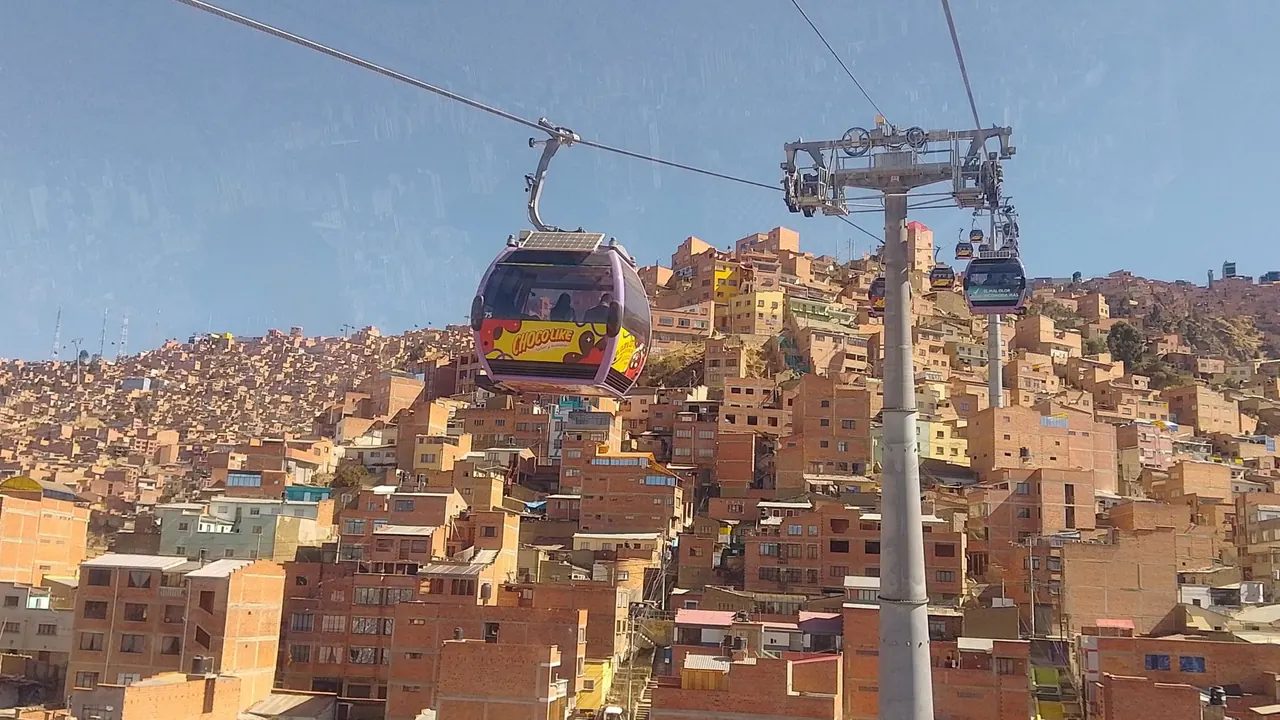
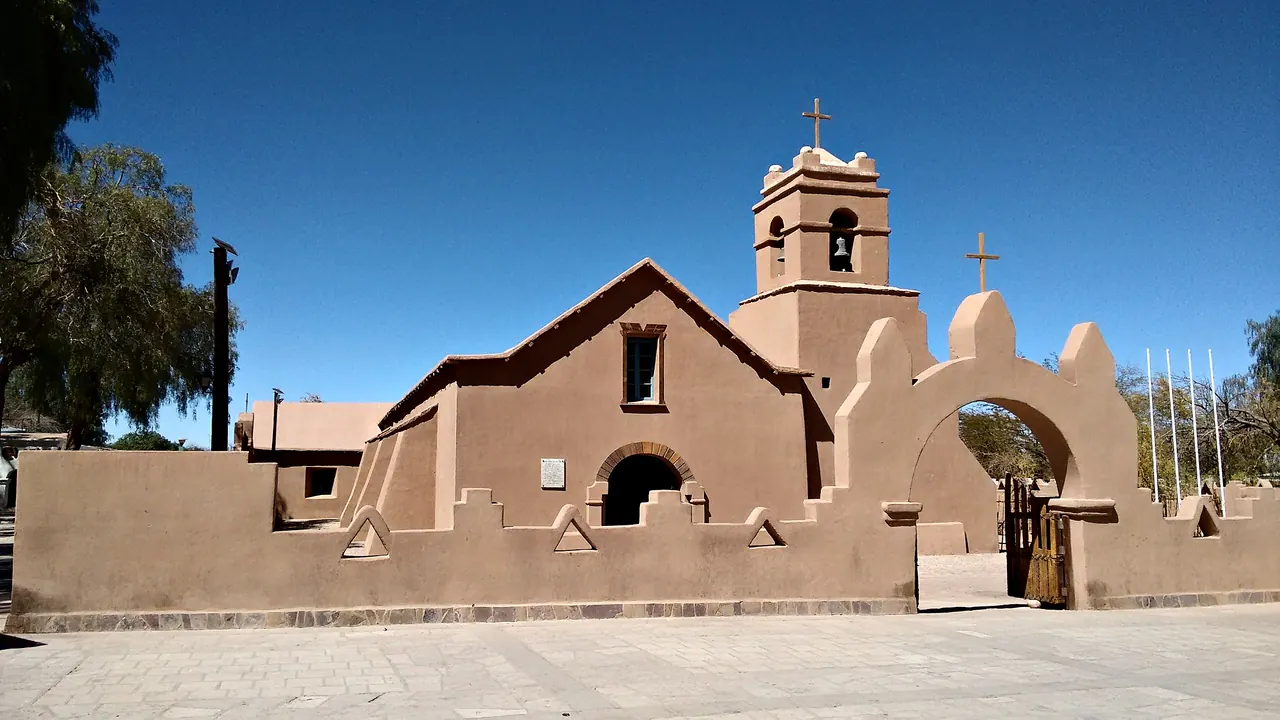
Photos: La Paz by Arabsalam, CC BY 4.0, cropped; San Pedro de Atacama by MarcosEscalier, CC BY-SA 4.0, cropped.
La Paz or San Pedro de Atacama?
Our verdict in twelve categories, each scored against the same fixed benchmark cities, and the climate month by month, so you can choose for your trip.
Choose La Paz for
- prices
- culture and sights
- nightlife
La Paz suits travellers who want a real city as well as mountains. It offers market food, colonial churches, Andean street life, folkloric music and a cable-car network strung across a canyon full of houses. It is also far cheaper, so money goes much further on a long stay. Tiwanaku and the glaciers of the Cordillera Real are close enough for day trips. The trade-off is altitude, traffic and cold nights, which make it a poor fit for young children or for anyone who wants rest.
Choose San Pedro de Atacama for
- wellness
- families
- nature and the outdoors
If you are going for the landscape and little else, San Pedro de Atacama is the one to choose. Around a quiet adobe village lie geysers, salt flats, deep blue lagoons and some of the clearest night skies anywhere, and there are hot springs and lodge spas for recovering afterwards. Expect to pay well for all of it and to book a tour for almost everything. Evenings are short and the restaurant menus soon repeat.
Scoreboard
Twelve categories on one fixed scale from 0 to 100. The shaded stretch is the gap between the two.
Your match
Pick a travel style or drag the sliders, and both match scores follow your weighting.
Wins on prices and culture and sights with your weighting.
Wins on wellness and families with your weighting.
What matters to you?
Category by category
What the scores mean for a trip.
Beaches & swimming
Neither place belongs on a beach trip. La Paz sits in a canyon in a landlocked country, and San Pedro is a desert oasis a long drive from the Pacific. In La Paz the only swimming is in a heated hotel pool, because Lake Titicaca is too cold to swim in.
San Pedro de Atacama at least has something unusual: you can float without effort in the dense salt water of Laguna Cejar or the Baltinache pools. It lasts about an hour, in cool water under a hard sun with no shade, and it is not an afternoon on the sand.
Food & drink
La Paz is much the better place to eat, because food there is part of daily street life rather than something laid on for visitors. Purple-corn api at dawn, salteñas at mid-morning and anticucho grills on street corners after dark give the day its rhythm. Mercado Rodríguez and Mercado Lanza sell more than a hundred kinds of potato and serve soups at long shared tables, and a few ambitious kitchens in Sopocachi cook with llama and Amazonian fish. Everyday cooking is often heavy and fried, and the altitude can take away your appetite for the first day or two, but there is still far more to explore than in San Pedro.
San Pedro de Atacama has no markets or street food, so every meal is eaten in the visitor restaurants along Caracoles. The better ones use Andean ingredients such as chañar, goat cheese and rica-rica, and a lunch menu of soup and a main course is the simple, honest choice. The village is small, so there is little choice, and after a few nights most people are eating to refuel between excursions rather than for the pleasure of it.
Culture & sights
La Paz is a capital with plenty to explore. There is the carved stone front of San Francisco, Plaza Murillo, the small museums on Calle Jaén and a strong ethnography collection. The living culture is just as rewarding: the Witches' Market, cholitas in bowler hats and the brightly decorated cholet mansions of El Alto.
San Pedro de Atacama's heritage is quieter and fits into half a day by bike. It takes in the cactus-wood ceiling of the adobe church, the hillside Pukará de Quitor fortress and the round adobe houses of Tulor, more than two thousand years old. They add a human side to the desert, but they are not a reason to go.
Nightlife
Neither is a party destination, but in La Paz you can have a night out. There are small bars and cocktail places in Sopocachi, traveller bars around Sagárnaga and clubs in the southern zone at weekends. Even so, the cold and the altitude send most visitors to bed early.
In San Pedro de Atacama, an evening out means a pisco sour by a fire pit on Caracoles, and the village is quiet before midnight. The most memorable night there is an astronomy tour under the desert sky.
Nature & outdoors
Both are superb bases for high-altitude landscapes, and each happens to have its own Valle de la Luna. San Pedro de Atacama comes out ahead because so much variety is so close. There are the dunes of the Valle de la Muerte, flamingos on the Salar de Atacama, the El Tatio geysers at sunrise and the Miscanti and Miñiques lagoons below snow-streaked volcanoes, with sun almost every day.
La Paz offers glaciers and real mountaineering, with Huayna Potosí the obvious goal, as well as the Death Road ride from the snowline down into cloud forest. It suits climbers and riders, but its skies are only reliably clear in the dry season.
Day trips
La Paz has the better destination for a single day. Tiwanaku, a major pre-Inca site with the Gateway of the Sun, is about an hour and a half across the Altiplano, and El Alto's huge market is right above the city. Copacabana, Isla del Sol and Coroico are better with a night away.
From San Pedro de Atacama, almost every outing goes into the landscape rather than to another place worth visiting. The white-stone village of Toconao and the old church at Chiu Chiu are pleasant, and the Chuquicamata copper mine is an unusual extra, but none of them compares with Tiwanaku.
Good for families
Altitude makes both of them hard with young children, but San Pedro de Atacama is the gentler of the two. Its village is small, calm and lower down, and older children can go sandboarding, float in a salt lagoon and look through telescopes. Families usually stick to the shorter outings and stay at a lodge with a pool.
In La Paz you land in El Alto at about 4,000m and then face steep streets, narrow pavements and fierce traffic. The cable cars and the Mallasa zoo are the main treats. Teenagers can cope, but with small children it is better to choose a lower base.
Getting around
La Paz has a proper transport network. The Mi Teleférico cable cars link the centre, the southern suburbs and El Alto, and cheap taxis fill the gaps. The minibuses are hard for visitors to use, though, and the steep streets leave you breathless at this altitude.
You can walk across San Pedro de Atacama in ten minutes, but beyond the village there is no public transport. You rely on minibus tours, a hired high-clearance car or a bike for the nearby valleys. Getting there means a ride of about an hour and a half from Calama airport.
Shopping & style
Both sell alpaca knitwear and Andean textiles, but La Paz has far more. The lanes around Sagárnaga and Linares also sell silver and musical instruments, the Mercado Negro is a maze of everyday trade, and El Alto's 16 de Julio fair spreads over dozens of streets.
San Pedro de Atacama has a craft market near the plaza and shops on Caracoles. Lapis lazuli jewellery and volcanic-stone carvings stand out among much the same stock you find across the region. A warm wool layer for the freezing dawn starts is the one thing really worth buying.
Affordability
Cost is where the two differ most. La Paz is very cheap: market lunches, taxis and cable cars cost little, and comfortable hotels in Sopocachi or the centre are a bargain. The main costs are guided climbs and the Death Road ride.
San Pedro de Atacama is expensive even by Chilean standards, because everything comes across the desert by truck and the village lives off visitors. Rooms, restaurant dinners, tours and park fees all add up. Set lunches, self-catering and a rented bike are the ways to save.
Live music & performing arts
La Paz has a real folk music scene. In the peñas, musicians play charangos, panpipes and drums while dancers perform the morenada and the diablada. The Teatro Municipal has a modest programme, and every year the Gran Poder festival fills the streets with tens of thousands of dancers.
San Pedro de Atacama has little beyond Andean musicians in restaurants on busy evenings. The exceptions are the feast of San Pedro and San Pablo and Carnival, when costumed troupes dance through the village.
Wellness & relaxation
San Pedro de Atacama is the better place to unwind. The Termas de Puritama step down a reed-filled canyon at around 30°C, lodges have spas and pools looking towards the volcanoes, and the village slows down for a siesta in the heat of the day. Pre-dawn tours undo some of that calm, so leave a few days empty.
La Paz offers little rest. The centre is noisy and full of exhaust fumes, sleep at altitude is poor for the first nights, and there are only a few hotel spas. The nearest thermal pools, at Urmiri, are two hours away, so coca tea and an early night are what most visitors fall back on.
When should you go?
Pick your month. The climate figures are measured averages, not a forecast.
La Paz in July
San Pedro de Atacama in July
Daytime high, °C
Rainfall in the month, mm
Where the figures come from
La Paz has no weather station within reach, so its figures come from a gridded climate model rather than a measured record, and read a broad area rather than the city itself.
San Pedro de Atacama has no weather station within reach, so its figures come from a gridded climate model rather than a measured record, and read a broad area rather than the city itself.
Temperature and rainfall are climate normals, averaged over the years shown. La Paz: 2001-2020 normals, NASA POWER reanalysis grid, no weather station within 90 km. San Pedro de Atacama: 1991-2020 normals, TerraClimate 4 km grid at the town, no weather station within 90 km.
Neither place has a beach season, so the questions are walking weather and clear skies. La Paz stays cool all year, with daytime highs of about 14°C in every month. That is comfortable for walking the streets in a jacket but never warm. What changes is the rain. December to March is the wet season, peaking at about 136mm in January. May to September is almost dry and brings the clearest mountain views, which is the time for trekking, climbing and the Death Road.
San Pedro de Atacama is warmer and drier all year. Days reach about 26°C from December to February and fall to around 19°C in June and July, so cycling and walking are pleasant in any month. Rain is almost absent, with only a little in January and February, when the odd storm can roll in. If you are combining the two, the dry months from May to September suit both well.
Which traveller are you?
On a trip on a tight budget, La Paz is far easier. Market set lunches, salteñas, taxis and cable-car rides cost very little. In San Pedro de Atacama, costly rooms, tourist-priced dinners and tours you cannot avoid use up a budget quickly.
For a culture and arts trip, La Paz has much more to offer: the mestizo baroque front of San Francisco, the museums on Calle Jaén, the Andean textiles in the ethnography museum, the folk music of the peñas and the Gran Poder festival. San Pedro's church and ruins fill half a day.
On a relaxing and wellness trip, San Pedro de Atacama is the better choice. It has the hot pools of Puritama, lodge spas looking towards the volcanoes and a slow-paced adobe village. In La Paz, noise, exhaust fumes and poor sleep at altitude make rest hard.
Before you go
| Measure | La Paz | San Pedro de Atacama |
|---|---|---|
| Official language | Spanish, Aymara, Quechua, Guarani | Spanish |
| Currency | Boliviano (BOB) | Chilean Peso (CLP) |
| Sockets | AC50 Hz | CL220 V, 50 Hz |
| Driving side | Right | Right |
| Time zone | UTC-4 | UTC-4, UTC-3 in summer |
| Emergency number | 911 | Police 133/134, ambulance 131, fire 132 |
| Elevation | 3,640 m | 2,407 m |
| Main airport | El Alto International Airport (LPB)6 km from centre12 non-stop destinations | El Loa Airport (CJC)86 km from centre3 non-stop destinations |
| Public holidays this year | 12 days | 16 days |
By the numbers
| Measure | La Paz | San Pedro de Atacama |
|---|---|---|
| City population | 755,732 | 5,347 |
| People per km² | 1,601 | 2,325 |
| Museums within 10 km | 21 | 1 |
| UNESCO World Heritage sites within 50 km | 1 | 1 |
Where else could you go?
Every comparison below shares a destination with this one, so you can follow La Paz or San Pedro de Atacama somewhere new.
- Punovs La Paz
- Saltavs San Pedro de Atacama
- Arequipavs La Paz
- Sucrevs La Paz
- Cuscovs La Paz
- Saltavs La Paz