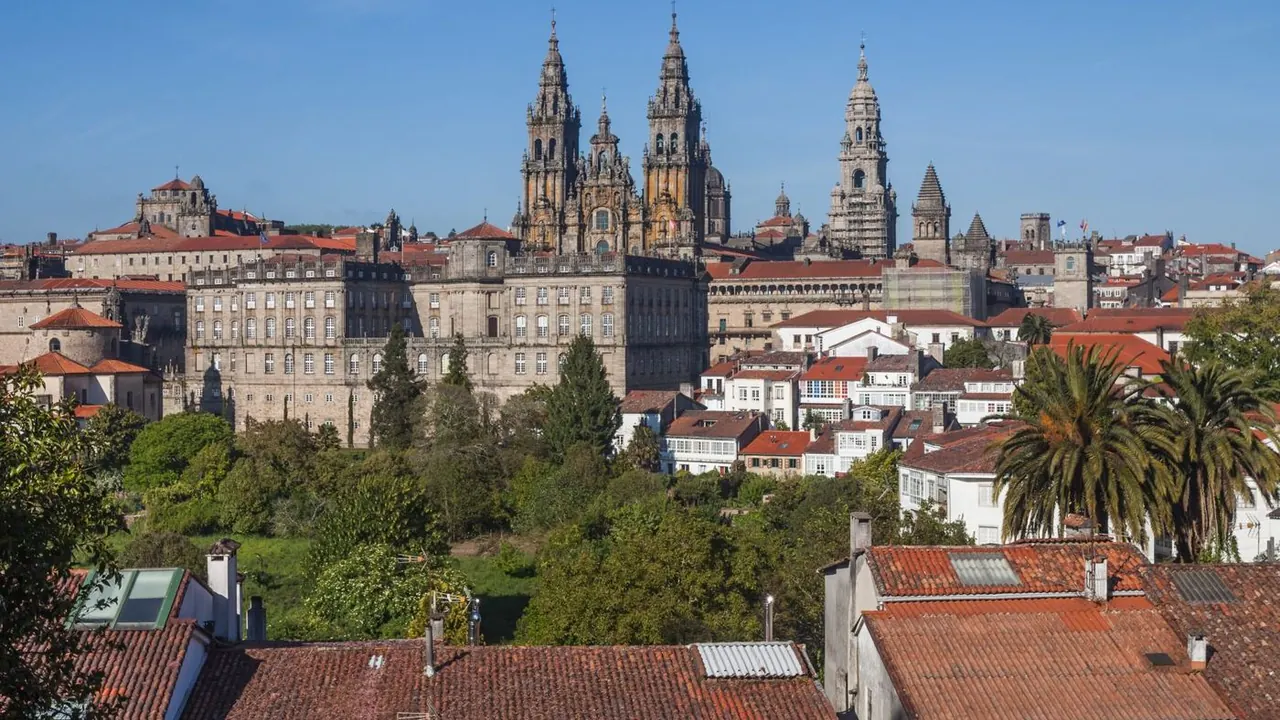
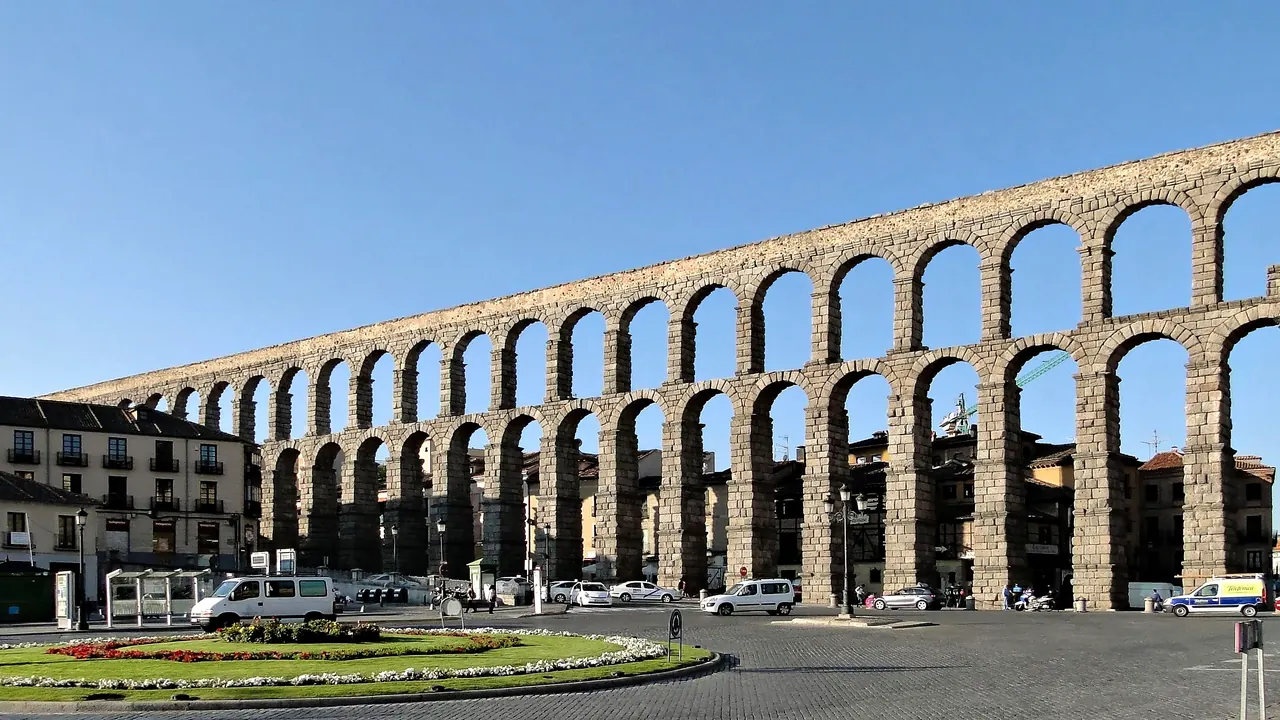
Photos: Santiago de Compostela by Luis Miguel Bugallo Sánchez (Lmbuga), CC BY-SA 3.0, cropped; Segovia by Bernard Gagnon, CC BY-SA 3.0, cropped.
Santiago de Compostela or Segovia?
Our verdict in twelve categories, each scored against the same fixed benchmark cities, and the climate month by month, so you can choose for your trip.
Choose Santiago de Compostela for
- beaches
- nightlife
- food and drink
Santiago de Compostela suits travellers who want to eat well and settle into one place for a few days. Galician seafood and the tavern streets around the cathedral give it the stronger table, the student bars keep evenings livelier, and Galicia's hot springs and white-sand rías are close enough for a slower second half to the trip.
Choose Segovia for
- nature and the outdoors
- day trips
- families
Choose Segovia if you would rather spend your days outdoors and on the move. The Sierra de Guadarrama rises half an hour away, with pine forest and high trails, and fast trains and short drives put Madrid, La Granja, Ávila and the walled villages of Pedraza and Sepúlveda within an easy day. Its sights carry as much weight as Santiago's, but the evenings are quieter and end earlier.
Scoreboard
Twelve categories on one fixed scale from 0 to 100. The shaded stretch is the gap between the two.
Your match
Pick a travel style or drag the sliders, and both match scores follow your weighting.
Wins on beaches and nightlife with your weighting.
Wins on nature and the outdoors and day trips with your weighting.
What matters to you?
Category by category
What the scores mean for a trip.
Beaches & swimming
Neither is a beach city, but Santiago at least has the sea within reach. About 35km away, the Ría de Muros e Noia and the Ría de Arousa have sheltered white sand, worth a summer day out if you can accept cold water.
Segovia is on the Castilian plateau and the coast is a long drive away, so swimming means a pool or a chilly reservoir in the Guadarrama foothills. If you want even one beach day, lean towards Santiago.
Food & drink
Santiago has the stronger table, built on one excellent regional cuisine: pulpo á feira, scallops, razor clams and percebes, bought fresh in the Abastos market hall and eaten with Albariño or Ribeiro. Tapas along Rúa do Franco and a slice of tarta de Santiago complete it.
Segovia's cooking centres on the wood-fired oven, with cochinillo and lechazo as the big meals and judiones beans and ponche segoviano around them. It makes a memorable lunch, but beyond the roasts the choice narrows quickly. Both cities are thin on international cooking.
Culture & sights
The two are evenly matched for sights, and both have UNESCO-listed granite old towns, but the focus differs. Santiago revolves around one great building, the pilgrimage cathedral with its Pórtico da Gloria on the Praza do Obradoiro, supported by the Museo do Pobo Galego and the Cidade da Cultura.
Segovia spreads its interest along a ridge: the Roman aqueduct, the late Gothic cathedral, the Alcázar and a string of Romanesque churches, with lighter museums. Santiago rewards two or three days of slow looking, while Segovia's essentials fit into a full day.
Nightlife
Santiago has much the livelier evenings, at least in term time. Wine and tapas on Rúa do Franco lead on to pub-like bars around the Praza de Cervantes, folk sessions and a few old-town clubs that stay open into the early morning, and Thursday is the student night.
In Segovia a night out means a tapas round on Plaza Mayor and a few later bars at weekends, and the old town goes quiet early in winter. Anyone after a real late night goes to Madrid. Santiago also calms down in summer, once the students have left.
Nature & outdoors
Segovia has the more dramatic outdoors, with real mountains on its doorstep. The Sierra de Guadarrama offers pine forest at Valsaín, high passes at Navacerrada and Cotos and trails up towards Peñalara at 2,428m, as well as winter snow and the vultures of the Hoces del Duratón.
Santiago's landscape is softer and wetter: hills of oak and eucalyptus, Camino paths leading out of town and, within a drive, the cliffs of the Costa da Morte, the ancient woods of the Fragas do Eume and kayaking in the rías.
Day trips
Both make good bases, but Segovia reaches more. La Granja's palace and fountains are twenty minutes away and Madrid is under half an hour by high-speed train. Ávila, El Escorial, Pedraza and Sepúlveda all make easy days, with Ribera del Duero wine country further out.
Santiago's day trips stay within Galicia: A Coruña and its Tower of Hercules, Pontevedra, Vigo, Ourense and walled Lugo by train, and the Rías Baixas or Fisterra by car. It is one region to explore in depth rather than a choice of capitals and castles.
Good for families
Neither city is built around children, and both have cobbled, hilly streets that are hard work with a pushchair. What differs is the main attraction. Segovia has a turreted castle with a tower to climb and the gardens of La Granja to run in. Santiago relies on its parks, a short train ride to A Coruña's aquarium and science museums, and summer beach days when the rain holds off.
Getting around
Santiago is the easier place to get about. You can cross the old town on foot in twenty minutes, buses link it with the station and the airport, and coastal trains reach the main Galician towns without a car.
Segovia's ridge is just as walkable but steeper, and the high-speed station is several kilometres out, so arriving means a bus ride. Its villages and mountain trailheads depend even more on a hire car than Santiago's coast does.
Shopping & style
Santiago gives you far better things to take home. Black jet, the old pilgrim's amulet, is still carved and set in silver around the Azabachería beside the cathedral. Blue-and-white Sargadelos ceramics, tetilla cheese, tinned seafood and a wander through the Abastos market also make browsing worthwhile, even if the high street in the Ensanche is ordinary.
Segovia has less to offer: souvenirs along Calle Real, a few shops with local ceramics and embroidery, and boxed ponche segoviano or La Granja beans. For fashion, both cities fall short, and serious shoppers in Segovia take the train to Madrid.
Affordability
Costs are much the same in both, and both are cheaper than Spain's big cities. What differs is where the money goes. In Santiago, free tapas with a drink, generous set lunches and pilgrim hostels keep spending low, though rooms cost more around the feast of Saint James in July. In Segovia the roast pig and lamb by the aqueduct are the splurge, and weekends bring visitors from Madrid, so midweek winter stays are the cheapest.
Live music & performing arts
Santiago has more on through the year: the Real Filharmonía de Galicia at the Auditorio de Galicia, drama at the Teatro Principal, and Galician bagpipes and student tunas in the streets on almost any night.
Segovia's live culture comes in seasons. It is led by the Titirimundi puppet festival in spring and summer concerts in churches and palace gardens, with the Teatro Juan Bravo for touring shows. Outside those weeks there is little on, and neither city has opera.
Wellness & relaxation
Santiago comes out ahead because of what lies around it. Thanks to Galicia's hot springs, the spa towns of Caldas de Reis and Cuntis and Ourense's open-air thermal pools are an easy outing, a good cure for tired walking legs.
Segovia has no bathing tradition, so rest there comes from the pace: a quiet old town once the coaches leave, walks along the walls and pine-scented air from the sierra.
When should you go?
Pick your month. The climate figures are measured averages, not a forecast.
Santiago de Compostela in July
Segovia in July
Daytime high, °C
Rainfall in the month, mm
Temperature and rainfall are climate normals, averaged over the years shown. Santiago de Compostela: 1991-2020 normals, Santiago / Labacolla (8.4 km from centre). Segovia: 1991-2020 normals, Segovia (0.3 km from centre).
Santiago is at its best from June to September, when the rain eases, highs reach about 25°C and the long days bring the most sunshine. This is also the only time for the beaches of the rías, and even then the sea stays near 17°C, which is bracing rather than warm. From October to January the city gets more than 200mm of rain a month, so autumn and winter visits mean umbrellas and wet, shining granite.
Segovia is much drier and sunnier all year, but its temperatures go to extremes. July and August reach 30°C on the plateau, which is hot work on the steep streets, and winter highs fall to about 8°C with a sharp cold. Late spring and September are the best times for walking the old town and the sierra, while Santiago is often still damp.
Which traveller are you?
On a food and nightlife trip, Santiago is the better pick. Seafood from the Mercado de Abastos, Albariño in the taverns of Rúa do Franco and student bars that stay open late in term outlast Segovia's roast dinners and early-closing evenings.
For an outdoors trip, Segovia wins. The Guadarrama passes are half an hour away, with trails towards Peñalara and its glacial lakes, pine forest at Valsaín and vultures over the Duratón gorge. Santiago's green hills and coastal walks are gentler and much wetter.
On a relaxing and wellness trip, Santiago has the edge. The spa towns of Caldas de Reis and Cuntis and Ourense's riverside thermal pools are all close by. That is a real bathing tradition, which Segovia, with only a few hotel spas, cannot offer.
Before you go
| Measure | Santiago de Compostela | Segovia |
|---|---|---|
| Official language | Spanish | Spanish |
| Currency | Euro (EUR) | Euro (EUR) |
| Sockets | CF230 V, 50 Hz | CF230 V, 50 Hz |
| Driving side | Right | Right |
| Time zone | UTC+1, UTC+2 in summer | UTC+1, UTC+2 in summer |
| Emergency number | 112 | 112 |
| Elevation | 260 m | 1,002 m |
| Main airport | Santiago-Rosalía de Castro Airport (SCQ)10 km from centre29 non-stop destinations | Adolfo Suárez Madrid–Barajas Airport (MAD)68 km from centre241 non-stop destinations |
| Public holidays this year | 13 days | 12 days |
By the numbers
| Measure | Santiago de Compostela | Segovia |
|---|---|---|
| City population | 100,965 | 52,375 |
| People per km² | 459 | 320 |
| Museums within 10 km | 6 | 11 |
| UNESCO World Heritage sites within 50 km | 2 | 2 |
| Swim season, months above 21 °C | None | - |
Where else could you go?
Every comparison below shares a destination with this one, so you can follow Santiago de Compostela or Segovia somewhere new.
- Madridvs Segovia
- Toledovs Segovia
- Salamancavs Segovia
- Portovs Santiago de Compostela
- Bilbaovs Segovia
- Zaragozavs Segovia