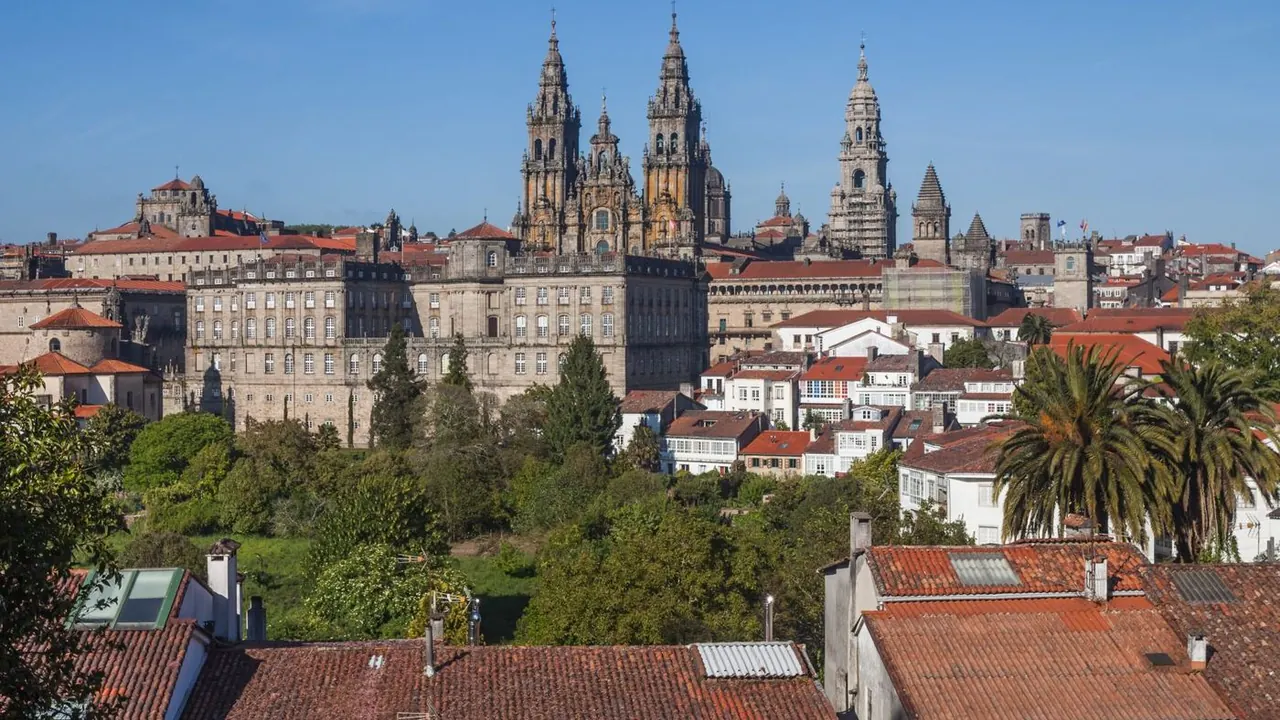
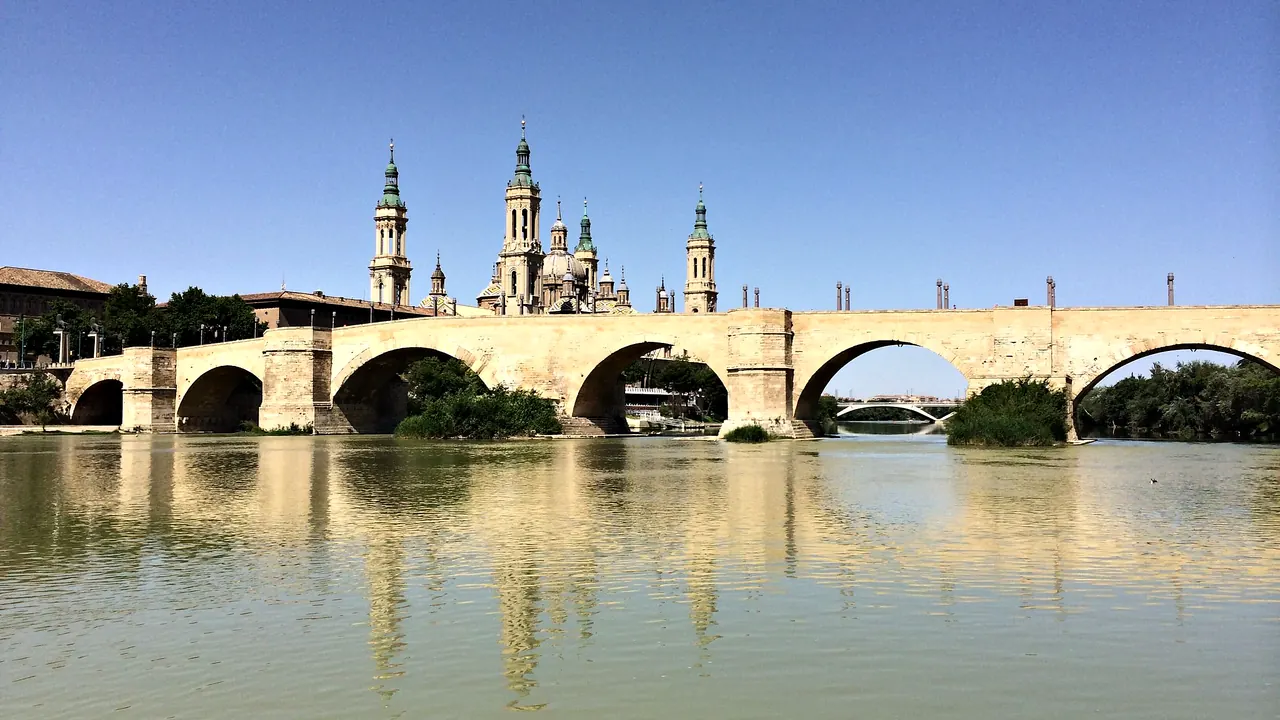
Photos: Santiago de Compostela by Luis Miguel Bugallo Sánchez (Lmbuga), CC BY-SA 3.0, cropped; Zaragoza by Pablo Alejandro Araujo Granda, CC BY-SA 2.0, cropped.
Santiago de Compostela or Zaragoza?
Our verdict in twelve categories, each scored against the same fixed benchmark cities, and the climate month by month, so you can choose for your trip.
Choose Santiago de Compostela for
- beaches
- food and drink
- culture and sights
Santiago de Compostela suits the traveller who wants one great sight and one great cuisine done properly. The cathedral, the Obradoiro and the granite old town have a sense of arrival that Zaragoza's monuments lack, and the seafood around the Abastos market is a reason to come in itself. Add the green hills and the rías within reach, and it is the better choice for walkers, pilgrims and anyone happy to dress for rain.
Choose Zaragoza for
- families
- nightlife
- shopping
Families with children and travellers who like warmth, sun and a livelier evening will get on better in Zaragoza. The flat centre, the river aquarium and the open parks make days with young ones easier, the tapas crawl through El Tubo carries on into late nights out, and the high-speed line puts Madrid and Barcelona within easy reach. It is a drier and harsher landscape, though, and summer on the plain is fierce.
Scoreboard
Twelve categories on one fixed scale from 0 to 100. The shaded stretch is the gap between the two.
Your match
Pick a travel style or drag the sliders, and both match scores follow your weighting.
Too close to call, 1 point apart
Wins on beaches and food and drink with your weighting.
Wins on families and nightlife with your weighting.
What matters to you?
Category by category
What the scores mean for a trip.
Beaches & swimming
Neither city is a beach destination, but Santiago at least has the sea within reach. About 35km away, the rías offer fine white sand and calm water in sheltered inlets, a worthwhile day out in high summer even if the Atlantic stays cold.
From Zaragoza the Mediterranean is more than 200km off, so swimming means a municipal open-air pool. Anyone who wants sand on this trip should add a few days on the coast.
Food & drink
Santiago eats better, largely on the strength of Galician seafood. Octopus with paprika, scallops, razor clams and percebes from the Mercado de Abastos, washed down with Albariño in the taverns of Rúa do Franco, make a meal here feel like the point of the trip.
Zaragoza is meat and tapas country instead: ternasco lamb, migas and a bar-to-bar crawl through El Tubo with robust reds from Cariñena and Somontano. It is hearty and enjoyable, but less of a reason to travel than Santiago's shellfish, and both cities are thin on international cooking.
Culture & sights
Santiago has the greater single experience. The pilgrimage cathedral, with the Pórtico da Gloria and the botafumeiro, opens onto the Obradoiro, and the whole UNESCO-listed old town of granite arcades and monasteries holds together as one historic place.
Zaragoza's history is longer and more varied, from Roman Caesaraugusta through the Islamic Aljafería to Goya's ceilings in the Pilar, with the Mudéjar wall of La Seo and the underground Roman remains. Its monuments are scattered through a largely modern city, though, so the effect is a series of fine sights rather than one complete setting.
Nightlife
Zaragoza has the fuller night out. After the tapas in El Tubo, the bars around Plaza San Felipe and Santa Marta fill with students at weekends, cocktail and music bars add variety, and the Fiestas del Pilar keep the streets busy until dawn.
Santiago's evenings are smaller and more pub-like, with wine on Rúa do Franco, folk sessions around Praza de Cervantes and a few clubs. In summer the students leave and early-rising pilgrims take their place, so the old town quietens just when most visitors arrive.
Nature & outdoors
Both cities have good country nearby, but the landscapes could hardly be more different. Santiago sits among green, rain-fed hills, with the Camino paths leaving straight from town and the cliffs of the Costa da Morte and the woods of the Fragas do Eume a short drive away.
Zaragoza's surroundings are dry steppe swept by the cierzo, with beauty found further out: the beech forests of Moncayo, the red towers of the Mallos de Riglos and the desert-like Bardenas Reales. Pack a waterproof for Santiago and expect fierce sun in Zaragoza.
Day trips
Both are excellent bases, but they reach different worlds. Santiago looks out over Galicia by train and car: Roman Lugo, A Coruña's lighthouse, the thermal town of Ourense and the fishing villages of Fisterra and Muxía at the end of the Camino.
Zaragoza's trump card is the high-speed line, which makes Madrid or Barcelona a realistic day out. Closer by, a hired car opens up Loarre castle, the ruins of Belchite, the Mudéjar towns of Tarazona and Teruel, and the cliff-top village of Alquézar.
Good for families
Zaragoza is clearly easier with children. The centre is flat with roomy pedestrian squares, the Expo site has a large river aquarium next to the playgrounds of the Parque del Agua, and Parque Grande has a small funfair. Only the summer heat needs planning around.
Santiago is safe and relaxed, but it has little made for children: churches, museums, hilly cobbles and rain that can last for days. Most families find a day or two in the city enough, then head for the coast or the aquarium in A Coruña.
Getting around
Santiago is compact and hilly. You can cross its granite old town on foot in about twenty minutes, but there are short climbs, and the lanes turn slippery in the rain. Buses link the centre with the station, the Cidade da Cultura and the airport. The beaches and wine villages of the rías are much easier with a car or a tour.
Zaragoza's centre is wider but flat. Its sights are spread between the Pilar riverfront, the Casco and the Aljafería, and a tram line, dense buses and bike-share stations cover the distances between them. A car is only worth having for rural Aragon.
Shopping & style
Zaragoza is better for ordinary shopping, with the main chains and a classic department store around Paseo de la Independencia, older shops and pastry makers on Calle Alfonso I, and a large mall on the city's edge.
Santiago is better for keepsakes than for clothes. Black jet on the Azabachería, silver around the Praterías and blue-and-white Sargadelos ceramics carry real local meaning, though much of the old town sells scallop-shell souvenirs.
Affordability
Both are among the cheaper cities in Spain, with generous set lunches, inexpensive local wine and free entry to their great churches, the cathedral in one and the Pilar in the other. The difference lies in what the money buys: shellfish and Albariño in Santiago, lamb and Aragonese reds in Zaragoza.
Each city has its expensive weeks as well, the feast of Saint James in July in Santiago and the October fiestas in Zaragoza.
Live music & performing arts
Neither city has a large stage scene, and both run modest seasons, so the interest lies in the local traditions. Santiago has bagpipes, tambourines and folk sessions in old-town bars, along with caped student tunas singing in the streets, while the Real Filharmonía plays at the Auditorio de Galicia.
Zaragoza's Auditorio takes a wider run of touring orchestras, chamber music and jazz. Its own sound is the leaping jota, which is seen at its best during the Fiestas del Pilar.
Wellness & relaxation
Neither city has a bathing tradition of its own, and both offer little more than hotel spas, so the real difference is how far you travel for hot water. From Santiago it is a short hop. Galicia is full of thermal springs, the old spa towns of Caldas de Reis and Cuntis are roughly half an hour away, and Ourense's open-air pools by the Miño, some free to use, make an easy train outing to rest legs tired from the Camino.
From Zaragoza, the thermal waters at Alhama de Aragón are a little over an hour away, so a soak takes up most of a day rather than an afternoon. Relaxing here mostly means settling into the slow provincial rhythm, with a long lunch and an evening by the river. That works best in spring and autumn, because summer on the plain is draining.
When should you go?
Pick your month. The climate figures are measured averages, not a forecast.
Santiago de Compostela in July
Zaragoza in July
Daytime high, °C
Rainfall in the month, mm
Temperature and rainfall are climate normals, averaged over the years shown. Santiago de Compostela: 1991-2020 normals, Santiago / Labacolla (8.4 km from centre). Zaragoza: 1991-2020 normals, Zaragoza / Aeropuerto (11.2 km from centre).
Santiago is a summer city. From June to September the days are mild, reaching about 25°C at their peak, the rain eases off and the sun comes out more often, so this is the time for the coast, although the sea in the rías stays cold at around 17°C. From October to March the Atlantic weather sets in, with more than 200mm a month in the wettest stretch, and the old town is seen under an umbrella.
Zaragoza runs the other way. It is dry and sunny all year, but July and August reach 33°C on the plain, which is too hot for comfortable sightseeing in the afternoon. Spring and early autumn are its best seasons, warm enough to eat outside and cool enough to walk. Winters in both cities are cool, but Zaragoza's are far drier and brighter, while summer is when Santiago is at its most pleasant and Zaragoza at its most tiring.
Which traveller are you?
For a beach and sun trip, Santiago is the better of two inland bases. The sheltered white-sand inlets of the Rías Baixas and the Ría de Muros e Noia are within an easy outing in July and August, while Zaragoza's sea lies too far for a day.
On a family trip with young children, Zaragoza is easier. Its flat centre suits pushchairs, the river aquarium and the Parque del Agua fill whole days, and the dry weather keeps plans intact, whereas Santiago's cobbles, churches and rainy spells wear children out quickly.
On a shopping trip, Zaragoza gives more choice, with fashion chains and a department store along Paseo de la Independencia and a large mall on the edge of town. Santiago's strength is narrower: jet, silver and Sargadelos ceramics rather than clothes.
Before you go
| Measure | Santiago de Compostela | Zaragoza |
|---|---|---|
| Official language | Spanish | Spanish |
| Currency | Euro (EUR) | Euro (EUR) |
| Sockets | CF230 V, 50 Hz | CF230 V, 50 Hz |
| Driving side | Right | Right |
| Time zone | UTC+1, UTC+2 in summer | UTC+1, UTC+2 in summer |
| Emergency number | 112 | 112 |
| Elevation | 260 m | 200 m |
| Main airport | Santiago-Rosalía de Castro Airport (SCQ)10 km from centre29 non-stop destinations | Zaragoza Airport (ZAZ)13 km from centre12 non-stop destinations |
| Public holidays this year | 13 days | 12 days |
By the numbers
| Measure | Santiago de Compostela | Zaragoza |
|---|---|---|
| City population | 100,965 | 693,091 |
| People per km² | 459 | 712 |
| Museums within 10 km | 6 | 22 |
| UNESCO World Heritage sites within 50 km | 2 | 1 |
| Swim season, months above 21 °C | None | - |
Where else could you go?
Every comparison below shares a destination with this one, so you can follow Santiago de Compostela or Zaragoza somewhere new.