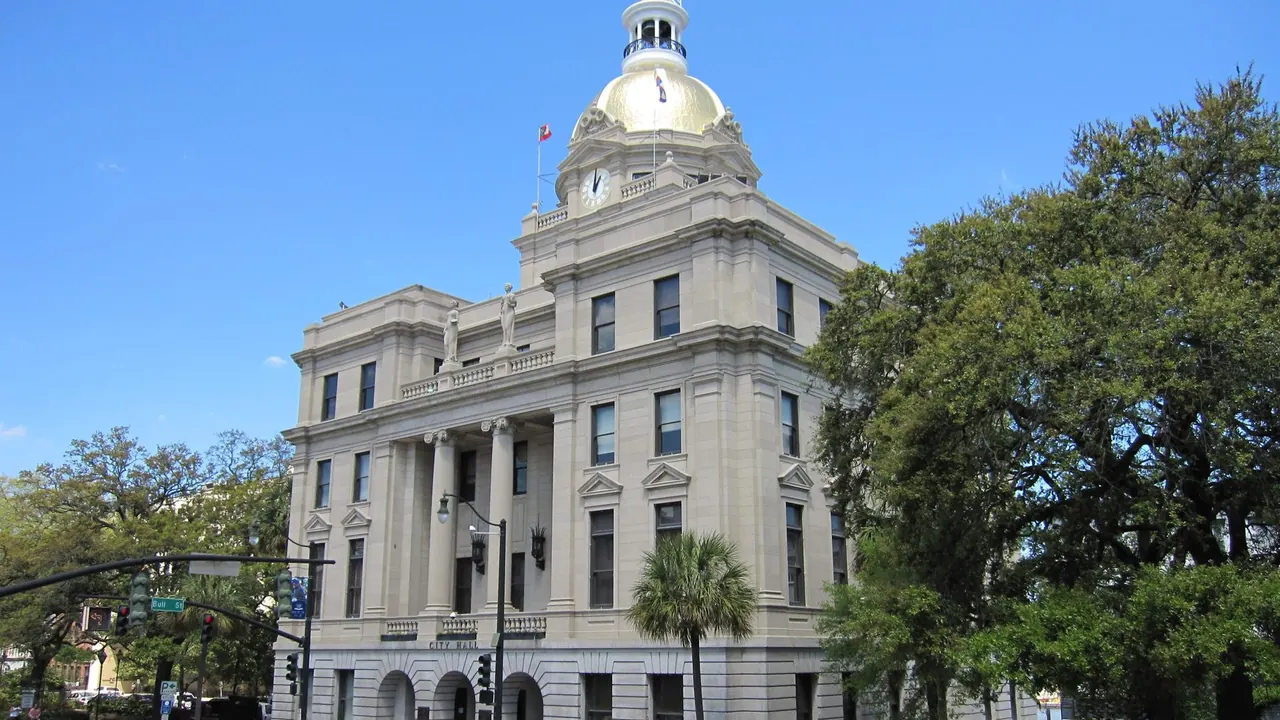

Photos: Savannah by Chris M Morris, CC BY 2.0, cropped; Washington DC by Guohua Song, Pexels License.
Savannah or Washington DC?
Our verdict in twelve categories, each scored against the same fixed benchmark cities, and the climate month by month, so you can choose for your trip.
Choose Savannah for
- beaches
- wellness
- prices
Savannah suits travellers who want a slow, atmospheric few days rather than a full sightseeing list. Its pleasure lies in wandering the garden squares under the live oaks, eating shrimp and grits, sitting on an inn porch and driving out to Tybee Island for an afternoon on the sand. It is the gentler, more restful choice, and the better one if a beach day matters.
Choose Washington DC for
- live music and the arts
- families
- culture and sights
Washington is the stronger pick for anyone who wants a lot to see and do. Free museums along the Mall, the monuments, a serious theatre and concert season and a Metro that makes a car unnecessary give it far more depth for a week, and it works better with children. History lovers also gain Mount Vernon, Baltimore and the Civil War battlefields within easy reach.
Scoreboard
Twelve categories on one fixed scale from 0 to 100. The shaded stretch is the gap between the two.
Your match
Pick a travel style or drag the sliders, and both match scores follow your weighting.
Wins on beaches and wellness with your weighting.
Wins on live music and the arts and families with your weighting.
What matters to you?
Category by category
What the scores mean for a trip.
Beaches & swimming
Savannah has the beach that Washington lacks. Tybee Island is about half an hour's drive, with broad flat sand for paddling and long walks and a warm Atlantic through summer, though the water is marsh-tinted rather than clear.
Washington offers only small, brackish beaches on the Chesapeake Bay about an hour away, with jellyfish late in the season, and the proper Atlantic shore is a weekend trip rather than an afternoon out. Most visitors there settle for a hotel pool.
Food & drink
Washington eats more widely. Its Ethiopian restaurants around Shaw and U Street, Salvadoran pupusas in Columbia Heights, Chesapeake crabs and oysters, the stalls of Eastern Market and Union Market and a serious tasting-menu tier give a visitor many different meals over a week.
Savannah's cooking is narrower but more rooted in place: Lowcountry boil, she-crab soup, shrimp and grits and family-style Southern tables, with a small group of chef-led kitchens in old townhouses. It makes for a delicious long weekend, but variety beyond Southern food is thin.
Culture & sights
Washington is in a different league for sights. The Smithsonian museums, the National Gallery of Art, the Capitol, the Lincoln Memorial, the Library of Congress and Arlington Cemetery can fill a week, and most of the museums are free to drop into.
Savannah's appeal is the whole townscape rather than its collections: Oglethorpe's grid of moss-hung squares, Factors Walk, the Telfair Museums and the Owens-Thomas House, with Bonaventure Cemetery as a haunting coda. It is absorbing for a day or two of walking, but it cannot match the capital's depth.
Nightlife
The two are fairly close for a night out, but the feel is different. Savannah's evenings are loose and wandering, with to-go cups carried between River Street's cobbled bars, City Market taverns and townhouse cocktail rooms, and they end fairly early except around St Patrick's Day.
Washington's going out is spread over distinct neighbourhoods: rooftops and dance spots on 14th Street and U Street, late cheap drinks in Adams Morgan, dives on H Street and the LGBTQ+ bars of Dupont Circle. Weekend bars stay open later, though early in the week the scene is mostly after-work happy hours.
Nature & outdoors
Washington gives the outdoors more range. Rock Creek Park and the C&O Canal towpath run straight out of the city, Great Falls offers cliff paths and whitewater half an hour upriver, and the Shenandoah ridges are within a day's reach for proper hiking.
Savannah's landscape is flat Lowcountry marsh, best seen from a kayak at high tide, on a dolphin-watching boat or along the oak avenue at Wormsloe. It is lovely for birders and paddlers, but there are no hills, and summer insects and humidity cut outings short.
Day trips
Washington has more on its doorstep and easier ways to reach it. Old Town Alexandria is a Metro ride away, Baltimore is under an hour by train, Philadelphia is a fast-train day out, and Mount Vernon, Annapolis, Gettysburg and Harpers Ferry give a strong run of American history.
From Savannah the stand-out trip is Charleston, about two hours north, with Beaufort, Hilton Head, Fort Pulaski and the Georgia islands of Jekyll and St Simons closer by. These are charming coastal outings, but almost all of them need a car.
Good for families
Washington is much the better city for children. The dinosaur halls, the Air and Space rockets and the free National Zoo can fill several days, the Mall is one long lawn with a carousel, and lifts at every Metro station make buggies easy.
Savannah works for families without being built for them. Trolley tours, the river ferry, ghost walks, the forts and Tybee's sea-turtle centre are pleasant treats, but there is no zoo, aquarium or theme park, and the summer heat tires young walkers quickly.
Getting around
Savannah's historic district is a delight to walk. It is small and flat, with a shaded square every few blocks, and a free shuttle and the river ferry cover the rest. Step outside that core, to Bonaventure, Wormsloe or Tybee, and the buses are little help, so you need a car, a taxi or a tour.
Washington's centre is much larger, and the Mall alone stretches about 3km, but the Metro more than makes up for it, running out to Arlington, Alexandria and the airport. Bike-share and the riverside paths link the monuments, so overall it is the easier city to manage without a car, which you need only for the battlefields and the countryside.
Shopping & style
Neither city is worth the trip for shopping alone, and Savannah offers the smaller browse. Broughton Street's restored storefronts, the shops selling work by art school students and graduates, and the antique dealers and bookshops near the squares are its best finds. River Street is mostly pralines and souvenirs.
Georgetown's M Street and Wisconsin Avenue give Washington a longer run of boutiques and antique shops in old brick buildings. Add the luxury labels at CityCenterDC, the suburban malls at Tysons Corner and Pentagon City and the books and prints in the museum shops, and there is a wider choice of things to buy.
Affordability
Neither is a cheap stay, but Savannah goes a little easier on the budget. Its inns are priced as a weekend destination, but motels by the highway and midweek summer visits bring costs down, and its squares, park and cemeteries cost nothing to enjoy.
Washington's hotels, restaurants and taxis are priced for expense accounts all year, rising further at cherry blossom time. What saves money there is the sightseeing, since the Smithsonian, the zoo and the memorials are free, and staying in Arlington trims the room bill.
Live music & performing arts
Washington has a full year-round season. Arena Stage, the Shakespeare Theatre Company, the Folger and Ford's Theatre lead a strong theatre scene, the National Symphony and National Opera give classical depth, and U Street's Lincoln and Howard theatres bring in big touring acts, with lawn concerts at Wolf Trap in summer.
Savannah comes alive mainly for its spring Music Festival, when chamber music, jazz and blues fill historic churches and theatres, and for an autumn jazz weekend in Forsyth Park. At other times there is little beyond the Lucas and Trustees theatres and bar bands.
Wellness & relaxation
Savannah is the more restful place, though neither has a spa culture. Its unhurried historic district, benches beneath the oaks and quiet inn courtyards make doing very little easy, especially midweek in spring or autumn.
Washington runs to the rhythm of a working capital, and its calm has to be sought out: an early loop of the Tidal Basin, the gardens at Dumbarton Oaks or the National Arboretum. Hotel spas exist in both, but rest does not come built into a Washington trip.
When should you go?
Pick your month. The climate figures are measured averages, not a forecast.
Savannah in July
Washington DC in July
Daytime high, °C
Rainfall in the month, mm
Temperature and rainfall are climate normals, averaged over the years shown. Savannah: 1991-2020 normals, Savannah Airport (9.9 km from centre). Washington DC: 1991-2020 normals, Washington National Airport (5 km from centre).
Savannah warms up early. By March and April the days are already mild and ideal for walking the squares, and the sea at Tybee is warm enough for swimming from June to September, reaching 29°C in high summer. That same summer is hard going in town, with highs around 34°C, heavy humidity and the wettest stretch of the year, as rainfall jumps to 169mm in June. October and November bring back comfortable walking weather, and winter stays mild.
Washington has a real winter, with January highs near 7°C, so outdoor sightseeing is chilly from December to February. Spring arrives later than in Savannah, and April, May, September and October are its best months for covering the long distances on foot. July and August are hot and sticky in both cities, though Washington is a little less oppressive and its rain is spread more evenly through the year.
Which traveller are you?
On a beach and sun trip, Savannah is the obvious pick. Tybee Island's wide sand and summer-warm Atlantic are half an hour's drive away, while Washington's nearest swimming is small brackish bay beaches an hour out, with the real resorts three hours off.
For a culture and arts trip, Savannah's moss-hung squares and house museums make a lovely two days, but Washington fills a week. Its free national museums and galleries, the monuments and a year-round theatre, opera and symphony season give far greater depth.
On a family trip with children, Washington is the easier choice, because its big sights are made to hold young attention and cost nothing to enter. Savannah suits older children happy with strolling, ghost stories and a Tybee beach day, ideally in spring.
Before you go
| Measure | Savannah | Washington DC |
|---|---|---|
| Currency | US Dollar (USD) | US Dollar (USD) |
| Sockets | AB120 V, 60 Hz | AB120 V, 60 Hz |
| Driving side | Right | Right |
| Time zone | UTC-5, UTC-4 in summer | UTC-5, UTC-4 in summer |
| Emergency number | 911 | 911 |
| Elevation | 15 m | 72 m |
| Main airport | Savannah Hilton Head International Airport (SAV)12 km from centre39 non-stop destinations | Ronald Reagan Washington National Airport (DCA)5 km from centre105 non-stop destinations |
| Public holidays this year | 12 days | 11 days |
By the numbers
| Measure | Savannah | Washington DC |
|---|---|---|
| City population | 147,780 | 689,545 |
| People per km² | 524 | 3,896 |
| Museums within 10 km | 19 | 98 |
| UNESCO World Heritage sites within 50 km | 0 | 0 |
| Swim season, months above 21 °C | 6 months | 3 months |
Where else could you go?
Every comparison below shares a destination with this one, so you can follow Savannah or Washington DC somewhere new.