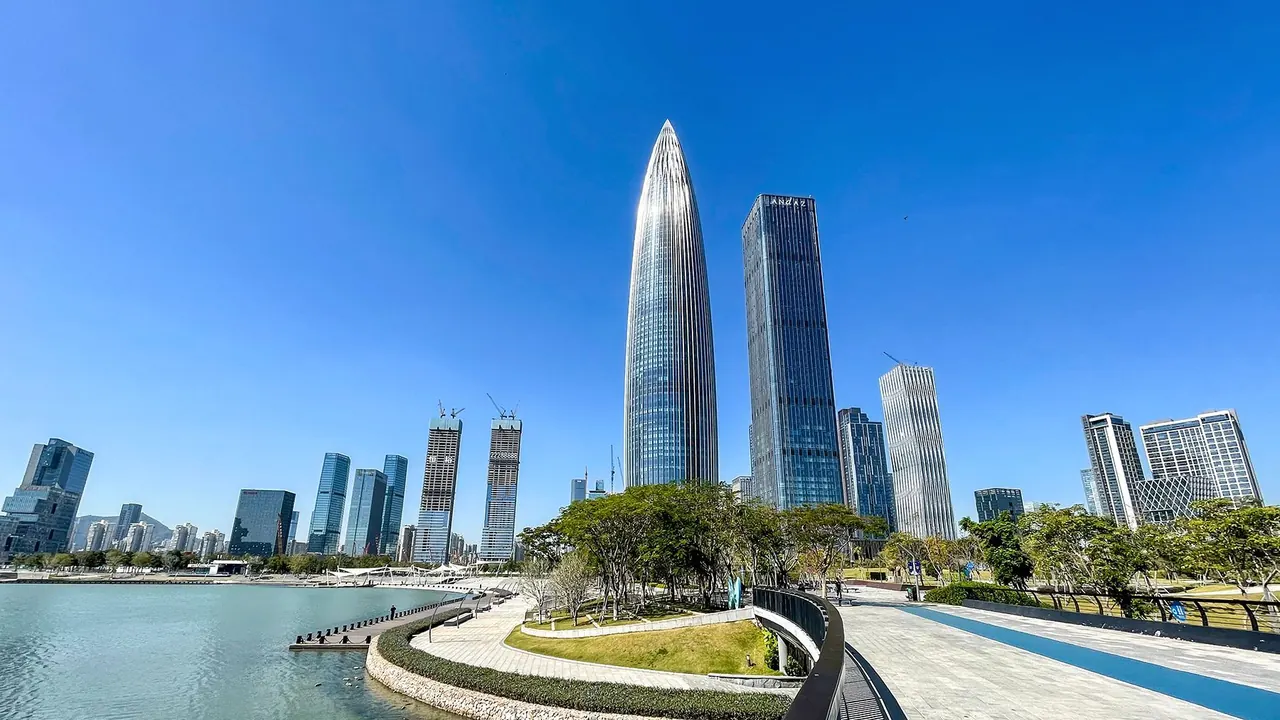
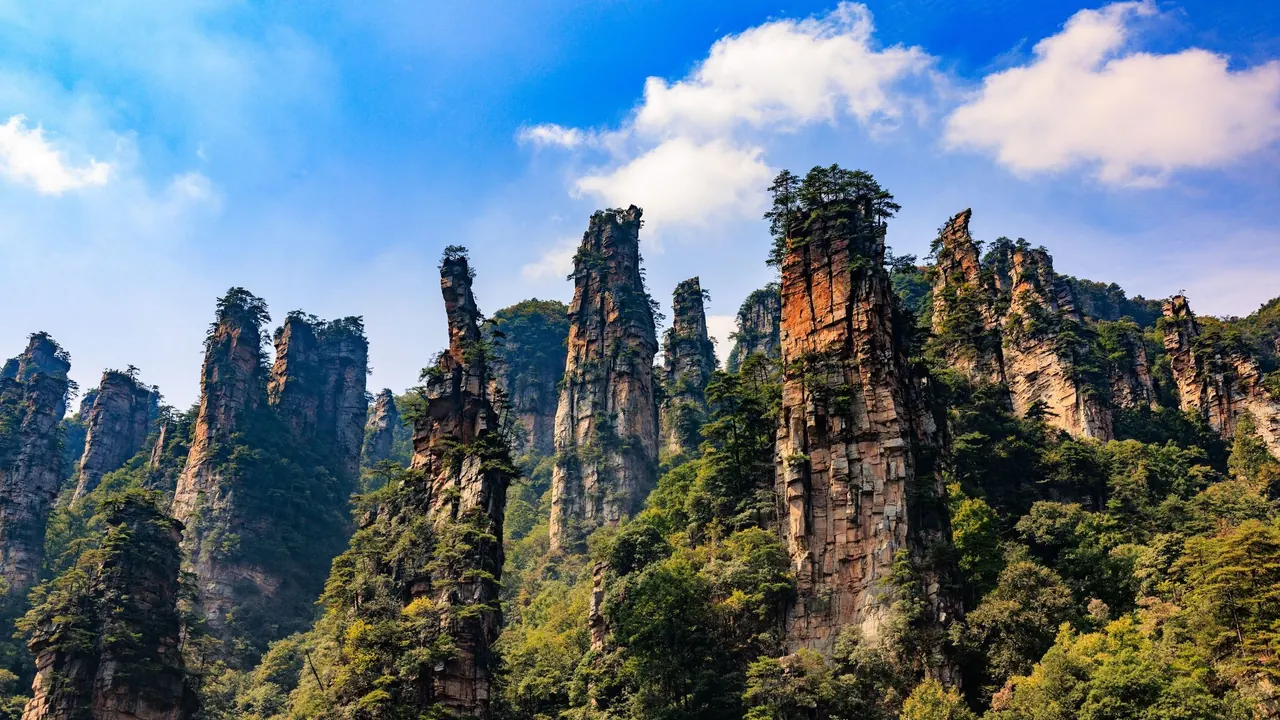
Photos: Shenzhen by Windmemories, CC BY-SA 4.0, cropped; Zhangjiajie by David Tran, Pexels License.
Shenzhen or Zhangjiajie?
Our verdict in twelve categories, each scored against the same fixed benchmark cities, and the climate month by month, so you can choose for your trip.
Choose Shenzhen for
- beaches
- shopping
- wellness
Shenzhen suits travellers who want an easy, comfortable city base with plenty to fill the days. It has theme parks for children, all-night bathhouses and foot massage for winding down, regional cooking from across China, and fast trains to Hong Kong, Guangzhou and Macau. It is also the only one of the two with a sea to swim in, out on the Dapeng peninsula.
Choose Zhangjiajie for
- nature and the outdoors
- prices
Zhangjiajie is a single-purpose trip, but that purpose is extraordinary: the sandstone pillars of Wulingyuan and the cliff paths of Tianmen Mountain, which Shenzhen's modest green hills cannot rival. Come for several days of early starts, cable cars and viewpoints, expect quiet evenings and a plain town, and add Fenghuang if you have time.
Scoreboard
Twelve categories on one fixed scale from 0 to 100. The shaded stretch is the gap between the two.
Your match
Pick a travel style or drag the sliders, and both match scores follow your weighting.
Wins on beaches and shopping with your weighting.
Wins on nature and the outdoors and prices with your weighting.
What matters to you?
Category by category
What the scores mean for a trip.
Beaches & swimming
Of the two, only Shenzhen can offer a beach vacation, though it takes some effort. The sands are all on the Dapeng peninsula, an hour or more from the centre. Dameisha and Xiaomeisha are busy and nearer, while the wider, greener curve of Xichong sits at the far tip. In summer the sea is warm for swimming, when typhoons allow.
Zhangjiajie is landlocked in the mountains of western Hunan. Baofeng Lake is for boat rides, not swimming, so rafting in the gorges is as close as you get to a day in the water.
Food & drink
Shenzhen eats like a cross-section of the whole country. You can have Cantonese dim sum, Chaoshan beef hotpot, Hakka salt-baked chicken and northern dumplings, often cooked by people from those regions. You can also pick seafood from the tanks at Nan'ao or Shekou, and Shekou and OCT have international restaurants and craft beer. The drawback is setting: most good meals are in malls and residential streets rather than old eating quarters.
Zhangjiajie has one cuisine, the sour, smoky, chilli-heavy cooking of western Hunan and the Tujia and Miao. Sanxiaguo stew and wood-cured bacon are worth seeking out in the city's evening food streets. Range is narrow, though, and near the Wulingyuan gates menus are aimed at tour groups.
Culture & sights
Neither city is a culture destination, but Shenzhen gives you more to fill the gaps. Its sights tell the story of a young city: the Shenzhen Museum's account of its rapid growth, the galleries in OCT Loft's old factories, and the copy painters of Dafen. For older history there are Nantou's Ming-era lanes, Dapeng Fortress and the Hakka walls of Crane Lake.
In Zhangjiajie itself, the quiet Ming halls of Puguang Temple and a Tujia folk-customs park are about all there is, and half a day covers them.
Nightlife
Shenzhen has a real night out, if not a famous one. There are big clubs with bottle service around Coco Park, relaxed pubs and terraces in Shekou, smaller arts-crowd bars in OCT, and private KTV rooms that run late. The catch is that the venues are far apart and mostly indoors.
Zhangjiajie keeps tourist hours. Everyone is up at dawn for the parks, so a beer by the river or on the rebuilt old street is the night, and Wulingyuan goes quiet after dinner.
Nature & outdoors
Shenzhen's outdoors is gentle and mostly coastal. Wutong Mountain, just under 950m, is a stiff climb with views towards Hong Kong. The Dapeng peninsula trail runs between rocky headlands and coves, and the Shenzhen Bay path passes mangroves where waders feed in winter. These are pleasant outings, but the hills are modest and nobody flies in for them.
Zhangjiajie is in a different league altogether, and here the gap between the two is enormous. The UNESCO-listed sandstone pillars of Wulingyuan rise sheer from misty forest, with macaques foraging beside the paths. Tianmen Mountain's cable car climbs from the town centre to cliff-edge walkways and the arch of Heaven's Gate, and the Grand Canyon, Yellow Dragon Cave and river rafting lie further out.
Day trips
Shenzhen's place on the Pearl River Delta gives it far more reach. Hong Kong is under half an hour by fast train. Guangzhou's Chen Clan Ancestral Hall and Shamian Island and Foshan's temple are close, and Macau's Portuguese old town is a ferry ride away, though Hong Kong and Macau need the right visa to get back in.
Zhangjiajie has three strong outings: the stilted riverside town of Fenghuang, Furong Town's cliff-top village over a waterfall, and the Tujia ruins of Laosicheng. After that, the choice is mostly more mountains.
Good for families
Shenzhen is much easier with children. Happy Valley, Window of the World and Splendid China are clustered in OCT, and there are also the Safari Park and the marine park at Xiaomeisha. Add metro lifts and malls with play areas and nursing rooms, and the logistics are simple.
Zhangjiajie thrills older children with swinging cable cars, glass walkways and the cliff-face lift. It has almost nothing made for families, though, and long queues and steep stone steps are hard on small children and pushchairs.
Getting around
Shenzhen's metro is clean, bilingual and reaches the airport, the theme parks and the border. The problem is distance: the city sprawls about 80km, so Shekou to the Dapeng beaches takes a morning.
Zhangjiajie's compact centre is walkable, but the forest park is around 30km away at Wulingyuan. Getting there means buses, taxis or a hired driver. Inside the park, the shuttles have confusing routes and mostly Chinese signs, which is why many visitors split their nights between Wulingyuan and town.
Shopping & style
Shenzhen has shopping you will find nowhere else. Huaqiangbei's floors of electronics stalls are worth a wander even if you buy nothing, and Luohu Commercial City is a maze of tailors and fabric sellers. There are also polished malls in Futian and Nanshan, though luxury flagships and independent boutiques are thin on the ground.
Zhangjiajie offers mountain produce, teas and souvenirs near the park gates. The souvenir most worth taking home is xilankapu, the geometric Tujia brocade, along with some Miao silver.
Affordability
Both are inexpensive for comfortable hotels, local meals and transport, with Zhangjiajie a little cheaper day to day. Where the money goes is different. In Zhangjiajie the biggest cost is the ticketed sights: separate charges for the forest park, the Tianmen cable car, the glass bridges and the lifts. Rooms near the gates also cost more during Golden Week and Chinese New Year.
In Shenzhen a careful traveller spends little. Costs rise mainly at the theme parks, in the international bars of Shekou and Coco Park, and at the Shenzhen Bay luxury hotels.
Live music & performing arts
Shenzhen has a proper concert calendar. Its symphony orchestra is based at the Shenzhen Concert Hall, the Poly Theatre and Grand Theatre host touring ballet and acrobatics, and live houses near OCT Loft put on Chinese indie bands. It is worth catching but not worth planning a trip around.
Zhangjiajie offers only large staged spectacles of Tujia and Miao folklore. The open-air show beneath Tianmen Mountain, with the cliffs as its backdrop, is a memorable evening, but it is the only kind of show in town.
Wellness & relaxation
Shenzhen treats relaxation as part of daily life. Its multi-floor bathhouses have pools, saunas, sleeping halls and massage rooms open all night, and people cross from Hong Kong just to use them. There are also foot-massage parlours on most blocks and hot springs in the hills.
Zhangjiajie is built around effort rather than rest. A foot massage after the trails, a few hotel spas and early mornings in the lower valleys before the tour groups arrive are the best it can offer.
When should you go?
Pick your month. The climate figures are measured averages, not a forecast.
Shenzhen in July
Zhangjiajie in July
Daytime high, °C
Rainfall in the month, mm
Where the figures come from
Shenzhen has no rain gauge within 25 km of the centre, so its rainfall comes from a gridded climate dataset read at the city rather than from a gauge further away.
Shenzhen's sunshine is measured 28 km from the centre, at King's Park.
Zhangjiajie has no weather station within reach, so its figures come from a gridded climate model rather than a measured record, and read a broad area rather than the city itself.
Temperature and rainfall are climate normals, averaged over the years shown. Shenzhen: 1999-2020 (sunshine 1991-2020, rainfall 1991-2020) normals, Shenzhen (4.7 km from centre). Zhangjiajie: 2001-2020 normals, NASA POWER reanalysis grid, no weather station within 90 km.
Shenzhen is warm all year. The sea is warm enough for swimming from May to October and reaches about 28°C in high summer. June to September is also hot, humid and very wet, with August the wettest month at around 339mm. The best stretch is October to December, when the rain stops, the skies are among the sunniest of the year and walking is comfortable. October is still warm enough for the beach. January and February are mild but too cool for the sea.
Zhangjiajie has proper seasons. Winters are cold, with January highs around 7°C, and the peaks sometimes carry snow. The rain builds through spring and is heaviest from May to July. Summer heat makes the endless stone steps hard work. April, September and October are the months to aim for, with highs of about 21°C to 26°C and the clearest views. In winter the gap between the two is widest, because Shenzhen stays pleasant for walking while Zhangjiajie is cold.
Which traveller are you?
For an outdoors trip, Zhangjiajie is the clear choice. Wulingyuan's forest of pillars, the Golden Whip Stream valley and the glass walkways of Tianmen Mountain are world-class scenery. Shenzhen's coastal trail and city hills make good half-days but nothing more.
On a beach and sun trip, choose Shenzhen. Xichong and the other Dapeng peninsula sands have warm summer water, and the city is warm enough to be outdoors well into the year. Zhangjiajie is far inland, so a hotel pool is the closest it gets.
For a relaxing and wellness trip, Shenzhen is the better place. Its huge overnight bathhouse complexes, foot-massage parlours on every block and nearby hot springs are made for idle days. Zhangjiajie's early starts, crowds and steps make it tiring rather than restful.
Before you go
| Measure | Shenzhen | Zhangjiajie |
|---|---|---|
| Official language | Putonghua | Putonghua |
| Currency | Yuan Renminbi (CNY) | Yuan Renminbi (CNY) |
| Sockets | ACI220 V, 50 Hz | ACI220 V, 50 Hz |
| Driving side | Right | Right |
| Time zone | UTC+8 | UTC+8 |
| Emergency number | Police 110, ambulance 120, fire 119 | Police 110, ambulance 120, fire 119 |
| Elevation | 0 m | 170 m |
| Main airport | Shenzhen Bao'an International Airport (SZX)28 km from centre174 non-stop destinations | Zhangjiajie Hehua International Airport (DYG)5 km from centre31 non-stop destinations |
| Public holidays this year | 6 days | 6 days |
By the numbers
| Measure | Shenzhen | Zhangjiajie |
|---|---|---|
| City population | 17,494,398 | 1,517,027 |
| People per km² | 8,759 | 159 |
| Museums within 10 km | 7 | 0 |
| UNESCO World Heritage sites within 50 km | 0 | 1 |
| Swim season, months above 21 °C | 8 months | - |
Where else could you go?
Every comparison below shares a destination with this one, so you can follow Shenzhen or Zhangjiajie somewhere new.
- Hong Kongvs Shenzhen
- Macauvs Shenzhen
- Guangzhouvs Shenzhen
- Chongqingvs Zhangjiajie
- Guilinvs Zhangjiajie
- Yangshuovs Shenzhen