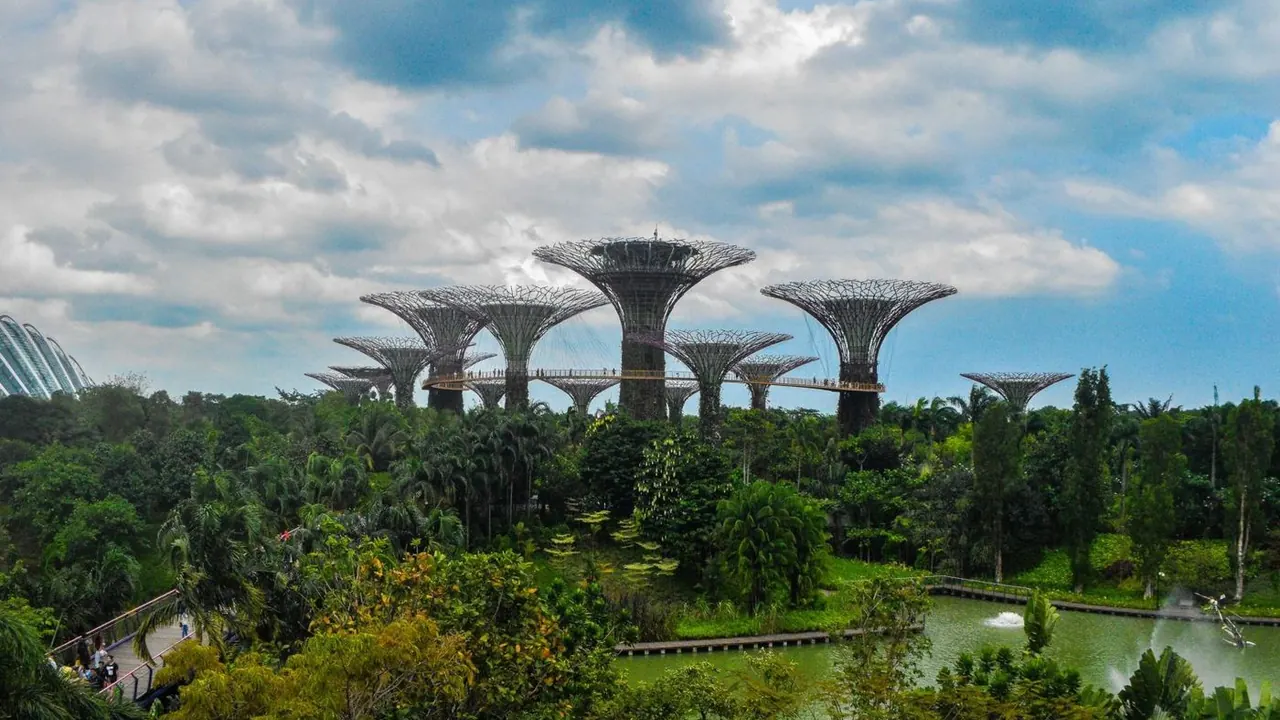
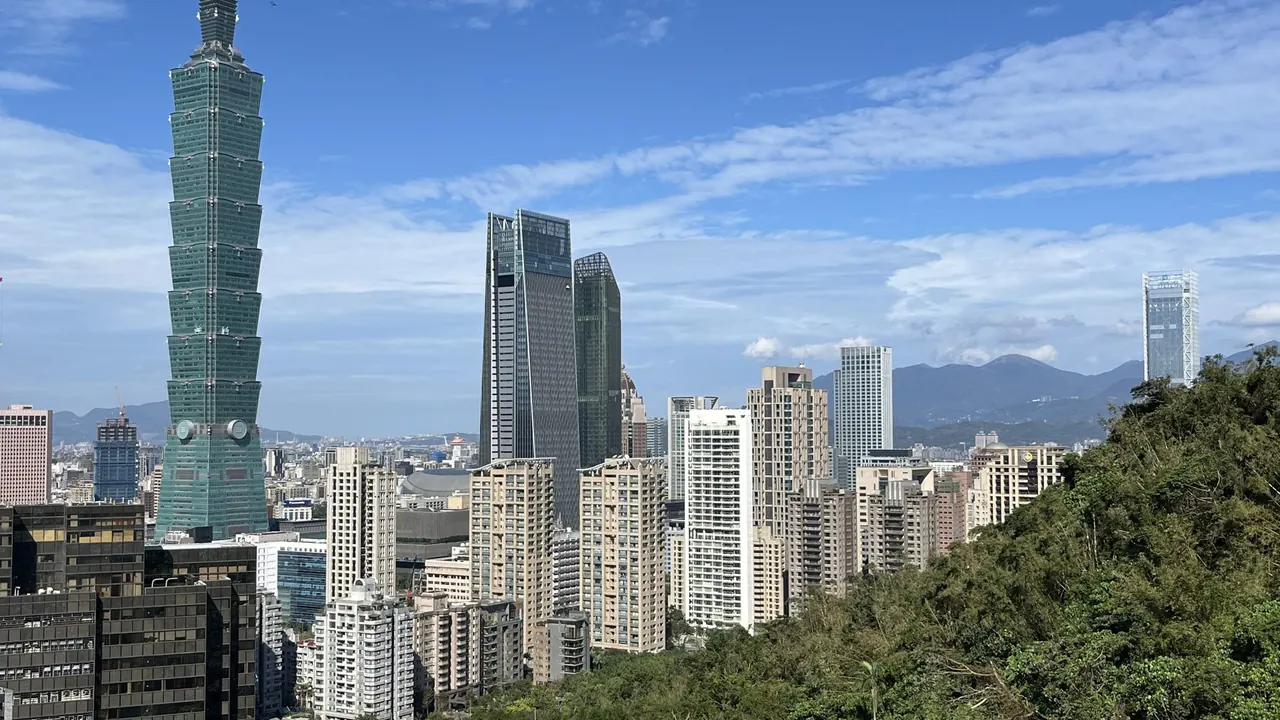
Photos: Singapore by Kai Kai, Pexels License; Taipei by Another Believer, CC BY-SA 4.0, cropped.
Singapore or Taipei?
Our verdict in twelve categories, each scored against the same fixed benchmark cities, and the climate month by month, so you can choose for your trip.
Choose Singapore for
- families
- getting around
- shopping
Singapore is the better pick for a family trip or a stopover where everything should simply work. The wildlife parks at Mandai and the rides on Sentosa keep children busy, the MRT is effortless, Orchard Road covers big-brand shopping, and the hawker centres are reason enough to come. It suits travellers who value comfort and air conditioning more than their budget, because rooms, drinks and the big attractions are expensive.
Choose Taipei for
- day trips
- prices
- wellness
Travellers who want to leave the city as well as explore it will get more from Taipei. Volcanic hills and hiking trails start at the edge of the streets, Beitou's hot springs are on the metro, and Jiufen, the Pingxi line and the old capital Tainan make easy outings. The food is as good as Singapore's and costs less, so a longer, more varied stay goes further here.
Scoreboard
Twelve categories on one fixed scale from 0 to 100. The shaded stretch is the gap between the two.
Your match
Pick a travel style or drag the sliders, and both match scores follow your weighting.
Wins on families and getting around with your weighting.
Wins on day trips and prices with your weighting.
What matters to you?
Category by category
What the scores mean for a trip.
Beaches & swimming
Neither city is a beach destination, but the swimming is different. Singapore's beaches are on Sentosa, close by and usable all year: imported sand, calm lagoons behind breakwaters and a view of anchored tankers. The quieter lagoons of St John's and Lazarus are a short ferry ride away.
Taipei has no shore of its own. Its beaches are natural, like the golden spit at Fulong, about an hour away by train, but they are only for swimming from June to September and rip currents are common on the open coast.
Food & drink
These are two of Asia's great eating cities, and they are different in style. Singapore's hawker centres bring Chinese, Malay, Indian and Peranakan cooking under one roof, so in one meal you can go from chilli crab to roti prata to nasi lemak.
Taipei is best explored at its evening night markets in Raohe or Ningxia and in its specialist noodle, dumpling and breakfast shops, with a Japanese influence running through the cooking. Its drinks are a strength of their own: oolong from the surrounding hills, bubble tea and speciality coffee. Singapore's heavy alcohol taxes hold it back here.
Culture & sights
Taipei has a little more depth. The National Palace Museum's imperial jade, bronzes and porcelain make up one of the world's great collections, and smoky Longshan Temple and the Dihua Street shophouses add lived-in history. Three or four days is not too long.
Singapore's strengths are Southeast Asian art at the National Gallery, a compact cluster of museums in the Civic District, and its ethnic quarters, each with its own character. Its modern landmarks are sights in their own right, from the Supertrees to Marina Bay Sands. Most visitors cover it in two or three days.
Nightlife
Both cities centre their nightlife on cocktails, but Taipei offers more range. Its bars in Da'an and Zhongshan use local tea and fruit, Xinyi has the large clubs, Ximending has cheap bars and craft beer, and private-room karaoke and stir-fry beer halls fill the rest of the evening.
In Singapore, going out mostly means a well-made drink on a rooftop above Marina Bay or in a Keong Saik shophouse. The club scene around Clarke Quay is small and the bills are high.
Nature & outdoors
Here the two are far apart. Taipei is ringed by hills: Yangmingshan's fumaroles and silvergrass lie inside the city limits, Elephant Mountain rises behind Xinyi, and gorges, waterfalls and sea cliffs are a bus or train ride away.
Singapore does well for a flat island city-state. It has real rainforest at Bukit Timah and MacRitchie, wetland birds at Sungei Buloh, and Pulau Ubin to explore by bicycle. Once you have visited those few places, though, there is nowhere else to go.
Day trips
Taipei is the clear winner. Jiufen's lantern-hung stairways, the sky-lantern towns of the Pingxi line, Tamsui's fort and riverside sunsets, and the pottery town of Yingge are all easy outings. High-speed rail brings Tainan, the island's old capital, within about two hours.
Singapore is hemmed in by borders and sea. Johor Bahru's border queues can take up much of the day, Bintan and Batam are resort stays rather than places to explore, and Malacca really needs a night away.
Good for families
Singapore is the stronger family city. The Mandai parks, including the Night Safari, are a highlight on their own, Sentosa adds Universal Studios, an aquarium and calm water, and lifts and air conditioning are everywhere.
Taipei is also safe and welcoming to children. The zoo with its pandas, the gondola ride up to Maokong and the science museums make good days out, and older children love the night markets. Scooters in the side lanes and theme parks well outside the city make it a little harder work.
Getting around
Both cities have excellent metros, and nobody needs a car in either. Singapore is slightly easier: you tap a contactless bank card at the gates, the stations are step-free, and covered walkways and smooth pavements link much of the centre, although the heat still keeps people out of the sun.
Taipei's single stored-value card also covers bike share and regional trains, and its shopfront arcades give shelter. Beyond them, uneven pavements and parked scooters make walking more awkward.
Shopping & style
Singapore has the edge for big-name shopping. Orchard Road and the Marina Bay Sands arcade put every luxury and high-street brand under air conditioning, and Haji Lane and Tiong Bahru add small boutiques. The weak point is the lack of markets with real character.
Taipei is better for browsing. You'll find design shops in the old industrial parks at Huashan and Songshan, dried goods and herbs on Dihua Street, high-mountain oolong and teaware, electronics around Guanghua, and cheap clothes at the night markets.
Affordability
The cost difference is large. In both cities, street food and public transport are cheap, but in Singapore the room bill dominates. Hotels there are among the costliest in Asia, drinks are heavily taxed, and the wildlife parks and Sentosa charge high entry fees.
Taipei's central rooms are also small for what you pay. Even so, guesthouses around Zhongshan and Ximending, free temples and trails, modest museum fees and moderately priced sit-down meals keep a day's spending well below Singapore's.
Live music & performing arts
Neither city is a stage capital, and their strengths differ. Singapore is easier for an English-speaking visitor: the Esplanade's free bayside performances, the Singapore Symphony Orchestra and touring musicals at Marina Bay Sands.
Taipei has more of its own work. Cloud Gate dance is based just outside the city, there is glove puppetry and Taiwanese opera in Dadaocheng, and indie bands play the live houses around Gongguan. English-language theatre is hard to find.
Wellness & relaxation
Taipei is far ahead because it sits on volcanic ground. Beitou's sulphur pools and hot-spring hotels are at the end of a metro line. Yangmingshan and Wulai have springs among hills and beside a river gorge, and an afternoon of tea in Maokong is restful in its own right.
Singapore has no bathing tradition. Relaxing there means a hotel spa with a skyline pool, reflexology in Chinatown or Ayurvedic treatments in Little India, with early mornings in the Botanic Gardens as the calmest time.
When should you go?
Pick your month. The climate figures are measured averages, not a forecast.
Singapore in July
Taipei in July
Daytime high, °C
Rainfall in the month, mm
Where the figures come from
Taipei has no rain gauge within 25 km of the centre, so its rainfall comes from a gridded climate dataset read at the city rather than from a gauge further away.
Temperature and rainfall are climate normals, averaged over the years shown. Singapore: 1991-2020 normals, Singapore / Changi Airport (17 km from centre). Taipei: 1992-2020 (rainfall 1991-2020) normals, Sungshan / Taipei (3.5 km from centre).
Singapore barely changes through the year. Daytime highs sit around 32°C in every month and the sea stays warm enough to swim all year, so rain is what really varies. February is the clear dry month and, together with March, the sunniest. June to September stay fairly settled, with only moderate rain. The wet season begins in October, builds through November and peaks in December at about 329mm. November and December are also the least sunny months, and the rain eases again in January. Midday is uncomfortable for walking in every month, so the time of day matters more than the season.
Taipei has real seasons. Winter highs fall to about 19°C, which is pleasant for walking but too cool for the beach. July reaches about 35°C, which is too hot for long days on foot. The rain builds from May to a peak of around 340mm in August and September. The sea is only warm enough for swimming from June to September. For hiking and city walks, March and April or October and November are the most comfortable. Choose Singapore if you want reliable heat in any month, and Taipei if you would rather have milder weather in spring or autumn.
Which traveller are you?
On a family trip with children, Singapore wins. The zoo, Night Safari and bird park at Mandai, along with Universal Studios and calm lagoons on Sentosa, are all close by and air-conditioned in between. Taipei's bigger theme parks are an hour or more outside the city.
For an outdoors trip, choose Taipei. Yangmingshan's volcanic peaks, the Elephant Mountain climbs, Maokong's tea terraces and the northeast coast trails are all close at hand. Singapore's rainforest reserves and Pulau Ubin are pleasant, but you will have done them within a few mornings.
On a trip with a tight budget, Taipei goes much further. Night markets, the metro and most temples and trails cost little or nothing, and guesthouses ease the room bill. In Singapore, cheap hawker food can't make up for expensive rooms, taxed drinks and costly attractions.
Before you go
| Measure | Singapore | Taipei |
|---|---|---|
| Official language | English, Tamil, Malay, Standard Chinese | Taiwanese Sign Language, Amis, Taiwanese Hokkien, Rukai, Bunun, Kanakanavu, Standard Taiwanese Mandarin, Paiwan, Yami, Atayal, Saaroa, Kavalan, Tsou, Seediq, Puyuma, Saisiyat, Sakizaya, Taiwanese Hakka, Truku, Matsu dialect, Kinmen dialect, Wuqiu dialect |
| Currency | Singapore Dollar (SGD) | New Taiwan Dollar (TWD) |
| Sockets | G230 V, 50 Hz | AB110 V, 60 Hz |
| Driving side | Left | Right |
| Time zone | UTC+8 | UTC+8 |
| Emergency number | Police 999, ambulance 995, fire 995 | 110 or 112 or 119 |
| Elevation | 21 m | 10 m |
| Main airport | Singapore Changi Airport (SIN)17 km from centre167 non-stop destinations | Taiwan Taoyuan International Airport (TPE)33 km from centre |
| Public holidays this year | 11 days | - |
By the numbers
| Measure | Singapore | Taipei |
|---|---|---|
| City population | 5,866,139 | 2,429,429 |
| People per km² | 8,158 | 8,938 |
| Museums within 10 km | 40 | 69 |
| UNESCO World Heritage sites within 50 km | 1 | 0 |
| Swim season, months above 21 °C | 12 months | 8 months |
Where else could you go?
Every comparison below shares a destination with this one, so you can follow Singapore or Taipei somewhere new.