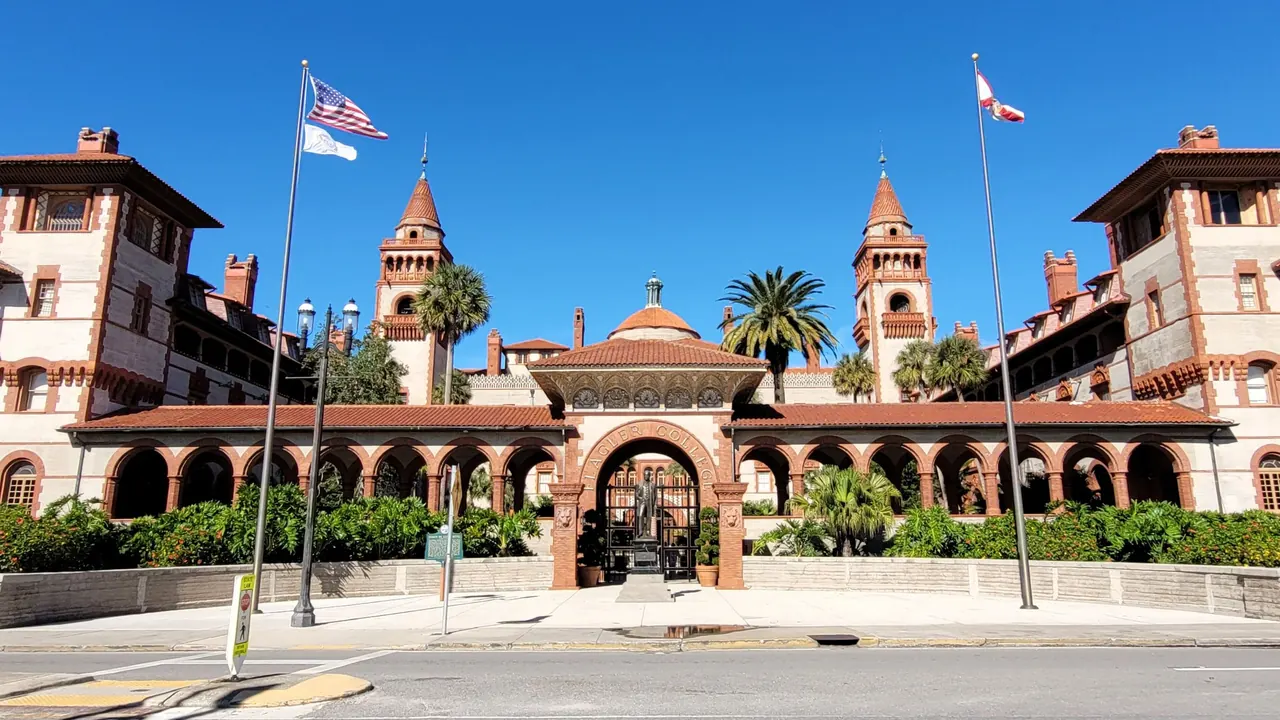
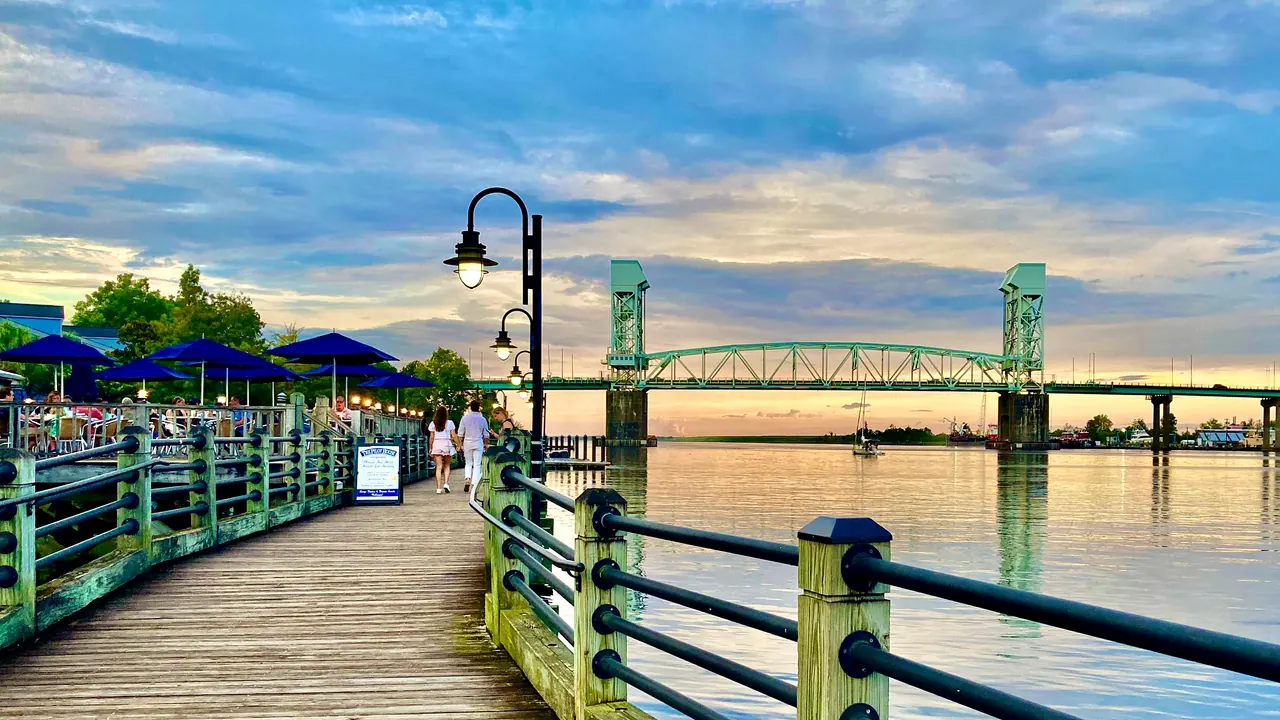
Photos: St. Augustine by Farragutful, CC BY-SA 4.0, cropped; Wilmington by Unexpected Snacks, CC BY-SA 4.0, cropped.
St. Augustine or Wilmington?
Our verdict in twelve categories, each scored against the same fixed benchmark cities, and the climate month by month, so you can choose for your trip.
Choose St. Augustine for
- culture and sights
- getting around
- day trips
St. Augustine is the choice for travellers who want history they can walk through. The Spanish fort, the lanes of the old quarter and Flagler's Gilded Age hotels give it a depth of sightseeing Wilmington cannot match. The beaches of Anastasia Island are only a short drive from all of it, so a few days can mix old streets and sand without much planning. Its milder winter also makes it the better pick outside summer.
Choose Wilmington for
- nightlife
- food and drink
- nature and the outdoors
Wilmington suits a more relaxed coastal stay where the evenings and the water matter more than the monuments. It eats and drinks better, with Carolina barbecue, a craft brewery scene and a livelier downtown bar strip. Its outdoors are richer too, with boat-only Masonboro Island, surfing off Wrightsville and wild Venus flytraps. It is also a little easier on the budget, though you will need a car for nearly everything.
Scoreboard
Twelve categories on one fixed scale from 0 to 100. The shaded stretch is the gap between the two.
Your match
Pick a travel style or drag the sliders, and both match scores follow your weighting.
Too close to call, 1 point apart
Wins on culture and sights and getting around with your weighting.
Wins on nightlife and food and drink with your weighting.
What matters to you?
Category by category
What the scores mean for a trip.
Beaches & swimming
Both coasts have wide, pale Atlantic sand and summer water warm enough to swim in. The difference is in how the beaches are laid out. St. Augustine has one long continuous strip down Anastasia Island, from the dunes of the state park to quiet Crescent Beach, only ten to fifteen minutes from the old town, and the water there is often greenish and churned.
Wilmington has three separate beach towns, each with a different feel: polished Wrightsville with its clean water and fishing pier, Carolina Beach with its boardwalk, and quieter Kure. They take longer to reach, summer parking can be a hunt, and rip currents need watching on rough days.
Food & drink
Wilmington eats better. Coastal seafood comes with eastern North Carolina's whole-hog barbecue, and there are modern Southern restaurants in old brick buildings downtown and a strong craft brewery culture.
St. Augustine has one thing Wilmington lacks, the Minorcan datil pepper in its spicy clam chowder and pilau. Apart from that, its scene is small, and the restaurants along St. George Street depend heavily on passing tourists.
Culture & sights
The two towns tell very different stories, and St. Augustine's is older and more striking. It began as a Spanish garrison town long before Wilmington's mansions were built. You still feel that in the shell-stone walls, the star-shaped fort on the water and the narrow lanes, which keep a Spanish look even where the buildings have been restored. Later, Henry Flagler turned it into a winter resort for wealthy Northerners, so the town has a second, more extravagant layer on top of the colonial one.
Wilmington's past is that of a Southern river port. It has merchants' houses, churches and warehouses from its trading years, and house tours that tell the story of the enslaved people whose work paid for them. Its best-known sight is a twentieth-century warship moored across the river. Walking among its old houses is pleasant, but it does not give the feeling of stepping back several centuries that St. Augustine does.
Nightlife
St. Augustine's evenings are packed into a few blocks of the old town. At weekends visitors make up most of the crowd, cheerful and fairly well lubricated, drifting between tavern patios and courtyard bars. Apart from that there are only a few beach bars on Anastasia Island, so it suits a drink or two after dinner rather than a night that moves from place to place.
Wilmington is larger after dark and feels less like a tourist strip. University students mix with visitors downtown, so a weekend night has more variety in its crowd and more places to try. In summer the beach towns add a second, slower set of bars near the sand. Neither town has much for anyone who wants to go clubbing.
Nature & outdoors
Both coasts are flat salt marsh and barrier island, but Wilmington has more to do outdoors. Masonboro Island can only be reached by boat or kayak, Wrightsville's waters suit surfing and sailing, pier and offshore fishing is a big part of local life, and the pine savanna of Carolina Beach State Park is one of the only places on earth where the Venus flytrap grows wild.
St. Augustine's outdoors are gentler and closer to hand. There is paddleboarding on the Anastasia lagoon, long birding walks in the Guana Tolomato Matanzas reserve and kayak trips through the creeks where dolphins often appear.
Day trips
Both towns have a fair choice of days out, almost all of them by car, but the trips are of different kinds. From St. Augustine the big names are Kennedy Space Center and the Orlando theme parks, each a long two-hour drive, while Jacksonville's museums and Amelia Island's Victorian port are closer.
Wilmington's outings are small-town and historical. Southport is the best of them, with its ferry to car-free Bald Head Island, and Fort Fisher's earthworks and the Brunswick Town ruins lie on the way. Colonial New Bern and Beaufort are further north.
Good for families
Children are well served in both, but in different ways. St. Augustine combines history and animals in one compact place: cannon firing at the fort, the long-running Alligator Farm with its zipline, and the lighthouse climb, all near the beach.
Wilmington is more of a beach-house vacation. Families rent near the sand, enjoy the old-fashioned rides on the Carolina Beach boardwalk, and save the aquarium at Fort Fisher and the battleship decks for rainy days.
Getting around
Both have a small, flat centre that is easy on foot, but St. Augustine is the easier place without your own wheels. Sightseeing trolleys loop past its main sights, and the beaches are a short taxi or bike ride across the bridge.
In Wilmington the riverwalk ties the historic district together, but the beaches are 15km or more away across suburban roads. The aquarium and Southport can only be reached by car, so hiring one is close to essential.
Shopping & style
Neither town is a shopping destination, and the shops they have are of different kinds. St. Augustine's St. George Street is full of fudge and pirate souvenirs, but nearby Aviles Street has galleries and antique dealers, and datil-pepper sauce makes a souvenir you won't find elsewhere.
Wilmington's best shopping is on Front Street and in the restored Cotton Exchange, where you will find independent boutiques, bookshops and antique dealers. The beach towns add surf wear.
Affordability
Wilmington is somewhat easier on the budget. Off-season city hotels are reasonable and casual seafood and barbecue are fair value, though summer beach rentals cost more and a hire car is hard to avoid.
St. Augustine's historic inns and its hotels within walking distance of the old town are in high demand, and weekend rates climb steeply. Staying in a motel by the highway or visiting midweek makes the biggest difference.
Live music & performing arts
Neither town has opera or a full orchestral season, so the two are roughly level, with different kinds of venue. St. Augustine's best stage is its open-air amphitheatre in the woods on Anastasia Island, which hosts touring rock, country and folk acts, and acoustic sets play on old-town patios.
Wilmington's scene is a little broader. It has Thalian Hall, a restored 19th-century opera house, a community symphony and several small theatre companies, and in warm weather there are long-standing jazz and blues festivals and outdoor concerts by Greenfield Lake.
Wellness & relaxation
Neither town has a bathing tradition or a proper spa retreat, and what calm they offer comes from their slow pace. In St. Augustine that means quiet B&B verandas, courtyard gardens and an evening walk along the bayfront seawall. Wilmington has resort spas near its beaches and yoga studios, plus calm evenings on the riverfront.
When should you go?
Pick your month. The climate figures are measured averages, not a forecast.
St. Augustine in July
Wilmington in July
Daytime high, °C
Rainfall in the month, mm
Where the figures come from
St. Augustine has no rain gauge within 25 km of the centre, so its rainfall comes from a gridded climate dataset read at the city rather than from a gauge further away.
St. Augustine's sunshine is measured 73 km from the centre, at Jacksonville International.
Temperature and rainfall are climate normals, averaged over the years shown. St. Augustine: 2006-2020 (sunshine 1991-2020, rainfall 1991-2020) normals, St Augustine / Kingsley Mobile Home Park (7.6 km from centre). Wilmington: 1991-2020 normals, Wilmington / The Palms Mobile Home Park (5.3 km from centre).
Both towns have the same kind of Atlantic summer: hot and humid, with the sea warm enough for easy swimming from June to September and reaching about 28°C. Late summer is the wettest part of the year in both, with heavy afternoon storms, and in July and August it is too hot to walk the streets comfortably after mid-morning. St. Augustine lies further south, so its beach season starts earlier and runs longer. The sea is already pleasant in May and still warm through October, and spring brings its sunniest weeks.
Wilmington has a shorter and wetter year. Its winters are clearly cooler, about 14°C by day in January against 18°C in St. Augustine, and the sea stays cold from November to April. Its rain also peaks harder, close to 221mm in September. For walking the historic districts, spring and October are best in both towns, and St. Augustine's mild winter keeps its old town comfortable through the cooler months as well.
Which traveller are you?
On a culture and arts trip, St. Augustine is the clear choice. The Castillo de San Marcos, the Spanish colonial quarter, Flagler College and the Lightner Museum make a far richer few days than Wilmington's historic houses and its battleship.
For a food and nightlife trip, Wilmington is the better bet. It offers vinegar-sauced barbecue, modern Southern cooking and craft breweries, and Front Street's bars and rooftop terraces stay open late. St. Augustine's evenings are quieter and mostly end early.
On an outdoors trip, Wilmington has more to explore. You can paddle out to undeveloped Masonboro Island, surf or sail at Wrightsville, fish from the piers and see wild Venus flytraps in Carolina Beach State Park. St. Augustine's marshes and lagoon offer a gentler version.
Before you go
| Measure | St. Augustine | Wilmington |
|---|---|---|
| Currency | US Dollar (USD) | US Dollar (USD) |
| Sockets | AB120 V, 60 Hz | AB120 V, 60 Hz |
| Driving side | Right | Right |
| Time zone | UTC-5, UTC-4 in summer | UTC-5, UTC-4 in summer |
| Emergency number | 911 | 911 |
| Elevation | 152 m | 9 m |
| Main airport | Jacksonville International Airport (JAX)76 km from centre48 non-stop destinations | Wilmington International Airport (ILM)5 km from centre25 non-stop destinations |
| Public holidays this year | 11 days | 14 days |
By the numbers
| Measure | St. Augustine | Wilmington |
|---|---|---|
| City population | 14,329 | 115,451 |
| People per km² | 433 | 839 |
| Museums within 10 km | 12 | 2 |
| UNESCO World Heritage sites within 50 km | 0 | 0 |
| Swim season, months above 21 °C | 8 months | 6 months |
Where else could you go?
Every comparison below shares a destination with this one, so you can follow St. Augustine or Wilmington somewhere new.
- Daytona Beachvs St. Augustine
- Myrtle Beachvs Wilmington
- Orlandovs St. Augustine
- Cocoa Beachvs St. Augustine
- Savannahvs St. Augustine
- Tampavs St. Augustine