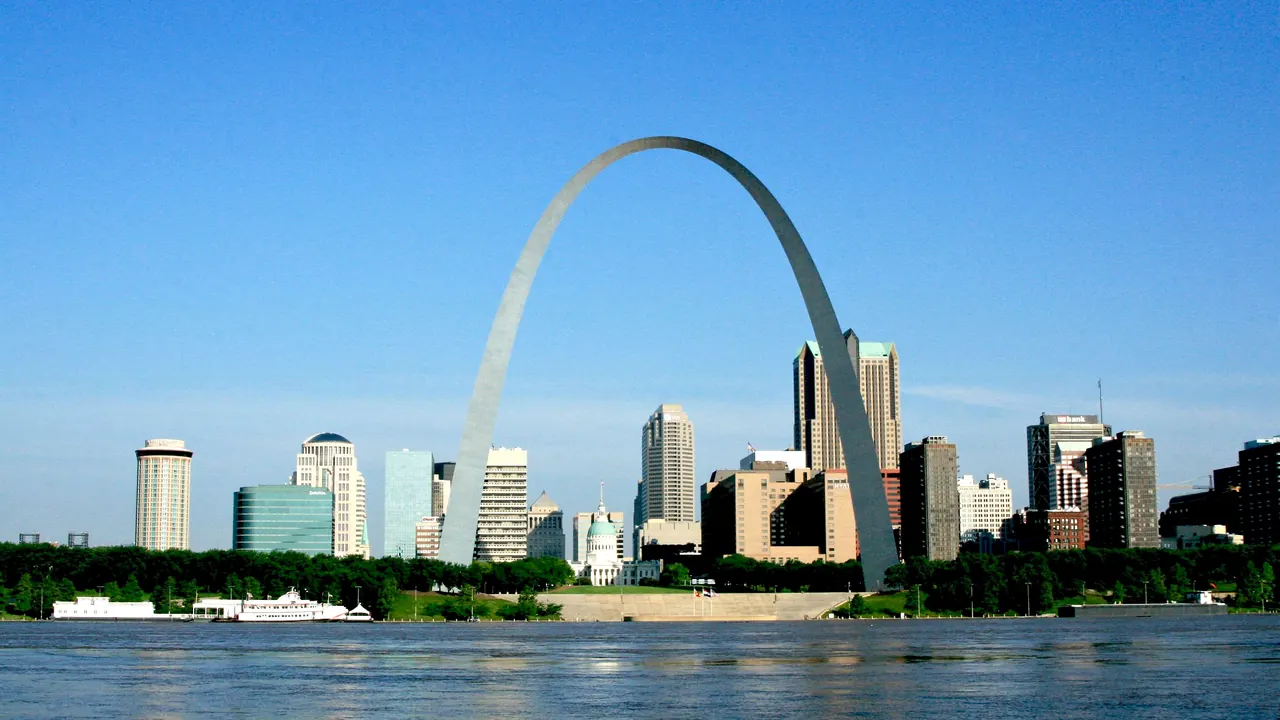
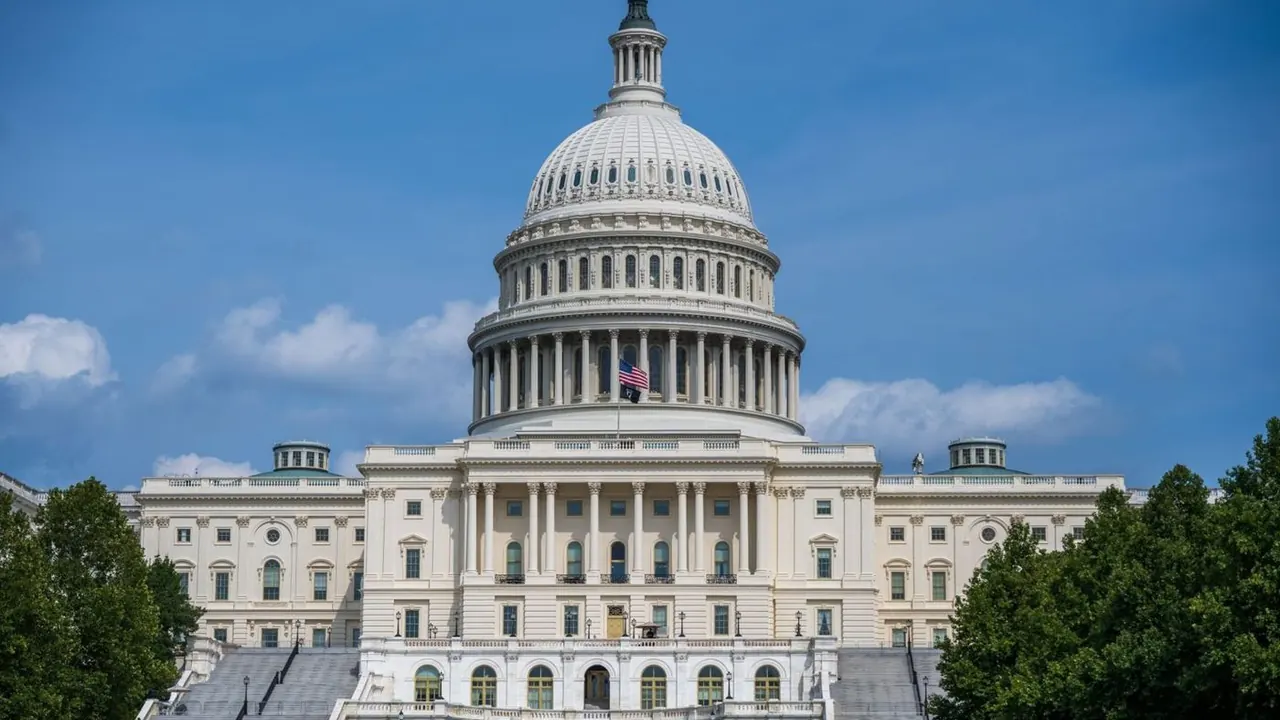
Photos: St. Louis by Holly Cheng, CC BY 2.0, cropped; Washington DC by Guohua Song, Pexels License.
St. Louis or Washington DC?
Our verdict in twelve categories, each scored against the same fixed benchmark cities, and the climate month by month, so you can choose for your trip.
Choose St. Louis for
- prices
St. Louis suits travellers who want an easy-going, cheaper American city and don't mind driving. The Gateway Arch, the free museums and zoo in Forest Park, the climbable City Museum and the blues bars of Soulard fill a long weekend well. Cahokia Mounds and the Missouri wine towns add a day or two out. It works best for families, couples on a budget and anyone who likes a city that feels lived-in rather than built for visitors.
Choose Washington DC for
- getting around
- culture and sights
- day trips
Washington is the stronger choice for anyone who wants a full week of sightseeing without a car. The Smithsonian museums, the National Gallery and the monuments along the Mall have few equals anywhere. The Metro links them to Alexandria and Arlington, and trains reach Baltimore and Philadelphia. Eating out and nights out are both livelier. The price is the cost of a room, so it rewards travellers who put sights ahead of savings.
Scoreboard
Twelve categories on one fixed scale from 0 to 100. The shaded stretch is the gap between the two.
Your match
Pick a travel style or drag the sliders, and both match scores follow your weighting.
Wins on prices with your weighting.
Wins on getting around and culture and sights with your weighting.
What matters to you?
Category by category
What the scores mean for a trip.
Beaches & swimming
Neither city has a beach, but Washington at least has water within reach. The Chesapeake Bay around Annapolis is about an hour away, with small, warm and brackish beaches, and the Atlantic resorts make a weekend trip.
From St. Louis the coast is hundreds of kilometres away. Swimming means a pool or a long drive to an Ozark reservoir lake.
Food & drink
St. Louis has the stronger local identity on a plate. There is toasted ravioli, cracker-thin Provel pizza, gooey butter cake and rib barbecue, as well as the old Italian trattorias of the Hill. It is a city for eating well and cheaply, not for big culinary nights.
Washington has the broader and more ambitious scene. Ethiopian restaurants cluster around Shaw and U Street, there are Salvadoran pupusas, and Chesapeake crab and oysters come in season. Union Market and Eastern Market are good for grazing, and tasting menus around Logan Circle and the waterfront give it a serious top end.
Culture & sights
St. Louis has a satisfying few days of sights. You can ride up the Gateway Arch and see the Old Courthouse where the Dred Scott case began. The free art museum in Forest Park, the mosaics of the Cathedral Basilica and the Wainwright Building are all worth the time. Its Victorian streets in Lafayette Square and Soulard have more period character than Washington's plainer rowhouses.
Washington is in another league. The Smithsonian museums, the National Gallery and the African American history museum stand side by side on the Mall, nearly all free. Around them are the Capitol, the Lincoln Memorial and the Library of Congress, more than enough for a week.
Nightlife
Washington has the better night out, driven by a large crowd of young staffers and students from Thursday to Saturday. The 14th Street and U Street corridor has cocktail bars and rooftops, and Adams Morgan has the cheap late-night strip.
St. Louis is more scattered and more local. You might hear blues in a Soulard corner tavern, try the dance bars on Washington Avenue or end up in the Grove late at night, but you need a taxi between them. On weeknights many streets go quiet early.
Nature & outdoors
St. Louis offers gentle, rolling country. Forest Park is good for running and cycling, and the bluffs and caves of Castlewood and Meramec are within an hour. The Katy Trail is good for long rides, and in winter you can watch bald eagles along the river near Alton.
Washington has more variety and more drama close at hand. Rock Creek Park and the C&O Canal towpath start in the city itself. At Great Falls the Potomac crashes through a rocky gorge half an hour away, and the ridge hikes of Shenandoah are within a long day.
Day trips
Washington's surroundings are dense with history, and much of it is reachable without a car. Old Town Alexandria is a Metro ride away and Baltimore is under an hour by train. Mount Vernon, Annapolis, Gettysburg, Antietam and Harpers Ferry all make easy outings, and Philadelphia is a full day by fast train.
St. Louis has fewer outings, but its best one is remarkable. The earthen mounds of Cahokia, the largest pre-Columbian city north of Mexico, are twenty minutes away. The French colonial houses of Ste. Genevieve and the German wine towns of Hermann and Augusta round out the list, all by car.
Good for families
Both cities are easy with children, and both lean on free attractions. St. Louis has the more playful headline in the City Museum, a warehouse of tunnels and slides. There is also the hands-on Magic House, and a theme park is within reach, though nearly everything needs the car.
Washington's appeal is more educational and easier to reach. The dinosaurs at Natural History, the rockets at Air and Space and the National Zoo can fill several days, and the Metro's lifts make buggies simple. On the other hand, there is no theme park nearby, and the long, exposed Mall is tiring in summer.
Getting around
This is where the two differ most in daily practice. Washington's flat grid and Metro reach most of what a visitor wants, including the airport, Arlington and Alexandria, and bike-share docks link the monuments. A car is only needed for the countryside.
In St. Louis, MetroLink covers the airport, Forest Park, downtown and Clayton, and not much else. Soulard, the Hill and South Grand all need a car or taxi. Driving is easy, with light traffic and simple parking.
Shopping & style
Washington has more to browse, though it is still a sideline. Georgetown's M Street and Wisconsin Avenue mix chains, boutiques and antiques in old brick buildings, and CityCenterDC gathers luxury labels downtown. The Smithsonian museum shops are good for books and prints.
St. Louis is smaller and quirkier. Cherokee Street has antiques, vintage clothes and records, the Delmar Loop has student-style independent shops, and the big-name fashion is out in the suburban malls.
Affordability
St. Louis is the cheaper stay, mainly because hotel rooms cost noticeably less, even downtown and in the Central West End. Some of that saving goes on a hire car or taxis, since public transport covers so little.
Washington is expensive for rooms, restaurants and cocktails, and dearer still in cherry blossom season. Its free museums, memorials and Capitol tours keep sightseeing almost costless, and the Metro means no car hire. Staying in Arlington can soften the bill.
Live music & performing arts
The two are closely matched, but their strengths differ. St. Louis is a music city. It has a symphony dating from 1880 in the ornate Powell Hall, summer musicals at the huge open-air Muny in Forest Park and an acclaimed opera festival. It also has deep blues roots, from Chuck Berry to the National Blues Museum.
Washington is first a theatre city, with Arena Stage, the Shakespeare Theatre Company, Woolly Mammoth and plays inside Ford's Theatre. The restored halls of U Street, local go-go and lawn concerts at Wolf Trap add the music.
Wellness & relaxation
Neither city is a place for a restorative vacation, and neither has a spa tradition. Washington has a little more on offer: the larger hotel spas downtown and in Georgetown, early walks around the Tidal Basin, and the quiet gardens of Dumbarton Oaks and the National Arboretum.
St. Louis has fewer spas but an unhurried pace and rarely any crowds. A slow morning in the Japanese garden at the Missouri Botanical Garden is its best answer.
When should you go?
Pick your month. The climate figures are measured averages, not a forecast.
St. Louis in July
Washington DC in July
Daytime high, °C
Rainfall in the month, mm
Temperature and rainfall are climate normals, averaged over the years shown. St. Louis: 2006-2020 (sunshine 1981-2010, rainfall 1991-2020) normals, Cahokia / Maplewood Park (7.2 km from centre). Washington DC: 1991-2020 (sunshine 1981-2010) normals, Washington National Airport (5 km from centre).
The two cities run on almost the same thermometer. Both reach about 32°C in July, humid and draining for long walks between sights. Winters are cold in both, with St. Louis a little colder. April to early June and September to October are the best times for walking and parks in either city. The difference is the rain. In St. Louis it comes hardest in April and May, at around 120mm a month, so spring there brings more wet days. Washington spreads its rain more evenly through the year, with no single soggy season.
Neither city is a beach destination. Washington's figures do show the Chesapeake Bay warming to about 26°C in August, which makes a summer swim an hour away possible. Summers are sunny in both, and St. Louis gets slightly more sunshine in July and August.
Which traveller are you?
For a culture and arts trip, Washington is the clear pick. The Smithsonian museums, the National Gallery and the great memorials could fill a week. Its theatres, from Arena Stage to Ford's, add evenings that St. Louis matches only in parts.
On a trip on a tight budget, St. Louis goes further. Hotel rooms cost noticeably less, and the zoo, art museum and science centre in Forest Park are free. Barbecue and the Bosnian grills of South Grand keep meals cheap, though you will probably pay for a hire car.
For a short city break, Washington is easier. You can land at Reagan National, take the Metro in and walk the Mall the same afternoon. St. Louis's sights are spread out, and most of its neighbourhoods need a car or taxi.
Before you go
| Measure | St. Louis | Washington DC |
|---|---|---|
| Currency | US Dollar (USD) | US Dollar (USD) |
| Sockets | AB120 V, 60 Hz | AB120 V, 60 Hz |
| Driving side | Right | Right |
| Time zone | UTC-6, UTC-5 in summer | UTC-5, UTC-4 in summer |
| Emergency number | 911 | 911 |
| Elevation | 149 m | 72 m |
| Main airport | St. Louis Lambert International Airport (STL)20 km from centre64 non-stop destinations | Ronald Reagan Washington National Airport (DCA)5 km from centre105 non-stop destinations |
| Public holidays this year | 14 days | 11 days |
By the numbers
| Measure | St. Louis | Washington DC |
|---|---|---|
| City population | 301,578 | 689,545 |
| People per km² | 1,764 | 3,896 |
| Museums within 10 km | 18 | 98 |
| UNESCO World Heritage sites within 50 km | 1 | 0 |
| Swim season, months above 21 °C | - | 3 months |
Where else could you go?
Every comparison below shares a destination with this one, so you can follow St. Louis or Washington DC somewhere new.
- Baltimorevs Washington DC
- Rehoboth Beachvs Washington DC
- Bethany Beachvs Washington DC
- Ocean City, Marylandvs Washington DC
- Williamsburg, Virginiavs Washington DC
- Cape Mayvs Washington DC