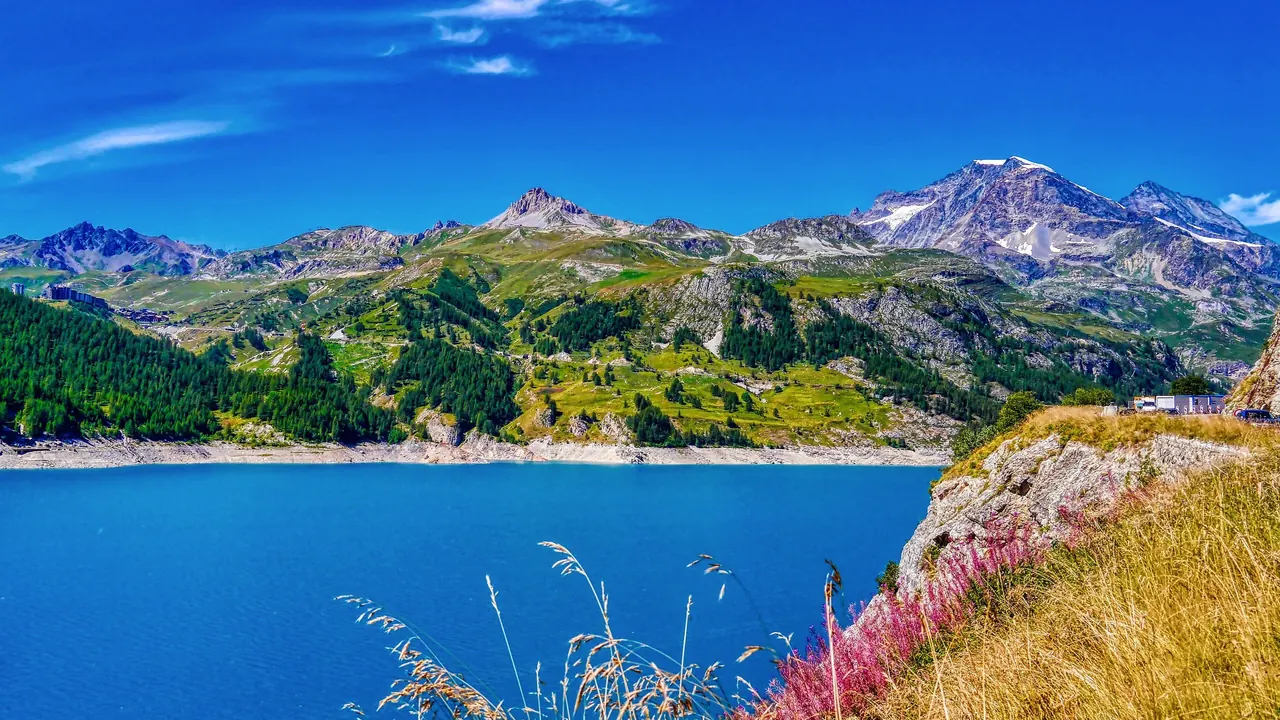
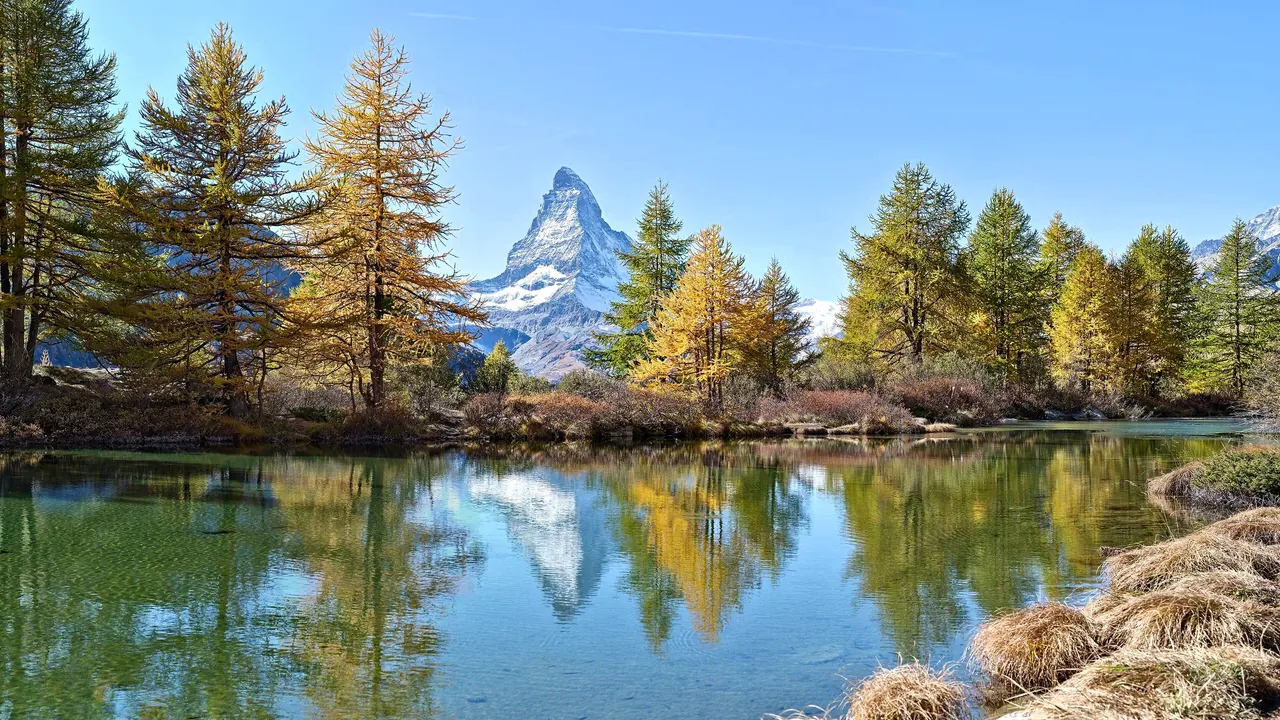
Photos: Tignes by Zairon, CC BY-SA 4.0, cropped; Zermatt by Roy Egloff, CC BY-SA 4.0, cropped.
Tignes or Zermatt?
Our verdict in twelve categories, each scored against the same fixed benchmark cities, and the climate month by month, so you can choose for your trip.
Choose Tignes for
- nightlife
- prices
- beaches
Tignes suits skiers and snowboarders who want to spend as many hours on the snow as possible. Its lifts link with Val d'Isère into one huge, high ski area, much of the lodging is ski-in, ski-out apartments, and the evenings are loud and young. It is still expensive, but it costs less than Zermatt, and self-catering makes a real difference. Groups of friends and families who ski will get the most from it.
Choose Zermatt for
- getting around
- shopping
- culture and sights
Zermatt is for travellers who want the Matterhorn outside the window and are prepared to pay for it. The village is car-free and reached by train. Its terrace restaurants with mountain views beat Tignes on food, and it has a small mountaineering heritage and a couple of music festivals to fill time off the slopes. It suits couples, hikers and climbers, and anyone adding a few Alpine days to a trip around Switzerland by rail.
Scoreboard
Twelve categories on one fixed scale from 0 to 100. The shaded stretch is the gap between the two.
Your match
Pick a travel style or drag the sliders, and both match scores follow your weighting.
Wins on nightlife and prices with your weighting.
Wins on getting around and shopping with your weighting.
What matters to you?
Category by category
What the scores mean for a trip.
Beaches & swimming
Neither place is for beach days, but Tignes at least has somewhere to swim outdoors. In July and August a supervised bathing area opens on the Lac de Tignes, with a small sandy shore, though the snowmelt water stays around 16°C. The indoor aquatic centre with slides is next to it.
Zermatt has no bathing lake at all. Its mountain tarns are for photographing the Matterhorn, not for swimming, so a swim there means a hotel pool.
Food & drink
The two eat much the same cheese-heavy Alpine food, but Zermatt does it with more style. Its best meals are long lunches in wooden chalets around Findeln, Furi and Zum See, with the Matterhorn in view. The village also has a few fine-dining kitchens and serves Valais wines such as Petite Arvine and Cornalin.
Tignes serves Savoyard fondue, tartiflette and croziflette. In Le Lac and Val Claret there are also pizzerias and crêperies, and menus repeat from one restaurant to the next. Its best food is the Beaufort cheese and charcuterie from the delicatessens, to eat in a self-catering apartment or take home.
Culture & sights
Tignes has almost nothing to visit. The resort was put up from scratch at altitude after the Chevril dam flooded the old village in the valley, and its apartment blocks are functional rather than old Savoyard stone. The drowned village, remembered in the giant mural on the dam wall, is its one real story. A couple of small chapels in Les Brévières and Les Boisses are the only other sights.
Zermatt has enough to fill a morning off the snow. The Matterhorn Museum, laid out as an underground version of the old village, tells of the first ascent in 1865 and the deaths on the way down. Climbers killed on the surrounding peaks lie in the cemetery by the parish church, and the dark larch barns of the Hinterdorf, raised on stone slabs, recall the farming village that was there before the hotels. The Gornergrat cog railway has been climbing since the late nineteenth century and is a historic sight in its own right.
Nightlife
Tignes is the place to party in winter. Après-ski starts with music on mountain terraces, then moves to the bars of Val Claret and Le Lac. A young British, Scandinavian and French crowd keeps the small clubs going well after midnight, with beer, shots and dancing in ski boots.
Zermatt's slope-side bars on the runs back into the village are cheerful too. A few bars and small clubs on the main street stay open late on busy weekends, but it costs more and is quieter. In summer Zermatt's hikers and climbers go to bed early, and both resorts go quiet between seasons.
Nature & outdoors
Both are among the great Alpine settings, and the difference is one of kind. Tignes is about the size of its ski area. Shared with Val d'Isère, it has big off-piste terrain and a season that opens in autumn on the Grande Motte glacier, and in summer the Vanoise National Park has hiking, biking and paragliding.
Zermatt is about the peaks themselves. The Matterhorn and a ring of four-thousanders rise around the village, and lifts climb to over 3,800m. The skiing crosses into Italy, the Five Lakes walk is close by, and guides lead first ascents. Choose it for scenery and mountaineering, and Tignes for sheer piste mileage.
Day trips
Both sit at the head of long valleys, but Zermatt's train makes outings easier. Sion has two castle hills, the Valère basilica and vineyards around it, Brig has the Stockalper Palace, Saas-Fee is a bus ride away and Bern fits into a long day.
From Tignes, Val d'Isère is a short bus ride, but most other outings need a car. Bourg-Saint-Maurice, medieval Conflans and the cheese village of Beaufort are down the valley, and in summer Roman Aosta is over the Little St Bernard Pass.
Good for families
The two are about level for families, and they suit them in different ways. Tignes is the more convenient for a ski trip. Ski-in, ski-out apartments save carrying small skis, beginner areas sit beside the villages, and the aquatic centre covers a white-out day.
Zermatt's strength is calm. With no cars in the streets, children can walk safely from hotel to ski school, the Sunnegga nursery slopes are gentle, and the cog railways are a treat in themselves. Rainy days there are harder to fill, and both resorts are high enough to tire very small children.
Getting around
Zermatt is much simpler from start to finish. Visitors arrive by train via Täsch and then walk everywhere, with the Gornergrat railway, the Sunnegga funicular and the gondolas all close to the centre. Smooth Swiss rail connections take you out of the valley.
Inside Tignes, free shuttles and the lifts link the villages, and in winter you can often ski from door to door. Getting there is the hard part. The station at Bourg-Saint-Maurice is about forty minutes below by a winding road, and anything beyond the valley needs a car.
Shopping & style
Zermatt has more to look at, all on one main street. It has Swiss watch and jewellery boutiques for wealthy skiers, genuinely good mountaineering outfitters, and chocolate and Matterhorn souvenirs. Tignes shops are practical, mainly ski hire and supermarkets, and the only thing worth buying there is Beaufort cheese, cured sausage and mountain honey.
Affordability
Neither is cheap, but Tignes gives you more ways to manage the cost. Self-catering apartments make up much of the resort, and weeks early and late in the season cost noticeably less. Summer rooms are cheaper too, although eating out stays at resort prices all year.
Zermatt costs more at every turn, from plain hotel rooms in season to a drink on a mountain terrace and the lifts and cog railways every visitor rides. Self-catering and supermarket picnics save you the most there, and sleeping down the valley in Täsch cuts the cost of a bed. Even so, the total stays well above what the same trip costs in Tignes.
Live music & performing arts
Tignes has no performing arts to speak of. You get bands in après-ski bars, DJs on terraces and the odd free outdoor concert during resort events.
Zermatt has no theatre either, but it has two festivals. Zermatt Unplugged brings acoustic sets to tents and mountain stages in spring, and a late-summer chamber music festival fills the village church. Outside those weeks the evenings in both places revolve around dinner.
Wellness & relaxation
Zermatt is the better place to wind down. It has many excellent hotel spas with mountain views, some open to non-residents, and the car-free streets keep the evenings quiet.
In Tignes the main spa is the wellness area at the lakeside aquatic centre, with a hammam and massage, and the days are built around early lifts and late bars. Neither has thermal springs of its own. From Tignes, Brides-les-Bains is about an hour away, and from Zermatt the Valais spa towns lie further down the valley.
When should you go?
Pick your month. The climate figures are measured averages, not a forecast.
Tignes in July
Zermatt in July
Daytime high, °C
Rainfall in the month, mm
Where the figures come from
Tignes has no weather station within reach, so its figures come from a gridded climate model rather than a measured record, and read a broad area rather than one spot.
Zermatt has no weather station within reach, so its figures come from a gridded climate model rather than a measured record, and read a broad area rather than one spot.
Temperature and rainfall are climate normals, averaged over the years shown. Tignes: 2001-2020 normals, NASA POWER reanalysis grid, no weather station within 90 km. Zermatt: 1991-2020 normals, TerraClimate 4 km grid at the town, no weather station within 90 km.
From December to March both are snow destinations, with daytime highs at or below freezing. Tignes is the warmer of the two in summer, with July highs near 18°C against about 14°C in Zermatt. That makes it pleasanter for hiking in light clothes and for a quick swim in the lake in July and August. Neither place ever gets too hot for walking.
Both get rain or snow all year round, and the wettest months come at different times. In Tignes the wettest month is May, at about 103mm. In Zermatt the wettest month is November, at around 130mm, and October is also damp, so September is the better autumn month there. Late spring and late autumn are also when much of both resorts closes.
Which traveller are you?
On a trip on a tight budget, Tignes is the only realistic choice of the two. Self-catering apartments, cheaper weeks early and late in the season and lower summer prices for rooms help. Zermatt stays expensive at every level, from plain hotel rooms to the lifts.
For a culture and arts trip, Zermatt has more to do away from the slopes. It has the Matterhorn Museum, the mountaineers' cemetery, the old larch barns of the Hinterdorf, and festival weeks of acoustic and chamber music. In Tignes, the story of the drowned village is about all there is.
For a short city break, Zermatt's car-free village is easier. You arrive by train, walk from the station to the lifts and can ride up the Gornergrat the same afternoon. Tignes needs a transfer up from Bourg-Saint-Maurice and repays a longer stay better.
Before you go
| Measure | Tignes | Zermatt |
|---|---|---|
| Official language | French | French, German, Italian, Romansh |
| Currency | Euro (EUR) | Swiss Franc (CHF) |
| Sockets | CE230 V, 50 Hz | CJ230 V, 50 Hz |
| Driving side | Right | Right |
| Time zone | UTC+1, UTC+2 in summer | UTC+1, UTC+2 in summer |
| Emergency number | 112 | 112 |
| Elevation | 1,440 m | 1,624 m |
| Main airport | Geneva International Airport (GVA)105 km from centre150 non-stop destinations | Geneva International Airport (GVA)128 km from centre150 non-stop destinations |
| Public holidays this year | 11 days | 9 days |
By the numbers
| Measure | Tignes | Zermatt |
|---|---|---|
| Population | 1,919 | 6,023 |
| People per km² | 24 | 25 |
| Museums within 10 km | 0 | 2 |
| UNESCO World Heritage sites within 50 km | 0 | 2 |
Where else could you go?
Every comparison below shares a destination with this one, so you can follow Tignes or Zermatt somewhere new.
- Val d'Isèrevs Tignes
- Les Arcsvs Tignes
- Saas-Feevs Zermatt
- La Rosièrevs Tignes
- La Plagnevs Tignes
- Val Cenisvs Tignes