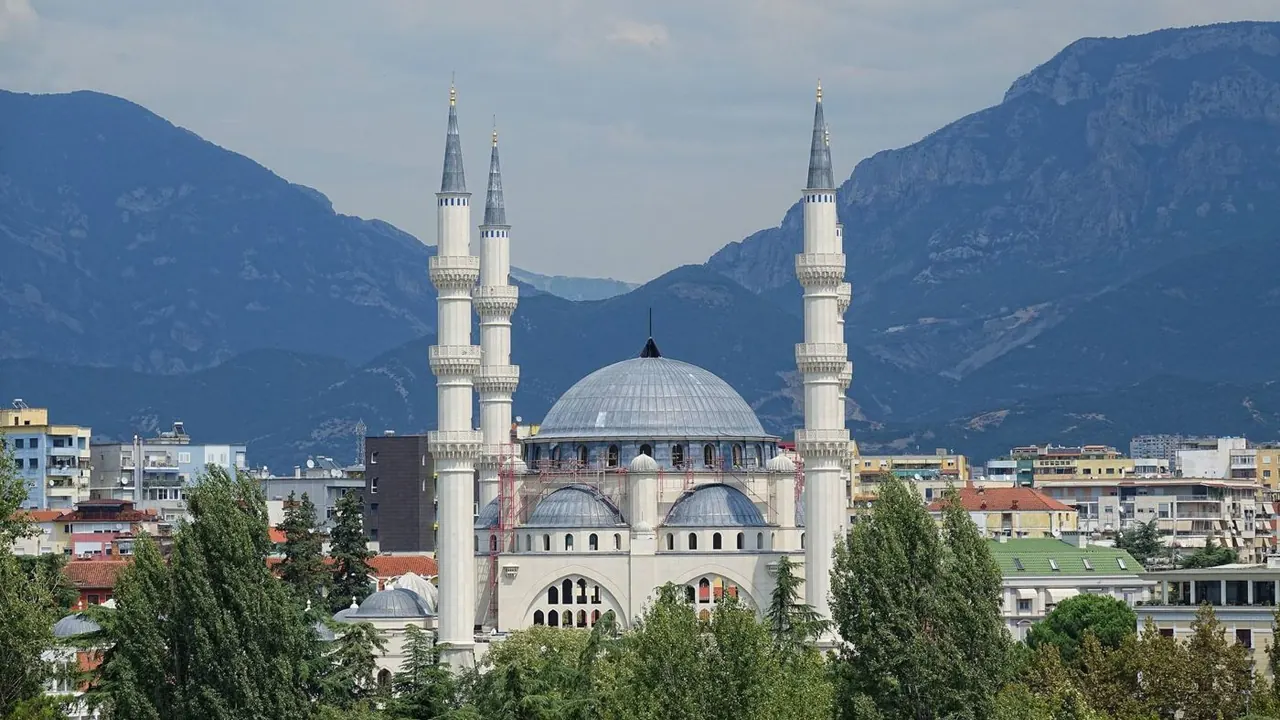
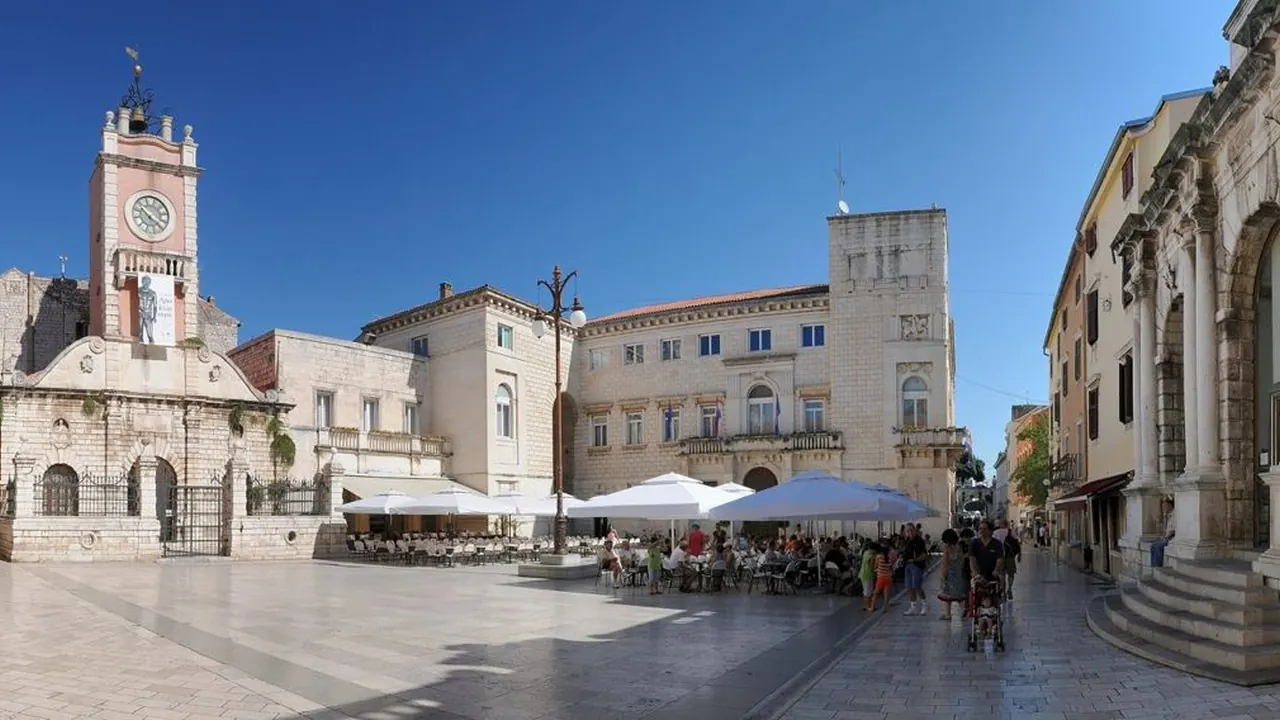
Photos: Tirana by Bjørn Christian Tørrissen, CC BY-SA 4.0, cropped; Zadar by Böhringer Friedrich, CC BY-SA 2.5, cropped.
Tirana or Zadar?
Our verdict in twelve categories, each scored against the same fixed benchmark cities, and the climate month by month, so you can choose for your trip.
Choose Tirana for
- prices
- nightlife
- food and drink
Tirana suits a traveller who wants an inexpensive capital with long evenings and a strong twentieth-century story. Late dinners lead into Blloku's bars, communist-era bunkers have become museums, and farm restaurants sit in the hills above town. Berat and Kruja make easy day trips. The sea is an outing rather than the reason to go.
Choose Zadar for
- beaches
- nature and the outdoors
- families
Choose Zadar for a summer spent by the water. You can swim off the old town's promenade, take a ferry to island coves, and reach Paklenica, the Kornati and Krka easily, which makes it the stronger base for the sea and the outdoors. Its walled peninsula, with the Roman forum and St Donatus, is also easier to manage with children. Expect quieter nights and higher bills.
Scoreboard
Twelve categories on one fixed scale from 0 to 100. The shaded stretch is the gap between the two.
Your match
Pick a travel style or drag the sliders, and both match scores follow your weighting.
Too close to call, 2 points apart
Wins on prices and nightlife with your weighting.
Wins on beaches and nature and the outdoors with your weighting.
What matters to you?
Category by category
What the scores mean for a trip.
Beaches & swimming
From Tirana the sea is a day out. Durrës is under an hour away and has a long stretch of sand with shallow water that suits children. The strip is built up and crowded, though, and the water near the port is not always clear. Albania's famous southern coves are too far away for this trip.
In Zadar, swimming is part of every summer day, whether off the stone promenade or at Kolovare and Borik. Those city beaches are pebble and concrete rather than sand. For sand, Nin is a short drive north, and ferries reach quieter coves on Ugljan and Pašman and the pale beach at Sakarun on Dugi Otok.
Food & drink
Tirana eats better, and for less. Its cooking comes straight from the farm: tavë kosi, fërgesë and byrek from corner bakeries. The farm restaurants on the hills around the city serve food grown on the surrounding land. In town, Blloku and the streets around Pazari i Ri cover the evenings, and coffee is a slow ritual on every block.
Zadar has good Dalmatian seafood, lamb cooked under the peka and Pag cheese, and Maraschino is its own liqueur. Menus on the peninsula repeat one another, though, and the main streets cater to passing visitors. Neither city has much international range or high-end dining.
Culture & sights
Zadar has the deeper history to walk through. Its walled peninsula holds the Roman forum, the round ninth-century St Donatus, the Romanesque cathedral of St Anastasia and the Venetian Land Gate, all a few minutes apart. The small but fine Museum of Ancient Glass and the Archaeological Museum add depth, and the Sea Organ gives the waterfront a modern landmark.
Tirana's sights are about the twentieth century. Bunk'Art and the House of Leaves tell the story of communist rule in a way Zadar cannot match, and Skanderbeg Square and the Et'hem Bey Mosque frame the centre. Little older fabric survives, though, and the country's heritage lies outside the city.
Nightlife
Tirana is the place for a night out. Blloku was once the closed quarter of the communist leadership and is now a grid of cocktail bars, lounge terraces and small clubs. It fills with young locals well past midnight, larger clubs near the Grand Park lake run into the early hours, and it all keeps going outside summer.
Zadar's evenings are gentler. They start with sunset at the Sea Organ, then move to café-bars along Kalelarga and terrace bars on the walls. Real clubbing means the hour's trip to Zrće on Pag in high summer, and from October the town goes quiet.
Nature & outdoors
Both cities have mountains close by, but Zadar adds the sea and a wider range. Paklenica's limestone gorges in the Velebit offer serious hiking and some of Croatia's best climbing. Boats run out to the bare Kornati and to Telašćica's cliffs, Krka's waterfalls and the Plitvice Lakes are within a day, and sea kayaking and cycling are easy to arrange.
Tirana's outdoors are closer at hand. A cable car rises from the city's edge up Mount Dajti to beech forest and views to the sea, and the Bovilla reservoir and Gamti mountain are about an hour away. The Albanian Alps need a separate trip.
Day trips
Both are good bases, and Zadar edges ahead on variety. Šibenik's UNESCO-listed cathedral is an hour south and Nin's tiny royal town is closer still. Split and Trogir make long but rewarding days, and ferries from the old town reach island villages such as car-free Silba.
Tirana's day trips are where much of Albania's heritage lies: Skanderbeg's castle and bazaar at Kruja, the Roman amphitheatre at Durrës and, above all, Berat's white Ottoman houses below its lived-in citadel. Slow roads make these full days, mostly by car, minibus or tour.
Good for families
Zadar is easier with children. The flat, car-free old town and the broad waterfront suit pushchairs and scooters, and the Sea Organ and the Greeting to the Sun, which lights up after dark, rarely fail to delight. Nin's shallow sand and short ferry hops fill the days.
Tirana welcomes children just as warmly in cafés and on the evening stroll, and the Grand Park and the Dajti cable car make good outings. Heavy traffic, drivers who rarely yield and obstructed pavements wear parents out, though, and the nearest beach is an hour away.
Getting around
Both are walking cities without a metro or tram, and in each the main sights lie within a short stroll. The difference is the street around you. Zadar's peninsula is car-free, and ferries to the islands leave from its edge. In Tirana, wide, busy roads need care to cross, and Bunk'Art and the Dajti cable car mean a taxi because the city buses are hard for a visitor to work out.
Further out, both depend on a hire car, minibuses or organised excursions. Parking near Zadar's old town is tight in summer.
Shopping & style
Neither city is a reason to go shopping, and the mainstream fashion in both is in malls on the edge of town. Tirana's most enjoyable browsing is in the stalls around Pazari i Ri, with felt hats, filigree silver and copperware. In Zadar, the marble Kalelarga has jewellers and small galleries, and the market by the walls is the best place to browse.
The things to take home differ most: raki, honey and mountain herbs from Tirana, and Maraschino, Pag cheese and Pag lace from Zadar.
Affordability
Tirana is by far the cheaper stay. Meals, coffee, taxis and museum entry cost a fraction of Western European levels. Even the smarter Blloku restaurants and bars stay well below what other capitals charge.
Zadar is priced like a mid-range Western European city. It is gentler than the better-known towns further south, but high-summer rooms on the peninsula cost much more, and national park fees and boat excursions add up. June and September give the best balance there.
Live music & performing arts
Neither city has a deep scene, and the two run on different calendars. Tirana's opera house on Skanderbeg Square gives you an evening of opera or ballet at almost any point in the season, with no need to plan far ahead. Albania's iso-polyphonic singing is heard more often in the south than here.
In Zadar, performance belongs to summer. The Musical Evenings in St Donatus bring early and chamber music into a ninth-century church, and in July and August you may hear klapa singing in squares and churches. In the cooler months there is little beyond Croatian-language theatre.
Wellness & relaxation
Zadar is the easier place to unwind. Spas in both cities are mostly hotel facilities, but Zadar adds the mineral mud of the lagoon at Nin, an afternoon siesta and the evening habit of watching the sun set over the islands from the Sea Organ steps.
Tirana's calm comes from long hours over coffee and the evening xhiro along the boulevards, with Dajti and the Grand Park as escapes from the traffic noise. Its nearest thermal springs are at Llixha, about an hour away, with simple, old-fashioned spa hotels.
When should you go?
Pick your month. The climate figures are measured averages, not a forecast.
Tirana in July
Zadar in July
Daytime high, °C
Rainfall in the month, mm
Where the figures come from
Zadar has no rain gauge within 25 km of the centre, so its rainfall comes from a gridded climate dataset read at the city rather than from a gauge further away.
Temperature and rainfall are climate normals, averaged over the years shown. Tirana: 1961-1990 normals, Tirana (3 km from centre). Zadar: 1999-2020 (rainfall 1991-2020) normals, Zadar / Zemunik (9.9 km from centre).
Tirana and Zadar share almost the same summer. Both reach 31°C in July and August, warm enough for swimming but hard going for midday sightseeing or hill walks. The sea warms to about 25°C in August and is comfortable from June to September. From Tirana that means a trip to Durrës, while in Zadar it is a walk from the old town. Tirana's summer is long and very sunny, but the rain sets in during October and builds to 172mm in November. May and September are its best months for the streets and the slopes of Dajti.
Zadar is drier for most of the year, and July is almost rainless. Its rain starts a month earlier, in September, but stays moderate until it peaks at 113mm in November. That leaves May, June and October as good months for the old town and the Paklenica trails. Winters are cool in both, with Tirana a little milder.
Which traveller are you?
On a beach and sun trip, Zadar is the clear pick. You can swim off the promenade beside the old town, spend a day on Nin's sandy shallows or take a ferry to island coves. From Tirana, the nearest sea is the crowded strip at Durrës.
For a food and nightlife trip, Tirana wins. Slow-baked lamb, morning byrek and farm restaurants in the hills lead into late nights in Blloku's cocktail bars and clubs all year round. Zadar's seafood menus tend to repeat each other and its evenings stay small and relaxed.
On a trip on a tight budget, Tirana lets the money last longest. Breakfast byrek, grilled-meat dinners, raki and a comfortable central hotel all come cheaply, and even a night in Blloku stays within reach. Zadar can work with an apartment and bakery lunches, but each day costs more.
Before you go
| Measure | Tirana | Zadar |
|---|---|---|
| Official language | Albanian | Croatian |
| Currency | Lek (ALL) | Euro (EUR) |
| Sockets | CF220 V, 50 Hz | CF230 V, 50 Hz |
| Driving side | Right | Right |
| Time zone | UTC+1, UTC+2 in summer | UTC+1, UTC+2 in summer |
| Emergency number | 112 | 112 |
| Elevation | 110 m | 5 m |
| Main airport | Tirana International Airport Mother Teresa (TIA)13 km from centre121 non-stop destinations | Zadar Airport (ZAD)10 km from centre66 non-stop destinations |
| Public holidays this year | 14 days | 14 days |
By the numbers
| Measure | Tirana | Zadar |
|---|---|---|
| City population | 389,323 | 70,779 |
| People per km² | 9,314 | - |
| Museums within 10 km | 11 | 1 |
| UNESCO World Heritage sites within 50 km | 0 | 2 |
| Swim season, months above 21 °C | 5 months | 4 months |
Where else could you go?
Every comparison below shares a destination with this one, so you can follow Tirana or Zadar somewhere new.