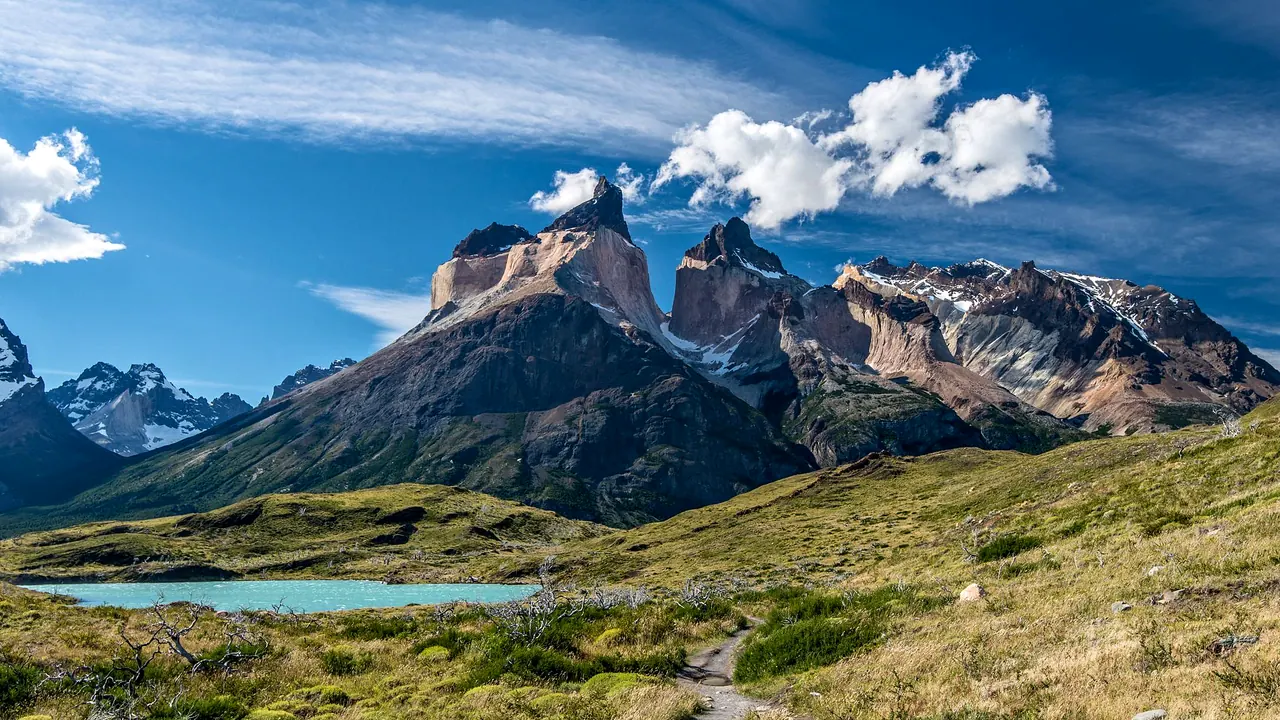
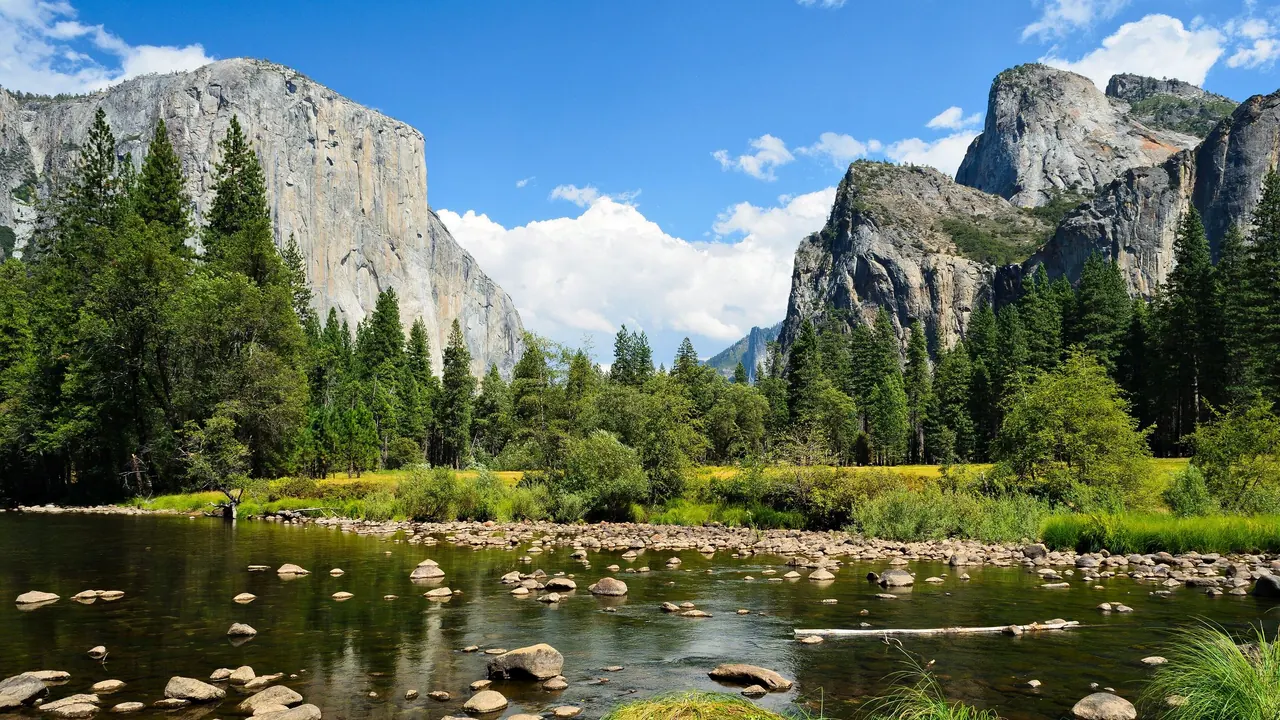
Photos: Torres del Paine by Holger J. Bub, Pexels License; Yosemite by King of Hearts, CC BY-SA 3.0, cropped.
Torres del Paine or Yosemite?
Our verdict in twelve categories, each scored against the same fixed benchmark cities, and the climate month by month, so you can choose for your trip.
Choose Torres del Paine for
- wellness
- food and drink
- shopping
Torres del Paine is for the walker who wants a real expedition: several days on the W Trek or the full O Circuit, moving between refugios under the granite Towers, with condors overhead and a fair chance of pumas in the eastern sector. It is far away, windy and costly, and almost everything beyond the mountains happens back in Puerto Natales. The upmarket lodges, with their saunas and hot tubs facing the massif, also make it the better choice for a couple who want comfort and silence after a long day outside.
Choose Yosemite for
- day trips
- families
- beaches
If you want great scenery without an expedition, Yosemite is the easier choice. Families, first-time hikers and road-trippers can base themselves in the Valley, ride the shuttle to trailheads, wade in the Merced in late summer and spend a day in the gold-rush towns of the foothills. It is cheaper to do on a budget if you can get a campsite. The price is summer crowds, which make the Valley feel like a busy town in July.
Scoreboard
Twelve categories on one fixed scale from 0 to 100. The shaded stretch is the gap between the two.
Your match
Pick a travel style or drag the sliders, and both match scores follow your weighting.
Wins on wellness and food and drink with your weighting.
Wins on day trips and families with your weighting.
What matters to you?
Category by category
What the scores mean for a trip.
Beaches & swimming
Torres del Paine offers no swimming at all. Its milky lakes are glacier-fed and barely above freezing, and the wind makes even a paddle miserable.
Yosemite at least gives you a cool-off. By late summer the Merced in the Valley slows into calm pools and sandbars, Tenaya Lake has a sandy shore in the high country, and Bass Lake just south of the park is warm enough for a proper lake day. None of it is a reason to go, and the rivers are dangerous in spring.
Food & drink
Neither is a place to travel for food, but Torres del Paine has more of a regional table. Patagonian lamb roasted on a cross over the fire, southern king crab, trout and calafate-flavoured drinks give meals a sense of place. Puerto Natales has a short street of restaurants and brewpubs where trekkers eat well, and the lodges serve careful set menus.
Yosemite's food is mostly fuel: cafeterias, pizza counters and general stores, with one grand historic dining room in the Valley. The gateway towns add diners, barbecue, Mexican cooking and Sierra foothill wine, and many visitors cook at camp.
Culture & sights
Both are about rock rather than buildings, and the man-made heritage is thin in each, just of a different kind. Around Puerto Natales the story is prehistory and sheep: the Milodon Cave with its giant ground sloth, and the old Puerto Bories freezing works on the fjord.
Yosemite's heritage is inside the park and tells of early tourism and conservation. There is rustic timber-and-stone park architecture, the Yosemite Museum's Ahwahneechee Miwok basketry, Ansel Adams's photographs and the stagecoach-era buildings at Wawona. Each takes an hour or two.
Nightlife
Evenings end early in both. The difference is where you spend them. Puerto Natales has a few brewpubs that fill with trekkers swapping trail stories in summer, often while it is still light outside. In Yosemite the night means a lodge lounge, a ranger campfire talk or simply the stars, which are especially clear in the high country.
Nature & outdoors
These are two of the great mountain landscapes on earth, and the choice is about how you want to experience one. Torres del Paine is wild, open and wind-scoured. The Towers and Cuernos rise from the steppe, Grey Glacier sheds icebergs, and the classic way to see it is a multi-day trek between refugios. Guanacos, rheas and condors are daily sights, and pumas are a real possibility.
Yosemite packs its drama into the sheer walls of the Valley, with waterfalls at their peak in spring, and it is best explored on day hikes such as the Mist Trail or the Half Dome cables. It adds big-wall climbing on El Capitan, the giant sequoias of Mariposa Grove, the alpine meadows of Tuolumne in summer and gentle skiing at Badger Pass in winter.
Day trips
From Torres del Paine there is little to visit except more wild country. Puerto Natales is two hours away, Punta Arenas works better as a stop on the way in or out, and El Calafate across the border is really a separate leg of the journey.
Yosemite has proper outings. The Gold Country to the west offers the preserved main street of Columbia, the steam railway yard at Jamestown and wineries around Murphys. In summer, Tioga Pass opens the way east to Lee Vining, the ghost town of Bodie and Mammoth Lakes.
Good for families
Yosemite is much the easier choice with children. The flat Valley floor has paved cycle paths, meadows, short walks to Lower Yosemite Fall and shallow river edges in late summer, and the Junior Ranger programme keeps children busy. Parents still need to watch out for cliff edges, fast spring water and bears.
Torres del Paine suits only older children who enjoy walking. A ten-year-old will love the guanacos and the glacier boat, but long gravel drives, fierce wind, sudden cold and few facilities between the lodges make it hard with younger ones.
Getting around
Getting into Torres del Paine is a journey in itself. You fly to Puerto Natales or Punta Arenas, then spend about two hours on the road to the park. Inside, there are gravel roads, a few buses a day, the boat across Lake Pehoé and, beyond that, your own legs. Trekkers need their refugio or campsite places booked well ahead.
Yosemite is easier, at least in the Valley. Free shuttles and bike paths cover the floor, and a regional bus from Merced makes a car-free visit possible. Glacier Point, Mariposa Grove and Tuolumne each need an hour or more of winding road, and summer brings queues at the entrances.
Shopping & style
There is little to buy in either, but the useful things differ. Puerto Natales is where you rent or replace trekking gear and buy supplies before setting off, along with sheep's-wool knitwear and leather. Yosemite's park stores lean towards maps, books and souvenirs. A long-standing gallery in the Valley sells fine-art landscape prints, and the gateway towns have antique shops.
Affordability
Both cost a lot, but Torres del Paine is harder on the budget. On top of the long flights there is a substantial entry fee for foreign visitors, the refugios are costly for what they offer, and the lodges are among the priciest stays in South America. Sleeping in Puerto Natales hostels and taking the bus helps, but only so much.
Yosemite's rooms and gateway motels are expensive in summer. Its campsites are very cheap, though hard to get, and the shuttles and trails cost nothing once you are in. A winter visit or a base in the foothills brings costs down further.
Live music & performing arts
Neither is a destination for performances. In Torres del Paine you might catch a folk guitarist in a Natales bar or a gaucho evening at an estancia. Yosemite has ranger campfire talks and the occasional one-person historical show in the Valley. On its edges there are a small repertory theatre in Sonora and summer concerts in the foothill towns.
Wellness & relaxation
Torres del Paine is better for real rest, as long as you stay in one of the upmarket lodges. Several have saunas, small spas and outdoor hot tubs looking out over the lakes and the massif, with deep silence all around. Life in the refugios is calming for the mind but tiring for the body.
Yosemite has a couple of resort spas near the southern entrance, and in summer there are open-air hot springs around Bridgeport and Mammoth Lakes, beyond Tioga Pass. In July the Valley itself is too crowded to feel like a retreat. Winter and the high country are quieter.
When should you go?
Pick your month. The climate figures are measured averages, not a forecast.
Torres del Paine in July
Yosemite in July
Daytime high, °C
Rainfall in the month, mm
Where the figures come from
Torres del Paine has no weather station within reach, so its figures come from a gridded climate model rather than a measured record, and read a broad area rather than one spot.
Yosemite has no weather station within reach, so its figures come from a gridded climate model rather than a measured record, and read a broad area rather than one spot.
Temperature and rainfall are climate normals, averaged over the years shown. Torres del Paine: 1991-2020 normals, TerraClimate 4 km grid at the town, no weather station within 90 km. Yosemite: 1991-2020 normals, TerraClimate 4 km grid at the town, no weather station within 90 km.
The two run on opposite calendars. In Torres del Paine the walking season is the southern summer, roughly October to April, and even at its warmest in January and February the days reach only about 17°C, with wind that makes it feel colder. Rain is spread almost evenly through the year, so there is no dry season to wait for, only weather that can change within the hour. By June and July highs fall to around 5°C. That is too cold for most trekkers, but quiet, and the best time for tracking pumas.
Where most visitors to Yosemite stay, summer is hot and almost rainless, with highs near 28°C in July and August. That is warm enough for a river dip, but it makes midday climbs on exposed trails hard work. The waterfalls are at their fullest from April to June. From November to March the wet season brings rain and snow, around 157mm in January, and Tioga Road to the high country stays shut. Neither destination is ever a beach destination.
Which traveller are you?
On a family trip with young children, Yosemite fills the days more easily. Torres del Paine is safe, but once you leave the park, Puerto Natales has little for children beyond its playgrounds. Yosemite adds mule deer grazing by the roadside and the covered bridge and pioneer cabins at Wawona.
For a relaxing and wellness trip, Torres del Paine is better at slowing you down. You can have a lodge massage after a day on the trail, an unhurried ride across an estancia or a quiet paddle near Grey Glacier. In Yosemite, the calmer corners are an hour or more of winding road from the Valley.
On a trip on a tight budget, Yosemite is the more forgiving. In Torres del Paine, transfers, guided tours and food brought in from far away all add to the bill. In Yosemite you can stock up in the gateway towns and picnic on the trail instead of paying the inflated prices of food inside the park.
Before you go
| Measure | Torres del Paine | Yosemite |
|---|---|---|
| Official language | Spanish | - |
| Currency | Chilean Peso (CLP) | US Dollar (USD) |
| Sockets | CL220 V, 50 Hz | AB120 V, 60 Hz |
| Driving side | Right | Right |
| Time zone | UTC-3 | UTC-8, UTC-7 in summer |
| Emergency number | Police 133/134, ambulance 131, fire 132 | 911 |
| Main airport | President Carlos Ibáñez International Airport (PUQ)7 non-stop destinations | Fresno Yosemite International Airport (FAT)15 non-stop destinations |
| Public holidays this year | 16 days | 13 days |
Where else could you go?
Every comparison below shares a destination with this one, so you can follow Torres del Paine or Yosemite somewhere new.
- Kings Canyonvs Yosemite
- Sequoiavs Yosemite
- Death Valleyvs Yosemite
- Joshua Treevs Yosemite
- Redwood National Parkvs Yosemite
- Zionvs Yosemite