Tunisia
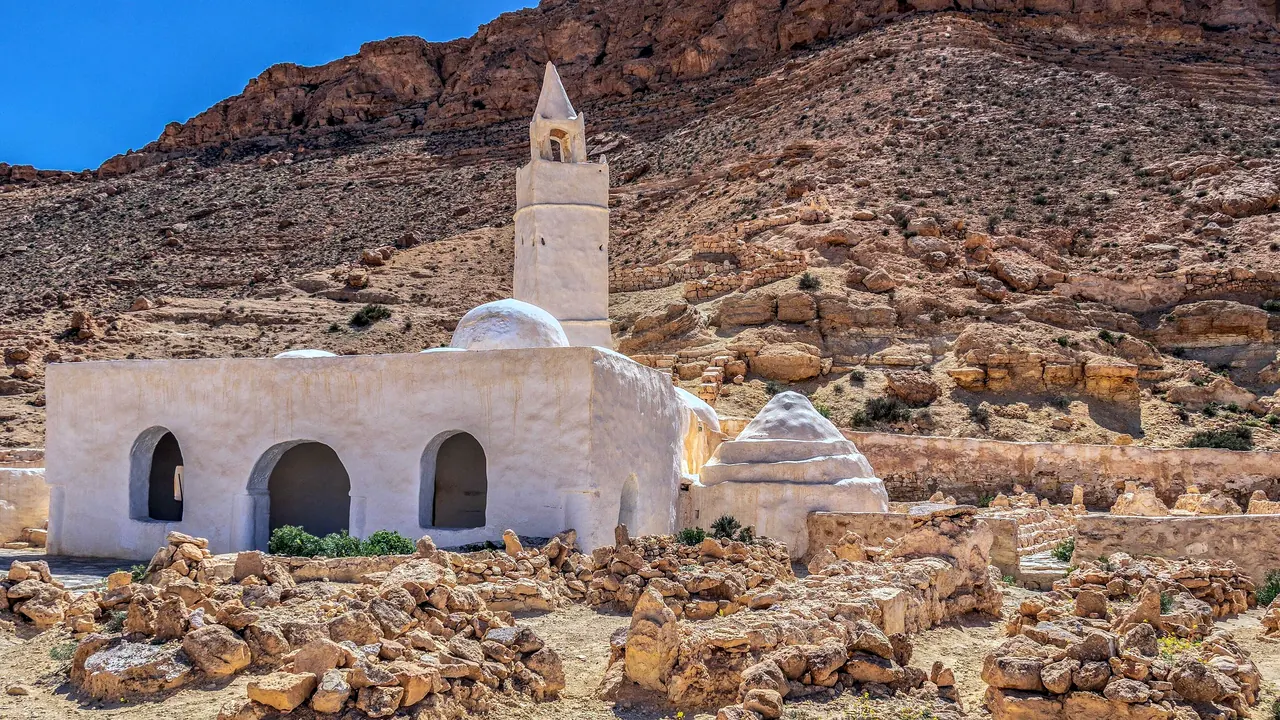
The Mosque of the Seven Sleepers in Chenini
- Affordability82
- Beaches80
- Culture & sights80
Photo: Smailtn, CC BY-SA 4.0, cropped
Match
60
Every category weighted equally
- Beach & sun64
- Culture & arts58
- Food & nightlife54
- Family trip64
- Outdoors64
- Relax & unwind64
- Shopping & style56
- On a budget62
Tunisia in twelve categories
Our verdict on the country as a whole, scored 0 to 100 against the same fixed benchmark cities as every destination, so a score means the same thing on every page.
Beaches & swimming. Scores 80 out of 100.
Food & drink. Scores 55 out of 100.
Culture & sights. Scores 80 out of 100.
Nightlife. Scores 32 out of 100.
Nature & outdoors. Scores 55 out of 100.
Day trips. Scores 68 out of 100.
Good for families. Scores 60 out of 100.
Getting around. Scores 50 out of 100.
Shopping & style. Scores 50 out of 100.
Affordability. Scores 82 out of 100.
Live music & performing arts. Scores 33 out of 100.
Wellness & relaxation. Scores 72 out of 100.
Tunisia category by category
Under each: where in Tunisia it is best, and our destinations in Tunisia that score highest on it.
Beaches & swimming
80Most visitors come to Tunisia for the beach, and the east coast delivers it across a long stretch of shoreline. Djerba has wide, pale sand and shallow, calm water on its eastern shore, ideal for long, lazy days. Hammamet and Yasmine Hammamet face a gently shelving bay. Around Sousse, Port El Kantaoui and Monastir the beaches are broad and well kept, and Mahdia has some of the clearest, quietest water on the coast. In August the sea reaches about 26°C, and swimming is comfortable from June to October.
The north is different. Tabarka and the coast near Bizerte have rockier, greener shores with cooler water and fewer resorts. The beaches are generous rather than dramatic, and the resort strips can feel built up.
Where: Djerba, Hammamet, Sousse and Monastir, Mahdia
Food & drink
55Tunisian cooking is hot, bright and built on harissa, olive oil, preserved lemon and fish. The dishes to look for are couscous with fish or lamb, brik with its runny egg in crisp pastry, lablabi chickpea soup for breakfast, ojja with eggs and merguez, and grilled fish by the harbour in Sfax, Mahdia or La Goulette. Tunis has the widest choice, from medina lunch counters to seafood terraces in La Marsa, and the pastry shops do sweets heavy with honey and pistachio.
The resort hotels mostly serve international buffets, so you have to go out to find the real cooking. Wine is produced on Cap Bon, but drinking happens mainly in hotels and tourist areas, and there is no café or bar culture to plan a trip around.
Where: Tunis and La Marsa, Sfax, Mahdia, Cap Bon
Culture & sights
80Tunisia has layers of heritage that few visitors expect. In Tunis, the Bardo Museum holds one of the world's great collections of Roman mosaics, and the walled medina is a maze of souks, mosques and old palaces. The ruins of Carthage lie along the shore. Inland, Dougga is a whole Roman town of temples and theatres on a hillside, and El Jem's amphitheatre stands almost intact above a small town.
Kairouan, with its Great Mosque, is one of the holy cities of Islam. Sousse and Monastir have fortified ribats and walled medinas, and Sbeitla and Bulla Regia add more Roman sites. In the south, Matmata's underground houses, the granaries of Tataouine and the Ghriba synagogue on Djerba are a different world again.
Where: Tunis and Carthage, Kairouan, El Jem, Dougga
Nightlife
32Going out in Tunisia is a summer, resort-based affair. Yasmine Hammamet and Port El Kantaoui near Sousse have clubs and hotel discos that fill with package visitors from June to September. Around Tunis, the seaside suburbs of Gammarth and La Marsa have lounge bars and beach clubs where the city's young professionals spend their evenings. Away from these places, evenings revolve around cafés, shisha and family strolls, and alcohol is not a big part of public life.
Where: Hammamet, Sousse and Port El Kantaoui, Gammarth and La Marsa
Nature & outdoors
55The great landscape is the Sahara, and getting there is a separate trip south. From Douz, camel treks and four-wheel-drive tours head into the dunes of the Grand Erg Oriental, and Ksar Ghilane has a spring at the edge of the sand. The salt flat of Chott el Jerid stretches between Tozeur and Kebili. Above Tozeur, the mountain oases of Chebika, Tamerza and Mides sit in palm-filled gorges.
The north is green, with cork-oak forest around Ain Draham, diving off the reefs at Tabarka, and wintering birds at Ichkeul National Park. Cap Bon has cliffs at its tip, but on most of the east coast the land behind the beaches is flat olive country. Desert trips are best between October and April.
Where: Douz and the Grand Erg Oriental, Tozeur and the mountain oases, Ain Draham and Tabarka, Ichkeul National Park
Day trips
68Day trips work best from Tunis and from the Sousse coast. From the capital, the suburban train runs out to Sidi Bou Said, a blue-and-white clifftop village, and on to La Marsa. Bizerte, with its old port and kasbah, is about an hour north, and Cap Bon's pottery town of Nabeul and the old fort at Kelibia make a good loop by road. Dougga is about two hours inland.
From Sousse or Monastir, El Jem and the holy city of Kairouan are each about an hour away. Mahdia's medina and fishermen's harbour are an easy outing down the coast. On Djerba, the villages of Guellala and Erriadh make a gentle day, but the desert towns of the south take more than a day.
Good for families
60Tunisia suits a family looking for a straightforward beach-and-pool week. The big resort hotels in Hammamet, Sousse, Monastir and Djerba are built around children, with splash pools, kids' clubs and entertainment, and the beaches shelve gently into calm water. Yasmine Hammamet and Port El Kantaoui have theme and water parks, and there is a wildlife park near Sousse. On Djerba you can see crocodiles and Berber heritage in one outing.
Tunisians are warm towards children. The difficulties start beyond the resort: hassle in the souks, high summer heat, and long hot drives to the desert. A camel ride at Douz in the cooler months is the classic adventure for older children.
Where: Hammamet, Sousse and Port El Kantaoui, Djerba, Monastir
Getting around
50The populated coast is reasonably easy to travel. A railway runs south from Tunis through Sousse, Monastir, El Jem and Sfax towards Gabes. The suburban line from Tunis serves Carthage, Sidi Bou Said and La Marsa, and the capital has a light-rail network. Between towns, shared louage minibuses leave when they are full and reach almost everywhere. Djerba and Tozeur are linked to Tunis by domestic flights.
The effort comes inland and in the south. Dougga, the mountain oases and the desert are much easier with a hired car, a driver or a tour, and trains can be slow and crowded. Medinas are walkable, but resort strips are spread out, so you need taxis. French helps everywhere.
Where: Tunis, Sousse, Monastir, Sfax
Shopping & style
50Shopping in Tunisia means crafts and souks rather than fashion. The Tunis medina has specialised lanes for perfume, gold, copper and the red felt chechia cap. Nabeul on Cap Bon is the pottery town, with painted ceramics everywhere, and Kairouan is known for knotted and woven carpets. On Djerba, the Houmt Souk market and the potters of Guellala are the places to browse, and Sidi Bou Said sells its blue wire birdcages.
Bargaining is expected, and the selling in tourist souks can be persistent. Modern malls on the edge of Tunis serve locals rather than visitors, and there is no luxury or design shopping.
Affordability
82Tunisia is one of the cheapest beach countries around the Mediterranean. On the Sousse coast, including Port El Kantaoui and Monastir, large all-inclusive resorts compete hard for package visitors, so a beach week costs far less than on the northern shore. Djerba is similar, with resort hotels along the eastern beaches and simple guesthouses in Houmt Souk and Erriadh. In Tunis, medina lunch counters, coffee, the light rail and the suburban train out to Carthage and Sidi Bou Said cost very little, and even the major archaeological sites are inexpensive to enter.
In the south, Tozeur has modest hotels and guesthouses in the old brick quarter, and oasis tours cost less when you arrange them with local drivers rather than through hotels. Wherever you stay, the costs that add up are imported alcohol, private drivers and desert excursions sold at resort desks, so it pays to book these locally. Shared louage minibuses keep travel between towns cheap.
Live music & performing arts
33The performing arts in Tunisia are mainly a summer festival season. The Carthage International Festival brings Arab and international singers to the Roman theatre above the sea. El Jem's amphitheatre hosts a symphonic music festival, and the Hammamet festival stages concerts and plays in an open-air theatre in the gardens. Djerba and Tabarka have festivals of their own.
The rest of the year, the life is in Tunis: the Art Nouveau Municipal Theatre on Avenue Habib Bourguiba, concerts of malouf, the Andalusian-rooted classical music, and the Carthage film and theatre festivals. Much of it is in Arabic or French, and there is little for a visitor in the resort towns beyond hotel shows.
Where: Tunis and Carthage, El Jem, Hammamet
Wellness & relaxation
72Tunisia has one of the largest thalassotherapy industries anywhere. Resort hotels in Hammamet, Djerba, Sousse, Monastir and Mahdia have seawater treatment centres offering hydrotherapy pools, algae wraps and massage. Many visitors come in the cooler months for a week of treatments.
The local bathing culture is the hammam. Every medina has neighbourhood bathhouses with separate hours or sections for men and women, offering steam and a hard scrub with a black-soap mitt. They are simple, local places, not showpieces. On Cap Bon, the hot springs at Korbous flow from the cliffs into the sea. Djerba is the calmest place to slow down, with whitewashed villages and quiet beaches.
Where: Djerba, Hammamet, Korbous and Cap Bon, Mahdia
Where to go in Tunisia
For a first visit built on history and food, base yourself in Tunis. The walled medina, the Roman mosaics of the Bardo and the ruins of Carthage are all close together, and the suburban train runs out to clifftop Sidi Bou Said and La Marsa, where seafood terraces and the beach clubs of nearby Gammarth fill the evenings. Bizerte is about an hour north, Dougga about two hours inland, and Cap Bon makes a road loop through the pottery town of Nabeul, the fort at Kelibia and the Korbous hot springs. Further west, Tabarka and Ain Draham are a quieter, greener corner for diving, cork-oak forest and cooler water.
The beach vacation happens on the east coast. Hammamet and Yasmine Hammamet, Sousse, Port El Kantaoui and Monastir suit families wanting an easy beach-and-pool week, with water parks, summer clubs and thalassotherapy, while Mahdia is calmer, with clear water and grilled fish by the harbour. From Sousse or Monastir, the amphitheatre at El Jem and the holy city of Kairouan are each about an hour away. The railway runs down this coast from Tunis to Sfax, so the capital and the resorts fit easily into one trip.
Djerba, in the south-east, is the calmest place for a beach stay, with wide sand, shallow water and whitewashed villages. Houmt Souk, the potters of Guellala, Erriadh and the Ghriba synagogue make gentle outings, and a domestic flight links the island to Tunis.
The Sahara is a trip of its own, best from October to April, when the coast is too cool for swimming. Douz leads into the dunes, Ksar Ghilane has its spring, and from Tozeur the salt flat and the gorge oases of Chebika, Tamerza and Mides open up. With a hired car or driver, several days from Djerba take in Matmata and the granaries of Tataouine on the way.
When should you go?
Tunisia has no single climate. Its months are measured at Tunis and Djerba; pick one to see it. The figures are measured averages, not a forecast.
Where in Tunisia
Tunis in July
Daytime high, °C
Rainfall in the month, mm
Temperature and rainfall are climate normals, averaged over the years shown. Tunis: 1991-2020 normals, Tunis-Carthage (6 km from centre).
Compare Tunisia with
Every comparison with a written verdict behind it, and any other country below.
Our destinations in Tunisia
Every place in Tunisia with its own page: its twelve scores, its texts and its months.