United States
Finger Lakes
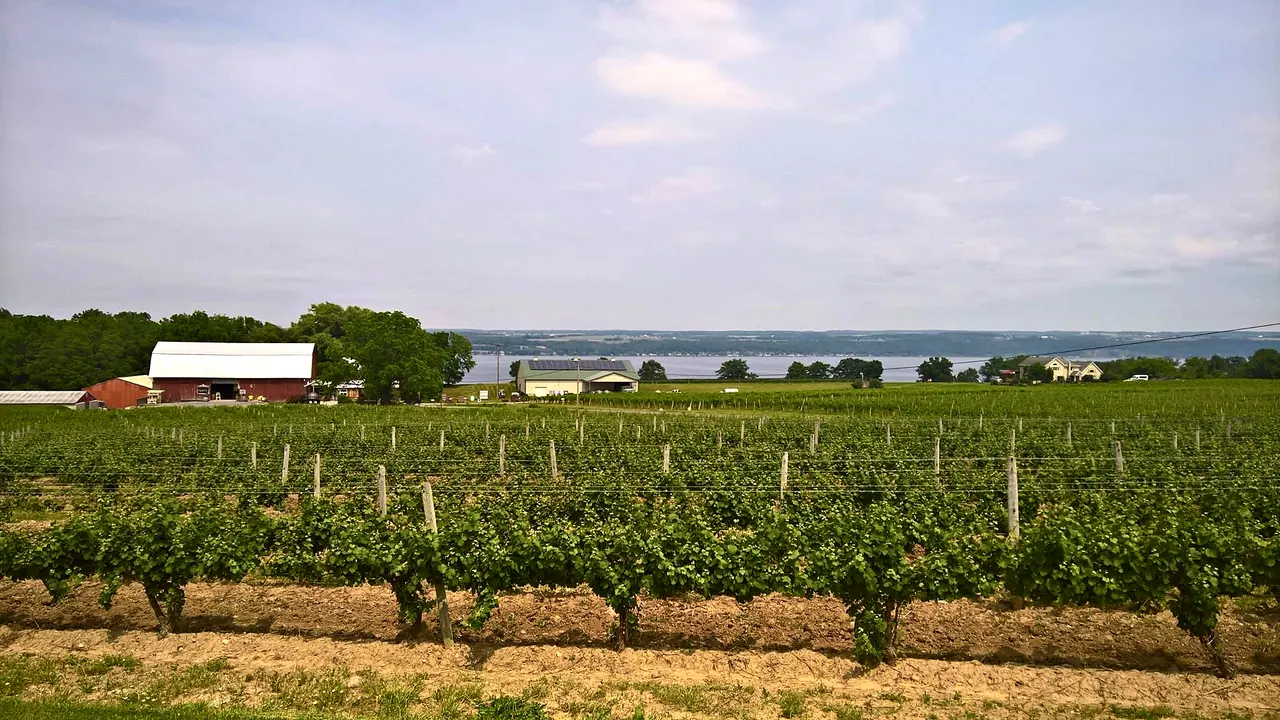
Vineyard rows above Cayuga Lake
- Nature & outdoors68
- Day trips58
- Families56
Photo: Andre Carrotflower, CC BY-SA 4.0, cropped
Match
45
Every category weighted equally
- Beach & sun46
- Culture & arts44
- Food & nightlife41
- Family trip49
- Outdoors51
- Relax & unwind48
- Shopping & style42
- On a budget45
Finger Lakes in twelve categories
Our verdict on each, scored 0 to 100 against the same fixed benchmark cities, so a score means the same thing on every page.
Beaches & swimming. Scores 45 out of 100.
Food & drink. Scores 52 out of 100.
Culture & sights. Scores 45 out of 100.
Nightlife. Scores 18 out of 100.
Nature & outdoors. Scores 68 out of 100.
Day trips. Scores 58 out of 100.
Good for families. Scores 56 out of 100.
Getting around. Scores 45 out of 100.
Shopping & style. Scores 30 out of 100.
Affordability. Scores 42 out of 100.
Live music & performing arts. Scores 40 out of 100.
Wellness & relaxation. Scores 42 out of 100.
Finger Lakes category by category
Beaches & swimming
45Swimming here means fresh water, not sea. In high summer the surface of the larger lakes warms to around 22°C to 24°C, and lake life takes over: docks, rented cottages, kayaks pulled up on gravel shores. The public beaches are mostly modest strands in state parks, at Seneca Lake's northern tip by Geneva, Keuka Lake's shore near Branchport, Taughannock Point on Cayuga and Kershaw Park in Canandaigua. Several gorge parks around Ithaca open pools beneath waterfalls in some summers, the most memorable swims in the region.
The season is short, roughly late June to early September, and outside it the water is cold. Beaches are shingle or coarse sand, with no surf. It suits families and swimmers happy with a lake, not anyone who wants a beach vacation.
Food & drink
52Wine leads. The slopes above Seneca, Keuka and Cayuga lakes grow some of the best Riesling in North America, along with dry rosé, Cabernet Franc and sparkling wine, and tasting rooms line the roads, many with lake views. Cider, craft beer and distilleries fill in, and farm stands sell sweet corn, apples and cheese from late summer into autumn.
Eating out is farm-to-table cooking in winery restaurants and lakeside inns, with the most range in Ithaca, a college town with a long vegetarian tradition and a big farmers' market on the inlet, and in Geneva and Canandaigua. Rochester, at the northern edge, adds the regional curiosities: the 'garbage plate' and white hots. Choice is thin in the smaller villages and in winter.
Culture & sights
45The heritage here is American nineteenth-century history and small-town architecture rather than great cities. The Corning Museum of Glass is the standout, the world's leading glass museum, with live glassblowing. Seneca Falls has the Women's Rights National Historical Park, where the 1848 convention met, and Auburn has Harriet Tubman's home and the Seward House. Geneva and Canandaigua keep Greek Revival and Victorian streets and grand lake houses, with Sonnenberg Gardens in Canandaigua.
Ithaca adds the Cornell campus with its art museum, and Rochester at the northern edge has the George Eastman Museum of photography. The sites are spread across the region and each is a few hours' visit, so a culture-minded stay mixes them with the wineries rather than filling days with them.
Nightlife
18Evenings are quiet. The wineries close in the late afternoon, and nights in the lake villages mean a brewpub, a hotel bar or a drink on a dock. Ithaca is the exception in a small way: its college bars and Collegetown streets stay lively in term time, and Geneva has a few bars around its own colleges. Anyone wanting clubs or a late scene has to drive to Rochester or Syracuse, and even there it is modest. This is a region for an early night and an early start.
Nature & outdoors
68Glaciers carved the long, narrow lakes and left steep gorges cut into the shale beside them, and these gorges are the region's great natural feature. Watkins Glen's stone-stepped trail climbs past nineteen waterfalls; around Ithaca, Taughannock Falls, Buttermilk Falls and Robert H. Treman offer gorge walks within minutes of town. Letchworth State Park on the western edge, with its deep canyon and three big falls, is worth a full day.
Between the gorges lie rolling vineyards, farmland and the Finger Lakes National Forest, good for gentle hiking and long cycling loops round the lakes. Kayaking and sailing on the lakes fill the summer, and the colours peak in October. There are no mountains, and winter brings snow but little to do in it.
Day trips
58The variety comes from the lakes themselves: from any base, a day out can be a different lake with its own town and wine trail. Skaneateles has a polished village on clear water, Hammondsport sits among the oldest vineyards at the foot of Keuka Lake, and Geneva, Canandaigua, Penn Yan and Trumansburg each make an unhurried afternoon. The wine trails around Seneca, Cayuga and Keuka are separate outings in themselves.
Further out, Rochester and Syracuse are about an hour from the northern lakes for city museums and shopping, and Niagara Falls is under two hours from Canandaigua. Cooperstown, with its baseball hall of fame, is a longer day from the eastern side. A car is needed for all of it.
Good for families
56Families do well here in summer, if they plan around the wineries rather than in them. The Strong National Museum of Play in Rochester is a huge, hands-on museum devoted to toys and games, and Rochester also has a zoo and an old-fashioned lakeside amusement park. Ithaca's Sciencenter is a good science museum for younger children, and at the Corning Museum of Glass children can watch glassblowing and make a piece of their own.
The gorge trails at Watkins Glen and around Ithaca thrill older children, though the steps and drops need watching with small ones. Lake beaches, rented cottages and pick-your-own farms make relaxed days. The towns are safe and easy, but everything involves time in the car.
Getting around
45A car is essential. The roads are good and uncrowded, and the drive between vineyards along the lake shores is part of the pleasure. Distances between towns are usually half an hour to an hour, but the lakes run north to south, so crossing from one to the next means going round the ends. Ithaca and the village centres are walkable, and Ithaca has a local bus network, but there is no regional rail and buses between towns are sparse. Wine-tasting visitors often hire a driver or join a tour rather than drive between tastings. Snow can slow travel in winter.
Shopping & style
30Shopping is mostly wine, local produce and crafts. Corning's restored Market Street, the Gaslight District, sells studio glass, and the Ithaca Commons has independent bookshops and gift shops near the farmers' market. Skaneateles and Canandaigua have a few small boutiques, and antique shops line the country roads. Most visitors go home with cases of Riesling and a jar of maple syrup. Anything bigger means the malls on the edge of Rochester or Syracuse.
Affordability
42The price level is that of rural America, which sounds cheap but is not on summer and autumn weekends. Lakeside inns, bed and breakfasts and cottage rentals fill early and charge accordingly. Winery restaurants and tastings add up over a few days, and car hire and fuel are unavoidable. Against that, chain motels in the towns, state park campsites and cabins are reasonable, the gorge parks charge little, and farm stands are cheap. Weekdays and the shoulder months cost noticeably less.
Live music & performing arts
40The strongest offer is at the northern edge, in Rochester: the Eastman School of Music fills its concert halls through the academic year, the Rochester Philharmonic plays a full season, and a large international jazz festival takes over the downtown streets each June. Within the lakes, Ithaca has a restored historic theatre, a summer playhouse and Cornell's concerts, Auburn has a summer musical theatre, and Geneva's Smith Opera House hosts touring shows.
Summer adds a large outdoor amphitheatre near Canandaigua for touring bands and the long-running GrassRoots festival of roots music in Trumansburg. Outside those, live music is a guitarist on a winery terrace on a Sunday afternoon.
Wellness & relaxation
42This is a region for slowing down rather than for taking the waters. The old mineral springs at Clifton Springs once drew patients to a sanitarium, but no bathing tradition survives. Relaxation comes in the form of a handful of resort and inn spas, mostly at Skaneateles, Geneva and Canandaigua, with massages, treatment rooms and lake-view pools. The real calm is in the pace: long afternoons on a porch over the water, quiet lake mornings in a canoe, villages that close early. Yoga and retreat centres scatter the countryside around Ithaca.
Where to stay in Finger Lakes
Ithaca, at the southern tip of Cayuga Lake, makes the easiest first base. It is a walkable college town with the region's widest choice of places to eat, a farmers' market on the inlet and gorge walks at Buttermilk Falls and Robert H. Treman a few minutes away. It suits walkers, food lovers and anyone who wants a little life after dark in term time. Watkins Glen, at the foot of Seneca Lake, puts the waterfall trail and the Seneca wine trail on the doorstep, with the Corning glass museum a short drive south, so it works well for families and wine tasters alike.
On the northern lakes, Geneva and Canandaigua have handsome old streets, small lake beaches, inn spas and good restaurants. They are also the closest bases to Rochester's museums and concerts and to Niagara Falls. Skaneateles, further east, is the polished choice for a quiet stay by clear water, and Hammondsport, among the old vineyards at the foot of Keuka Lake, suits a slow few days of tasting and porch afternoons.
A car is needed wherever you stay. Towns are close, but because the lakes run north to south, crossing between them means driving round the ends. One base is enough for a long weekend. A week works well split between a southern lake and a northern one.
When should you go?
Pick a month to see what it is like. The climate figures are measured averages, not a forecast.
Finger Lakes in July
Daytime high, °C
Rainfall in the month, mm
The whole year
Shaded against this destination’s own year: the deepest cell is its best month for that figure and the palest its weakest.
Where the figures come from
Finger Lakes's temperatures are measured 27 km from the centre, at Penn Yan.
Finger Lakes's station stands 163 m above the place it is measured for, so that place is likely a little warmer than the figures say.
Finger Lakes has no rain gauge within 25 km of the centre, so its rainfall comes from a gridded climate dataset read at the destination rather than from a gauge further away.
Finger Lakes's sunshine is measured 63 km from the centre, at Greater Rochester International.
Temperature and rainfall are climate normals, averaged over the years shown. Finger Lakes: 2006-2020 (sunshine 1981-2010, rainfall 1991-2020) normals, Penn Yan (26.6 km from centre).
Before you go
| Measure | Finger Lakes |
|---|---|
| Currency | US Dollar (USD) |
| Sockets | AB120 V, 60 Hz |
| Driving side | Right |
| Time zone | UTC-5, UTC-4 in summer |
| Emergency number | 911 |
| Main airport | Frederick Douglass Greater Rochester International Airport (ROC)25 non-stop destinations |
| Public holidays this year | 13 days |
By the numbers
| Measure | Finger Lakes |
|---|---|
| Swim season, months above 21 °C | 1 month |
Compare Finger Lakes with
Every comparison with a written verdict behind it.
- Acadia
- Adirondacks
- Cape Cod
- Catskills
- Door County
- Great Smoky Mountains
- Hudson Valley
- Martha's Vineyard
- Nantucket
- Napa Valley
- Niagara Falls
- Outer Banks
- Poconos
- Shenandoah
- The Hamptons