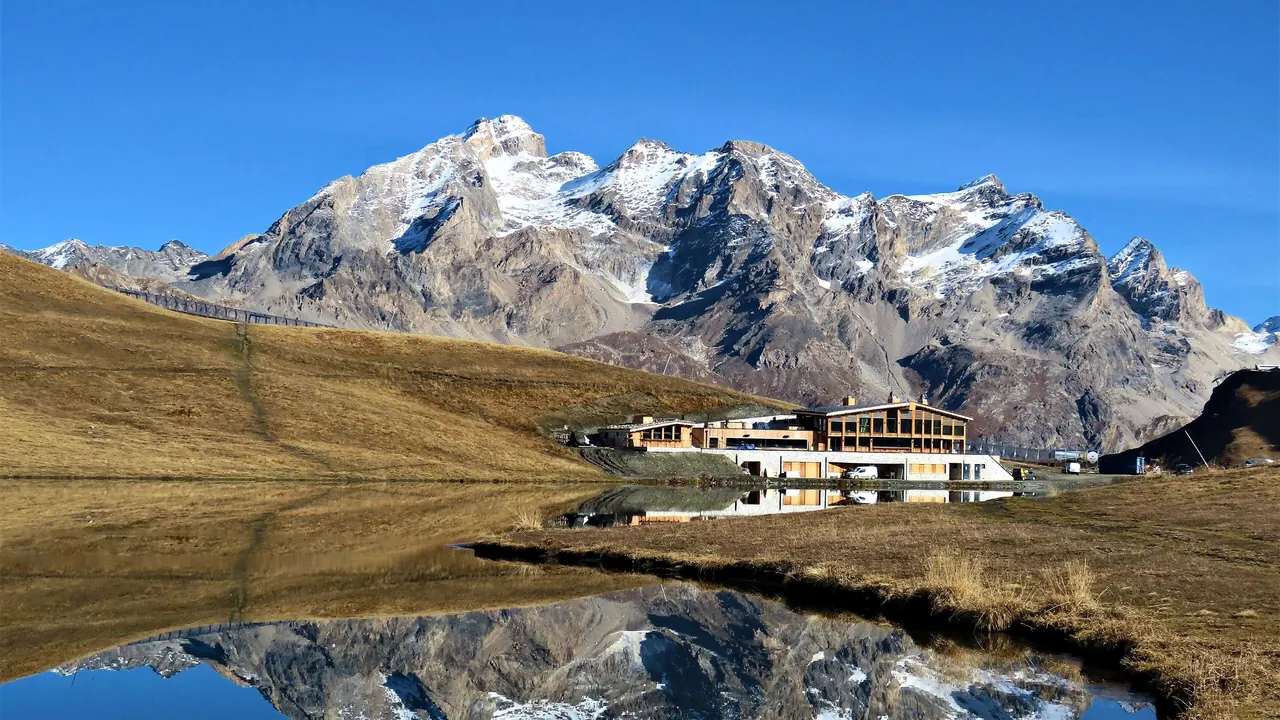
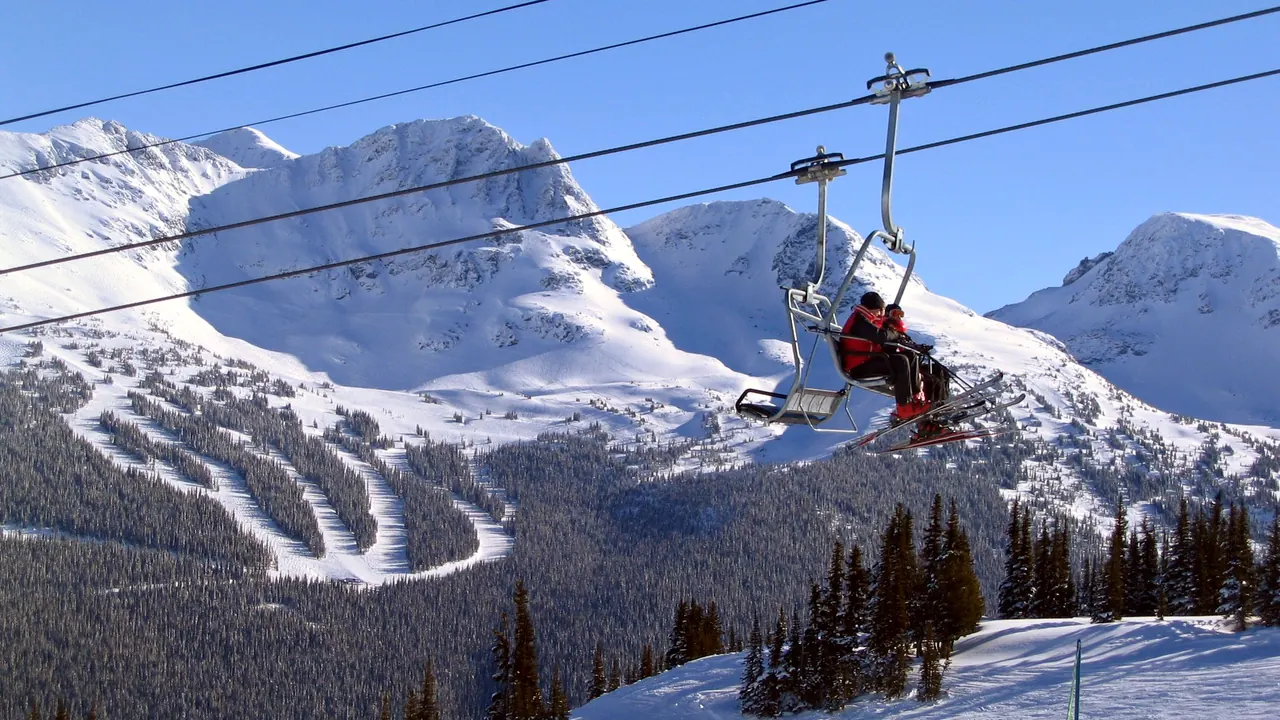
Photos: Val d'Isère by Rémih, CC BY-SA 4.0, cropped; Whistler by Ruth Hartnup, CC BY 2.0, cropped.
Val d'Isère or Whistler?
Our verdict in twelve categories, each scored against the same fixed benchmark cities, and the climate month by month, so you can choose for your trip.
Choose Val d'Isère for
Val d'Isère does not lead in any category we score.
Val d'Isère is for the committed skier who wants height and steepness above everything else. With Tignes it offers high, snow-sure terrain, the Olympic Face de Bellevarde and big off-piste descents, and its glaciers keep the top of the area wintry into spring. Evenings are spent among stone hamlets and Savoyard cheese dishes, and it suits a group of adults who will be on the hill from first lift to après-ski.
Choose Whistler for
- beaches
- families
- wellness
Whistler makes more sense for a mixed party or a summer stay. The two mountains linked by the Peak 2 Peak Gondola are just as serious, but the resort around them does more for people who aren't skiing: a forest spa, lake beaches, a downhill bike park, an art museum and easier days for children. It is the better choice for families, for anyone wanting rest as well as exercise, and for visitors who would like to add a night in Vancouver.
Scoreboard
Twelve categories on one fixed scale from 0 to 100. The shaded stretch is the gap between the two.
Your match
Pick a travel style or drag the sliders, and both match scores follow your weighting.
Has no clear advantage with the weighting you have chosen.
Wins on beaches and families with your weighting.
What matters to you?
Category by category
What the scores mean for a trip.
Beaches & swimming
Neither place has a sea, but Whistler at least has a summer beach season. In July and August, Lost Lake's sandy shore and the docks and rafts on Alta and Alpha lakes make good afternoons after a hike, and the shallow lakes warm to around 20°C.
At Val d'Isère the swimming options are snowmelt lakes such as Lac de Tignes, which seldom warm up enough for a comfortable dip, so the indoor pool at the sports centre is the realistic option.
Food & drink
The food is equally good in both resorts, but very different. Val d'Isère is rooted in Savoie: fondue, raclette, tartiflette and Beaufort cheese, long lunches on mountain terraces and a few top kitchens among the most celebrated in the French Alps.
Whistler cooks Pacific Northwest produce such as BC salmon and spot prawns with serious British Columbia wine lists, and adds ramen, sushi and patio nachos. Whistler offers a bit more variety from day to day. Val d'Isère has the stronger regional identity, though a week of cheese-heavy dishes can get repetitive.
Culture & sights
You can see Val d'Isère's sights in about an hour, while Whistler's two museums can fill a wet afternoon. In the French resort the main points of interest are the gilded Baroque altarpiece in Saint-Bernard-de-Menthon, the larch-and-stone hamlets of Le Fornet and Le Joseray, and the Bellevarde face where the 1992 Olympic downhill was raced.
Whistler has no old village, but it has more to see indoors. The Audain Art Museum holds Emily Carr paintings and Northwest Coast First Nations masks, and the Squamish Lil'wat Cultural Centre uses carving and weaving to explain whose land the resort stands on.
Nightlife
Both are proper party resorts in winter, and both go quiet outside the season. Val d'Isère is known for dancing on tables in ski boots at restaurants on the slopes from mid-afternoon, before the crowd moves down to village bars and a couple of basement clubs. It feels the most European of the two, with British and Scandinavian groups.
Whistler's après starts on the patios at the gondola bases as the lifts close, and later the clubs in the pedestrian village fill with seasonal workers and Australians on working visas. Its summer bike festivals also give it some nights out after the snow has gone.
Nature & outdoors
These are two of the great mountain bases in the world, and they differ mainly in character. Val d'Isère is high and steep. With Tignes it offers snow-sure terrain under peaks above 3,000m, big off-piste and ski touring. The Pissaillas glacier and the Grande Motte extend the season, and in summer you can reach the ibex and chamois of the Vanoise, France's oldest national park.
Whistler has more sheer scale. Two huge mountains linked by the Peak 2 Peak Gondola offer over 200 runs and deep Coast Mountains snow. In summer it becomes one of the world's best-known downhill bike parks, with Garibaldi's turquoise lakes and black bears on the slopes.
Day trips
Whistler gives you somewhere worth going: Vancouver is about two hours away along the Sea to Sky Highway, and many visitors make it an overnight stop. On the way there are Squamish, its gondola and the Britannia mining museum, with Pemberton's farmland to the north.
In winter Val d'Isère is effectively a dead end, with only Bourg-Saint-Maurice and the Tarentaise villages down the valley. Summer opens the Col de l'Iseran to Bonneval-sur-Arc and the Little St Bernard Pass to Roman Aosta, which makes up much of the gap.
Good for families
Whistler suits families better, especially those who aren't all skiers. Its ski schools are large, the gentle gondola runs are easy for beginners, and tubing fills the gaps between lessons. Many lodgings have kitchens, and in summer there are lake beaches, mini-golf and an adventure park at the base of Blackcomb.
Val d'Isère suits a family that skis. It has multilingual ski schools from preschool age, fenced snow gardens and childcare included in many chalets. However, once you step off the snow there is little more than sledging and the ice rink, and the cold and altitude are harder on small children.
Getting around
Once you arrive, both resorts are car-free and easy to get around. Val d'Isère spreads a few kilometres along the valley floor from La Daille to Le Fornet, connected by free shuttles and lifts from several points. Whistler has a compact pedestrian village with gondolas at its edge, plus the paved Valley Trail for walking and cycling between the lakes.
Getting there tips it slightly towards Whistler, with a single airport coach from Vancouver. Val d'Isère means a train to Bourg-Saint-Maurice followed by an hour on a winding road, or several hours from Geneva or Lyon.
Shopping & style
Both resorts are good places to buy ski gear, and Whistler adds a little more besides. Among its outdoor stores you will find galleries selling Indigenous prints and carvings, some clothing boutiques and a summer farmers' market in the Upper Village.
In Val d'Isère the main street is mostly rental shops, boot fitters and mountain-wear boutiques. The best things to take home are edible: Beaufort, charcuterie and Savoie wine from the delicatessens.
Affordability
Both are among the most expensive ski weeks you can book, and neither works on a tight budget. In Val d'Isère the cost comes from chalets, lift passes and mountain lunches aimed at a wealthy international crowd. January and the end of the season are the gentler weeks.
Whistler's lift passes are among the costliest anywhere. You can save by staying further down the valley, cooking in a condo or coming in spring or autumn. In both resorts summer is noticeably cheaper than winter.
Live music & performing arts
In Val d'Isère, live music mostly means cover bands and DJs in the après-ski bars, plus the occasional open-air event in season. There is no theatre or concert hall until you are a long way down the valley.
Whistler offers a little more. In summer there are free outdoor concerts on Olympic Plaza and buskers in the village streets, and a small community arts centre puts on local theatre and touring shows. For an orchestra or a proper play, you would need to go to Vancouver.
Wellness & relaxation
Whistler is better for winding down. Its Nordic-style outdoor spa in the cedar forest by the river, with silent hot pools and cold plunges under falling snow, has no public equivalent in Val d'Isère. Massage studios for sore skiers are found all over the village.
In Val d'Isère the soaking happens privately, in the pool, sauna and hammam of your own upmarket hotel or catered chalet, or in the public spa at the sports centre. Early summer and September in the quiet high valley are its calmest times.
When should you go?
Pick your month. The climate figures are measured averages, not a forecast.
Val d'Isère in July
Whistler in July
Daytime high, °C
Rainfall in the month, mm
Where the figures come from
Val d'Isère has no weather station within reach, so its figures come from a gridded climate model rather than a measured record, and read a broad area rather than one spot.
Whistler has no rain gauge within 25 km of the centre, so its rainfall comes from a gridded climate dataset read at the destination rather than from a gauge further away.
Temperature and rainfall are climate normals, averaged over the years shown. Val d'Isère: 2001-2020 normals, NASA POWER reanalysis grid, no weather station within 90 km. Whistler: 1991-2020 normals, Whistler - Nesters (1.1 km from centre).
Val d'Isère is a true high-altitude climate. From December to February daytime highs stay below freezing, about -4°C in January, which is exactly what the snow wants and bitter for anyone just strolling about. The ski season runs from late November into early May. Summer is mild at around 18°C in July, good for hiking and cycling but never warm enough for real swimming. Rain and snow are spread evenly through the year, and late spring is the dampest stretch, with about 103mm in May.
Whistler is wetter in winter and warmer in summer. From October the Pacific storms set in, bringing roughly 196mm in November, which falls as deep snow on the mountains but often as rain in the valley. July and August are the driest months and reach about 25°C, warm enough for afternoons at the lakes. Whistler therefore has a much fuller summer season, and Val d'Isère has the colder, more dependable winter.
Which traveller are you?
On a family trip with children, Whistler is the easier base, especially if not everyone skis. Val d'Isère works for a family that spends every day on the slopes, but Whistler gives children much more to do off the snow and in summer.
For a relaxing and wellness trip, pick Whistler. In Val d'Isère, how well you rest depends on the spa in your own hotel or chalet. Whistler has a public spa in the forest that is worth an evening on its own.
For road cyclists who come to climb, Val d'Isère is the place to stay. The Col de l'Iseran, one of the highest paved passes in the Alps, climbs straight from the village. Whistler's riding is downhill and singletrack, with no climb to match.
Before you go
| Measure | Val d'Isère | Whistler |
|---|---|---|
| Official language | French | French, English |
| Currency | Euro (EUR) | Canadian Dollar (CAD) |
| Sockets | CE230 V, 50 Hz | AB120 V, 60 Hz |
| Driving side | Right | Right |
| Time zone | UTC+1, UTC+2 in summer | UTC-8, UTC-7 in summer |
| Emergency number | 112 | 911 |
| Elevation | 1,785 m | 670 m |
| Main airport | Geneva International Airport (GVA)111 km from centre150 non-stop destinations | Vancouver International Airport (YVR)104 km from centre109 non-stop destinations |
| Public holidays this year | 11 days | 11 days |
By the numbers
| Measure | Val d'Isère | Whistler |
|---|---|---|
| Population | 1,567 | 13,982 |
| People per km² | 17 | 58 |
| Museums within 10 km | 0 | 1 |
| UNESCO World Heritage sites within 50 km | 0 | 0 |
Where else could you go?
Every comparison below shares a destination with this one, so you can follow Val d'Isère or Whistler somewhere new.
- Tignesvs Val d'Isère
- Les Arcsvs Val d'Isère
- Val Cenisvs Val d'Isère
- La Rosièrevs Val d'Isère
- La Plagnevs Val d'Isère
- Courchevelvs Val d'Isère