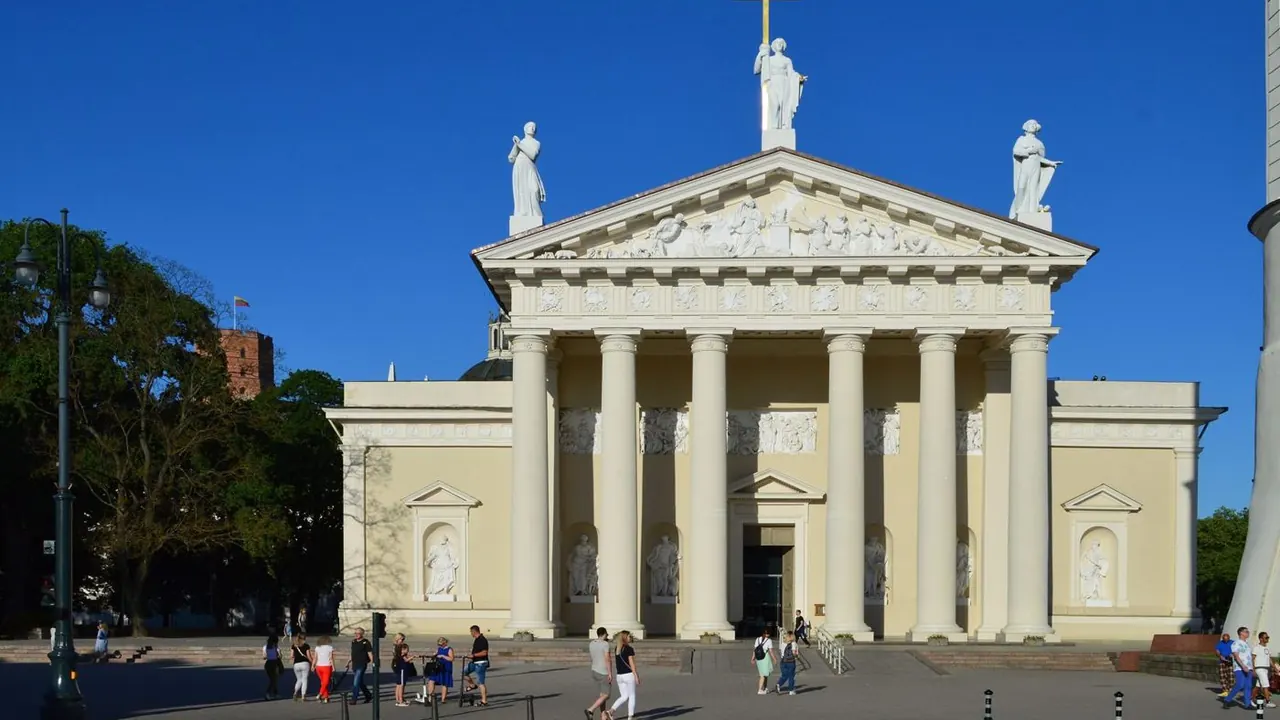
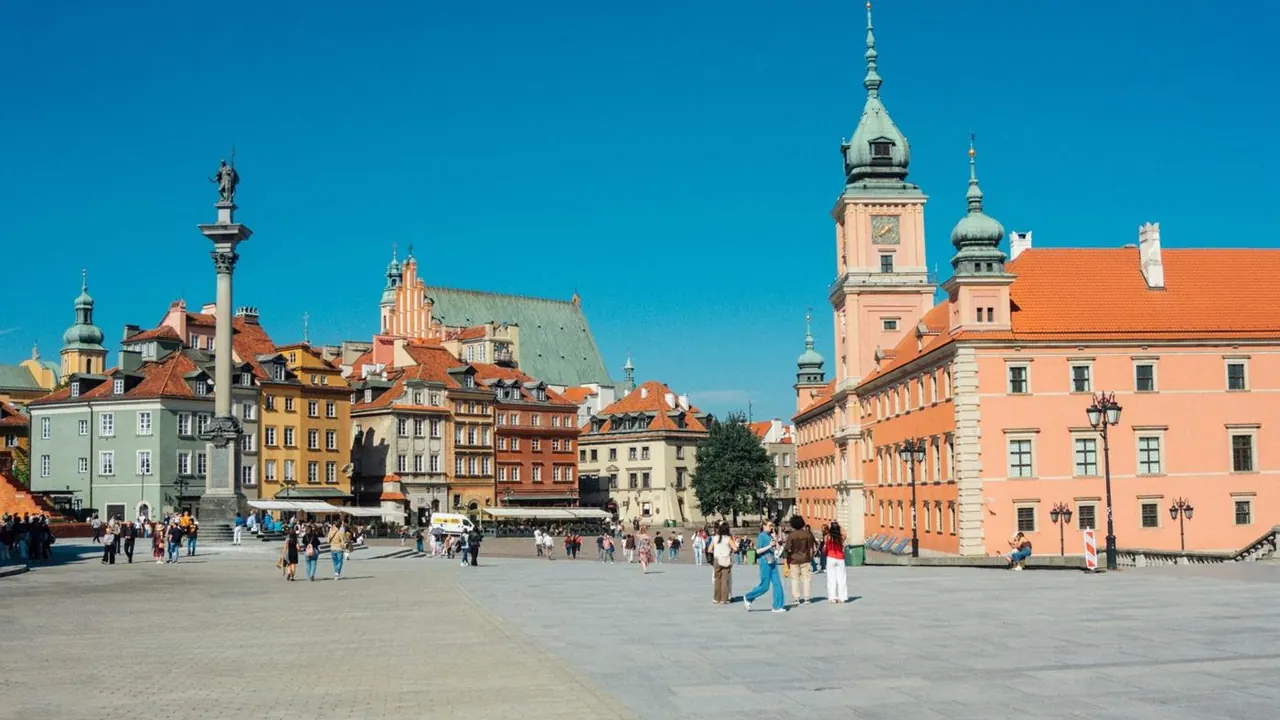
Photos: Vilnius by Scotch Mist, CC BY-SA 4.0, cropped; Warsaw by Raymond Petrik, Pexels License.
Vilnius or Warsaw?
Our verdict in twelve categories, each scored against the same fixed benchmark cities, and the climate month by month, so you can choose for your trip.
Choose Vilnius for
- day trips
- beaches
- nature and the outdoors
Vilnius suits a traveller who wants a historic centre to wander on foot, with a large baroque Old Town, the bohemian lanes of Užupis and pine forest almost at the edge of the streets. It is the gentler, smaller city, and it makes a stronger base for outings, with Trakai's island castle, Kaunas and Kernavė all within easy reach. Go there for atmosphere, slow days and lakes rather than for big nights or big shops.
Choose Warsaw for
- nightlife
- families
- shopping
Warsaw is the better pick for a fuller city trip. It is livelier after dark, it eats better, and its music runs from the national opera to Chopin recitals in palaces. Families also have more to do, with the Copernicus Science Centre and a large zoo. The history here is told through world-class museums rather than surviving streets, and the city is larger and more spread out, so you trade some charm for range.
Scoreboard
Twelve categories on one fixed scale from 0 to 100. The shaded stretch is the gap between the two.
Your match
Pick a travel style or drag the sliders, and both match scores follow your weighting.
Wins on day trips and beaches with your weighting.
Wins on nightlife and families with your weighting.
What matters to you?
Category by category
What the scores mean for a trip.
Beaches & swimming
Neither city is a place to come for water, and both are far from the Baltic. What differs is how you get wet. Vilnius has real lake swimming close by, at the Green Lakes on the northern edge, Balžis and the lakes around Trakai. In Warsaw people mostly lie on the sandy Vistula banks with a drink, and the river is not for swimming, so a dip means the Zegrze reservoir, outskirts lidos or an outdoor pool.
Food & drink
Warsaw is the better city to eat in. It covers more ground, from pierogi and żurek in old dining rooms and cheap milk-bar counters to ambitious tasting menus, market-hall food courts, cake shops and vodka served with herring.
Vilnius is good for trying Lithuanian cooking: cepelinai, cold pink šaltibarščiai, garlic fried bread with craft beer, and Karaim kibinai on a trip to Trakai. Halės market is worth a browse. Beyond that, though, the range is narrower, and the meals tend to be pleasant rather than memorable.
Culture & sights
Both cities reward a culture trip about equally, but in opposite ways. Vilnius's Old Town is the real thing, a large medieval and baroque centre that survived, so the pleasure lies in wandering among St Anne's, the Gate of Dawn and the university courtyards, with the former KGB building as its most powerful museum.
Warsaw's Old Town was rebuilt from paintings after 1944, and its strength is indoors: the Warsaw Rising Museum and POLIN rank among Europe's strongest history museums. The palaces along the Royal Route out to Łazienki and Wilanów add grandeur that Vilnius does not try to match.
Nightlife
Warsaw is the stronger city for going out, and it has more variety. It has the packed pavilion bars, Mazowiecka Street, a younger crowd in Powiśle, techno in old Praga factories, and summer beach bars along the Vistula, and the clubs keep going through winter.
Vilnius has lively weekends thanks to its students, with cellars and cocktail bars around Vokiečių and Pylimo streets and a small electronic scene on the edge of the centre. It is compact, though, and goes quiet midweek and in the dark months.
Nature & outdoors
Both offer gentle lowland green rather than scenery, but Vilnius has the more varied setting. Its wooded hills and river valleys at Pavilniai and Verkiai are a short bus ride out, hot-air balloons cross the Old Town on summer evenings, and the Trakai lakes and Aukštaitija's canoe routes are close.
Warsaw's best asset is Kampinos National Park, with dunes, marshes and elk just past the suburbs. The untamed eastern bank of the Vistula is unusual for a capital, but the land around it is flat.
Day trips
Vilnius makes the easier base for outings. Trakai's island castle is half an hour away, Kaunas and its interwar modernism are about an hour by train, and UNESCO-listed Kernavė is closer still.
From Warsaw, the stars of Poland, Kraków and Toruń, need an overnight stay. Day trips mean Łódź's factory palaces, Chopin's birthplace at Żelazowa Wola, the gardens at Nieborów or the Treblinka memorial, which is a solid list but runs out sooner.
Good for families
Warsaw is far better geared to children. The Copernicus Science Centre can fill a whole day, and there is a large zoo, playgrounds in Łazienki and the Saxon Gardens, and fountain shows on the river in summer.
Vilnius is calm and safe, and children like the funicular to Gediminas Tower and rowing boats at Trakai. However, it has no zoo or aquarium, and the cobbled Old Town is hard work with a pushchair.
Getting around
Both are easy without a car, and both have a quick rail link from the airport. Vilnius does it on foot: the sights sit close together on hilly cobbles, with buses and trolleybuses for anything further. Warsaw is spread along wide post-war avenues, so you will use its trams and two metro lines, all on one ticket, to reach Wilanów or Praga.
Shopping & style
Warsaw gives a shopper much more. It has large modern malls, a luxury department store, Polish designer labels along Mokotowska Street and weekend flea markets full of communist-era posters.
In Vilnius, shopping mostly means crafts: amber, linen, ceramics and woven sashes from the workshops of the Old Town and Užupis, with the Kaziukas fair each March. There is little in the way of fashion or designer shopping.
Affordability
Both are good-value capitals that cost well below Western Europe, so the difference is in where the money goes. In Vilnius it is Old Town hotels on summer weekends that cost more. Warsaw's business trade pushes up central hotel rates on weekdays and during trade fairs, so a weekend stay there often comes out cheaper.
Live music & performing arts
Warsaw has the bigger musical life. Its Grand Theatre has one of Europe's largest opera stages, there are Chopin recitals all year and free Sunday concerts in Łazienki in summer, and the city hosts the Chopin Piano Competition.
Vilnius is serious too, and affordable. It has a full opera and ballet season, the National Philharmonic, courtyard concerts in summer and an autumn jazz festival. The scene is smaller, and its celebrated avant-garde theatre is mostly in Lithuanian.
Wellness & relaxation
Neither has a bathing culture of its own, so in both a spa visit means hotel spas and the sauna zones of water parks. Warsaw's saunas come with Polish towel-waving rituals, and there is the graduation tower at Konstancin-Jeziorna on the city's edge. Vilnius is the calmer city to idle in, with quiet courtyards and slow mornings in Užupis cafés, while serious spa stays mean Druskininkai.
When should you go?
Pick your month. The climate figures are measured averages, not a forecast.
Vilnius in July
Warsaw in July
Daytime high, °C
Rainfall in the month, mm
Temperature and rainfall are climate normals, averaged over the years shown. Vilnius: 1991-2020 normals, Vilnius (13 km from centre). Warsaw: 1991-2020 normals, Warszawa-Okecie (7.7 km from centre).
Both cities share the same continental rhythm, but Vilnius runs a little colder and greyer. From June to August both are warm enough for long days outside, with highs around 24°C in Vilnius and 25°C in Warsaw. That is also when the lakes near Vilnius and the reservoirs and lidos around Warsaw are worth a swim. Summer is the wettest stretch in both, and Vilnius is the wetter of the two, with about 90mm in July, so expect short heavy showers rather than settled weather.
Warsaw is noticeably sunnier through the warm half of the year, with well over 300 hours of sun a month in midsummer, while Vilnius has fewer. May and September are the pleasant months for walking either city without the summer downpours. From November to March both are cold, dark and short of sun, and Vilnius sits around freezing in midwinter, a degree or two below Warsaw.
Which traveller are you?
On a food and nightlife trip, Warsaw is the clear choice. It has tasting menus built on game and forest mushrooms, milk bars and food halls, then pavilion bars, Powiśle and Praga techno nights that go on until morning. Vilnius offers a good night or two.
On a family trip with children, Warsaw gives more to fill the days. The Copernicus Science Centre, the zoo, wide pavements and summer fountain shows on the Vistula beat Vilnius, where cobbles, churches and history museums tire young children quickly.
For a short city break, Vilnius has the edge in feel. The Old Town, Užupis and the Cathedral are minutes apart on foot, the airport is close, and Trakai's island castle is about half an hour away. Warsaw's sights are more spread out across wide avenues.
Before you go
| Measure | Vilnius | Warsaw |
|---|---|---|
| Official language | Lithuanian | Polish |
| Currency | Euro (EUR) | Zloty (PLN) |
| Sockets | CF220 V, 50 Hz | CE50 Hz |
| Driving side | Right | Right |
| Time zone | UTC+2, UTC+3 in summer | UTC+1, UTC+2 in summer |
| Emergency number | 112 | 112 |
| Elevation | 98 m | 118 m |
| Main airport | Vilnius International Airport (VNO)6 km from centre82 non-stop destinations | Warsaw Chopin Airport (WAW)8 km from centre172 non-stop destinations |
| Public holidays this year | 14 days | 14 days |
By the numbers
| Measure | Vilnius | Warsaw |
|---|---|---|
| City population | 619,405 | 1,862,402 |
| People per km² | 1,545 | 3,601 |
| Museums within 10 km | 31 | 117 |
| UNESCO World Heritage sites within 50 km | 3 | 1 |
Where else could you go?
Every comparison below shares a destination with this one, so you can follow Vilnius or Warsaw somewhere new.