
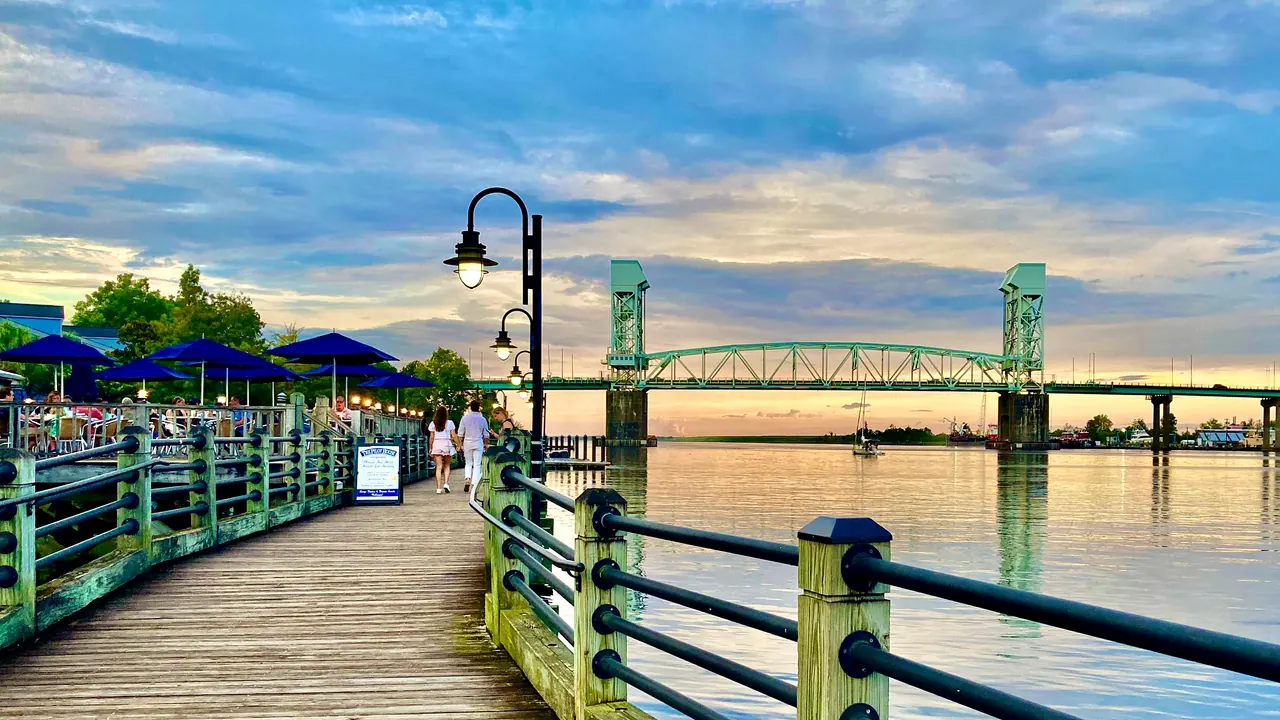
Photos: Washington DC by Guohua Song, Pexels License; Wilmington by Unexpected Snacks, CC BY-SA 4.0, cropped.
Washington DC or Wilmington?
Our verdict in twelve categories, each scored against the same fixed benchmark cities, and the climate month by month, so you can choose for your trip.
Choose Washington DC for
- culture and sights
- getting around
- day trips
Washington is the choice for a trip built around sights. The free museums along the Mall, the monuments, serious theatre and a Metro that makes a car unnecessary suit first-time visitors to the United States, families with curious children, and anyone willing to pay more for a room in return for days that cost almost nothing to fill.
Choose Wilmington for
- beaches
- prices
- wellness
Pick Wilmington when the sea matters more than the sights. It has three beach towns within half an hour, warm Atlantic water through the summer, an old riverside district shaded by live oaks and a slow pace. That makes for a relaxed coastal stay at a gentler cost, as long as you hire a car and don't expect a capital's dining or museums.
Scoreboard
Twelve categories on one fixed scale from 0 to 100. The shaded stretch is the gap between the two.
Your match
Pick a travel style or drag the sliders, and both match scores follow your weighting.
Wins on culture and sights and getting around with your weighting.
Wins on beaches and prices with your weighting.
What matters to you?
Category by category
What the scores mean for a trip.
Beaches & swimming
This is where the two cities differ most. Washington has no swimming of its own. The nearest sand is a few small, brackish beaches on the Chesapeake around Annapolis, an hour away, and the proper Atlantic shore is a weekend trip, so most visitors settle for the hotel pool.
Wilmington has three beach towns within half an hour: polished Wrightsville with its long pier, Carolina Beach with its boardwalk, and quieter Kure Beach. The ocean is pleasant for swimming from late May into October. You still have to drive to it, and on some days the rip currents mean you need to watch the flags.
Food & drink
Washington offers much more range. There is Ethiopian cooking around Shaw and U Street, pupusas in Columbia Heights, grazing at Eastern Market and Union Market, and a serious top end of tasting menus around Logan Circle and Penn Quarter. That is enough for a week of varied meals.
Wilmington eats more narrowly, but closer to the water. Expect local shrimp, flounder and oysters, shrimp and grits and vinegar-sauced whole-hog barbecue, plus craft breweries at the north end of downtown. International cooking and fine dining are thin, so it pleases for a few days rather than a long stay.
Culture & sights
Washington is in a different league. The Smithsonian museums on the Mall, the National Gallery of Art, the Capitol, the Lincoln Memorial and the Library of Congress can fill a week, and nearly all of it is free.
Wilmington appeals through atmosphere rather than collections. Its large historic district of antebellum and Victorian houses runs back from the river, the Bellamy Mansion tells the story of the old port's wealth and enslaved labour, and the Battleship North Carolina is moored across the water. Two or three days covers it.
Nightlife
Washington has more nights worth going out for. There are cocktail bars and rooftops along 14th Street and U Street, late drinking in Adams Morgan, dive bars on H Street and Dupont Circle's long-standing LGBTQ+ scene. Early in the week, though, the drinking is mostly after-work happy hours.
Wilmington's evenings are simpler. Bars and rooftop terraces fill Front Street at weekends and beach bars open at Wrightsville and Carolina Beach in summer, but there is little club culture and weeknights out of season are quiet.
Nature & outdoors
Both cities are greener than you might expect, but the land is very different. Washington has woods and some height: Rock Creek Park, the C&O Canal towpath, the rocky gorge at Great Falls and, within two hours, ridge hikes in Shenandoah National Park. That range of walking gives it a modest edge.
Wilmington is flat and watery, with tidal creeks, salt marsh and longleaf pine. It is good for paddling out to undeveloped Masonboro Island, surfing off Wrightsville and fishing from the piers. You can also see the Venus flytrap growing wild in Carolina Beach State Park, but there are no hills to climb.
Day trips
History lies thick around Washington, and much of it is reachable without a car. Old Town Alexandria is a short Metro ride away, Baltimore is under an hour by train, and Independence Hall in Philadelphia makes a long but worthwhile day by fast train. Mount Vernon, the Civil War battlefields at Gettysburg and Antietam, and the river town of Harpers Ferry can fill several more days.
Wilmington's outings are smaller and mostly by car. You can visit Southport and take the ferry to car-free Bald Head Island, see Fort Fisher's earthworks and the ruins of Brunswick Town, or drive two hours north to New Bern or Beaufort. They make pleasant days, but there are fewer of them.
Good for families
Washington keeps children busy for longer, and mostly for free. There are the dinosaurs at Natural History, the rockets at Air and Space, the National Zoo and the open lawns of the Mall, all reached on a Metro with lifts at every station. The catch is the long, exposed walks in summer.
Wilmington is a summer beach vacation for families. It has sand, old-fashioned rides on the Carolina Beach boardwalk, the aquarium at Fort Fisher and the decks of the battleship, with rental houses near the shore. Every outing involves the car, and children need watching in the water on rip-current days.
Getting around
Washington is far easier without a car. The Metro reaches most sights as well as Arlington, Alexandria and the airport, and bike-share docks line the riverside paths. The only real gaps are Georgetown and the thinner late-night service.
In Wilmington only downtown and the riverwalk work on foot. The beaches are 15km or more away, buses are infrequent, and the aquarium and Southport can only be reached by car, so plan for a hire car and slow summer parking.
Shopping & style
Neither city is a shopping destination, but Washington has more to browse. There are the old brick shopfronts of Georgetown's M Street, the luxury labels at CityCenterDC, big malls at Tysons Corner and Pentagon City, and the Smithsonian shops for prints and books. Wilmington works on a smaller scale, with boutiques, galleries and antique dealers on Front Street and in the Cotton Exchange, and surf wear in the beach towns.
Affordability
Wilmington is the cheaper stay, especially outside summer, when city hotel rooms are reasonable and casual seafood and barbecue are fair value. Summer beachfront rentals push costs up, and the hire car is an extra you can't avoid.
Washington's hotels and restaurants are priced for expense accounts and cost even more in cherry blossom season. The gap narrows because the museums, zoo and memorials are free, and staying in Arlington can cut the cost of a room.
Live music & performing arts
Theatre is where Washington stands out. Arena Stage puts on new American plays, the Shakespeare Theatre Company does the classics and Woolly Mammoth does sharper contemporary work. Ford's Theatre stages plays in the house where Lincoln was shot, and touring Broadway musicals come to the National Theatre. On the music side there are the National Symphony Orchestra, the opera, big touring acts at the restored Lincoln and Howard theatres on U Street, and summer lawn concerts at Wolf Trap.
Wilmington's scene is lively for a city its size. It centres on Thalian Hall, a restored 19th-century opera house, with a community symphony, small theatre companies and summer bands by Greenfield Lake. A show there is something to add to a beach trip, not a reason to plan one.
Wellness & relaxation
Neither city has a spa or bathing tradition, and both rely on hotel spas, day spas and yoga studios. Wilmington is the easier place to unwind thanks to its slow pace and calm waterfront evenings outside summer weekends. Washington runs to the rhythm of a government town, and rest there means an early walk round the Tidal Basin or a quiet bench at Dumbarton Oaks.
When should you go?
Pick your month. The climate figures are measured averages, not a forecast.
Washington DC in July
Wilmington in July
Daytime high, °C
Rainfall in the month, mm
Temperature and rainfall are climate normals, averaged over the years shown. Washington DC: 1991-2020 normals, Washington National Airport (5 km from centre). Wilmington: 1991-2020 normals, Wilmington / The Palms Mobile Home Park (5.3 km from centre).
Washington has four distinct seasons. January highs are around 7°C, and July and August reach 32°C with a sticky heat that makes the long walks between monuments hard work. That leaves April, May, late September and October as the best months for sightseeing. Rain falls fairly evenly through the year, and the nearby bay is only warm enough for a swim in July and August.
Wilmington is milder all year, at around 14°C in January, so a winter walk through the historic district is comfortable. May brings the most sunshine and suits the riverwalk and the sand, though the sea is still cool for a long swim. June is the best month for the beach, with the water at about 26°C and the heaviest rain still to come. The sea stays warm into October, but late summer is the wet season, with rain peaking at about 221mm in September.
Which traveller are you?
For a beach and sun trip, Wilmington wins outright. Wrightsville, Carolina and Kure beaches lie within half an hour and the Atlantic stays warm from late May into October. Washington's nearest sand is a handful of small, brackish Chesapeake beaches an hour away.
On a culture and arts trip, Washington is the clear choice. Its free Smithsonian museums, the National Gallery, the great monuments and a strong theatre season from Arena Stage to the Shakespeare Theatre Company far outweigh Wilmington's historic district and battleship.
For a short city break, Washington works better. The Metro links the Mall, Alexandria and the airport, so you can manage without a car, and a few days barely cover the museums. In Wilmington you need a hire car for almost everything beyond downtown.
Before you go
| Measure | Washington DC | Wilmington |
|---|---|---|
| Currency | US Dollar (USD) | US Dollar (USD) |
| Sockets | AB120 V, 60 Hz | AB120 V, 60 Hz |
| Driving side | Right | Right |
| Time zone | UTC-5, UTC-4 in summer | UTC-5, UTC-4 in summer |
| Emergency number | 911 | 911 |
| Elevation | 72 m | 9 m |
| Main airport | Ronald Reagan Washington National Airport (DCA)5 km from centre105 non-stop destinations | Wilmington International Airport (ILM)5 km from centre25 non-stop destinations |
| Public holidays this year | 11 days | 14 days |
By the numbers
| Measure | Washington DC | Wilmington |
|---|---|---|
| City population | 689,545 | 115,451 |
| People per km² | 3,896 | 839 |
| Museums within 10 km | 98 | 2 |
| UNESCO World Heritage sites within 50 km | 0 | 0 |
| Swim season, months above 21 °C | 3 months | 6 months |
Where else could you go?
Every comparison below shares a destination with this one, so you can follow Washington DC or Wilmington somewhere new.