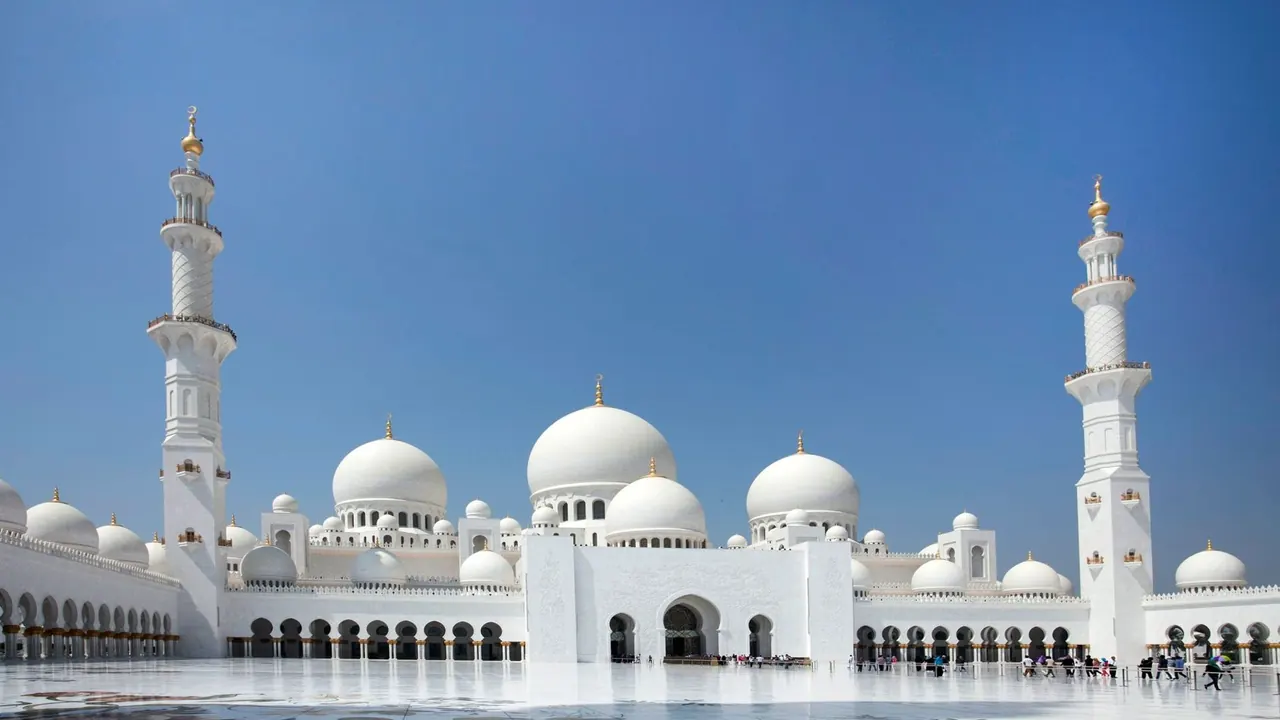
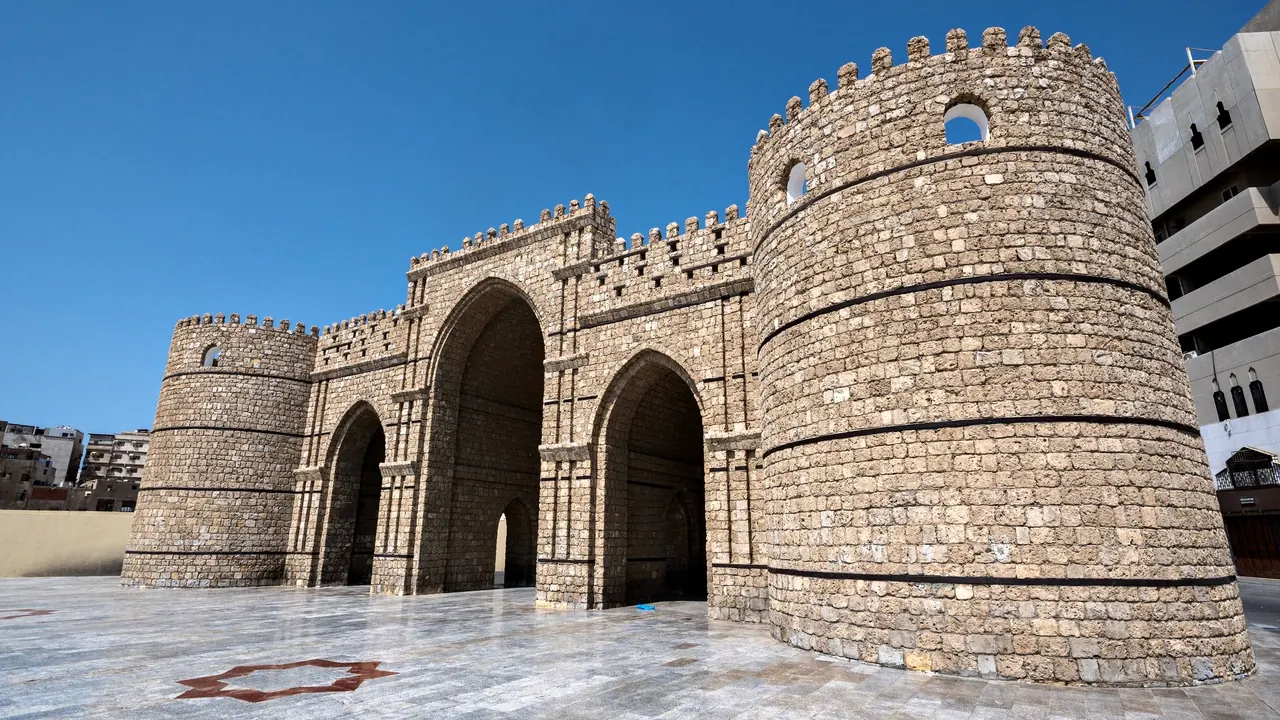
Photos: Abu Dhabi by Jeffry Surianto, Pexels License; Jeddah by xiquinhosilva, CC BY 4.0, cropped.
Abu Dhabi or Jeddah?
Our verdict in twelve categories, each scored against the same fixed benchmark cities, and the climate month by month, so you can choose for your trip.
Choose Abu Dhabi for
- families
- beaches
- nightlife
Abu Dhabi is the easier choice for a resort-style winter vacation, especially with children. It has long, free stretches of calm sand, the theme parks on Yas Island, a few world-class sights such as the Grand Mosque and the Louvre, and hotel bars for anyone who wants a drink in the evening. Dubai, Al Ain and Sharjah are all close enough for day trips.
Choose Jeddah for
- nature and the outdoors
- prices
- shopping
Jeddah suits travellers who want an older Arabian city and the Red Sea rather than polished resorts. The coral-stone lanes of Al-Balad, a Hejazi kitchen built on seafood, gold and perfume souks, and reefs just off the shore give it a character Abu Dhabi doesn't have. Day to day it costs a little less, but evenings are alcohol-free, and swimming means paying for a beach club.
Scoreboard
Twelve categories on one fixed scale from 0 to 100. The shaded stretch is the gap between the two.
Your match
Pick a travel style or drag the sliders, and both match scores follow your weighting.
Wins on families and beaches with your weighting.
Wins on nature and the outdoors and prices with your weighting.
What matters to you?
Category by category
What the scores mean for a trip.
Beaches & swimming
For a straightforward beach vacation, Abu Dhabi is better. The Corniche beach is right by downtown and has lifeguards, Saadiyat Island has a wide natural beach backed by dunes where turtles nest, and the resort beaches on Yas add more. Swimming is easy and safe in shallow, calm water.
Jeddah's sea is the better one, warmer in winter and full of coral, but getting into it takes more effort. The corniche is for walking and picnics, and most swimming happens at paid beach clubs and resorts in Obhur, with jetties out over the reef.
Food & drink
On food the two are broadly level, but they eat differently. Abu Dhabi is split between polished hotel dining, with Friday brunch as a social ritual, and the cheap Keralan, Pakistani, Lebanese and Iranian kitchens downtown. Emirati dishes take some hunting, and alcohol is served in licensed venues.
Jeddah has a stronger local cuisine of its own. Hejazi mandi, saleeg and mutabbaq sit alongside Yemeni and East African dishes, you can pick your fish at the market and have it grilled, and Al-Balad is the place for street snacks. There is no alcohol anywhere.
Culture & sights
Abu Dhabi has the bigger individual sights. The Sheikh Zayed Grand Mosque, the Louvre under its light-scattering dome and the halls of Qasr Al Watan are each worth a half-day, though the old city amounts to little more than Qasr Al Hosn.
Jeddah has the opposite strength: a real historic quarter. Al-Balad's lanes of coral-stone houses with carved wooden balconies are best walked in the late afternoon, but beyond them the museums are small, and two or three days cover everything.
Nightlife
Abu Dhabi at least has a nightlife, even if it stays inside licensed hotels: rooftop and beach bars, pubs and a few clubs, with the liveliest clusters on Yas and Al Maryah. Jeddah has no bars or clubs at all. A night out there means a speciality café, a dessert shop or shisha past midnight, and families strolling the corniche, which is pleasant but not a party.
Nature & outdoors
Jeddah wins on nature, and almost all of it is in the water. Coral reefs line the coast to the north and south, and kitesurfing and sailing centre on the creek at Obhur. Inland, the mountain roads to Taif climb to cooler air and terraced slopes.
Abu Dhabi's landscape is flatter and quieter. Its best outing is kayaking or walking the boardwalks through the mangroves at Jubail, with dune drives and Jebel Hafeet near Al Ain as the other options.
Day trips
Abu Dhabi offers more choice, and its three outings feel quite different from one another. Dubai is the big-city day, all towers and creekside trading streets. Al Ain is the green and quiet one, with date groves and old forts on the Omani border. Sharjah is for a slower day in museums and restored quarters. Dubai and Al Ain are each about an hour and a half by road and Sharjah is a little further, so three free days can be filled without repeating yourself.
From Jeddah, what you can do depends on your faith. A Muslim visitor has Mecca within an hour and many use the city as their base for umrah. A non-Muslim really has one easy outing, the two-hour climb to Taif for its rose farms, old palaces and cooler mountain air. Medina is possible by fast train but takes most of the day, and beyond those two the land around the city is mostly desert.
Good for families
Abu Dhabi is one of the easiest places in the region to bring children. Yas Island packs a Ferrari-themed park, a Warner Bros world, a water park and a marine park into a small area, and many resorts are designed around young guests.
Jeddah is warm towards children, who are welcome late into the evening, and the corniche playgrounds, the aquarium and the mall play centres keep them busy. It has nothing on Yas Island's scale, though, and pavements away from the seafront are patchy.
Getting around
Neither city is walkable, there is no metro in either, and in both you will be taking taxis or ride-hailing everywhere. Abu Dhabi is slightly easier, because its handful of major sights are linked by fast highways and the Corniche is pleasant to walk in the cool months.
Jeddah stretches for many kilometres along the coast and has heavy rush-hour traffic. Its one compact area to explore on foot is Al-Balad. The high-speed trains serve only Mecca and Medina.
Shopping & style
Jeddah is the more rewarding place to shop. Al-Balad's souks sell gold by weight and perfume blended to order, and bargaining is expected. The northern districts add huge malls and fashionable abayas.
Abu Dhabi is mostly malls, with the luxury brands gathered on Al Maryah Island. Its souks at Qaryat al Beri, the Central Market and the Iranian souk by the port are pleasant for dates and oud, but they have less of the old trading atmosphere.
Affordability
Jeddah is easier on the wallet. Local meals are cheap, and fares stay low because fuel is cheap. The main extra costs are entry to the Obhur beach clubs and dining in the smart northern districts.
Abu Dhabi's international hotels can be good value outside the winter peak, but drinks, brunches, theme park tickets and some museum entry fees make a family vacation there noticeably more expensive.
Live music & performing arts
Neither city has an opera house or a regular season, but Abu Dhabi offers more. Its long-running spring festival brings orchestras and dance companies, the Yas arenas host big touring acts, and there are winter concerts at the Cultural Foundation. In Jeddah you need to check event programmes before you travel, though heritage nights in Al-Balad sometimes bring Hejazi oud music and the mizmar stick dance.
Wellness & relaxation
Abu Dhabi is the better place for a slow few days. Its palace-style hotels and the quiet Saadiyat beach resorts have large spas with hammam rooms and long pool days. Jeddah's spas, usually separated by gender, are also mostly inside hotels, and the city's traffic and heat are tiring, so the restful option there is a seafront resort in Obhur.
When should you go?
Pick your month. The climate figures are measured averages, not a forecast.
Abu Dhabi in July
Jeddah in July
Daytime high, °C
Rainfall in the month, mm
Where the figures come from
Abu Dhabi's temperatures are measured 26 km from the centre, at Abu Dhabi International Airport.
Temperature and rainfall are climate normals, averaged over the years shown. Abu Dhabi: 1991-2020 (sunshine 1981-2010, rainfall 1981-2010) normals, Abu Dhabi International Airport (25.7 km from centre). Jeddah: 1991-2020 normals, Jeddah King Abdul Aziz International Airport (19.1 km from centre).
Both cities are at their best from November to March, and both are too hot to be outside at midday from May to September. Abu Dhabi has the cooler winter, with January highs around 25°C, which is pleasant for walking the Corniche and visiting the mosque. Its sea drops to about 22°C, which some swimmers will find fresh. By August the air reaches 44°C and the Gulf is as warm as a bath, so it no longer cools you down.
In Jeddah, winter is warmer, with January highs near 29°C. The Red Sea stays around 26°C, so midwinter swimming and snorkelling are more comfortable there than in the Gulf. Summers are a little less extreme than in Abu Dhabi but still oppressive. Neither city gets much rain: Abu Dhabi's few showers come in late winter, Jeddah's around November. Both see long sunshine all year, and Abu Dhabi gets slightly more of it in summer.
Which traveller are you?
On a family trip with children, Abu Dhabi is the stronger choice. Yas Island's theme parks and water park sit close together, the resorts have shallow pools and kids' clubs, and calm sea lies in front. Jeddah welcomes children warmly but has far less built for them.
On a tight budget, Jeddah goes further. Everyday meals of ful, shawarma and grilled fish are cheap, and ride-hailing costs little thanks to cheap fuel. In Abu Dhabi, drinks, hotel brunches and theme park tickets soon add up, even though cheap downtown eateries exist.
For divers and snorkellers, Jeddah is the clear pick. Fringing coral reefs, walls and wrecks start a few metres from the shore, and boats leave from Obhur for sites close by. Abu Dhabi's shallow, sandy Gulf water has no reef to compare.
Before you go
| Measure | Abu Dhabi | Jeddah |
|---|---|---|
| Official language | Arabic | Arabic |
| Currency | UAE Dirham (AED) | Saudi Riyal (SAR) |
| Sockets | CG220 V, 50 Hz | G60 Hz |
| Driving side | Right | Right |
| Time zone | UTC+4 | UTC+3 |
| Emergency number | 112 | 112 or 911 |
| Elevation | 14 m | 7 m |
| Main airport | Zayed International Airport (AUH)26 km from centre96 non-stop destinations | King Abdulaziz International Airport (JED)17 km from centre147 non-stop destinations |
By the numbers
| Measure | Abu Dhabi | Jeddah |
|---|---|---|
| City population | 1,570,000 | 4,697,000 |
| People per km² | 1,615 | 860 |
| Museums within 10 km | 3 | 2 |
| UNESCO World Heritage sites within 50 km | 0 | 1 |
| Swim season, months above 21 °C | 11 months | 12 months |
Where else could you go?
Every comparison below shares a destination with this one, so you can follow Abu Dhabi or Jeddah somewhere new.