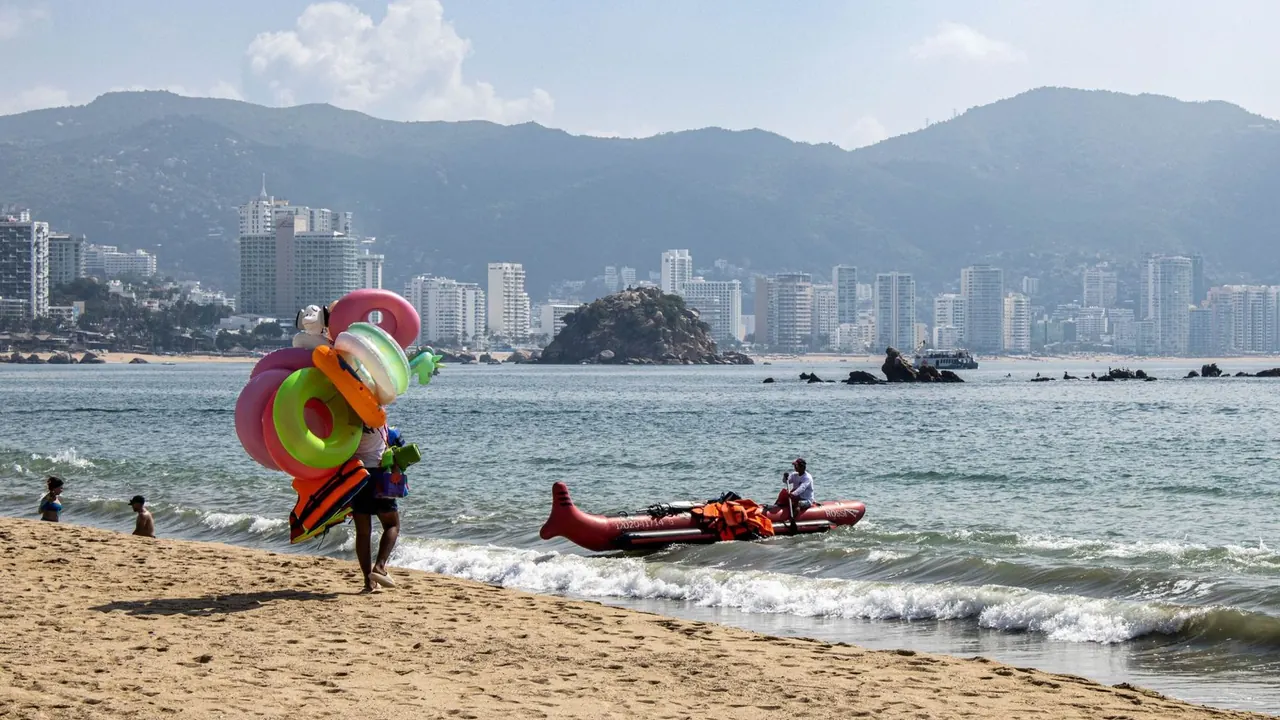
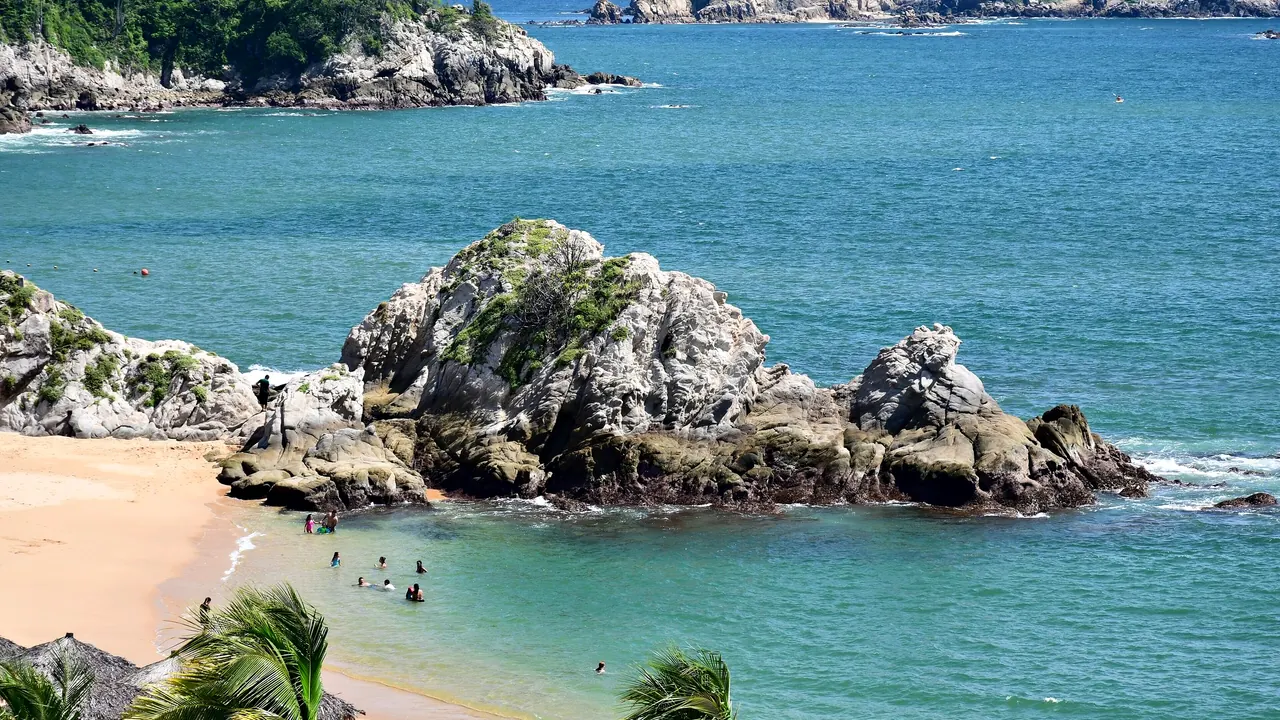
Photos: Acapulco by Felicia Navarrete, Pexels License; Huatulco by Gzzz, CC BY-SA 4.0, cropped.
Acapulco or Huatulco?
Our verdict in twelve categories, each scored against the same fixed benchmark cities, and the climate month by month, so you can choose for your trip.
Choose Acapulco for
- nightlife
- live music and the arts
- culture and sights
Acapulco suits travellers who want their beach with a city attached: a long curve of sand around the bay, grilled fish at Barra Vieja, a galleon-era fortress and the cliff divers by day, then clubs on the Costera that run until dawn. It is also the cheaper of the two, and its sights, music and shopping go a little further when you need a break from the sand.
Choose Huatulco for
- nature and the outdoors
- day trips
- wellness
Huatulco is the better pick for clearer, calmer water and greener surroundings. Its sheltered coves are made for swimming and snorkelling, much of the coast is national park with whales in winter and rafting inland, and the villages around Mazunte make easy outings. Evenings are a plaza dinner rather than a night out, which is exactly the appeal for couples and families who want rest.
Scoreboard
Twelve categories on one fixed scale from 0 to 100. The shaded stretch is the gap between the two.
Your match
Pick a travel style or drag the sliders, and both match scores follow your weighting.
Too close to call, 1 point apart
Wins on nightlife and live music and the arts with your weighting.
Wins on nature and the outdoors and day trips with your weighting.
What matters to you?
Category by category
What the scores mean for a trip.
Beaches & swimming
Both have warm Pacific water all year, and both split between sheltered swimming and open-coast surf that is risky to swim in. Acapulco is one big urban bay, with Condesa and Icacos below the hotels and the family coves of Caleta and Caletilla on the old peninsula, but the water can turn murky after rain, sending swimmers to Puerto Marqués or Roqueta Island.
Huatulco has the edge with its nine separate coves, clearer and calmer, with coral off La Entrega and wilder bays such as Cacaluta reached only by boat or forest path. Hopping from beach to beach by boat in a morning is something Acapulco's single bay cannot match.
Food & drink
Acapulco has the more distinctive local cooking and a wider spread of places to eat: pescado a la talla at the lagoon palapas, tomato-based ceviche, the Thursday pozole verde ritual and a few clifftop restaurants for dinner over the bay. Huatulco eats simply and well, with Oaxacan mole, tlayudas and mezcal at the La Crucecita market and plaza fondas, but it has only a handful of serious restaurants and the Tangolunda resorts lean towards buffets.
Culture & sights
Neither is a culture destination, but Acapulco fills a day where Huatulco fills a morning. The Fuerte de San Diego tells the story of the Manila galleons, Diego Rivera's mosaics cover the Casa de los Vientos, and the hillside villas and old hotels carry the memory of the mid-century jet set.
Huatulco, a planned resort, has the painted dome of La Crucecita's church, the small pre-Hispanic site at Copalita with its walk to a clifftop lookout, and a quiet colonial church inland at Santa María Huatulco.
Nightlife
This is where the two differ most. Acapulco has a real late-night scene along the Costera Miguel Alemán, with beach bars, terraces and hillside clubs that run until dawn, loudest when crowds drive down from Mexico City on long weekends. It is mainstream rather than intimate, and it can feel half empty midweek off-season.
Huatulco goes to bed early: a few bars and mezcal spots around La Crucecita's square, some beach bars by the Santa Cruz marina, and little else. Anyone wanting a party there heads up the coast to Zipolite.
Nature & outdoors
Huatulco is the stronger choice outdoors. Much of its coast is national park, dry forest falling to cliffs and coral that is easy to snorkel, with blowholes, humpback whales from December to March, rafting on the Copalita River and waterfalls and coffee farms in the Sierra Sur foothills.
Acapulco's setting is a grand green horseshoe of a bay, and it has its own strengths in deep-sea fishing for sailfish and marlin and the mangrove channels of Coyuca Lagoon. Inland, though, the Sierra Madre del Sur offers few marked trails.
Day trips
Huatulco has far better outings within reach. About an hour west lie Mazunte with its turtle centre, laid-back San Agustinillo, the harbour at Puerto Ángel and Zipolite, with the surf town of Puerto Escondido further on and coffee villages in the hills.
From Acapulco the easy trips are half days on the city's own edges, Pie de la Cuesta for sunsets and Barra Vieja for lunch. Taxco, the silver town that is its obvious cultural outing, is far enough away to need a night.
Good for families
Both have sheltered water and resorts with kids' clubs, but Huatulco is the easier place with children. At La Entrega and Santa Cruz children can snorkel among fish close to shore, and the small, calm town is simple to manage.
Acapulco has more built for children, with the CICI water park, Papagayo Park and the gentle coves of Caleta and Caletilla. Against that, the Costera's traffic, the heat and the dangerous open-ocean surf mean many families end up staying inside their resort.
Getting around
Neither is walkable from end to end, and both run on taxis. Acapulco is a long city strung along a single boulevard, with cheap buses on the Costera but steep hills behind and distances from the old town to Diamante too long to walk. Huatulco is smaller, a set of bays a short drive apart, with a compact La Crucecita and colectivos on the main routes, though the remoter bays need a boat or a hire car.
Shopping & style
Acapulco has a little more to browse. Its big artisan market near the old town gathers Taxco silver, Olinalá lacquerware and Guerrero masks, and the open-air malls in Diamante cover everyday needs. Huatulco's stalls around La Crucecita and Santa Cruz carry appealing Oaxacan craft, such as black pottery, alebrijes and embroidered blouses, but there is no mall or fashion retail, and keen buyers save their money for Oaxaca city.
Affordability
Acapulco is the cheaper stay, because it is mainly a resort for Mexican visitors. Older beach-view hotels on the Costera, seafood lunches and local buses all cost little, and even the all-inclusives are fair for what they offer.
Huatulco can be kept modest by staying in La Crucecita and eating at the market and fondas, but boat tours, hotel restaurants and the Tangolunda resorts add up more quickly. In both places, Mexican vacation periods push room rates up.
Live music & performing arts
Acapulco gives you more to listen to in the evening. Mariachis and guitar trios play for diners in the seafood restaurants and around the zócalo, and hotels put on Mexican folk dance shows. Touring Latin pop stars play the big concert venue in Diamante, and the Acapulco Philharmonic gives occasional concerts between its tours around Guerrero.
Huatulco has little to plan a night around: Oaxacan folk dance in the resorts, a few bands in bars, and music and dancing on La Crucecita's plaza during festivals. You won't find a regular theatre or classical season in either city.
Wellness & relaxation
Huatulco is the more restful place. It is low-rise and quiet once the boats come in, with full spas in Tangolunda and Conejos and the temazcal, a herbal steam bath taken in a small dome, as its own local ritual.
In Acapulco, wellness lives inside the resort spas of Diamante and Las Brisas and a few clifftop hotels. Outside them, the noisy Costera and packed long-weekend beaches work against rest, and Pie de la Cuesta is the place to find a slower pace.
When should you go?
Pick your month. The climate figures are measured averages, not a forecast.
Acapulco in July
Huatulco in July
Daytime high, °C
Rainfall in the month, mm
Where the figures come from
Huatulco's temperatures are measured 42 km from the centre, at Puerto Angel, Oax..
Huatulco's station stands 177 m below the city centre, so the centre is likely a little cooler than the figures say.
Huatulco has no rain gauge within 25 km of the centre, so its rainfall comes from a gridded climate dataset read at the city rather than from a gauge further away.
Temperature and rainfall are climate normals, averaged over the years shown. Acapulco: 1991-2020 normals, Acapulco, Gro. (5.9 km from centre). Huatulco: 1991-2020 normals, Puerto Angel, Oax. (42.2 km from centre).
Both are hot all year, with daytime highs of about 32°C to 34°C, so the rain decides when to go. Each has a dry, sunny season from November to April, the best months for swimming, boat trips and walking about in the early morning or evening. Acapulco is the drier of the two in spring, with almost no rain in March and April, which are also its sunniest months. Huatulco is at its clearest in December and January, though its sea is a touch cooler then at 27°C.
The wet season runs from June to October in both, with heavy downpours peaking at 293mm in Acapulco's September. In Huatulco the rain starts a month earlier, in May. The sea is warmest in these months at 30°C, but grey, stormy days and murkier water make them the weaker choice in both places.
Which traveller are you?
For a food and nightlife trip, Acapulco is clearly the pick. Thursday pozole verde and wood-grilled fish at Barra Vieja lead into long nights on the Costera, where hillside clubs fill late and stay open until dawn, while Huatulco is quiet by midnight.
On an outdoors trip, Huatulco comes out ahead on almost every count. Its national park coast has easy coral snorkelling, winter whale watching and boat trips past sea arches, and inland the Copalita River and the Sierra Sur waterfalls add rafting and forest walks.
For a relaxing and wellness trip, Huatulco's low-rise calm suits better. Uncrowded coves, full resort spas and the traditional temazcal steam bath make unwinding easy, whereas in Acapulco rest is found mostly behind resort walls, away from the traffic and music of the Costera.
Before you go
| Measure | Acapulco | Huatulco |
|---|---|---|
| Official language | Spanish, Nahuatl, Yucatec Maya | Spanish, Nahuatl, Yucatec Maya |
| Currency | Mexican Peso (MXN) | Mexican Peso (MXN) |
| Sockets | AB127 V, 60 Hz | AB127 V, 60 Hz |
| Driving side | Right | Right |
| Time zone | UTC-6 | UTC-6 |
| Emergency number | 911 | 911 |
| Elevation | 18 m | 220 m |
| Main airport | General Juan N. Álvarez International Airport (ACA)18 km from centre10 non-stop destinations | Bahías de Huatulco International Airport (HUX)15 km from centre13 non-stop destinations |
| Public holidays this year | 9 days | 9 days |
By the numbers
| Measure | Acapulco | Huatulco |
|---|---|---|
| City population | 658,609 | 7,409 |
| People per km² | 350 | - |
| Museums within 10 km | 3 | 0 |
| UNESCO World Heritage sites within 50 km | 0 | 0 |
| Swim season, months above 21 °C | 12 months | 12 months |
Where else could you go?
Every comparison below shares a destination with this one, so you can follow Acapulco or Huatulco somewhere new.