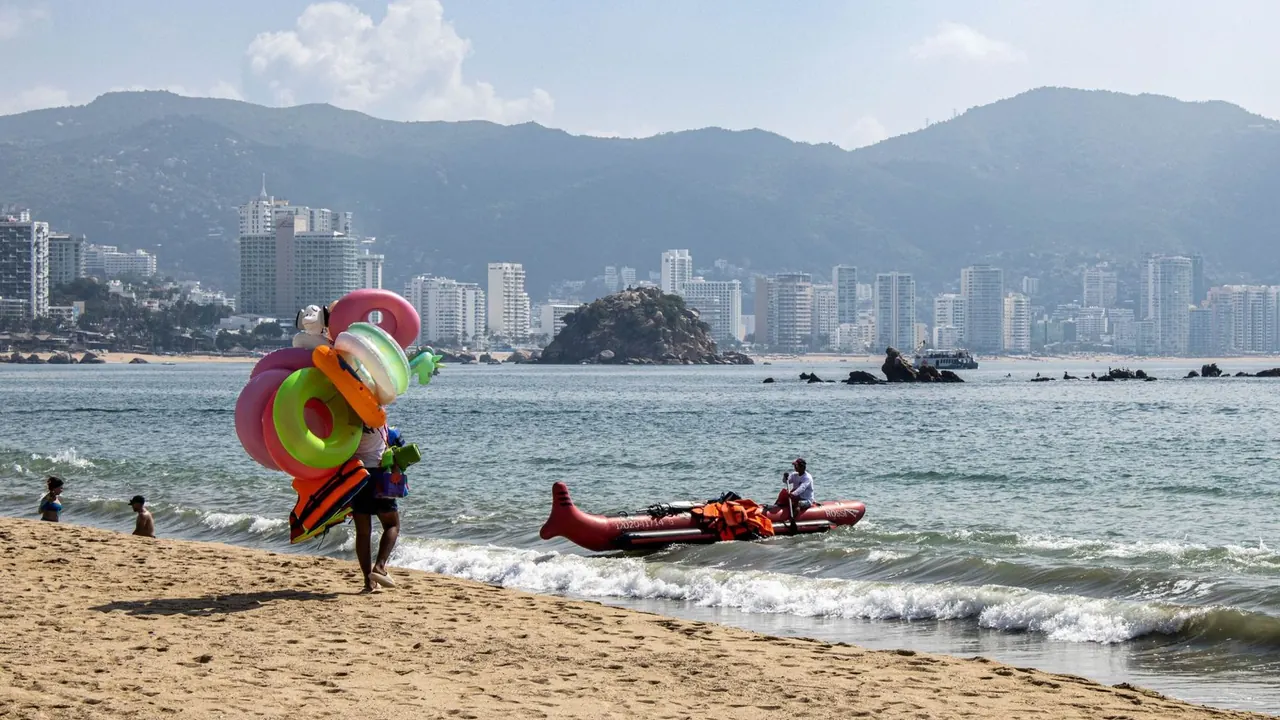
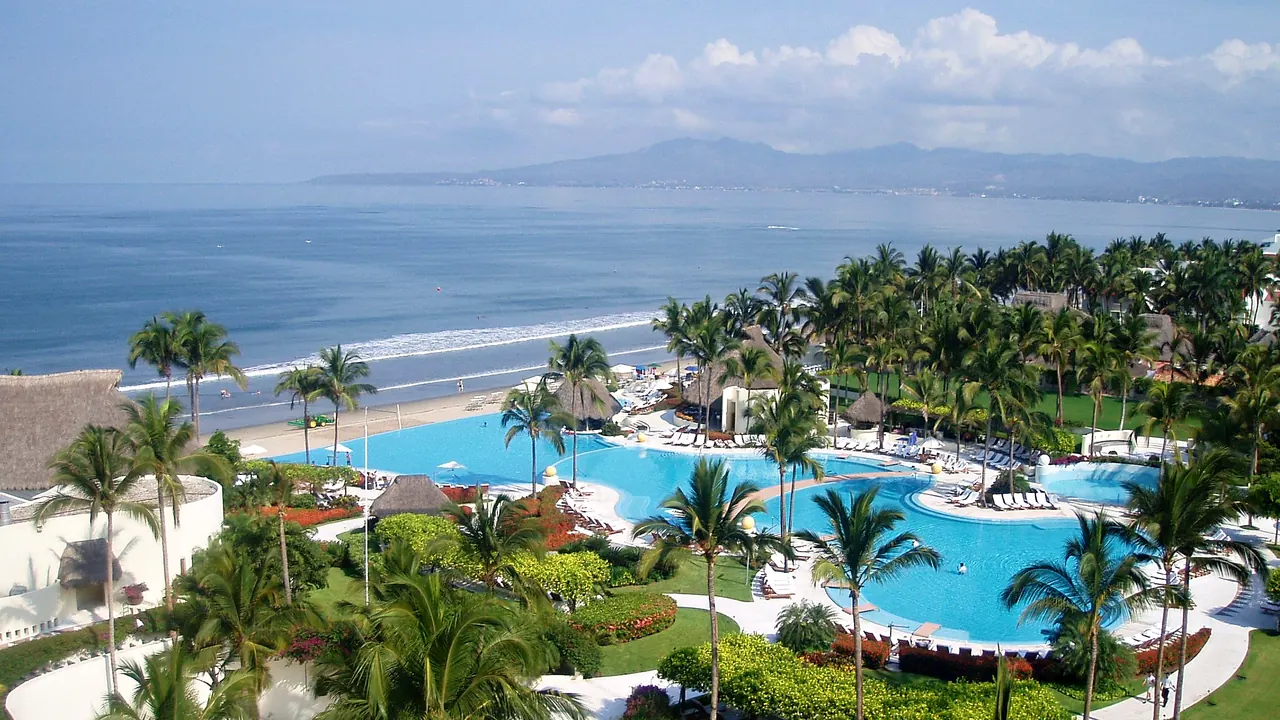
Photos: Acapulco by Felicia Navarrete, Pexels License; Nuevo Vallarta by Harpqueen, Public domain.
Acapulco or Nuevo Vallarta?
Our verdict in twelve categories, each scored against the same fixed benchmark cities, and the climate month by month, so you can choose for your trip.
Choose Acapulco for
- nightlife
- prices
- culture and sights
Acapulco suits travellers who want a real city around their beach. It has an old town with a fortress and a cathedral, clubs on the Costera that run until dawn, and coastal Guerrero cooking at the lagoon-side palapas. It also costs noticeably less, because its visitors are mostly Mexicans rather than foreigners. The trade-offs are traffic, noise and very few good day trips, so it works best for people happy to stay put, eat well and go out late.
Choose Nuevo Vallarta for
- day trips
- families
- nature and the outdoors
Nuevo Vallarta is the calmer choice, built for a resort stay that runs without effort. Families get gentle sand and kids' clubs, and the nature trips are a cut above: whales in winter, snorkelling at the Marietas Islands, and towns like Sayulita and Puerto Vallarta close by. In exchange you pay more and find very little culture or nightlife within the enclave itself.
Scoreboard
Twelve categories on one fixed scale from 0 to 100. The shaded stretch is the gap between the two.
Your match
Pick a travel style or drag the sliders, and both match scores follow your weighting.
Too close to call, 1 point apart
Wins on nightlife and prices with your weighting.
Wins on day trips and families with your weighting.
What matters to you?
Category by category
What the scores mean for a trip.
Beaches & swimming
Both are true beach destinations with warm Pacific water, but their beaches are built differently. Acapulco has a string of coves and city beaches around one deep bay. Caleta and Caletilla are calm and full of families, and Puerto Marqués is sheltered for swimming, but the open-ocean sand at Revolcadero has dangerous surf, and the main bay can turn murky after rain.
Nuevo Vallarta has one long, wide golden strand that you reach straight from the resort, with a gentle slope that suits paddling. Acapulco's sea is also a little warmer in winter.
Food & drink
Acapulco gives you more to eat outside your hotel. Its coastal Guerrero cooking is easy to find: whole fish grilled over wood at Barra Vieja, ceviche in a tomato sauce, and the Thursday pozole verde. Market stalls and taquerías around the old centre fill the gaps between the Costera's chain restaurants.
Nuevo Vallarta's regional dishes are just as good, from pescado zarandeado and aguachile to raicilla to drink. The difference is that the enclave mostly eats inside its all-inclusives, so good meals mean planned evenings out in Bucerias or Puerto Vallarta.
Culture & sights
Neither will keep a history lover busy for long, but Acapulco at least has sights of its own. There is the star-shaped Fuerte de San Diego, built to guard the Manila galleons, along with Diego Rivera's mosaic murals and the zócalo's oddly domed cathedral. The cliff divers and the city's mid-century jet-set history add some character.
Nuevo Vallarta is a planned resort with no historic fabric of any kind. For cobbled streets and a church you go to Puerto Vallarta.
Nightlife
Acapulco has a proper party scene on its doorstep. Beach bars, terraces and big hillside clubs line the Costera and fill up late, and on long weekends the whole strip is busy. The music is loud and mainstream, and midweek in the low season it can feel half empty.
Nuevo Vallarta goes quiet around midnight, after the lobby bars and poolside shows. A real night out means a taxi south to Puerto Vallarta's malecon and the Zona Romantica, where the gay scene is far stronger than anything in Acapulco.
Nature & outdoors
Nuevo Vallarta has the richer wildlife and more to do outdoors. Humpback whales come into Banderas Bay to calve in winter, and the Marietas Islands are a protected park for snorkelling among seabirds and rock arches. Behind the coast are the crocodiles and herons of the Ameca estuary and jungle walks, canyons and zip-lines in the foothills.
Acapulco's best natural feature is the view of its hill-ringed bay. Beyond that it offers snorkelling at Roqueta, sportfishing for marlin and the mangrove channels of Coyuca Lagoon, but the steep Sierra inland has few marked trails.
Day trips
This is one of the widest gaps between the two. Nuevo Vallarta sits in the middle of a row of good outings: Puerto Vallarta's old town half an hour south, Bucerias, Sayulita and San Pancho up the coast, Yelapa by boat, and the mountain village of San Sebastian del Oeste.
Acapulco offers half-days at Pie de la Cuesta and Barra Vieja, and little else. Taxco, the obvious cultural trip, is about three hours away, so it really needs an overnight stay.
Good for families
Acapulco has been a Mexican family resort for generations. The CICI water park on the Costera and the open lawns of Papagayo Park give children a change from the sand, and the boat across to Roqueta Island makes a good morning out. The harder part is the time in between: the traffic on the Costera is loud, the heat is strong all year and every outing means a taxi, so many families end up treating their resort as the whole trip.
Nuevo Vallarta has more for children to do. There are water parks and a dolphin centre nearby, and older children who can snorkel can take the boat out to the Marietas Islands. There are no zoos, science museums or theme parks, though, and in the humid summer and autumn months time outdoors shrinks to mornings and evenings.
Getting around
Both depend on taxis, and neither has any rail. Acapulco is at least one continuous city, with cheap buses running the length of the Costera and a few pleasant stretches to walk by the beach. The old town and Diamante are too far apart to cover on foot, though.
Nuevo Vallarta is a long boulevard of gated resorts, and it can be a hot walk just to reach the highway buses. A hire car is useful for the northern coast, and the airport is close by.
Shopping & style
Acapulco has a little more to offer. Its large artisan market near the old town sells Taxco silver, Olinalá lacquerware, masks and embroidery from all over Guerrero, and the Diamante malls cover the basics, though you will need to bargain and check quality.
Nuevo Vallarta itself has only resort boutiques and a modest mall. Its distinctive craft is Wixarika (Huichol) beadwork and yarn painting, and for that you need to go to Bucerias or Puerto Vallarta's river market.
Affordability
Acapulco is clearly the cheaper of the two. Because it is priced for Mexican visitors, older beachfront hotels, seafood lunches and even its all-inclusives cost little, and only Diamante, Las Brisas and the peak weeks push prices up.
Nuevo Vallarta is aimed at North Americans, and almost everything inside the enclave is priced accordingly. All-inclusive packages keep costs predictable, and the cheapest meals are in Bucerias or Puerto Vallarta's neighbourhoods.
Live music & performing arts
Neither is somewhere to plan a trip around performances, but Acapulco has slightly more beyond hotel shows. There are mariachi and guitar trios around the zócalo, touring Latin pop stars at the Diamante venue, and occasional concerts by the Acapulco Philharmonic.
In Nuevo Vallarta, performance means resort entertainment, plus one permanent acrobatic dinner show. Puerto Vallarta's cabaret and drag stages are the nearest alternative.
Wellness & relaxation
Nuevo Vallarta is much better suited to unwinding. The whole enclave moves slowly, the bigger resorts have hydrotherapy circuits, and several offer a temazcal sweat lodge ceremony, the region's one real bathing tradition, alongside yoga on the beach.
In Acapulco, rest has to be found away from the noise. That means the resort spas of Diamante and Las Brisas, a quiet clifftop hotel, or the slower pace of Pie de la Cuesta, because the Costera rarely calms down.
When should you go?
Pick your month. The climate figures are measured averages, not a forecast.
Acapulco in July
Nuevo Vallarta in July
Daytime high, °C
Rainfall in the month, mm
Where the figures come from
Nuevo Vallarta has no weather station within reach, so its figures come from a gridded climate model rather than a measured record, and read a broad area rather than the city itself.
Temperature and rainfall are climate normals, averaged over the years shown. Acapulco: 1991-2020 normals, Acapulco, Gro. (5.9 km from centre). Nuevo Vallarta: 1991-2020 normals, TerraClimate 4 km grid at the town, no weather station within 90 km.
Both cities are hot all year, and both have the same split between seasons. The dry months run from November to May, and the summer rains arrive in June and peak in September, when each gets close to 300mm in a month. Acapulco is the more extreme of the two. Its afternoons hardly drop below the low thirties even in January, so walking the old town is hard work at any time, and it is sunniest in March and April. The sea stays warm enough for long swims in every month.
Nuevo Vallarta has a softer winter. From December to March the days sit around 30°C and the bay cools to about 24°C, which some swimmers will find bracing, but these are also the whale months and the calmest seas. Its rains taper off sooner than Acapulco's, and October is noticeably drier there. For both, late autumn to spring is the time to go, and Nuevo Vallarta's winter is the gentler of the two.
Which traveller are you?
For a food and nightlife trip, Acapulco is the clear pick. You can eat grilled pescado a la talla at Barra Vieja and green pozole on Thursdays, then go on to the Costera's terraces and hillside clubs, which stay open until dawn. In Nuevo Vallarta, both food and nightlife mean a taxi to Puerto Vallarta.
On a family trip with young children, Nuevo Vallarta works better. Its beach shelves gently, the enclave is quiet and partly gated, and the resorts are designed around children. Whale watching and turtle releases give them outings they will remember, without the traffic and dangerous open-ocean surf of Acapulco.
On a trip with a tight budget, Acapulco goes much further. Older beach-view hotels, market stalls, taquerías and local buses all cost little, because they are priced for Mexican visitors. Nuevo Vallarta's resorts and condominiums are aimed at North Americans, and saving money there means eating out in Bucerias.
Before you go
| Measure | Acapulco | Nuevo Vallarta |
|---|---|---|
| Official language | Spanish, Nahuatl, Yucatec Maya | Spanish, Nahuatl, Yucatec Maya |
| Currency | Mexican Peso (MXN) | Mexican Peso (MXN) |
| Sockets | AB127 V, 60 Hz | AB127 V, 60 Hz |
| Driving side | Right | Right |
| Time zone | UTC-6 | UTC-6 |
| Emergency number | 911 | 911 |
| Elevation | 18 m | 3 m |
| Main airport | General Juan N. Álvarez International Airport (ACA)18 km from centre10 non-stop destinations | Puerto Vallarta International Airport (PVR)4 km from centre52 non-stop destinations |
| Public holidays this year | 9 days | 9 days |
By the numbers
| Measure | Acapulco | Nuevo Vallarta |
|---|---|---|
| City population | 658,609 | 1,301 |
| People per km² | 350 | - |
| Museums within 10 km | 3 | 0 |
| UNESCO World Heritage sites within 50 km | 0 | 1 |
| Swim season, months above 21 °C | 12 months | 12 months |
Where else could you go?
Every comparison below shares a destination with this one, so you can follow Acapulco or Nuevo Vallarta somewhere new.