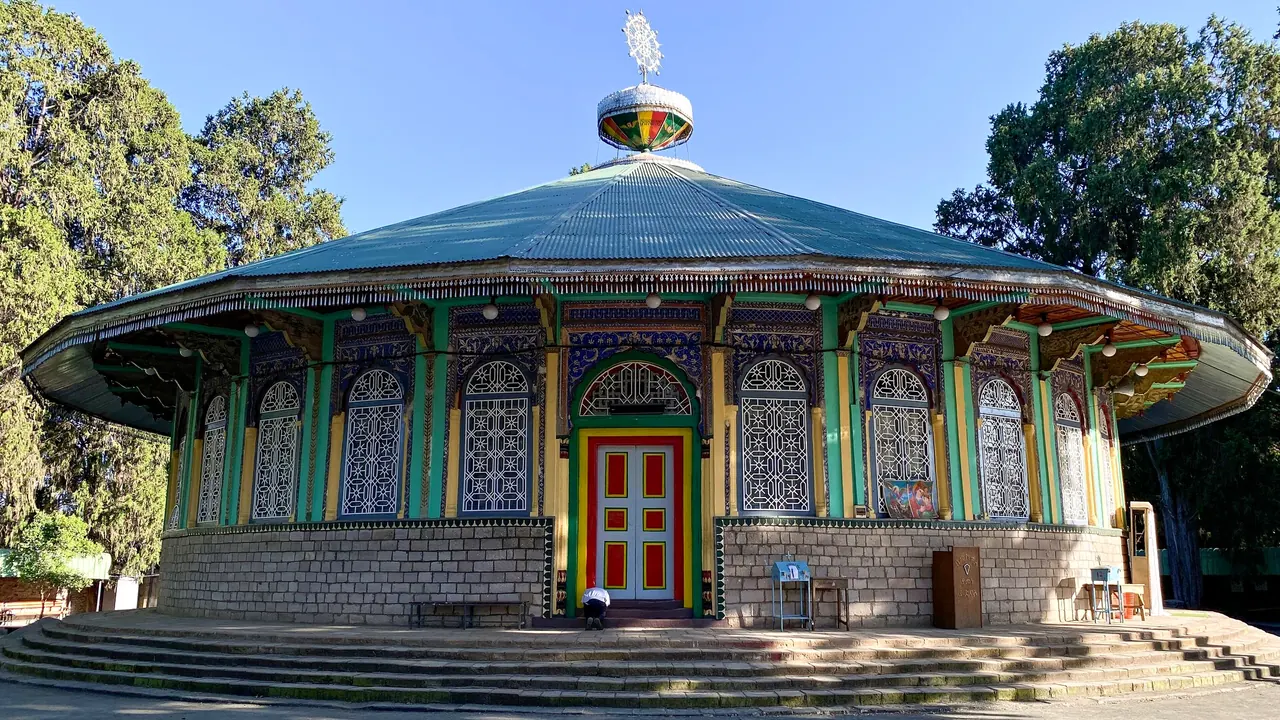
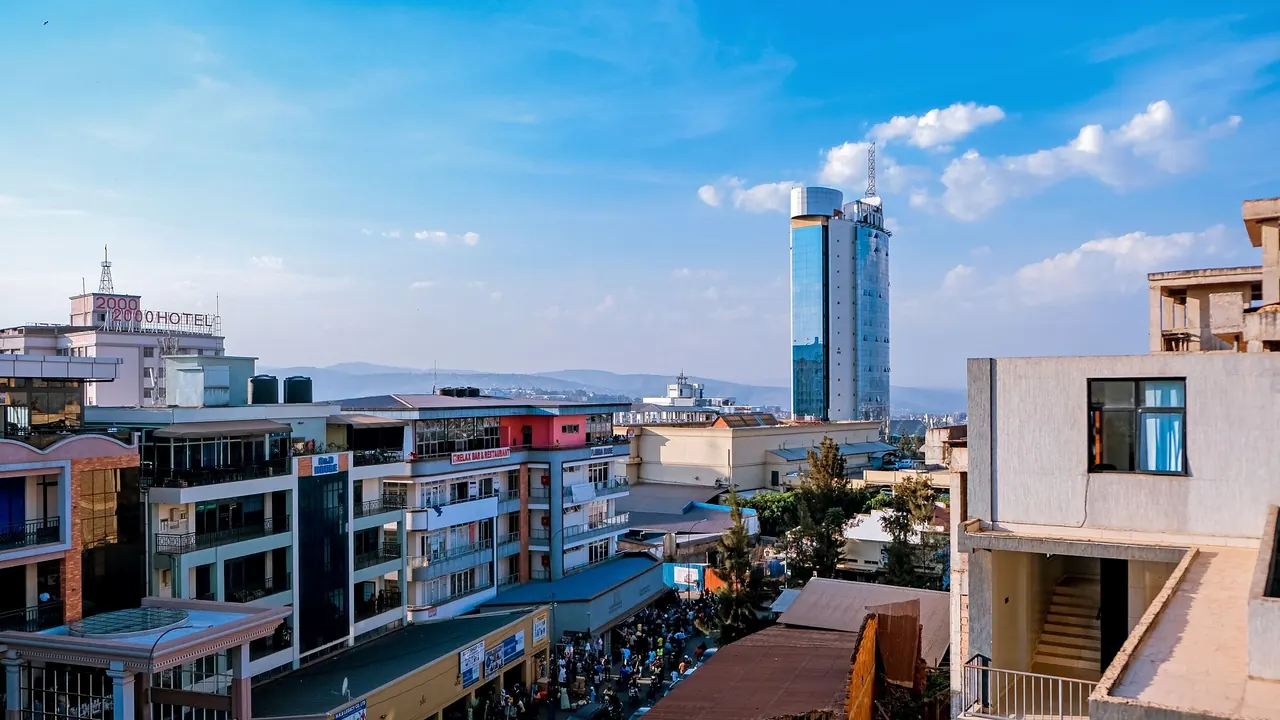
Photos: Addis Ababa by ProtoplasmaKid, CC BY 4.0, cropped; Kigali by Jax pexels, Pexels License.
Addis Ababa or Kigali?
Our verdict in twelve categories, each scored against the same fixed benchmark cities, and the climate month by month, so you can choose for your trip.
Choose Addis Ababa for
- live music and the arts
- food and drink
- culture and sights
Addis Ababa suits the curious traveller who wants a few days with real substance. Lucy and the imperial palaces, injera shared from one platter, coffee ceremonies in the plant's homeland and azmari singers teasing the room at night make it the richer city for history, food and music. Day-to-day costs are low too. The trade-off is effort: sprawl, slow traffic and altitude make it hard going, so it is best for adults who don't mind some friction.
Choose Kigali for
- families
- getting around
- nature and the outdoors
Kigali is the easier and calmer of the two. It has clean, safe streets, short rides between ridges and steady warmth, which make it the gentler choice for families and for anyone new to the region. The Genocide Memorial is a sober, essential visit. With fewer sights and quieter evenings, the city works best as a comfortable base for an Akagera safari or the gorilla volcanoes rather than as the whole trip.
Scoreboard
Twelve categories on one fixed scale from 0 to 100. The shaded stretch is the gap between the two.
Your match
Pick a travel style or drag the sliders, and both match scores follow your weighting.
Wins on live music and the arts and food and drink with your weighting.
Wins on families and getting around with your weighting.
What matters to you?
Category by category
What the scores mean for a trip.
Beaches & swimming
Both cities are landlocked highland capitals, and in both a swim means a hotel pool. The lakes nearby are different, though. Addis Ababa's crater lakes at Bishoftu, about an hour away, have resorts for a weekend by the water, but you don't go there to bathe.
From Kigali, Lake Muhazi is good for a lakeside lunch or a boat trip. The real sand is on Lake Kivu at Rubavu, three hours away, which makes a proper overnight lake break possible.
Food & drink
Addis Ababa is a real food destination. Injera comes with doro wat, sizzling tibs or kitfo, and on fasting days with spreads that happen to be vegan. Tej honey wine is poured in traditional houses, and the coffee ceremony takes place in the country the plant comes from. Its weakness is range, since there is little beyond Ethiopian and Italian cooking.
Kigali's own food is plainer: bean and plantain buffets at lunch, then goat brochettes with cold beer in the evening. The diplomatic community brings more international variety, and the speciality coffee in Kiyovu is excellent. Still, few people choose Kigali for its food.
Culture & sights
Neither city has an old town, but Addis Ababa has far more to see. The National Museum with Lucy, the Ethnological Museum in Haile Selassie's palace, Menelik's palace compound, the Holy Trinity and St George's cathedrals and the Red Terror Martyrs' Memorial together span the empire, the church and the Derg years.
Kigali's sightseeing centres on the Genocide Memorial at Gisozi, a carefully made and deeply affecting museum, plus the Campaign Against Genocide Museum and Kandt House. Add an afternoon in the Kacyiru and Kimihurura galleries and you have seen most of it.
Nightlife
Addis Ababa has the livelier nights. Bole's lounges, rooftops and clubs fill late at weekends, while Kazanchis and Piazza have rougher local bars, and the best evenings are built around live music. Kigali's nights are more orderly: brochettes and beer under open skies, a rooftop drink over the lit hills, then clubs in Kimihurura or Nyarutarama on Fridays and Saturdays. Both go quiet on weeknights.
Nature & outdoors
There is little between them, but the outdoors works differently in each. In Addis Ababa, the Entoto hills rise behind the city, and further out you can reach the old juniper forest of Menagesha Suba and the Blue Nile gorge near Debre Libanos, where geladas graze the cliff edges. The trouble is getting out through the traffic.
Kigali is greener within the city itself, with the walk up Mount Kigali and the boardwalks through the Nyandungu wetland. It also has big game within a long day, at Akagera.
Day trips
Addis Ababa has the longer list of outings. North of the city are the holy monastery of Debre Libanos and the Portuguese Bridge. To the south, a single road takes in Tiya's UNESCO stelae, the rock-hewn church of Adadi Mariam and the prehistoric site at Melka Kunture, with the Bishoftu lakes for a gentler day.
From Kigali, the essential trip is to the memorial churches at Nyamata and Ntarama, about an hour away. Nyanza's royal compound with its long-horned cattle is the other option. After that, Huye and Lake Kivu need overnight stays.
Good for families
With children, the difference lies less in what there is to do than in how much each day takes out of everyone. In Kigali, outings stay simple: the central districts can be walked, a ride to the next ridge is quick, and the city's calm keeps a day out from becoming a test of patience. Addis Ababa asks more. The sights are far apart with traffic jams in between, the footpaths are hard going for small legs, and the thin air leaves young children flagging until they adjust.
What each city gives children is modest and works differently. In Addis, the lions in the palace park and the open slopes of Entoto are close to the centre and easy to fit into a morning. Kigali's best family outing is a whole day watching elephants and hippos at Akagera, which is a bigger adventure but only right for children who can manage the drive. Addis also needs more care over what children eat, so for a family Kigali is the more restful place to spend a few days.
Getting around
Kigali is easier to get around. Its central districts have good pavements that are safe to walk, licensed moto-taxis with numbered vests and spare helmets are everywhere, and traffic is light, so rides are short even across the deep valleys.
Addis Ababa spreads over hills with its sights far apart. Its light rail misses most of them, and the minibuses are hard to use without help. In practice you rely on ride-hailing apps, taxis or a driver, and rush hour slows everything down.
Shopping & style
Addis Ababa has more to buy and a far bigger market. Merkato is a vast maze of spice, basket and metalwork districts, best explored with a guide. The weavers at Shiro Meda sell white cotton shawls, and silver and brass Orthodox crosses are sold around Piazza.
Kigali's buys are smaller and more crafted: lidded agaseke baskets, geometric imigongo panels and kitenge cloth from Kimironko, which the tailors there make into clothes within days. Neither city has luxury shopping.
Affordability
Both cities are cheap if you live locally and expensive at the top end, but Addis Ababa stretches a budget further. Injera, macchiatos, minibuses and museum entry cost very little. Comfortable international hotels and the restaurants in Bole are where the money goes.
Kigali's buffets, brochettes and moto-taxis are also inexpensive, and the Genocide Memorial is free. Its tourist end costs more, though, and park fees and gorilla permits can take over the whole budget.
Live music & performing arts
Addis Ababa is far ahead here. In the azmari bets of Kazanchis, singers improvise verses to the one-stringed masinko and often tease the foreigners in the room. Ethio-jazz, the music born in the city in the 1960s and 70s, still plays live in a few clubs, and cultural restaurants stage eskista dancing over dinner. Hager Fikir is one of Africa's oldest theatres.
Kigali's highlight is intore dance, with leaping drummers and warriors. You will only see it on certain nights or at festivals, since there is no regular programme of performances.
Wellness & relaxation
The two are level here, and in both the hotel spas do most of the work. What differs is where you find calm. Addis Ababa has a bathing heritage in the simple Filwoha hot-spring cubicles and weekend resorts at Bishoftu, but the city itself is loud. Kigali has no bathing tradition, but its quiet, clean, green streets make rest come easily without leaving town.
When should you go?
Pick your month. The climate figures are measured averages, not a forecast.
Addis Ababa in July
Kigali in July
Daytime high, °C
Rainfall in the month, mm
Temperature and rainfall are climate normals, averaged over the years shown. Addis Ababa: 1991-2020 normals, Addis Ababa (7.8 km from centre). Kigali: 1991-2020 normals, Kigali (1.6 km from centre).
Neither city has a beach season, so timing comes down to rain and to comfort for walking, and the two run on almost opposite calendars. Addis Ababa is mild all year, with daytime highs no higher than 26°C. It is at its best from October to February, when the air is dry and the sun shines for long hours almost every day. Its rain comes in one heavy season from June to September and peaks at nearly 300mm in August, when the days turn cool, grey and muddy.
Kigali is a little warmer and very steady, at around 28°C all year. Its rain is spread over more months instead of falling all at once. There are two wet stretches, from March to May and from October to December, and only a slight lull in January and February. The clear window is June to August, and July sees just 17mm. That is exactly when Addis is wettest, so a trip to both means accepting rain in one of them. September is the nearest compromise, because Kigali is still fairly dry and the Addis rains are easing.
Which traveller are you?
On a culture and arts trip, Addis Ababa is the clear pick. Lucy at the National Museum, the Ethnological Museum in Haile Selassie's palace, the Entoto churches and nights of azmari song and Ethio-jazz give it far more depth than Kigali.
For a family trip with children, Kigali is the easier city. Its streets are clean and safe, journeys between neighbourhoods are short and the warm climate is steady, and Nyandungu's wetland boardwalks fill an afternoon. Addis has heavy traffic, broken pavements and altitude that tires small children.
On a safari and gorilla-trekking trip, Kigali is the natural gateway. Akagera's lions, elephants and hippos are within a long day's drive, and the volcanoes of the mountain gorillas are a similar distance away. Addis Ababa has no big-game park within reach.
Before you go
| Measure | Addis Ababa | Kigali |
|---|---|---|
| Official language | Amharic | French, English, Swahili, Kinyarwanda |
| Currency | Ethiopian Birr (ETB) | Rwanda Franc (RWF) |
| Sockets | CEFJL220 V, 50 Hz | CEG230 V, 50 Hz |
| Driving side | Right | Right |
| Time zone | UTC+3 | UTC+2 |
| Emergency number | 911 | Police 112, ambulance 912, fire 112 |
| Elevation | 2,355 m | 1,567 m |
| Main airport | Addis Ababa Bole International Airport (ADD)8 km from centre137 non-stop destinations | Kigali International Airport (KGL)3 km from centre24 non-stop destinations |
| Public holidays this year | 10 days | 13 days |
By the numbers
| Measure | Addis Ababa | Kigali |
|---|---|---|
| City population | 5,704,000 | 1,745,555 |
| People per km² | 10,824 | 2,391 |
| Museums within 10 km | 7 | 4 |
| UNESCO World Heritage sites within 50 km | 1 | 1 |
Where else could you go?
Every comparison below shares a destination with this one, so you can follow Addis Ababa or Kigali somewhere new.
- Arushavs Kigali
- Nairobivs Kigali
- Mombasavs Kigali
- Nairobivs Addis Ababa
- Arushavs Addis Ababa
- Cairovs Addis Ababa