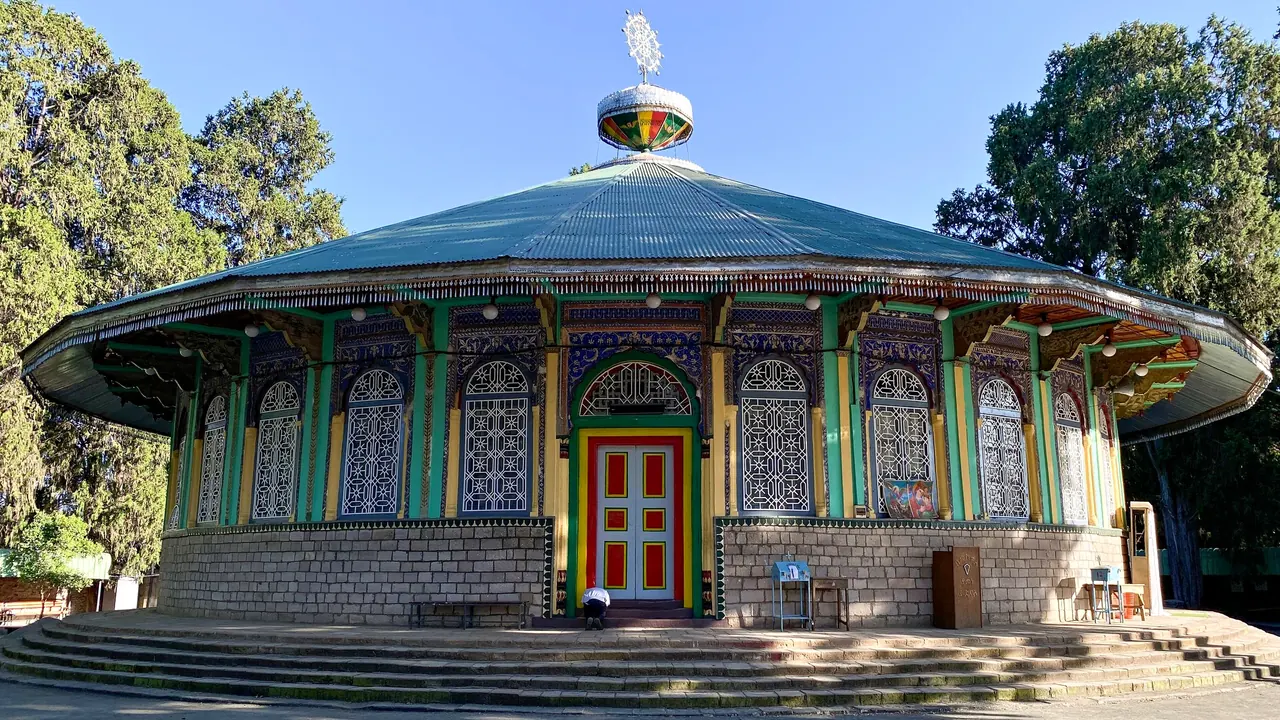
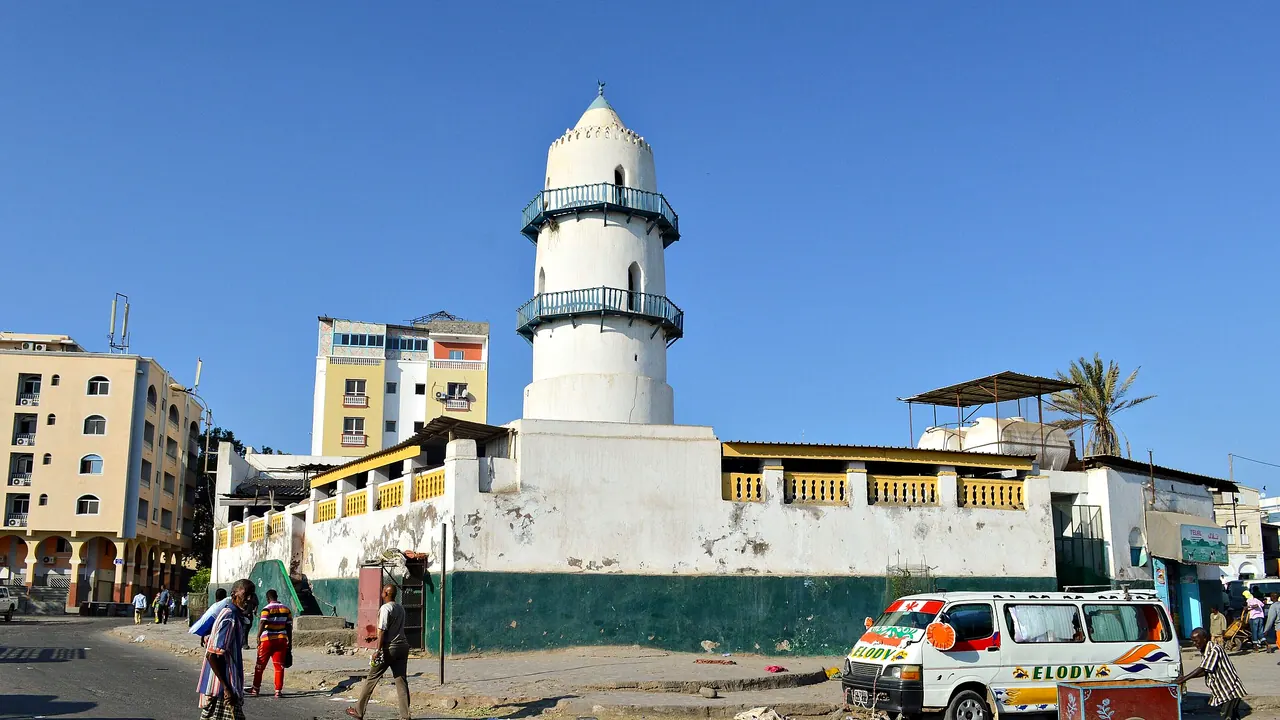
Photos: Addis Ababa by ProtoplasmaKid, CC BY 4.0, cropped; Djibouti City by Francisco Anzola from United States, CC BY 2.0, cropped.
Addis Ababa or Djibouti City?
Our verdict in twelve categories, each scored against the same fixed benchmark cities, and the climate month by month, so you can choose for your trip.
Choose Addis Ababa for
- prices
- live music and the arts
- culture and sights
Addis Ababa suits travellers who want the city itself to be the point of the trip. You get Ethiopian food and the coffee ceremony, museums holding Lucy and the imperial past, and evenings of azmari singing and Ethio-jazz. Day to day it is far cheaper, at least if you are happy with local guesthouses and eateries, and the mild highland climate makes the hills pleasant for walking most of the year. There is no sea at all, though.
Choose Djibouti City for
- beaches
- nature and the outdoors
Djibouti City is for people who come for what lies outside it. The town takes half a day, but the warm sea, the island beaches across the bay, the whale sharks in the Gulf of Tadjoura and the salt flats of Lac Assal make it a base for adventure in raw volcanic country. Expect to pay well for hotels and excursions, and to plan the whole trip around the cooler months.
Scoreboard
Twelve categories on one fixed scale from 0 to 100. The shaded stretch is the gap between the two.
Your match
Pick a travel style or drag the sliders, and both match scores follow your weighting.
Wins on prices and live music and the arts with your weighting.
Wins on beaches and nature and the outdoors with your weighting.
What matters to you?
Category by category
What the scores mean for a trip.
Beaches & swimming
This is Djibouti City's category by a wide margin. Addis Ababa sits on a highland plateau far from any coast, so swimming means a hotel pool. People go to the Bishoftu crater lakes for the lakeside resorts, not to bathe.
Djibouti's own shore is mostly port and rock, but a short boat ride takes you to Moucha and Maskali, which have pale sand and coral close in. The coves towards Khor Ambado are a short drive west. Beach days there are organised outings with little shade, and they only work in the cooler half of the year.
Food & drink
Addis Ababa is the far better place to eat. Injera shared by hand with doro wat, tibs and kitfo, vegan fasting platters, tej in flasks and the coffee ceremony, in the country where coffee began, make every meal part of the visit.
Djibouti City's highlight is Yemeni-style fish baked against the wall of a clay oven in the grill houses of the African quarter, with Somali and Ethiopian dishes and French bakeries filling in. Beyond that you mostly find menus aimed at expatriates, and alcohol is served mainly in hotels. Afternoons are given over to khat rather than food.
Culture & sights
Neither city has an old townscape, but Addis Ababa fills two or three good days. You can see Lucy in the National Museum, the Ethnological Museum, the Holy Trinity and St George's cathedrals, the Red Terror memorial and Menelik's palace compound. Djibouti City offers a half-day walk past the faded arcades around Place Menelik and the Hamoudi mosque, with no museum worth the name.
Nightlife
Addis Ababa has a real night out. The rooftop bars, lounges and clubs of Bole run past midnight at weekends, and Kazanchis and Piazza have rougher local bars. Djibouti City's scene is a handful of bars in the European quarter and hotel terraces, mostly serving the military and expatriates. Local evenings there mean a walk along the seafront or khat. Weekdays are quiet in both.
Nature & outdoors
Addis Ababa's outdoors is gentler and starts at the city's edge. Eucalyptus trails climb the Entoto hills straight from town, colobus monkeys live in the old juniper woods of Menagesha Suba, and gelada monkeys graze the cliff edges of the Blue Nile gorge near Debre Libanos. The mild climate lets you walk in comfort whenever the rains hold off, though Ethiopia's great wild ranges lie far beyond a day out.
Djibouti City has the more extraordinary landscape. In the cooler months you can snorkel beside whale sharks in the Gulf of Tadjoura, dive the reefs around Moucha, and drive out to Lac Assal, a turquoise lake ringed with salt flats far below sea level beside the black Ghoubbet lava fields. Few places offer anything like it, but almost every outing needs an off-road vehicle and a driver, and the summer heat rules out hiking.
Day trips
Addis Ababa has the better set of outings. To the north are the monastery of Debre Libanos and the Portuguese Bridge. To the south are the Tiya stelae, the rock church of Adadi Mariam, Melka Kunture and the Bishoftu lakes. The roads are slow, so most visitors hire a driver.
Djibouti City has only Tadjoura, the country's oldest town, across the gulf, and Arta, a cooler stop in the hills on the way west. Its other trips head into desert and salt lakes rather than to towns or heritage sites.
Good for families
Neither city is built for children, so the choice comes down to which drawbacks you can live with. Addis Ababa has the lions and gardens of the palace park, the Entoto hills and a mild climate. Against that come heavy traffic, broken pavements, altitude that tires small children for the first few days, and food that needs some care.
Djibouti City's draws are the calm, shallow water off the islands and whale shark trips for older children. Summer heat, long rough drives and limited medical care make it a choice for the cooler months only.
Getting around
Visitors end up in taxis in both cities, so the real difference is the layout. Addis Ababa sprawls over hills with its sights far apart. The light rail misses most of them, so ride-hailing or a hired driver is the norm, and rush-hour traffic is heavy.
Djibouti City's centre is compact, and in winter you can walk between the European quarter, the markets and the seafront, taking taxis at fares agreed in advance. Anything beyond town means a boat operator or a 4x4 with a driver.
Shopping & style
Addis Ababa has far more to take home. Merkato, one of Africa's largest open-air markets, is an expedition in itself. Shawls from the Shiro Meda weavers, silver crosses and religious paintings from around Piazza, and bags of roasted coffee all make good buys.
Djibouti City's central market and the stalls of Les Caisses deal mostly in spices, cloth, incense and imported electronics, and Afar knives and baskets are available but scarce. Neither city has luxury shops or a high street.
Affordability
Addis Ababa is far kinder to the wallet, at least if you live locally. Food, coffee, minibuses and museums cost little, though international-standard hotels and Bole restaurants charge close to what you would pay at home. Djibouti City is expensive across the board, with hotels priced for contractors, imported food, and boat and 4x4 trips that soon add up. Its local grill houses, street tea and taxis are the only real savings.
Live music & performing arts
The gap here is wide. Evenings in Addis Ababa revolve around music. In the azmari bets of Kazanchis and Piazza, singers with the one-stringed masinko tease the audience. A few clubs play live Ethio-jazz, cultural restaurants stage eskista dancing, and the National Theatre and Hager Fikir put on plays, mostly in Amharic.
Djibouti City has no regular theatre or live-music circuit. You mostly hear Somali and Afar music and dance at weddings and national celebrations, plus the odd concert at a cultural centre.
Wellness & relaxation
Addis Ababa grew up around the Filwoha hot springs, and their mineral water still feeds simple private bath cubicles near the centre. They are more about health than pampering, but they give the city a bathing tradition of its own. The big hotels add spas and massage, and the Bishoftu lake resorts are an hour away for a quiet weekend.
Djibouti City has no such tradition, so relaxing comes down to a hotel spa and pool, a seafront room in the cooler months or a very still night at a desert camp.
When should you go?
Pick your month. The climate figures are measured averages, not a forecast.
Addis Ababa in July
Djibouti City in July
Daytime high, °C
Rainfall in the month, mm
Where the figures come from
Djibouti City has no weather station within reach, so its figures come from a gridded climate model rather than a measured record, and read a broad area rather than one spot.
Temperature and rainfall are climate normals, averaged over the years shown. Addis Ababa: 1991-2020 normals, Addis Ababa (7.8 km from centre). Djibouti City: 2001-2020 normals, NASA POWER reanalysis grid, no weather station within 90 km.
Addis Ababa sits so high that it is never hot, and daytime highs stay in the low to mid twenties all year. The long rains are what you plan around. They build from June and peak in August at close to 300mm, with grey skies and much less sun. October to February is dry and sunny, the best time for the Entoto hills and for road trips out of town. March to May stays pleasant despite some showers.
Djibouti City works the other way round. It is almost rainless all year, but from June to September highs reach 39°C, and both the streets and the beaches become punishing. Its season is November to March, with highs around 28°C and a sea that never drops much below 26°C. In the northern winter both cities are at their best. In the northern summer Addis Ababa is wet while Djibouti is fiercely hot.
Which traveller are you?
On a beach and sun trip, Djibouti City wins outright. Addis Ababa has no sea, while Djibouti has warm water all year and boat trips to the pale sand and calm, coral-fringed shallows of Moucha and Maskali, best from November to March.
For a culture and arts trip, Addis Ababa is the clear choice. It has Lucy at the National Museum, the Ethnological Museum in Haile Selassie's palace, the cathedrals and Entoto's churches, then azmari bets and Ethio-jazz at night. Djibouti has no museum of substance.
On a trip on a tight budget, your money goes much further in Addis Ababa. Injera, macchiatos, minibuses and museum entry cost little, and local guesthouses keep the nights cheap. Djibouti City prices its hotels for contractors, and its 4x4 and boat excursions add up quickly.
Before you go
| Measure | Addis Ababa | Djibouti City |
|---|---|---|
| Official language | Amharic | French, Arabic |
| Currency | Ethiopian Birr (ETB) | Djibouti Franc (DJF) |
| Sockets | CEFJL220 V, 50 Hz | CE220 V, 50 Hz |
| Driving side | Right | Right |
| Time zone | UTC+3 | UTC+3 |
| Emergency number | 911 | Police 17, ambulance 19, fire 18 |
| Elevation | 2,355 m | 14 m |
| Main airport | Addis Ababa Bole International Airport (ADD)8 km from centre138 non-stop destinations | Djibouti-Ambouli Airport (JIB)5 km from centre10 non-stop destinations |
| Public holidays this year | 10 days | - |
By the numbers
| Measure | Addis Ababa | Djibouti City |
|---|---|---|
| Population | 5,704,000 | 603,900 |
| People per km² | 10,824 | 3,020 |
| Museums within 10 km | 7 | 0 |
| UNESCO World Heritage sites within 50 km | 1 | 0 |
| Swim season, months above 21 °C | - | 12 months |
Where else could you go?
Every comparison below shares a destination with this one, so you can follow Addis Ababa or Djibouti City somewhere new.
- Nairobivs Addis Ababa
- Arushavs Addis Ababa
- Kigalivs Addis Ababa
- Sharm el-Sheikhvs Djibouti City
- Dahabvs Djibouti City
- Cairovs Addis Ababa