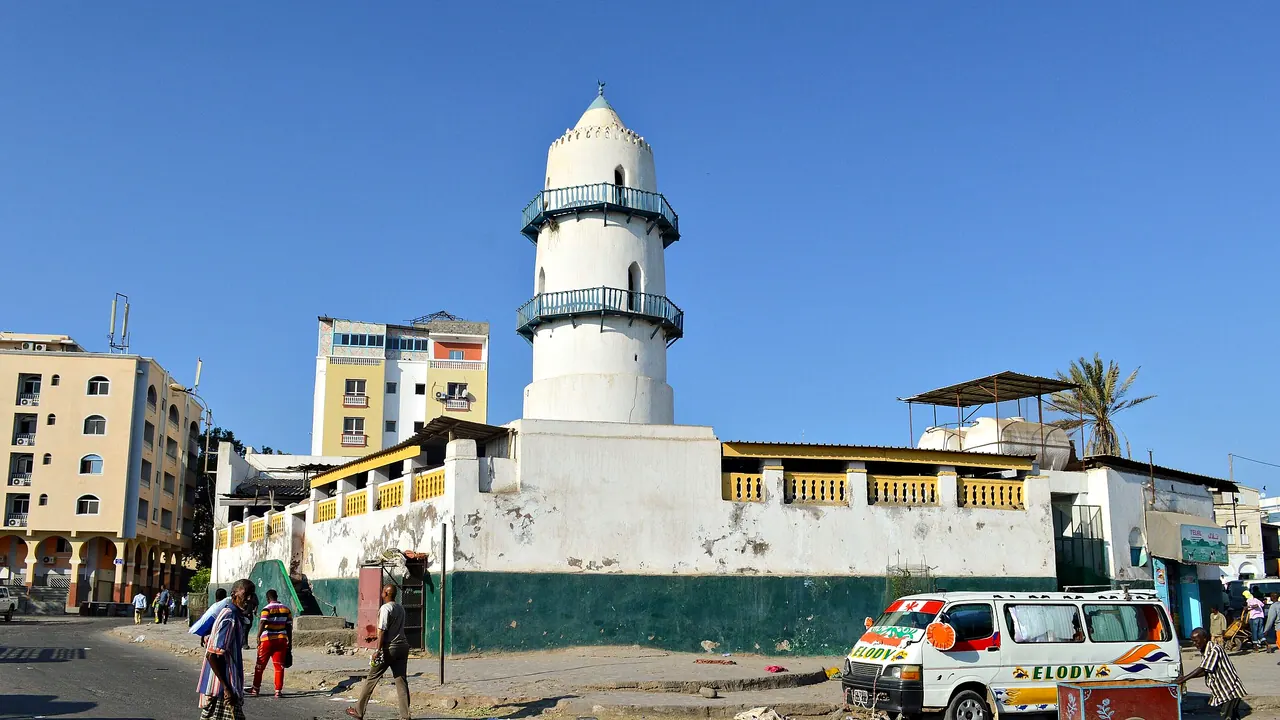
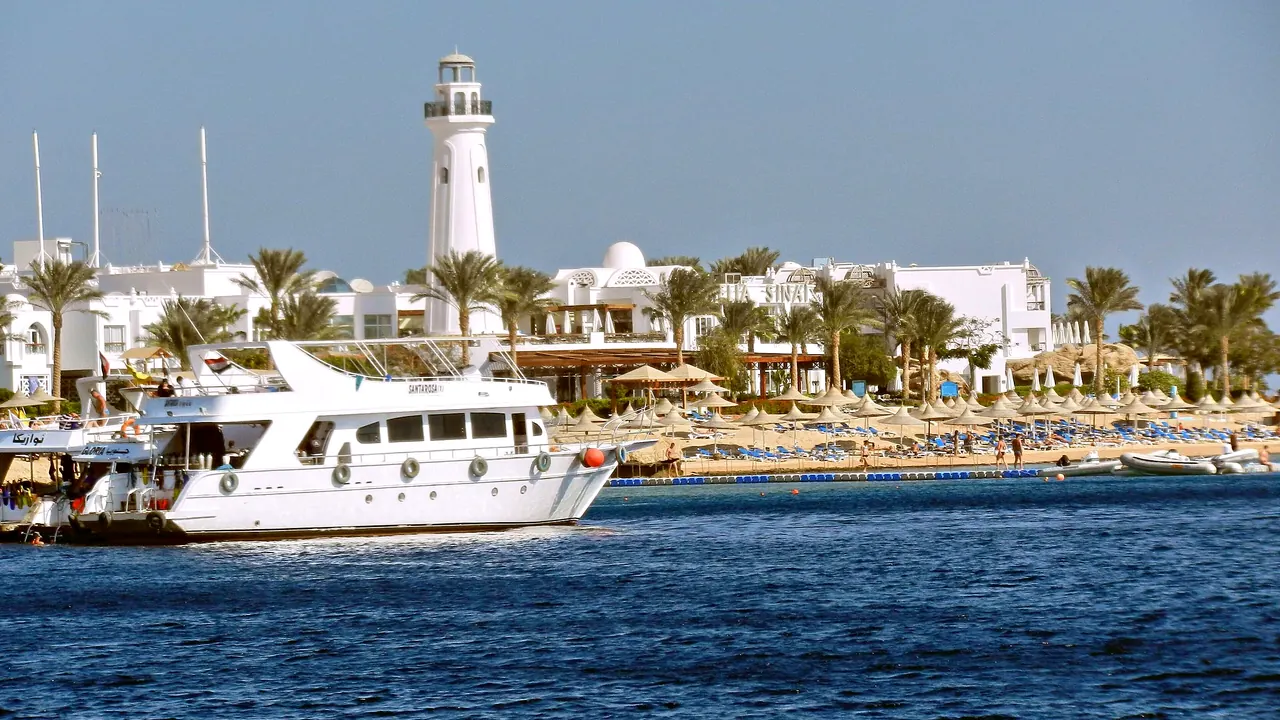
Photos: Djibouti City by Francisco Anzola from United States, CC BY 2.0, cropped; Sharm el-Sheikh by Tanya Dedyukhina, CC BY 3.0, cropped.
Djibouti City or Sharm el-Sheikh?
Our verdict in twelve categories, each scored against the same fixed benchmark cities, and the climate month by month, so you can choose for your trip.
Choose Djibouti City for
- getting around
- culture and sights
- food and drink
Djibouti City is for the traveller who wants somewhere few people have been and comes for what lies outside the city. Swimming beside whale sharks in the Gulf of Tadjoura, the salt flats of Lac Assal and the lava fields of the Ghoubbet are unlike anything around Sharm. Getting there takes money, patience and a 4x4 with a driver, and the city has little to offer once you are back.
Choose Sharm el-Sheikh for
- prices
- families
- wellness
Sharm el-Sheikh suits almost every other kind of trip. You can snorkel the reef straight from the beach, Ras Mohammed is one of the world's great dive sites, and the resorts are made for children and for doing very little. It costs far less than Djibouti and takes far less organising, which makes it the easier choice for a relaxed week of sun and sea.
Scoreboard
Twelve categories on one fixed scale from 0 to 100. The shaded stretch is the gap between the two.
Your match
Pick a travel style or drag the sliders, and both match scores follow your weighting.
Wins on getting around and culture and sights with your weighting.
Wins on prices and families with your weighting.
What matters to you?
Category by category
What the scores mean for a trip.
Beaches & swimming
Djibouti City's water is even warmer, but its own shore is mostly port and rocky foreshore. A beach day there means a boat across the bay to Moucha or Maskali for pale sand, calm shallows and coral close in, or a drive west to Doraleh and the coves towards Khor Ambado. Expect little shade and only basic facilities.
Sharm el-Sheikh is the real beach destination. Naama Bay is the classic sandy bay. At Sharks Bay, Ras Um Sid and along the Nabq coast, wooden jetties carry you over the reef flat to the drop-off, so the snorkelling starts a few steps from your sunbed. Most beaches belong to hotels and are often small and partly man-made, and reef shoes are a good idea.
Food & drink
Neither is a place to travel for the food, and the two are close. What differs is the local table. Djibouti's best dish is Yemeni-style fish baked against the walls of a clay oven, alongside Somali and Ethiopian cooking and French bakeries in the European quarter.
In Sharm most meals come from the hotel buffet. The cooking worth seeking out is Egyptian street food in the Old Market, such as koshari, ful and taameya, with mint tea and shisha late into the night. In both cities alcohol is mostly found in hotels.
Culture & sights
Both have very little to see, and half a day covers either. Djibouti's centre has more of a past. The arcaded colonial buildings around Place Menelik and the white minaret of the Hamoudi mosque give a faded sense of a French colonial port.
Sharm is a modern resort, and its sights are the floodlit Al Sahaba Mosque and the painted interior of the Coptic Heavenly Cathedral. In either city, real culture means travelling out.
Nightlife
Sharm el-Sheikh has a proper night out to offer, if a narrow one. Naama Bay's promenade of bars, shisha lounges and late clubs, plus DJ nights at beach bars, gives a few good evenings of dancing in the busy months.
Djibouti's scene is a handful of bars and clubs in the European quarter that mostly serve military personnel and expatriates, plus hotel terraces by the sea. Local evenings are spent walking the seafront or chewing khat, not out at bars.
Nature & outdoors
Djibouti's landscapes are the stranger of the two. Lac Assal is a turquoise crater lake far below sea level, ringed with salt flats beside the black lava of the Ghoubbet, and the limestone chimneys of Lac Abbe lie further out. Almost all of it needs an off-road vehicle and a driver, and the summer heat rules out most of it.
Sharm el-Sheikh is still the richer and easier choice for an active stay. Ras Mohammed's sheer reef walls, the wreck of the Thistlegorm and the reefs of the Tiran Strait are all a short trip from town. On land there are jeep trips into the red granite mountains of South Sinai, kiteboarding on the coast and evenings at Bedouin camps.
Day trips
Sharm el-Sheikh has more places to go for a day. Dahab is an easy hour up the coast, and St Catherine's Monastery at the foot of Mount Sinai makes a memorable longer outing, often combined with a night climb to watch the sunrise.
From Djibouti City the only real town to visit is Tadjoura, with its whitewashed houses and small mosques across the gulf. Arta is just a cooler stop in the hills, and every other trip out is into the desert rather than to another place.
Good for families
For children, the two are far apart. In Sharm el-Sheikh large hotels have kids' clubs, family pools and water slides, and glass-bottom boats and shallow lagoons make the reef easy for young children to see.
In Djibouti families manage with a hotel pool and boat trips to the calm island shallows, and older children may love the whale sharks. There are no parks or museums for them, medical care is limited and the summer heat is hard on small children.
Getting around
Both depend on taxis with the fare agreed first, but Djibouti City is a little easier in town. Its compact centre, markets and seafront can be walked in winter, although pavements are uneven and there is little shade.
Sharm stretches about 30km along the coast and only Naama Bay is pleasant on foot, so hotel shuttles and tours with pick-up do most of the work. In both places anything beyond town means a booked boat or driver.
Shopping & style
Neither is a shopping destination, though Sharm el-Sheikh gives you a bit more to browse. The Old Market and Naama Bay sell perfume oils, alabaster, galabiyas and Bedouin-style jewellery, with haggling and persistent sellers, and there are a few malls for beachwear.
Djibouti's shopping is market stalls in the African quarter and Les Caisses, selling spices, cloth and incense. Afar knives and woven baskets turn up, but not often.
Affordability
Sharm el-Sheikh costs much less. Its all-inclusive hotels are cheap by European standards, and anyone who stays inside one gets the best value, though diving, excursions and Naama Bay restaurants add up.
Djibouti is expensive. Hotels are priced for business travellers and military contractors, imported goods are dear, and the 4x4 hire and private boats that the trip depends on are the biggest costs. Grill houses, street tea and taxis around town are the only real savings.
Live music & performing arts
Neither city has a theatre, a concert season or a local music scene for visitors. What little there is differs in kind. In Sharm you will see staged entertainment, such as belly dancing and whirling tanoura dancers at dinner shows. In Djibouti, Somali and Afar music and dance belong to weddings and national celebrations, with only the occasional concert at a cultural centre.
Wellness & relaxation
Sharm el-Sheikh is far better for switching off. Nearly every large resort has a spa with a hammam-style Oriental bath and massages at fair prices, and the slow rhythm of pool, sea and winter sun does the rest.
Djibouti offers little more than a hotel spa and pool, and the hot, dusty port city is not restful. The calmest moments come at a seafront hotel in the cooler months or on a very still night at a desert camp.
When should you go?
Pick your month. The climate figures are measured averages, not a forecast.
Djibouti City in July
Sharm el-Sheikh in July
Daytime high, °C
Rainfall in the month, mm
Where the figures come from
Djibouti City has no weather station within reach, so its figures come from a gridded climate model rather than a measured record, and read a broad area rather than one spot.
Sharm el-Sheikh has no weather station within reach, so its figures come from a gridded climate model rather than a measured record, and read a broad area rather than one spot.
Temperature and rainfall are climate normals, averaged over the years shown. Djibouti City: 2001-2020 normals, NASA POWER reanalysis grid, no weather station within 90 km. Sharm el-Sheikh: 2001-2020 normals, NASA POWER reanalysis grid, no weather station within 90 km.
Djibouti City is only really comfortable from November to March, when the days are around 27°C, the sea is warm enough for long swims and the whale sharks are in the gulf. By June the heat reaches 39°C and stays there until September, too hot for walking, beaches or desert excursions. Rain hardly matters in either city. Both are dry all year, and Djibouti's small share falls mostly in late autumn and spring.
Sharm el-Sheikh has a wider good season. In winter it is cooler than Djibouti, around 21°C in January, and the sea drops to about 23°C, which is fine for snorkelling but makes windy afternoons feel fresh on the beach. Spring and October to November are the sweet spot, warm on land and comfortable in the water. Midsummer is fierce in Sharm as well, though the sea reaches about 29°C in August for anyone who stays in it.
Which traveller are you?
For a beach and sun trip, Sharm el-Sheikh wins easily. The coral starts a few steps from the resort beaches of Naama Bay and Nabq, while Djibouti's good sand is offshore on Moucha and Maskali and needs an organised boat trip.
On a family trip with children, choose Sharm el-Sheikh. Kids' clubs, family pools and calm lagoons for a first snorkel are standard there. Djibouti has almost nothing aimed at children, limited medical care and long, hot drives on rough roads.
For travellers set on swimming with whale sharks, Djibouti City is the one to pick. From about November to February they gather in the Gulf of Tadjoura, and you can snorkel beside them from a small boat, which Sharm's reefs do not offer.
Before you go
| Measure | Djibouti City | Sharm el-Sheikh |
|---|---|---|
| Official language | French, Arabic | Arabic |
| Currency | Djibouti Franc (DJF) | Egyptian Pound (EGP) |
| Sockets | CE220 V, 50 Hz | CF220 V, 50 Hz |
| Driving side | Right | Right |
| Time zone | UTC+3 | UTC+2, UTC+3 in summer |
| Emergency number | Police 17, ambulance 19, fire 18 | Police 122, ambulance 123, fire 180 |
| Elevation | 14 m | 1 m |
| Main airport | Djibouti-Ambouli Airport (JIB)5 km from centre10 non-stop destinations | Sharm El Sheikh International Airport (SSH)16 km from centre116 non-stop destinations |
| Public holidays this year | - | 15 days |
By the numbers
| Measure | Djibouti City | Sharm el-Sheikh |
|---|---|---|
| Population | 603,900 | 73,000 |
| People per km² | 3,020 | - |
| Museums within 10 km | 0 | 1 |
| UNESCO World Heritage sites within 50 km | 0 | 0 |
| Swim season, months above 21 °C | 12 months | 12 months |
Where else could you go?
Every comparison below shares a destination with this one, so you can follow Djibouti City or Sharm el-Sheikh somewhere new.
- Dahabvs Sharm el-Sheikh
- Hurghadavs Sharm el-Sheikh
- Luxorvs Sharm el-Sheikh
- Cairovs Sharm el-Sheikh
- Aswanvs Sharm el-Sheikh
- Addis Ababavs Djibouti City