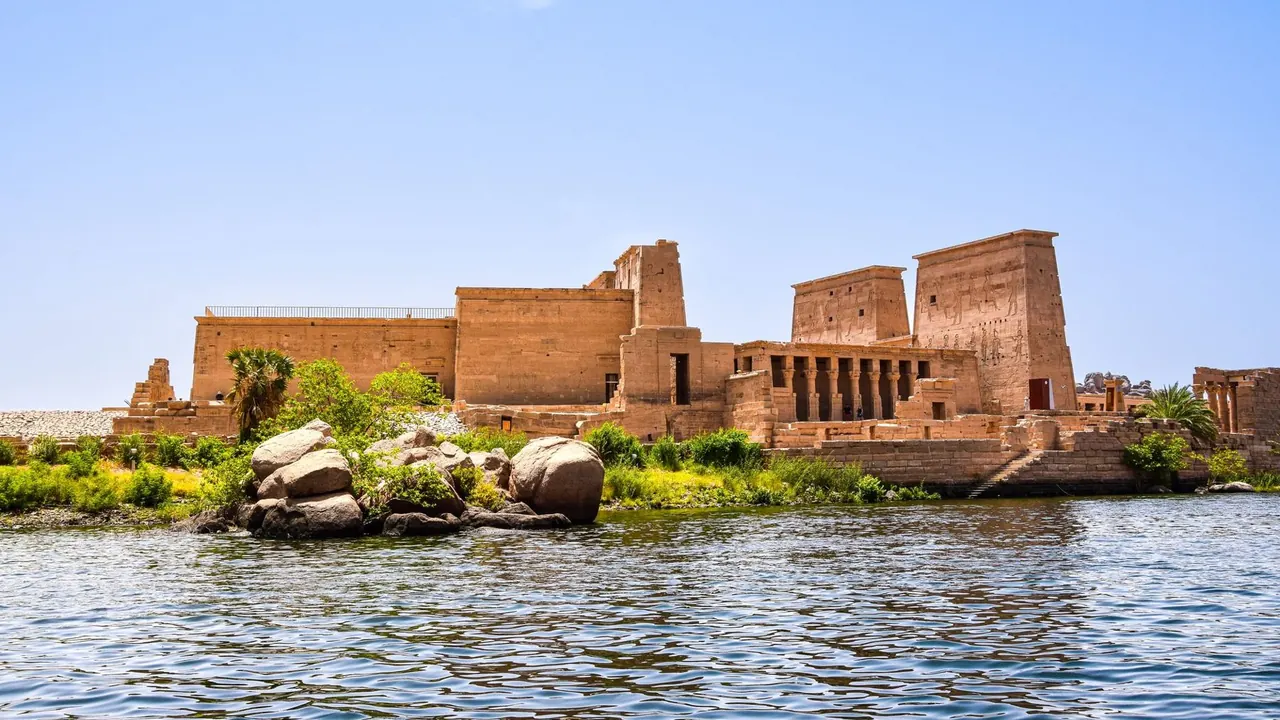
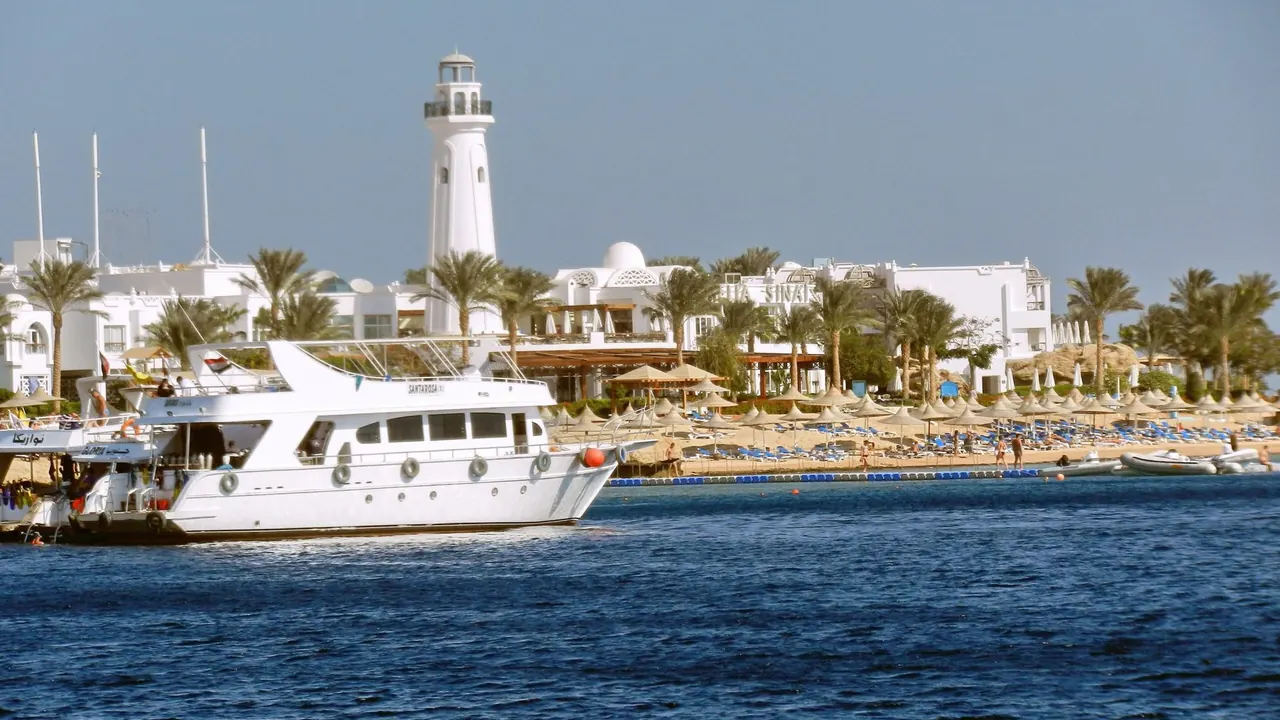
Photos: Aswan by AXP Photography, Pexels License; Sharm el-Sheikh by Tanya Dedyukhina, CC BY 3.0, cropped.
Aswan or Sharm el-Sheikh?
Our verdict in twelve categories, each scored against the same fixed benchmark cities, and the climate month by month, so you can choose for your trip.
Choose Aswan for
- culture and sights
- day trips
- getting around
Aswan suits travellers who want ancient Egypt at an unhurried pace. Philae, Elephantine, the cliff tombs and the long day north to Kom Ombo and Edfu fill several days. Between the sights you sail among granite islands below the dunes, and in the evening you sit with tea by the river. It is cheaper and far richer in history, but there is no sea, the nights are quiet and the town does little for small children.
Choose Sharm el-Sheikh for
- beaches
- nature and the outdoors
- nightlife
Pick Sharm el-Sheikh for a week built around warm water. The reef starts a few steps from the hotel jetty, Ras Mohammed is one of the world's great dive sites, and the big resorts give families pools, kids' clubs and calm lagoons. It also has livelier evenings in Naama Bay. In return you give up nearly all history, and the resort strip is spread out enough that most people stay put.
Scoreboard
Twelve categories on one fixed scale from 0 to 100. The shaded stretch is the gap between the two.
Your match
Pick a travel style or drag the sliders, and both match scores follow your weighting.
Wins on culture and sights and day trips with your weighting.
Wins on beaches and nature and the outdoors with your weighting.
What matters to you?
Category by category
What the scores mean for a trip.
Beaches & swimming
This is the widest gap between the two. Aswan's only swimming is in the Nile, from sandbanks below the west-bank dunes, and you need to take care with the current and the boats. Most visitors use a hotel pool.
Sharm el-Sheikh is built around the sea. Naama Bay has proper sand, and at Sharks Bay, Ras Um Sid and Nabq jetties lead out over the reef to deep water. The beaches are mostly hotel-owned and partly man-made, and you will want reef shoes.
Food & drink
Neither is a place to travel for food, but the best meals differ. In Aswan they are Nubian: clay-pot stews, Nile fish and hibiscus drinks on a riverside terrace or in a village home.
In Sharm most eating happens at the hotel buffet or in the tourist restaurants of Naama Bay. The more local meals are grilled fish and koshari in the Old Market, or a Bedouin dinner in the desert. Alcohol is hard to find outside hotels in both.
Culture & sights
Aswan has a few days of serious sightseeing. You take a boat to the Temple of Isis on Philae, then see the Temple of Khnum and the Nilometer on Elephantine, the Nubian Museum and the rock tombs below Qubbet el-Hawa. Most of it involves a boat ride.
Sharm el-Sheikh is a modern resort. Its sights come down to the Al Sahaba Mosque and the painted Heavenly Cathedral in the Old Market, an hour's visit at most.
Nightlife
In Aswan an evening means a walk on the Corniche, shisha in a riverside café or a drink on a hotel terrace at dusk, and there are no clubs. Sharm has more going on. Naama Bay's promenade of bars and big late clubs plus DJ nights on the beaches give you a few nights of dancing. It is a scene aimed at tourists and goes quiet outside the busy seasons.
Nature & outdoors
Aswan's nature is above the water: the granite boulders of the First Cataract, palms, golden dunes running down to the Nile, and herons and kingfishers seen from a felucca. Kitchener's Island adds a shady garden.
Sharm's best scenery is underwater, and it is world class. Ras Mohammed's reef walls, the Thistlegorm wreck and the Tiran Strait reefs draw divers from everywhere. On land, the red mountains of South Sinai are good for jeep and camel trips.
Day trips
Aswan has the stronger day out. Kom Ombo and Edfu, with stops at Daraw's camel market or Gebel el-Silsila, make a full and rewarding day along the Nile, and Kalabsha is a short boat ride away. Abu Simbel is a bigger expedition that starts before dawn.
From Sharm the options are fewer: an easy day in laid-back Dahab, or the long trip to St Catherine's Monastery, often paired with a night climb of Mount Sinai.
Good for families
Sharm el-Sheikh is the easier choice with children. Its large resorts have kids' clubs, family pools and water slides, the shallow lagoons suit beginner snorkellers, and glass-bottom boats suit those who stay dry. Picking the right hotel matters more than the town around it.
Aswan has nothing designed for children. Even so, feluccas, a camel ride up the dunes and a Nubian village with pet crocodiles can win over school-age children. Heat, pushy sellers and sights that are mostly ruins make it harder with toddlers.
Getting around
Aswan's centre is compact, with the Corniche and the souk street side by side, so you can walk it in the cooler hours. Cheap public ferries go to Elephantine and the west bank, and you hire a boat or taxi for the rest.
Sharm stretches about 30km along the coast, and only Naama Bay is pleasant on foot. Getting about means hotel shuttles, negotiated taxis or tours with pick-up.
Shopping & style
Both offer souvenir shopping with hard bargaining rather than fashion, but Aswan's has more local character. Its souk street sells hibiscus, dates and henna to residents as well as visitors, and the west-bank villages sell Nubian baskets, beadwork and pottery. Sharm's Old Market and Naama promenade lean on perfume oils, alabaster and galabiyas, and a few malls carry beachwear and familiar brands.
Affordability
Aswan is the cheaper of the two. Local meals, public ferries and Nubian guesthouses cost very little, and even Nile-view hotels are modest. The costs come from site entry fees and chartered boats.
Sharm is good value mainly inside an all-inclusive resort. Once you step out, taxis, Naama Bay restaurants, diving and excursions are priced for tourists.
Live music & performing arts
Neither has theatre or a concert programme, so the difference is in what you see. Aswan has real Nubian music, with drums, the tambour lyre and call-and-response singing at village evenings or weddings, plus the sound-and-light show at Philae. Sharm offers staged entertainment: belly dancing, tanoura dancers and hotel shows.
Wellness & relaxation
Sharm has the edge for an easy switch-off. Almost every large resort has a spa with a hammam-style bath and steam rooms, and the days are built around pool and sea.
Aswan's calm is of an older kind. It has been a winter retreat since the nineteenth century, with long felucca afternoons, quiet west-bank guesthouses and the hot-sand cure of the Nubian villages, though touts on the Corniche can spoil the calm.
When should you go?
Pick your month. The climate figures are measured averages, not a forecast.
Aswan in July
Sharm el-Sheikh in July
Daytime high, °C
Rainfall in the month, mm
Where the figures come from
Sharm el-Sheikh has no weather station within reach, so its figures come from a gridded climate model rather than a measured record, and read a broad area rather than the city itself.
Temperature and rainfall are climate normals, averaged over the years shown. Aswan: 1991-2020 normals, Asswan (18 km from centre). Sharm el-Sheikh: 2001-2020 normals, NASA POWER reanalysis grid, no weather station within 90 km.
Both are desert places where rain hardly ever falls, so the question is heat. Aswan is at its best from December to February, when days around 25°C make walking the souk and climbing to the tombs comfortable. November and March are clearly warmer, fine for sightseeing in the mornings and late afternoons, and from May to September the town sits at 40°C or more, too hot for anything beyond early morning and evening. The sun shines almost every day of the year.
Sharm is a few degrees cooler in winter, around 21°C in January. Breezy afternoons can feel cool on the sand, though the sea never drops below a swimmable 23°C. March to April and October to November give the easiest mix of warm air and warm water. Midsummer is hot on land, but the sea peaks at 29°C in August, so most of the day is spent in the water.
Which traveller are you?
On a beach and sun trip, Sharm el-Sheikh is the only real choice. It has clear, calm sea, sandy bays like Naama and snorkelling straight off resort jetties. Aswan has a riverside sandbank and a hotel pool at best, with the Red Sea hours away.
For a culture and arts trip, Aswan wins easily. Philae, the Nubian Museum, the Tombs of the Nobles and Elephantine's ruins sit within reach of town, and Edfu and Kom Ombo make a day out. From Sharm, Egypt's heritage means long excursions.
On a family trip with children, Sharm is the easier week. Resorts have kids' clubs, slides and shallow lagoons for first snorkels. Aswan's feluccas and camel rides charm school-age children, but the ruins, touts and broken pavements are harder going for small ones.
Before you go
| Measure | Aswan | Sharm el-Sheikh |
|---|---|---|
| Official language | Arabic | Arabic |
| Currency | Egyptian Pound (EGP) | Egyptian Pound (EGP) |
| Sockets | CF220 V, 50 Hz | CF220 V, 50 Hz |
| Driving side | Right | Right |
| Time zone | UTC+2, UTC+3 in summer | UTC+2, UTC+3 in summer |
| Emergency number | Police 122, ambulance 123, fire 180 | Police 122, ambulance 123, fire 180 |
| Elevation | 99 m | 1 m |
| Main airport | Aswan International Airport (ASW)16 km from centre2 non-stop destinations | Sharm El Sheikh International Airport (SSH)16 km from centre112 non-stop destinations |
| Public holidays this year | 15 days | 15 days |
By the numbers
| Measure | Aswan | Sharm el-Sheikh |
|---|---|---|
| City population | 401,890 | 73,000 |
| People per km² | 1,072 | - |
| Museums within 10 km | 3 | 1 |
| UNESCO World Heritage sites within 50 km | 1 | 0 |
| Swim season, months above 21 °C | - | 12 months |
Where else could you go?
Every comparison below shares a destination with this one, so you can follow Aswan or Sharm el-Sheikh somewhere new.