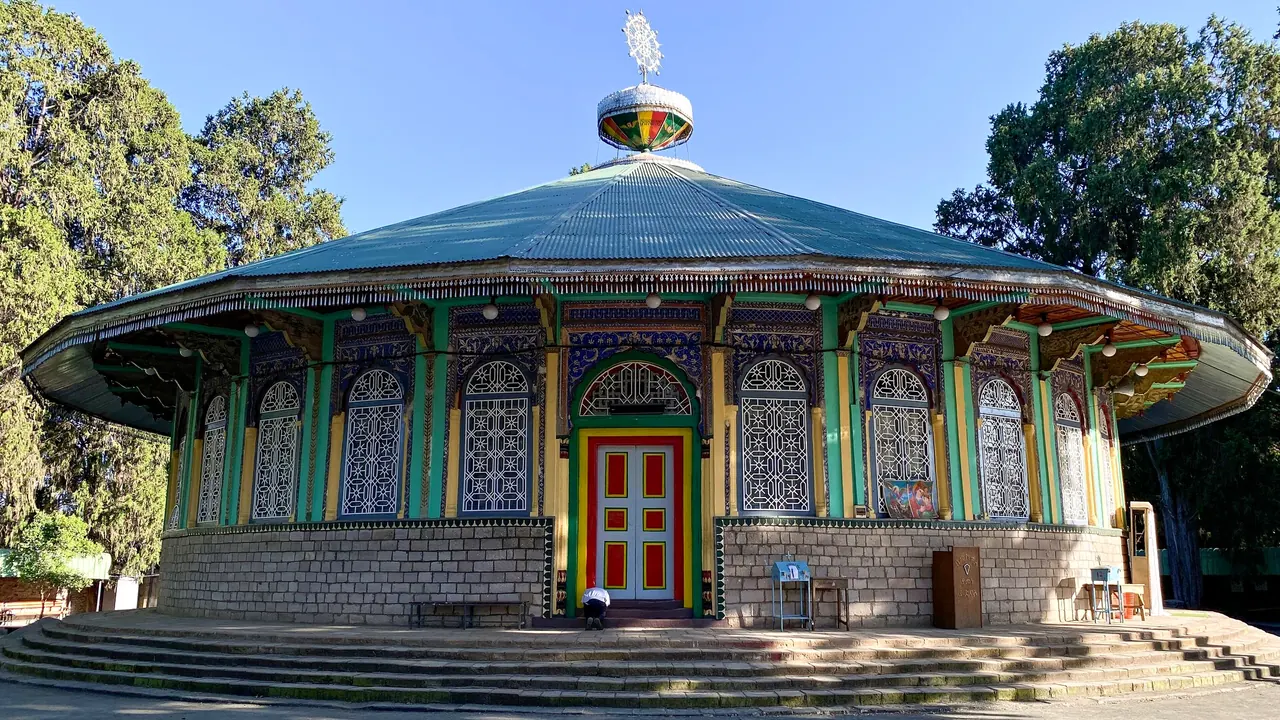
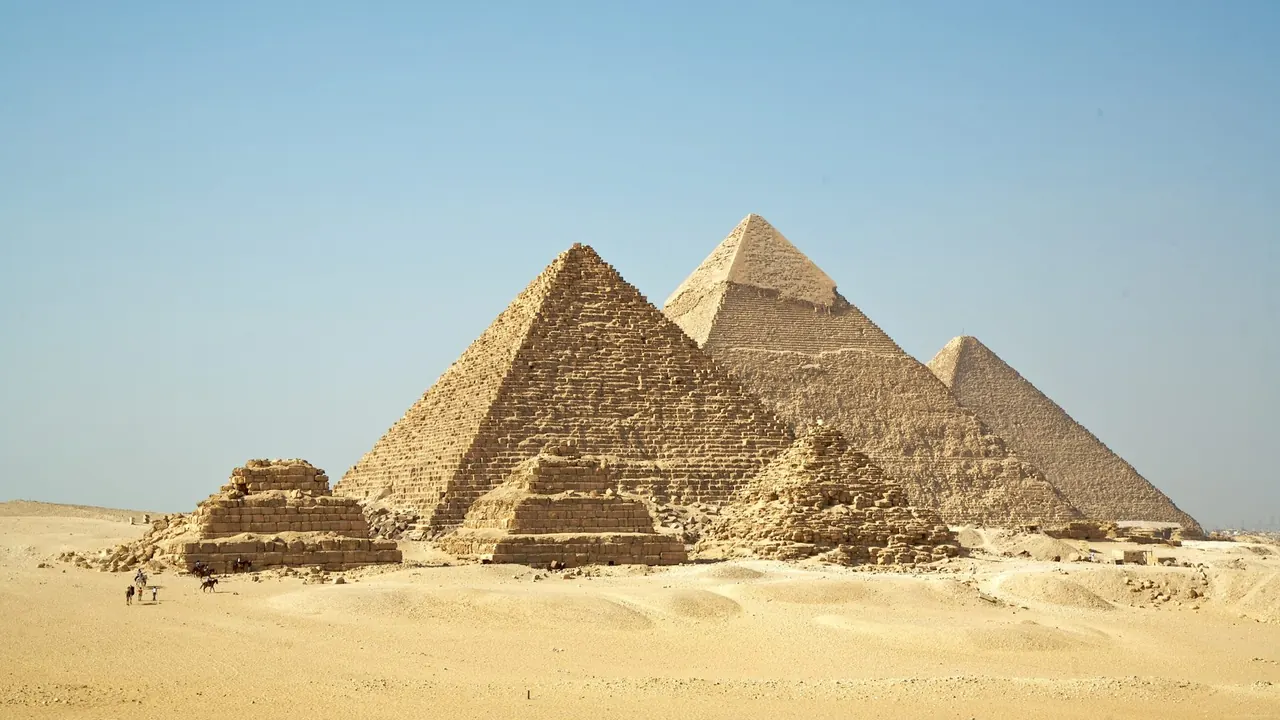
Photos: Addis Ababa by ProtoplasmaKid, CC BY 4.0, cropped; Cairo by Ricardo Liberato, CC BY-SA 2.0, cropped.
Addis Ababa or Cairo?
Our verdict in twelve categories, each scored against the same fixed benchmark cities, and the climate month by month, so you can choose for your trip.
Choose Addis Ababa for
- nature and the outdoors
- wellness
- food and drink
Addis Ababa suits a traveller more interested in coffee, music and highland country than in monuments. The mild climate, the trails of the Entoto hills and the gorges to the north, and evenings in azmari houses make it a good few days on a wider Ethiopian journey. When you need a break from the traffic, it is also the easier of the two places to find a quiet hotel garden or a hot spring.
Choose Cairo for
- culture and sights
- day trips
- prices
If history is the reason for the trip, go to Cairo. Addis has nothing to match the pyramids, the great antiquities museums or the medieval streets of Islamic Cairo. Day trips to Saqqara and Dahshur add even more, and your daily spending will be lower. In return you get heat, noise and traffic, so plan around the cooler months.
Scoreboard
Twelve categories on one fixed scale from 0 to 100. The shaded stretch is the gap between the two.
Your match
Pick a travel style or drag the sliders, and both match scores follow your weighting.
Wins on nature and the outdoors and wellness with your weighting.
Wins on culture and sights and day trips with your weighting.
What matters to you?
Category by category
What the scores mean for a trip.
Beaches & swimming
Neither city is a beach destination, and in both of them swimming in town means a hotel pool. The difference is the nearest water. From Addis Ababa it is the crater lakes at Bishoftu, about an hour away, which suit a lakeside weekend rather than a swim. Cairo can be paired with the warm, calm Red Sea at Ain Sokhna, about 130km east, or with a few days further down that coast.
Food & drink
Both cities eat well and cheaply, in quite different ways. In Addis Ababa you share injera by hand from one platter, with doro wat, tibs and kitfo, and fully vegan spreads on fasting days. Meals end with the coffee ceremony, in the country where coffee comes from, and tej honey wine and local lager are part of eating out.
Cairo is more of a street-food city: ful and taameya for breakfast, koshari for lunch, feteer and pressed juices in between. The drink that goes with it is tea or Turkish coffee in the ahwa, not alcohol. Beyond its own cooking each city has only a thin extra layer, Italian dishes in Addis and some international restaurants in Zamalek.
Culture & sights
The gap here is wide. Addis Ababa was only founded in the 1880s. Its best sights are Lucy at the National Museum, the Ethnological Museum in Haile Selassie's former palace, the imperial cathedrals and Menelik's palace compound, and two or three days cover them.
Cairo holds millennia of history in one city. It has the pyramids and Sphinx at Giza, Tutankhamun's treasures at the Grand Egyptian Museum and the royal mummies at Fustat. Then there are the minarets, madrasas and Citadel of Islamic Cairo, and Coptic Cairo besides. Many days still leave things unseen.
Nightlife
A night out in Addis Ababa is built around a drink and music, while Cairo's is built around tea. In Addis the lounges, rooftop bars and few clubs of Bole fill up late on Fridays and Saturdays, with Ethiopian pop and Afrobeats. Kazanchis and Piazza have rougher local bars, and weeknights are quiet.
Cairo stays up later, and far more of the city joins in. Families walk the Nile corniche and Qasr el-Nil bridge, and the ahwas of downtown and Islamic Cairo stay full of shisha and backgammon past midnight, most of all during Ramadan. Drinking is a small scene in Zamalek, the big hotels and a few party boats on the river, and it costs well above the rest of the city.
Nature & outdoors
Addis Ababa has better outdoors close at hand. The Entoto hills rise straight from its northern edge, with trails and wide views. Menagesha Suba keeps old juniper forest and colobus monkeys, and gelada monkeys graze above the Blue Nile gorge near Debre Libanos, all in a mild highland climate.
Cairo is desert and river. In town, the green is Al-Azhar Park and the fresh air is a felucca at sunset. Wadi Degla has dry canyons, and the lakes and dunes of the Fayoum are two hours away, best visited outside the summer heat.
Day trips
Cairo has far more within a day. Saqqara, Dahshur and the ruins of Memphis are less than an hour south. The ancient monasteries of Wadi Natrun lie on the Alexandria road, and Alexandria itself is a long but doable day.
From Addis Ababa there are fewer options and the roads are slower. You can reach the monastery of Debre Libanos two hours north, the Tiya stelae and the rock-hewn church of Adadi Mariam to the south, and the lakes at Bishoftu. Most people hire a driver in either city.
Good for families
Neither is easy with children, but Cairo gives them more to remember: the pyramids, a camel ride at the edge of the desert, and the mummies and gold in the museums. Addis Ababa has the lions and gardens of the palace park and room to run in the Entoto hills. The altitude tires small children for the first days, though, and the food needs some care.
Both cities have warm, welcoming people and hard streets, with heavy traffic and broken pavements. In Cairo there is also the summer heat, so families do best to visit between November and March.
Getting around
Both cities are hard to get around, and most visitors end up using ride-hailing apps or a hired driver and sitting in heavy traffic. Cairo's metro is the more useful of the two rail systems, linking Tahrir, Coptic Cairo and Heliopolis. Addis Ababa's light rail misses most of the sights.
Cairo has a few good stretches on foot, along Al-Muizz Street, under Zamalek's trees or across the downtown grid, and river taxis cross the Nile. In Addis Ababa, the hills and the distances between sights mean walking from one to the next is rarely practical.
Shopping & style
Cairo is the better city for shopping. Khan el-Khalili and the lanes around it sell brass lamps, inlaid boxes, silver and spices, and real craftsmen work nearby on the Street of the Tentmakers. Zamalek adds contemporary Egyptian design and cotton linens.
Addis Ababa's Merkato is a huge market that is more fascinating to wander than to buy in. What you take home is quite specific: woven cotton shawls from Shiro Meda, Orthodox crosses and roasted coffee.
Affordability
Both are cheap for everyday local life, but Cairo also stays cheap when you want comfort. Its mid-range hotels downtown and in Zamalek are a bargain. Addis Ababa has few hotels of international standard and they charge accordingly, as do the restaurants in Bole.
The extra costs come in different places. In Cairo they are the higher entry fees for foreigners at the big sites, guided tours and constant small tips. In Addis, hiring a driver for day trips is what adds up.
Live music & performing arts
Addis Ababa's music happens in small rooms late at night, and Cairo's happens on a formal stage. In the azmari houses of Kazanchis and Piazza, a singer with the one-stringed masinko makes up teasing verses about the audience, foreigners included. A handful of clubs play Ethio-jazz, the city's own sound from the 1960s and 70s, and cultural restaurants put on eskista dancing over dinner.
Cairo has the classical season that Addis lacks, with a symphony orchestra, ballet and Arabic music ensembles at the Cairo Opera House on Gezira Island. Its most memorable show is the whirling Sufi tanoura in the medieval Wikala of al-Ghouri. Plays are mostly in Amharic or Arabic, so in either city a visitor gets the most from the music and dance.
Wellness & relaxation
Neither city is built for rest, but Addis Ababa makes it easier to find. The highland air is mild rather than hot, and quiet places are close by: the eucalyptus slopes of Entoto just above town, and the lakeside resorts of Bishoftu about an hour's drive away. The mineral baths at Filwoha are plain and practical, closer to a visit to a local bathhouse than a spa, but they still give you a soak in hot spring water.
Cairo gives you less relief within the city. Traffic and dust follow you almost everywhere, and the bathhouse tradition has not survived in a form visitors can use. Calm comes in short spells: a treatment at one of the big Nile-side hotels, a felucca sail at dusk or the shaded courtyard of a historic house. If rest matters on a Cairo trip, plan it as a separate stop at the end, on the Red Sea coast or in a desert oasis.
When should you go?
Pick your month. The climate figures are measured averages, not a forecast.
Addis Ababa in July
Cairo in July
Daytime high, °C
Rainfall in the month, mm
Temperature and rainfall are climate normals, averaged over the years shown. Addis Ababa: 1991-2020 normals, Addis Ababa (7.8 km from centre). Cairo: 1991-2020 normals, Helwan (21.9 km from centre).
Addis Ababa's altitude keeps it mild all year. Daytime highs stay between about 21°C and 26°C, so walking the streets is comfortable in any month. Rain is what changes. The long wet season runs from June to September and peaks at almost 300mm in August, with grey skies and muddy roads. October to February is dry and very sunny, and that is the best time to go.
Cairo works the other way round. It hardly rains at all, but from May to September afternoons reach 36°C, and sightseeing at Giza or in the old city becomes hard work. October to April is the time for Cairo, with winter highs near 19°C that are ideal for walking. That means both cities are at their best from October to February.
Which traveller are you?
On a culture and arts trip, Cairo is the clear choice. The pyramids, Tutankhamun's treasures, the royal mummies and the mosques of Islamic Cairo fill many days, and the Opera House and tanoura dance fill the evenings. Two or three days cover Addis Ababa's museums.
For an outdoors trip, Addis Ababa has more to offer. Trails start in the eucalyptus of the Entoto hills at the city's edge, Menagesha Suba has old forest and colobus monkeys, and the Blue Nile gorge is a drive away. In Cairo, summer heat rules out most outdoor plans.
On a tight budget, your money goes further in Cairo. Street food, the metro and mid-range hotels downtown or in Zamalek cost very little. Local life in Addis Ababa is cheap too, but decent hotels are scarce and priced for business travellers.
Before you go
| Measure | Addis Ababa | Cairo |
|---|---|---|
| Official language | Amharic | Arabic |
| Currency | Ethiopian Birr (ETB) | Egyptian Pound (EGP) |
| Sockets | CEFJL220 V, 50 Hz | CF220 V, 50 Hz |
| Driving side | Right | Right |
| Time zone | UTC+3 | UTC+2, UTC+3 in summer |
| Emergency number | 911 | Police 122, ambulance 123, fire 180 |
| Elevation | 2,355 m | 23 m |
| Main airport | Addis Ababa Bole International Airport (ADD)8 km from centre137 non-stop destinations | Cairo International Airport (CAI)17 km from centre127 non-stop destinations |
| Public holidays this year | 10 days | 15 days |
By the numbers
| Measure | Addis Ababa | Cairo |
|---|---|---|
| City population | 5,704,000 | 9,801,536 |
| People per km² | 10,824 | 18,564 |
| Museums within 10 km | 7 | 48 |
| UNESCO World Heritage sites within 50 km | 1 | 2 |
Where else could you go?
Every comparison below shares a destination with this one, so you can follow Addis Ababa or Cairo somewhere new.