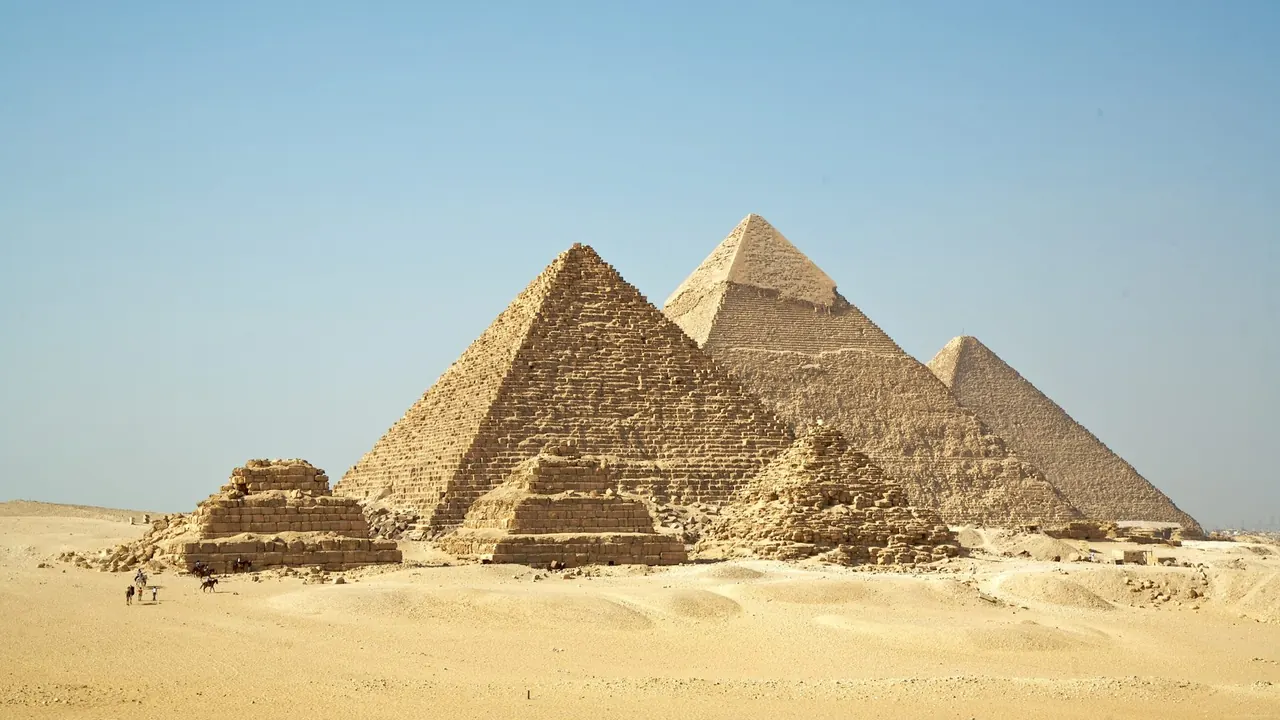
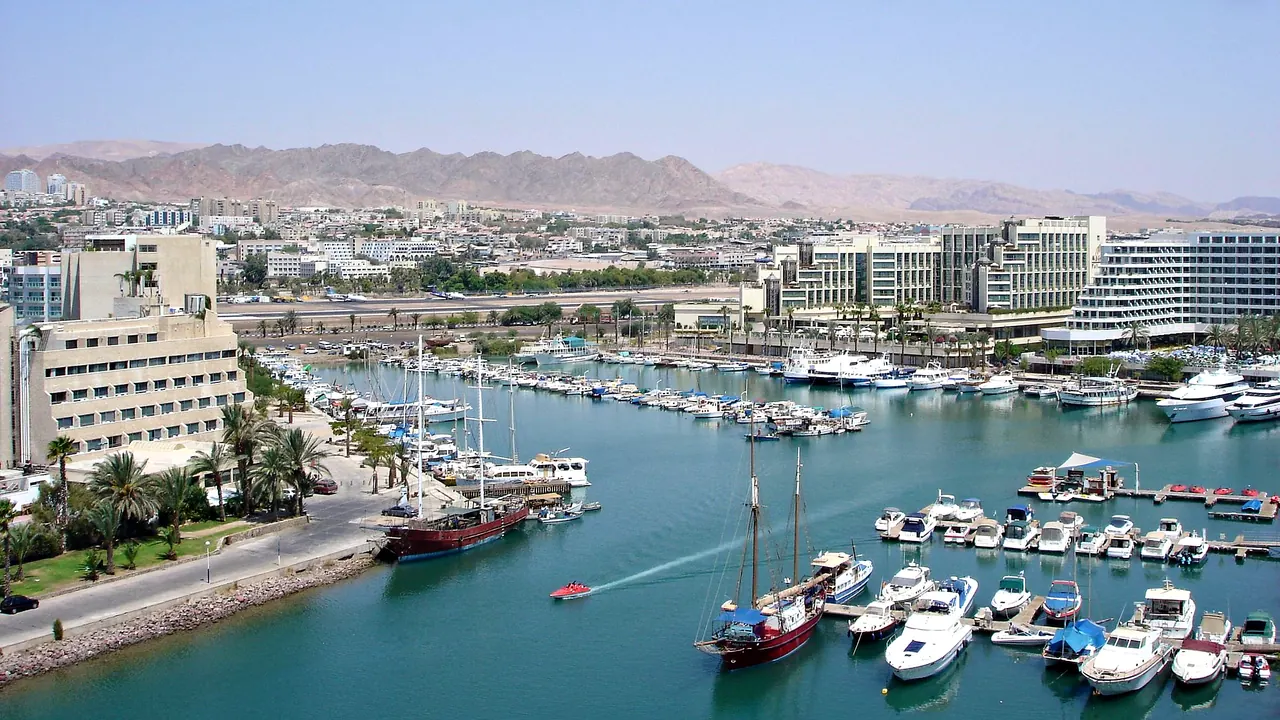
Photos: Cairo by Ricardo Liberato, CC BY-SA 2.0, cropped; Eilat by Tango7000, Public domain.
Cairo or Eilat?
Our verdict in twelve categories, each scored against the same fixed benchmark cities, and the climate month by month, so you can choose for your trip.
Choose Cairo for
- culture and sights
- prices
- live music and the arts
Cairo is for a trip built around history. The pyramids and the Sphinx, the great antiquities museums and the medieval lanes of Islamic Cairo add up to days of sightseeing that few places can match, and the cost of eating, sleeping and moving about stays remarkably low. It suits travellers who can take traffic, noise and persistent touts in their stride, and who are happy to make the beach a separate leg on the Red Sea coast.
Choose Eilat for
- beaches
- nature and the outdoors
- families
Pick Eilat when the sea is the point. Calm, clear water with reefs you can reach straight off a jetty makes it a winter sun and snorkelling resort, and an easy one for families, with red desert canyons behind the town. Expect to pay well for it, and to find almost no history or arts beyond the long day out to Petra.
Scoreboard
Twelve categories on one fixed scale from 0 to 100. The shaded stretch is the gap between the two.
Your match
Pick a travel style or drag the sliders, and both match scores follow your weighting.
Wins on culture and sights and prices with your weighting.
Wins on beaches and nature and the outdoors with your weighting.
What matters to you?
Category by category
What the scores mean for a trip.
Beaches & swimming
Cairo has no beach to speak of. The Nile is not for swimming, so in town you swim in a hotel or club pool, and the nearest sea is at Ain Sokhna, about 130km away, where resort compounds line the shore.
In Eilat the shore is the reason to come. North Beach is the sociable strip by the hotels, and Coral Beach and the reserve beaches to the south put a living reef a few strokes from the sand. The sand is coarse and the coastline is short, but for swimming and snorkelling there is no contest.
Food & drink
Cairo is much the better place to eat if you like food with a strong local character. Koshari shops, ful and taameya carts at breakfast, flaky feteer, pigeon stuffed with freekeh and the ahwa coffeehouses give every day a rhythm of its own, though fine dining and wine are thin.
Eilat eats like a resort, with hotel buffets and promenade fish, steak and sushi aimed at visitors. Its best meals are the hummus counters and shawarma stands in the older neighbourhoods, and a food lover will run out of new places within days.
Culture & sights
This is where the two cities are furthest apart. Cairo holds the pyramids and the Sphinx, two great museums of pharaonic treasures, the royal mummies at Fustat, the minarets and madrasas of Al-Muizz Street, Saladin's Citadel and the churches of Coptic Cairo.
Eilat is a young port and resort town of hotel towers and malls, with almost nothing historic to visit. Its nearest heritage is the ancient copper workings at Timna or across the border in Jordan.
Nightlife
The two are broadly level, but the evenings could hardly be more different. Cairo stays out late over tea, not alcohol: families stroll the corniche and Qasr el-Nil bridge, and the ahwas fill with shisha and backgammon past midnight. Drinking is limited to Zamalek's bars and rooftops, hotel bars and a few party boats.
Eilat's nights are about beer and cocktails by the water, with bars around the lagoon, beach parties and a few clubs playing mainstream pop and dance. It peaks on summer weekends and school breaks with young Israeli crowds and can be quiet midweek out of season.
Nature & outdoors
Eilat has far more of the outdoors on its doorstep. Coral reefs run along the coast road with diving centres and night dives, and the Dolphin Reef has a resident pod. Inland are the sandstone canyons of the Eilat Mountains and Timna's rock formations, and in spring and autumn the bird migration passes overhead.
Cairo's green space is mostly Al-Azhar Park and a sunset felucca on the Nile, with the dry canyons of Wadi Degla on the eastern edge. Real landscape means a two-hour drive to the lakes and dunes of the Fayoum.
Day trips
Cairo has far more to choose from. Saqqara's Step Pyramid, the Bent and Red Pyramids at Dahshur and the ruins of Memphis are all under an hour or so south, and the Wadi Natrun monasteries, the Fayoum and a long day to Alexandria add variety. Most of these trips need a driver or a tour.
Eilat's range is narrower but includes one extraordinary outing: Petra, across the Jordanian border, a long and tiring day that most visitors still count as a highlight. Aqaba and Timna are the shorter options, and beyond them the Negev is mostly empty.
Good for families
Eilat is the easier place for children. The sea is calm without surf, hotels have pools and kids' clubs, and Coral World, glass-bottom boats and snorkelling off the jetties make the reef something even small children can enjoy.
Cairo gives children the pyramids, a camel ride and Tutankhamun's gold, and Egyptians are openly warm towards families. Between those sights, though, the traffic, broken pavements, touts and heat make it tiring, and it works best with a private driver and a winter visit.
Getting around
Eilat is simply less work. The lagoon hotels, North Beach, the promenade and the malls sit within a short walk of each other, and a taxi covers the few kilometres south to the reef beaches. You only need a car for Timna or the mountain trails.
Cairo is a huge city where crossing town can take far longer than the distance suggests. The metro helps for downtown, Coptic Cairo and Heliopolis but not the pyramids, so most visitors rely on ride-hailing or a driver and keep walking to short stretches such as Al-Muizz Street or leafy Zamalek.
Shopping & style
Cairo has the more rewarding shopping. Khan el-Khalili, trading since the fourteenth century, is the place to haggle for brass lamps, inlaid boxes, spices and cotton, and close by, the Street of the Tentmakers and the coppersmiths' alley still make things by hand. For something contemporary, the small boutiques of Zamalek sell Egyptian design, jewellery and cotton linens.
Eilat's shoppers are mostly Israelis drawn by its VAT-free malls of chain fashion, electronics and cosmetics. A visitor from abroad will find little there that isn't sold at home. The one local souvenir is jewellery set with blue-green Eilat stone, and the malls make a cool escape on a hot afternoon.
Affordability
The gap is wide, and it changes how you plan. Everyday life in Cairo costs so little that most of the budget goes on the sights. Foreigners pay far more than locals at the pyramids and the museums, and guided tours, a drink or a Nile-view room are the real extras. Small tips for every service add up, and the touts at Giza are best met with a polite, firm no.
In Eilat, the dates you choose decide the bill. Rooms climb during the Jewish festivals, school vacations and summer weekends, then ease midweek in the quieter months. The way to save is to book one of those midweek stretches in a self-catering apartment or a simple guesthouse set back from the beachfront.
Live music & performing arts
Cairo has a real stage life. The Opera House on Gezira Island hosts the symphony orchestra, ballet and Arabic music ensembles, and the whirling tanoura in the medieval Wikala of al-Ghouri is a performance few visitors forget.
Eilat has its long-running jazz festival by the Red Sea and occasional concerts in the festival seasons. For the rest of the year it has hotel shows and musicians in the promenade bars, and no theatre or classical season.
Wellness & relaxation
Eilat is the place to rest. Hotel spas use Dead Sea minerals, resorts are built around pools and gardens, and long, warm winter days do the rest, provided you avoid the noisy festival and school vacation weeks.
Cairo's dust, traffic and noise rarely let up, and its old hammams are no longer places visitors can use. A Nile-side hotel spa or an evening felucca offers a pause, but rest usually means leaving the city for the coast or an oasis.
When should you go?
Pick your month. The climate figures are measured averages, not a forecast.
Cairo in July
Eilat in July
Daytime high, °C
Rainfall in the month, mm
Temperature and rainfall are climate normals, averaged over the years shown. Cairo: 1991-2020 normals, Helwan (21.9 km from centre). Eilat: 1991-2020 normals, Eilat (0.9 km from centre).
Both cities are desert places where rain hardly matters, so the calendar is really about heat. Cairo is at its most comfortable for walking from November to March, with winter afternoons around 19°C and spring and autumn pleasant enough for the pyramids and the old city. From May to September the days reach about 36°C and the sun is relentless, which makes long days of sightseeing hard work.
Eilat runs a few degrees hotter all year, and that suits its winter role: a December or January afternoon is beach weather, and the sea stays near 21°C even in the coolest months. Summer is fierce, with highs around 40°C and hiking only possible at dawn, although the sea warms to about 28°C. Late autumn and spring suit both cities, and the two pair well on one winter trip.
Which traveller are you?
On a culture and arts trip, Cairo is in a different league. The Giza plateau, the Grand Egyptian Museum, Islamic Cairo's mosques and madrasas and a tanoura night in a medieval hall could fill a week, while Eilat has almost no history in town.
For a beach and sun trip, Eilat wins easily. You can step from a jetty onto a coral reef, the water is calm and warm for most of the year, and there is winter sun. From Cairo, the nearest sea is a long drive away at a resort compound.
On a trip on a tight budget, Cairo makes the money last. Street food, local restaurants, the metro and mid-range hotels cost very little, whereas Eilat's hotels, restaurants and diving are expensive, and only partly eased by its VAT exemption.
Before you go
| Measure | Cairo | Eilat |
|---|---|---|
| Official language | Arabic | Hebrew |
| Currency | Egyptian Pound (EGP) | New Israeli Sheqel (ILS) |
| Sockets | CF220 V, 50 Hz | CHM230 V, 50 Hz |
| Driving side | Right | Right |
| Time zone | UTC+2, UTC+3 in summer | UTC+2, UTC+3 in summer |
| Emergency number | Police 122, ambulance 123, fire 180 | Police 100, fire 102 |
| Elevation | 23 m | 16 m |
| Main airport | Cairo International Airport (CAI)17 km from centre127 non-stop destinations | Ramon International Airport (ETM)20 km from centre2 non-stop destinations |
| Public holidays this year | 15 days | - |
By the numbers
| Measure | Cairo | Eilat |
|---|---|---|
| City population | 9,801,536 | 51,935 |
| People per km² | 18,564 | 612 |
| Museums within 10 km | 48 | 6 |
| UNESCO World Heritage sites within 50 km | 2 | 2 |
| Swim season, months above 21 °C | - | 12 months |
Where else could you go?
Every comparison below shares a destination with this one, so you can follow Cairo or Eilat somewhere new.