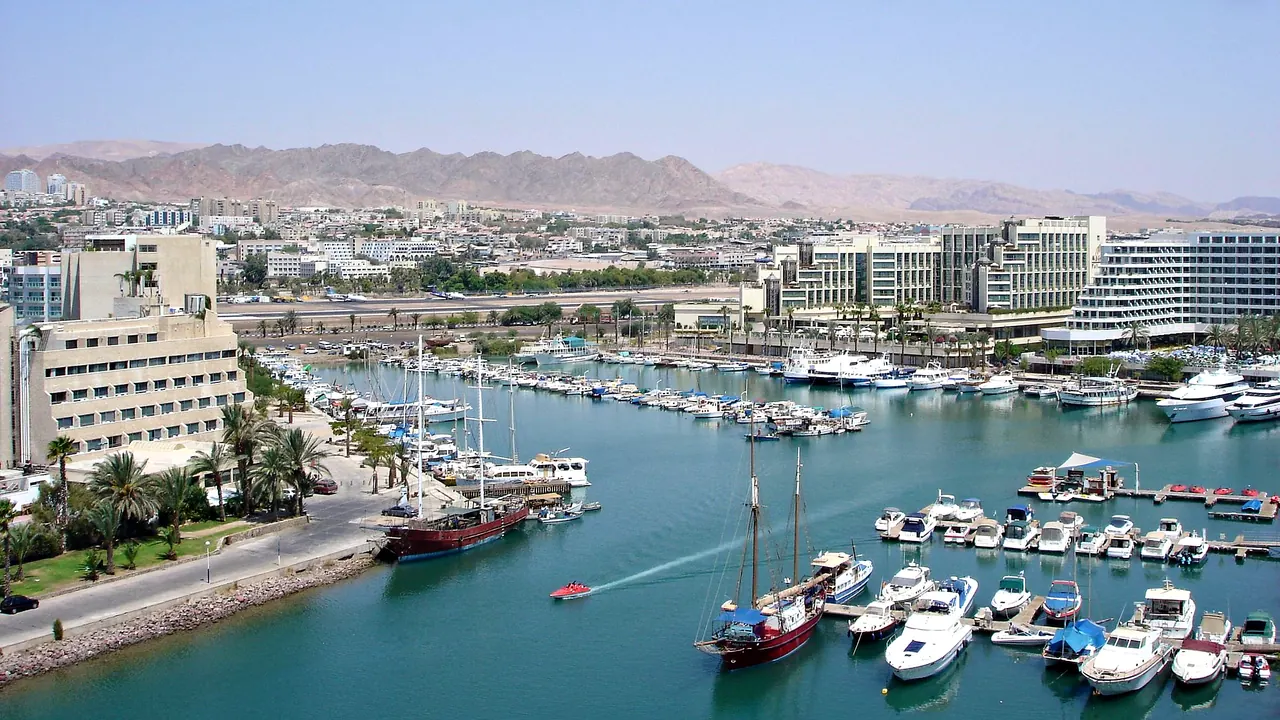
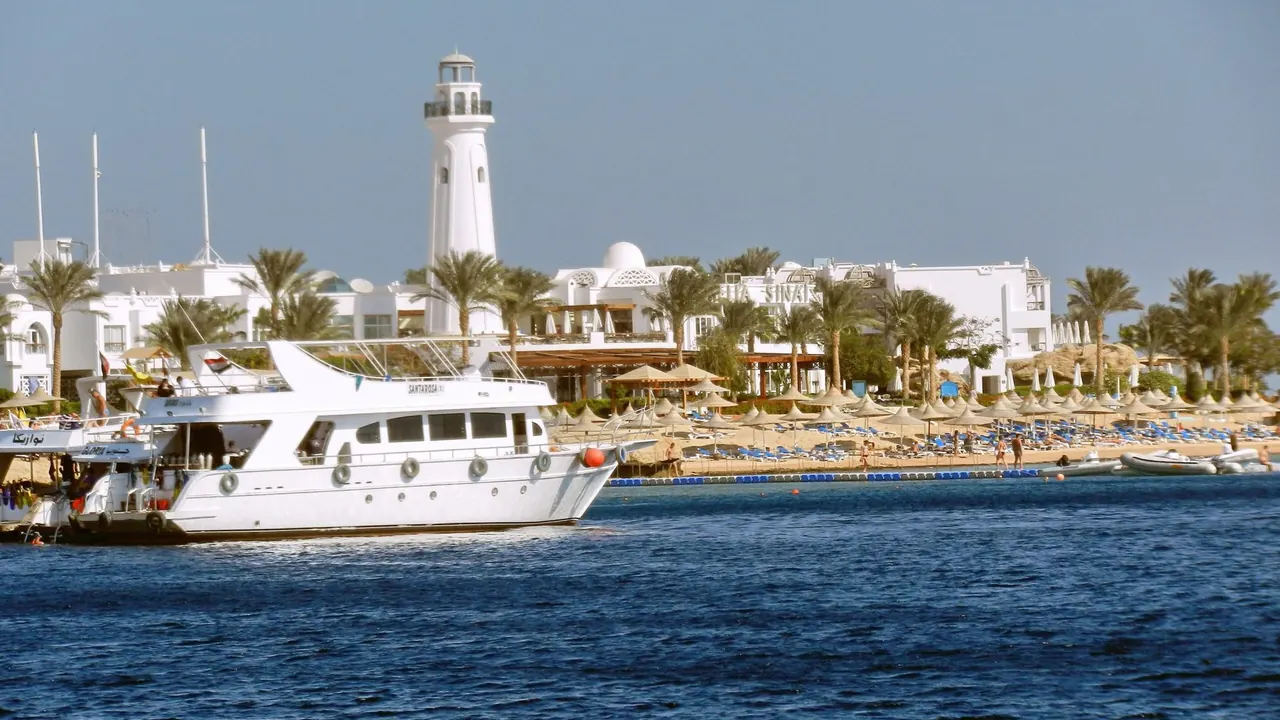
Photos: Eilat by Tango7000, Public domain; Sharm el-Sheikh by Tanya Dedyukhina, CC BY 3.0, cropped.
Eilat or Sharm el-Sheikh?
Our verdict in twelve categories, each scored against the same fixed benchmark cities, and the climate month by month, so you can choose for your trip.
Choose Eilat for
- getting around
- shopping
- day trips
Eilat suits travellers who want a compact beach town with more to do away from the sand. You can walk between the lagoon, the promenade and the malls, shop VAT-free, eat simple Israeli food at hummus and falafel counters, and make the long but memorable day trip to Petra across the Jordanian border. Reef snorkelling pairs easily with desert walks in the Red Canyon and at Timna. It is an expensive place to stay, so it rewards those who can come midweek or outside the festival and school-break weeks.
Choose Sharm el-Sheikh for
- prices
- nature and the outdoors
- wellness
Sharm el-Sheikh is the better pick for a resort week where the sea is the whole point and the budget matters. Its reefs, from the jetties at Sharks Bay to Ras Mohammed and the Tiran Strait, rank among the world's great diving, and an all-inclusive stay costs far less than a comparable week in Eilat. Expect to spend most of your time at your hotel, because the resort strip is long and getting anywhere means taxis, shuttles or tours with pick-up.
Scoreboard
Twelve categories on one fixed scale from 0 to 100. The shaded stretch is the gap between the two.
Your match
Pick a travel style or drag the sliders, and both match scores follow your weighting.
Too close to call, level with your weighting
Wins on getting around and shopping with your weighting.
Wins on prices and nature and the outdoors with your weighting.
What matters to you?
Category by category
What the scores mean for a trip.
Beaches & swimming
For beaches, Sharm comes out ahead. Eilat has only a few kilometres of shore, hemmed in by the port, the border and the mountains. Its sand is coarse and gravelly, and the central stretch gets crowded at weekends and in school breaks. What it does offer is North Beach in town and the reserve beaches at Coral Beach, which anyone can use, hotel guest or not.
Sharm has far more coastline and a proper sandy bay at Naama. From Sharks Bay and Ras Um Sid up to Nabq you can snorkel the reef straight off a jetty, and the water is slightly warmer in winter. The catch is that most of this shore is hotel-owned and partly man-made, so the hotel you book decides where you swim. Pack reef shoes too.
Food & drink
Neither resort is a reason to travel for food, and in both a lot of meals are hotel buffets. Eilat comes out a little ahead. Hummus counters, grilled skewers, Red Sea fish and the shawarma and falafel in the older neighbourhoods give you honest Israeli meals, and you can get a drink easily. In Sharm, all-inclusive eating sets the tone. The reward is the grilled fish, koshari and taameya in the Old Market, but outside the hotels and tourist bars alcohol is hard to find.
Culture & sights
Both are modern resorts, and in both, history means a trip out of town. The difference is in what little there is. Eilat has essentially nothing in town, so for any history you head to the ancient copper workings at Timna or across the border. Sharm at least has the Al Sahaba Mosque, lit up at night, and the painted interior of the Heavenly Cathedral in the Old Market, both easy to see in an evening.
Nightlife
The two are broadly level, but the crowd is different. Eilat is a party town for young Israelis. On summer weekends and during school breaks, the promenade and the lagoon fill with pubs, beach parties and a few clubs that run past midnight, while midweek in the quiet months it goes flat.
Sharm's nightlife is built for foreign package visitors and centres on Naama Bay's bars, shisha lounges and large clubs. It is busiest in the European summer and over Christmas and Easter. In the Old Market people stay out late in cafés rather than bars, and many guests never leave the hotel lobby bar.
Nature & outdoors
Sharm comes out ahead, because its underwater world is on a different scale. Eilat's reef is close and easy to reach, with dive centres along the coast road and the dolphin pod at Dolphin Reef. On land, though, Eilat has the edge, with marked trails through the Red Canyon, Timna's sandstone formations and the spring and autumn bird migration.
From Sharm, the sheer reef walls and huge shoals of Ras Mohammed are about 30km away, and the Tiran Strait and Nabq reefs are a short boat ride from town. The Thistlegorm wreck lies further off in the Strait of Gubal. It is a long boat trip of several hours, or a stop on a liveaboard. Sharm's desert is about jeeps, quad bikes and Bedouin camps rather than marked hiking trails.
Day trips
Eilat has the better day out, because Petra is about two hours from the border crossing just north of town, and organised tours handle the formalities. Aqaba makes a shorter outing, and Timna adds copper mines and an Egyptian shrine.
From Sharm, the easy outing is laid-back Dahab, about an hour up the coast. The big one is St Catherine's Monastery below Mount Sinai, about three hours away, often combined with a night climb for the sunrise. Cairo, Luxor and Petra are sold as day tours, but they mean very long hours on the road.
Good for families
Both resorts work well for a beach week with children, with calm warm water and big hotels that have kids' clubs and family pools. Eilat has more to do outside the hotel: the Coral World underwater observatory, the Dolphin Reef and an ice rink in one of the malls, all reached through a centre you can walk.
In Sharm the hotel is the attraction, with water slides and shallow lagoons for first snorkelling lessons. Children will need water shoes on the reef flats, and every outing means a taxi. In both resorts, midsummer heat keeps small children indoors through the middle of the day.
Getting around
Eilat is much easier to get around. The lagoon hotels, North Beach, the promenade and the malls are all within a short walk of each other, and only the reef beaches a few kilometres south need a bus or taxi.
Sharm stretches about 30km from the Old Market to the Nabq hotels, and only Naama Bay is pleasant on foot. Getting around means shared minibuses on the main road, hotel shuttles or taxis with the fare agreed before you get in. Many visitors simply stay inside their resort.
Shopping & style
Eilat gives a shopper more, mainly because the whole town is a VAT-free zone and Israelis come partly for that. The big malls by the lagoon and the waterfront are a practical way to fill a hot afternoon or pick up brand-name goods, though a visitor from abroad will find little there that they couldn't buy at home. Its one local product is jewellery set with Eilat stone.
Sharm's shopping is mostly souvenirs from the Old Market and Naama Bay, where you bargain over gifts such as perfume oils and cotton galabiyas, and its few modern shopping centres are small by comparison. Neither resort has luxury streets, independent boutiques or design shops.
Affordability
This is where the two differ most. Eilat is expensive. Beach hotels charge high rates over the Jewish festivals and school vacations, and diving, tours and promenade dining cost more than at most European resorts. Midweek stays, self-catering and the VAT exemption soften the bill.
In Sharm, an all-inclusive hotel often costs less than a basic room on the Mediterranean, and Old Market food is cheap. Outside the hotel, costs creep up through negotiated taxi fares, Naama Bay restaurants, imported drinks and excursions, so you get the best value by staying in and going out little.
Live music & performing arts
Neither has a theatre, concert hall or classical season. Eilat has slightly more to offer, thanks to its long-running jazz festival by the Red Sea and concerts by Israeli performers during the festivals and the summer season. In Sharm, performance means dinner shows with belly dancing and whirling tanoura dancers, plus large evening spectacles staged for package tourists.
Wellness & relaxation
Neither resort has a bathing tradition of its own, and in both you unwind at the hotel spa and by the pool. Sharm does it better. Most large resorts have an Oriental bath with hammam-style scrub-and-foam treatments, massage is fairly priced, and the whole stay is built around having nothing to rush for.
Eilat's spas offer Dead Sea mineral treatments and steam rooms, and the winter sun is reliable. During festivals and school breaks, though, the families and young crowds make the town much less restful than a quiet resort in Sharm.
When should you go?
Pick your month. The climate figures are measured averages, not a forecast.
Eilat in July
Sharm el-Sheikh in July
Daytime high, °C
Rainfall in the month, mm
Where the figures come from
Sharm el-Sheikh has no weather station within reach, so its figures come from a gridded climate model rather than a measured record, and read a broad area rather than the city itself.
Temperature and rainfall are climate normals, averaged over the years shown. Eilat: 1991-2020 normals, Eilat (0.9 km from centre). Sharm el-Sheikh: 2001-2020 normals, NASA POWER reanalysis grid, no weather station within 90 km.
The two resorts have almost the same climate: next to no rain in any month, mild winters and fierce summers. From December to February, daytime highs in both are around 21°C to 23°C. That is comfortable for walking and for sunbathing out of the wind, and the sea is still fine for a swim. Sharm's water stays a little warmer through the winter, while Eilat's dips to about 21°C. Eilat also has long, reliable winter sunshine.
March and April are warm enough for a full beach day without the summer glare, though the sea is then at its coolest of the year. From June to September both are extremely hot, and Eilat is a degree or two hotter at up to 40°C, so keep walking, hiking and desert trips to the early morning and evening. October and November are the best balance. The air has eased back to beach warmth, and the sea has warmed through the summer and is at its best, with Sharm's at about 27°C.
Which traveller are you?
On a tight budget, Sharm el-Sheikh is the clear choice. An all-inclusive hotel there often costs less than a basic Mediterranean room, while Eilat's beach hotels, diving and promenade restaurants all cost well above typical European resort prices.
For an outdoors trip, Sharm el-Sheikh wins underwater, with the reef walls of Ras Mohammed, the Tiran Strait and the Thistlegorm wreck. Eilat is better for walkers, with marked canyon trails, Timna's sandstone formations and the spring and autumn bird migration.
On a shopping trip, Eilat gives you more to do. Its VAT-free malls carry fashion, electronics and cosmetics, and Eilat stone jewellery makes a real local souvenir. In Sharm's Old Market the shopping is mostly spices, papyrus and alabaster, with haggling and persistent sales patter.
Before you go
| Measure | Eilat | Sharm el-Sheikh |
|---|---|---|
| Official language | Hebrew | Arabic |
| Currency | New Israeli Sheqel (ILS) | Egyptian Pound (EGP) |
| Sockets | CHM230 V, 50 Hz | CF220 V, 50 Hz |
| Driving side | Right | Right |
| Time zone | UTC+2, UTC+3 in summer | UTC+2, UTC+3 in summer |
| Emergency number | Police 100, fire 102 | Police 122, ambulance 123, fire 180 |
| Elevation | 16 m | 1 m |
| Main airport | Ramon International Airport (ETM)20 km from centre2 non-stop destinations | Sharm El Sheikh International Airport (SSH)16 km from centre116 non-stop destinations |
| Public holidays this year | - | 15 days |
By the numbers
| Measure | Eilat | Sharm el-Sheikh |
|---|---|---|
| City population | 51,935 | 73,000 |
| People per km² | 612 | - |
| Museums within 10 km | 6 | 1 |
| UNESCO World Heritage sites within 50 km | 2 | 0 |
| Swim season, months above 21 °C | 12 months | 12 months |
Where else could you go?
Every comparison below shares a destination with this one, so you can follow Eilat or Sharm el-Sheikh somewhere new.
- Aqabavs Eilat
- Dahabvs Sharm el-Sheikh
- Hurghadavs Sharm el-Sheikh
- Petravs Eilat
- Dahabvs Eilat
- Aqabavs Sharm el-Sheikh