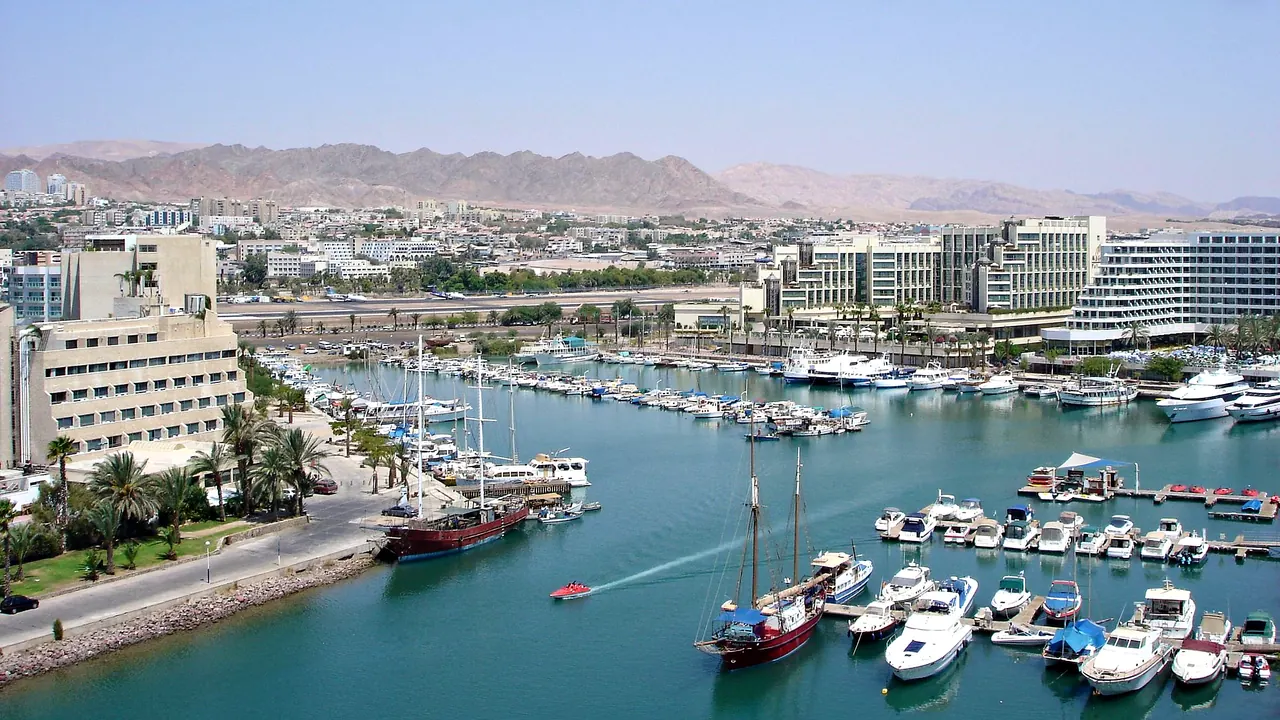
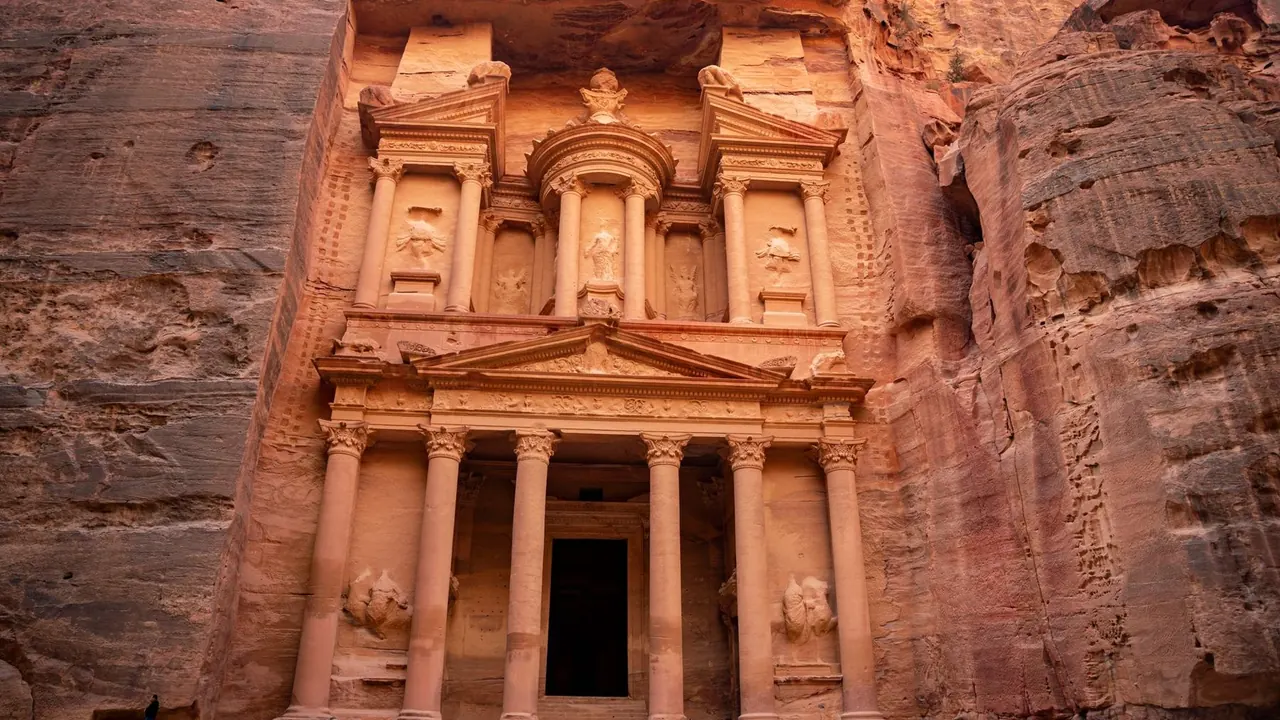
Photos: Eilat by Tango7000, Public domain; Petra by Yasir Gürbüz, Pexels License.
Eilat or Petra?
Our verdict in twelve categories, each scored against the same fixed benchmark cities, and the climate month by month, so you can choose for your trip.
Choose Eilat for
- beaches
- families
- nightlife
Eilat is the choice for a warm-weather resort stay: a calm, clear sea with coral a few steps off a jetty, big hotels with pools and kids' clubs, and evenings on the promenade. It suits families, divers and anyone escaping a northern winter who wants easy days in the sun. The town itself has almost no history, but it can still serve as a base for a single long day to Petra.
Choose Petra for
- culture and sights
- prices
- nature and the outdoors
Petra suits travellers who come for one of the great ancient sites of the world and want to walk it properly. Rock-cut tombs, temples and the Monastery fill two or three days, and the Sharah mountains, Little Petra and Wadi Rum add serious hiking. Expect early starts, quiet evenings and very little to do in Wadi Musa itself. It rewards stamina and curiosity rather than a wish to lounge.
Scoreboard
Twelve categories on one fixed scale from 0 to 100. The shaded stretch is the gap between the two.
Your match
Pick a travel style or drag the sliders, and both match scores follow your weighting.
Wins on beaches and families with your weighting.
Wins on culture and sights and prices with your weighting.
What matters to you?
Category by category
What the scores mean for a trip.
Beaches & swimming
Eilat is built around its stretch of Red Sea coast. North Beach is the sociable town beach, and Coral Beach lets you step from a jetty straight onto a reef. The sand is coarse and the shore is short, but the water is calm, clear and warm in every month.
Petra is in the mountains with nowhere to swim. The nearest sea is at Aqaba, across the gulf from Eilat, which is a separate stop on a Jordan tour rather than a beach day.
Food & drink
Neither place is somewhere to travel for the food, but Eilat gives you more choice. You can eat Red Sea fish, grilled skewers and hummus counters in the older neighbourhoods, and resort restaurants along the promenade and marina.
Wadi Musa has fewer places to eat, though what it serves is more distinctly local: mansaf, maqluba and zarb cooked in a pit in the ground, plus sage tea at stalls inside the site. Alcohol is easy to find in Eilat but sits on the margins in Petra.
Culture & sights
This is where Petra stands far above Eilat. The Nabataean city carved into rose-coloured sandstone needs two or three days to cover the High Place of Sacrifice, the Great Temple, the Byzantine mosaics and the long climb to the Monastery.
Eilat is a young town of hotel towers and malls with almost nothing historic. Its own nearby history is the ancient copper workings at Timna. Its most rewarding cultural day out is the trip across the border to Petra.
Nightlife
Eilat has a real night out, especially on summer weekends and school breaks. Bars, pubs and beach parties fill the promenade and the lagoon, and a few clubs stay open well past midnight, though midweek in the quiet months it thins out.
Petra has almost none. Wadi Musa is a conservative town where the evening means dinner, a shisha on a terrace and bed before an early start at the site.
Nature & outdoors
Petra is the stronger choice for outdoor time, but Eilat has one thing it cannot match: a coral reef a short ride from town, with diving centres along the coast road, routine introductory and night dives, and the Dolphin Reef. Birders come for the spring and autumn migrations. The Red Canyon and Timna offer good desert walks, but there are fewer of them, and in summer they are possible only at dawn.
Petra itself is a hiking ground in the Sharah mountains. Trails run through Wadi Muthlim, up Jebel Haroun and along the back route from Little Petra to the Monastery, and the Jordan Trail passes through. Dana's ibex slopes and the red valleys and peaks of Wadi Rum add more days of walking, scrambling and camping in the desert.
Day trips
Eilat has the better day trips, largely because Petra itself is one of them. It is reachable via the nearby crossing, and Aqaba's fort and souk make a shorter outing. On the Israeli side, Timna is close but the Negev empties out quickly.
From Petra, Wadi Rum and the castle at Shobak, combined with Dana, are the main outings. Kerak and the King's Highway fit better on the drive to or from Amman than as a return trip.
Good for families
Eilat is set up for families. The sea is calm and free of surf, hotels have pools and kids' clubs, and Coral World's underwater observatory, glass-bottom boats and a mall ice rink keep children busy. Summer middays are too hot for small children.
Petra is an adventure for older, sturdy children who like scrambling into tombs, but strollers are little use off the main path and Wadi Musa has nothing designed for children.
Getting around
Eilat's centre is compact. The lagoon hotels, North Beach, the promenade and the malls are all within a short walk, and taxis cover the few kilometres south to the reefs.
Petra is a place of long walks. The park can only be crossed on foot, apart from carts and animals on the main route, and Wadi Musa climbs steeply away from the gate. Dana, Wadi Rum and the castles need a driver or a hire car.
Shopping & style
Eilat is a VAT-free zone, and its lagoon malls offer chain fashion, electronics and cosmetics. Eilat stone jewellery is the local speciality. Little of it will surprise a visitor from abroad, but it fills a hot afternoon.
Petra's shopping is souvenirs: Bedouin silver and bead jewellery along the trails, and bottles of coloured sand. The women's cooperative shops selling embroidery are the most worthwhile stops.
Affordability
Petra is the cheaper stay, with one big exception: the site's entry fee for foreign visitors is famously steep, though a multi-day ticket or a pass bought before arrival softens it. After that, guesthouses, mid-range hotels and falafel counters cost little.
Eilat is expensive all round. Beach hotels charge high rates during festivals and summer weekends, and diving, tours and promenade dining all add up. Coming midweek, staying in self-catering apartments and eating at hummus counters keep the bills down.
Live music & performing arts
Neither place is for a serious night of theatre or music. Eilat is slightly better served, with its long-running Red Sea jazz festival, festival-season concerts by Israeli performers and musicians in the promenade bars. Petra offers one memorable thing instead: Petra by Night, with Bedouin rababa and flute playing in front of the candlelit Treasury.
Wellness & relaxation
Eilat is the more restful stay. Hotel spas use Dead Sea minerals, resorts are built around pools and gardens, and long winter days in the sun are the main point, though festival crowds bring noise.
Petra is physically demanding by design. The Turkish-style bathhouses of Wadi Musa, with steam, a scrub and a massage, are there to restore tired legs after the trails rather than to make the stay a retreat.
When should you go?
Pick your month. The climate figures are measured averages, not a forecast.
Eilat in July
Petra in July
Daytime high, °C
Rainfall in the month, mm
Where the figures come from
Petra's temperatures are measured 34 km from the centre, at Ma'An.
Petra's station stands 219 m above the city centre, so the centre is likely a little warmer than the figures say.
Petra has no rain gauge within 25 km of the centre, so its rainfall comes from a gridded climate dataset read at the city rather than from a gauge further away.
Temperature and rainfall are climate normals, averaged over the years shown. Eilat: 1991-2020 normals, Eilat (0.9 km from centre). Petra: 1991-2020 normals, Ma'An (33.9 km from centre).
Eilat is a winter sun resort. From November to April the days are warm without being harsh, around 21°C at the coolest, and the sea stays warm enough to swim in every month, peaking at about 28°C in August. Rain hardly registers at any time of year. From June to September the heat builds to about 40°C at its peak, so beach time and walking move to early morning and evening.
Petra is higher and much cooler in winter. January highs are about 14°C, the winter months bring most of the year's rain, around 45mm in January, and nights can freeze. Summer is dry but too hot for long climbs. The best walking months are March to May and October to early November. Both places are sunny for most of the year, so a combined trip works best in spring and autumn.
Which traveller are you?
On a beach and sun trip, Eilat wins easily. It has a warm Red Sea with reefs right off the shore, reliable winter sunshine and hotel pools. Petra has no sea at all, and swimming there means a hotel pool, if your hotel has one.
For a culture and arts trip, Petra is the obvious choice. The Siq, the Treasury, the Royal Tombs and the Monastery can fill several days. Eilat has almost no historic sights, and its best cultural outing is the drive to Petra.
On a family trip with children, Eilat is far easier. The sea is calm, the hotels have kids' clubs and children can watch the reef through glass at Coral World. Petra means long, shadeless walks that only older, sturdy children will enjoy.
Before you go
| Measure | Eilat | Petra |
|---|---|---|
| Official language | Hebrew | Arabic |
| Currency | New Israeli Sheqel (ILS) | Jordanian Dinar (JOD) |
| Sockets | CHM230 V, 50 Hz | BCFGJ230 V, 50 Hz |
| Driving side | Right | Right |
| Time zone | UTC+2, UTC+3 in summer | UTC+3 |
| Emergency number | Police 100, fire 102 | 911 |
| Elevation | 16 m | 850 m |
| Main airport | Ramon International Airport (ETM)20 km from centre2 non-stop destinations | King Hussein International Airport (AQJ)90 km from centre5 non-stop destinations |
By the numbers
| Measure | Eilat | Petra |
|---|---|---|
| City population | 51,935 | - |
| People per km² | 612 | - |
| Museums within 10 km | 6 | 2 |
| UNESCO World Heritage sites within 50 km | 2 | 1 |
| Swim season, months above 21 °C | 12 months | - |
Where else could you go?
Every comparison below shares a destination with this one, so you can follow Eilat or Petra somewhere new.