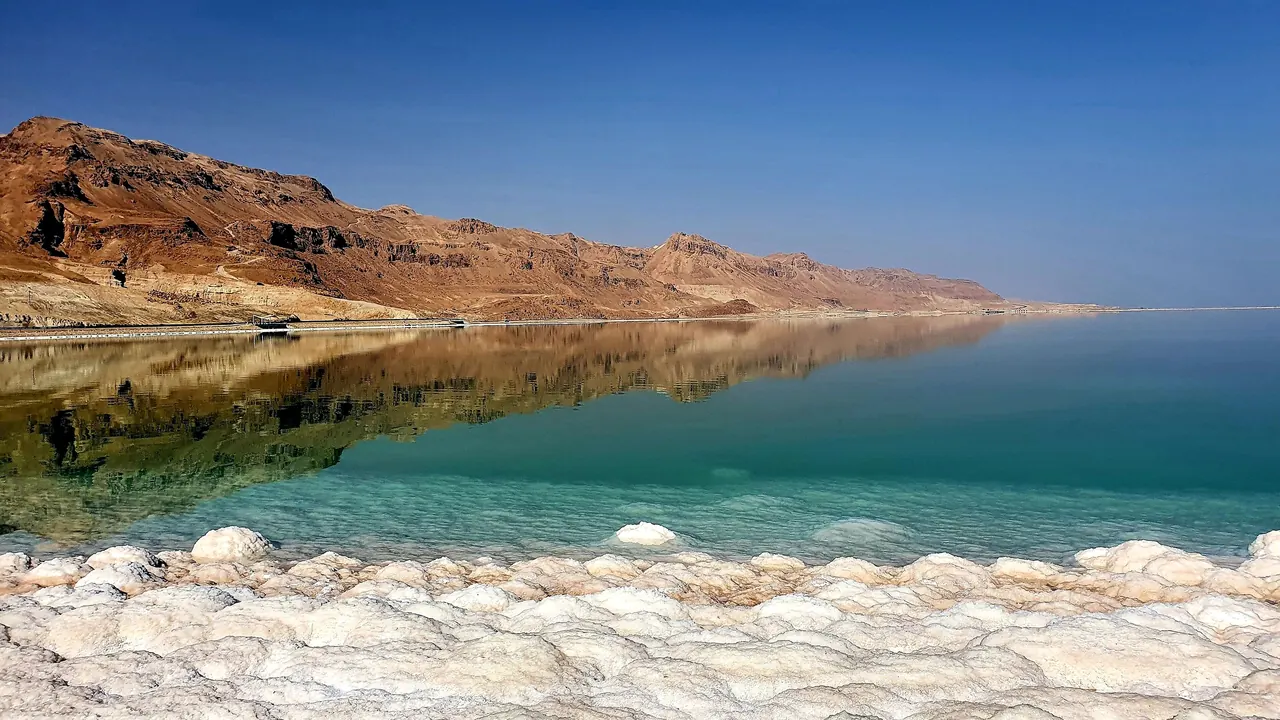
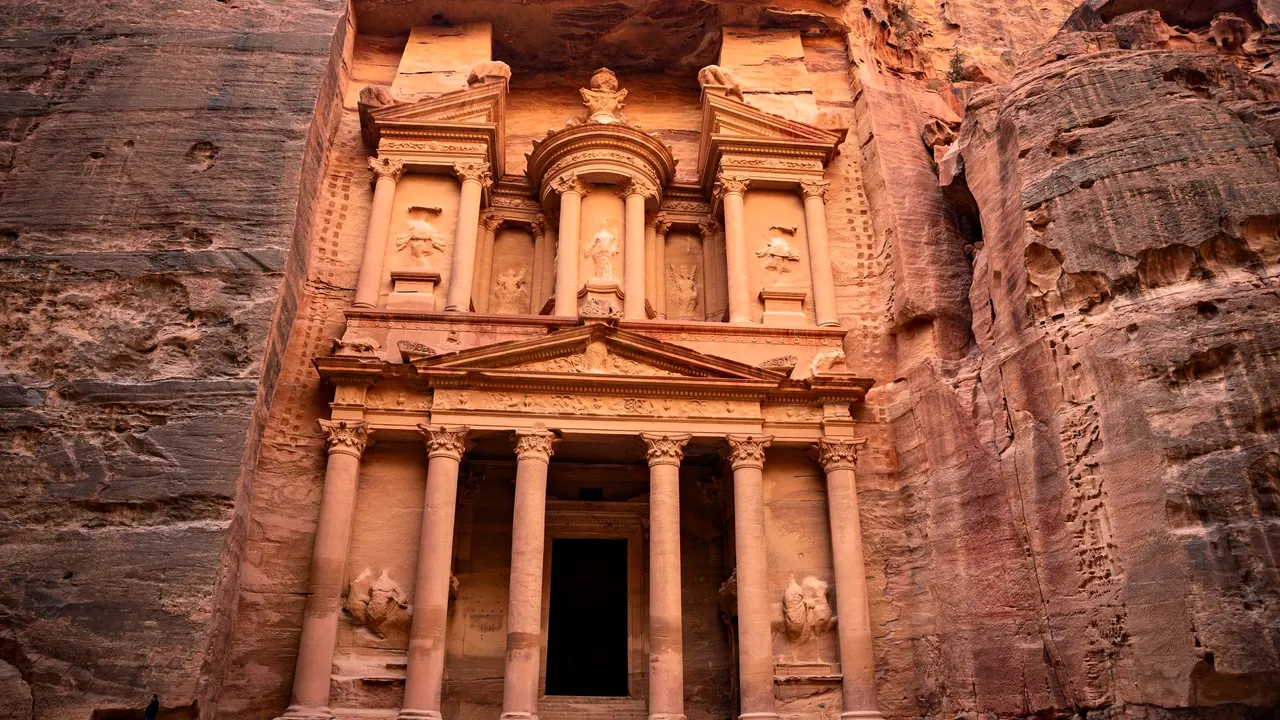
Photos: Dead Sea by Anagoria, CC BY-SA 4.0, cropped; Petra by Yasir Gürbüz, Pexels License.
Dead Sea or Petra?
Our verdict in twelve categories, each scored against the same fixed benchmark cities, and the climate month by month, so you can choose for your trip.
Choose Dead Sea for
- wellness
- beaches
- day trips
The Dead Sea suits a slow, restorative stay. You float in the salt water, bake in the mud and soak in the spa pools of the Ein Bokek hotels, with Masada and Ein Gedi as early-morning outings and Jerusalem a drive away. It is the better pick in winter, for families with older children, and for anyone who would rather rest than explore. In return it costs more and has little to eat out on or do at night.
Choose Petra for
- culture and sights
- prices
- nature and the outdoors
Choose Petra if the point of the trip is to see something extraordinary and walk to it. The rock-cut Nabataean city needs two or three days of long hikes, from the Siq to the Monastery and up Jebel Haroun, and Wadi Rum and Dana are close by. Apart from the entry fee it is cheaper to stay in, but it is tiring rather than restful and has no water to swim in.
Scoreboard
Twelve categories on one fixed scale from 0 to 100. The shaded stretch is the gap between the two.
Your match
Pick a travel style or drag the sliders, and both match scores follow your weighting.
Wins on wellness and beaches with your weighting.
Wins on culture and sights and prices with your weighting.
What matters to you?
Category by category
What the scores mean for a trip.
Beaches & swimming
Neither offers real swimming, but the Dead Sea at least gives you water to get into. At Ein Bokek the shingle and sand beaches in front of the hotels have shade, showers and lifeguards. The salt water holds you up, so you lie back and float rather than swim, and it is warm enough even in winter.
Petra is in the mountains, so the nearest sea is the Red Sea at Aqaba, a separate stop about two hours south. In Wadi Musa the only water is a hotel pool, and not every hotel has one.
Food & drink
Neither is a place to travel for food, and both lean on hotel buffets. The Dead Sea is the narrower of the two: half-board in resort hotels, often kosher, a few grills in the Ein Bokek malls and dates from the kibbutz groves.
Wadi Musa is at least a town. Its roadside restaurants serve mansaf, maqluba and zarb, the Bedouin dish cooked in an underground pit, and there are falafel counters and knafeh shops. A Bedouin meal in the hills or a cooking class gives an evening some purpose.
Culture & sights
Petra is in another league. You enter the rock-cut Nabataean city through the Siq, and it spreads out to the Royal Tombs, the Great Temple and the Monastery. It fills two or three days, with Little Petra and the site museum on top.
The Dead Sea has one great site, Masada, Herod's fortress on its mesa with the Roman siege works still visible below. Add Qumran, linked to the Dead Sea Scrolls, and the synagogue mosaic at Ein Gedi, and you have a few rewarding outings rather than the purpose of a trip.
Nightlife
Both go to bed early, so neither suits anyone who wants nights out. At Ein Bokek the evening means a hotel bar and a walk along the promenade. In conservative Wadi Musa it means dinner and a shisha on a terrace, and beer is harder to find. For anything more, the Dead Sea sends you to Jerusalem and Petra to Amman.
Nature & outdoors
Both sit in dramatic desert country, and Petra edges ahead because the walking is the trip itself. Its trails run through Wadi Muthlim and Wadi al-Farasa, up Jebel Haroun and along the back route from Little Petra to the Monastery. Dana's juniper slopes and Wadi Rum's red sand valleys are also within reach.
At the Dead Sea the setting is the draw: pale Judean cliffs above milky turquoise water, and the springs and waterfalls of Ein Gedi with ibex on the rocks. There are canyon walks near Mount Sodom and Masada, but the fiercer summer heat makes hiking a winter affair.
Day trips
The Dead Sea has much the stronger outing. Jerusalem is an hour or so up the road, with the Old City, the Western Wall, the Church of the Holy Sepulchre and the Israel Museum, and is worth one or two full days. After that the list is short: Arad, Beersheba and Mitzpe Ramon.
From Petra the options are castles and landscapes, and nothing within reach compares with Jerusalem. You can pair Shobak with the village of Dana, drive the King's Highway to Kerak, explore Wadi Rum or go down to the seafront town of Aqaba on the Red Sea, two hours away. Jordan's northern sights are better reached from Amman.
Good for families
Neither is built for children, but the Dead Sea is the easier of the two. The Ein Bokek hotel pools keep younger children busy, and older ones enjoy floating as long as the salt stays out of their eyes. The short waterfall trail at Ein Gedi and the cable car at Masada make good half-day outings.
Petra rewards sturdy older children who like clambering into tombs. But it means long walks over sand and rock with little shade, a hard climb to the Monastery, and paths where a stroller is of little use. Wadi Musa has nothing aimed at children.
Getting around
The Dead Sea is simpler. Route 90 runs along the shore and links Ein Bokek, Masada and Ein Gedi within forty minutes, and the Ein Bokek strip is a short, flat walk. Buses are infrequent, so a car or hotel shuttles do most of the work.
At Petra, everything inside the site is on foot, over long and steep distances. Wadi Musa climbs a hillside away from the gate, and the sights around it need a taxi, a hired driver or a rental car.
Shopping & style
There is little to shop for in either place, and what there is reflects each one. The Dead Sea sells its own mud, salts and mineral creams, plus dates from the kibbutz shops, and not much else.
Petra has slightly more to browse. Bedouin families sell silver and bead jewellery along the trails, Wadi Musa has bottles of coloured sand, and the cooperative shops sell embroidery and handmade goods by local women, which are the most worthwhile buys.
Affordability
Petra is the cheaper stay, even though its entry fee is one of the steepest anywhere. Once you have the ticket, Wadi Musa has guesthouses and mid-range hotels at fair rates, along with cheap falafel and shawarma.
The Dead Sea is expensive across the board. Resort rates are high and climb at weekends and during festivals, meals cost a lot, and Masada and Ein Gedi charge park fees. The free public beaches at Ein Bokek and the kibbutz guesthouses are the way to keep costs down.
Live music & performing arts
Neither has a stage worth planning around, but Petra has one memorable evening. During Petra by Night, the Siq and the Treasury are lit by candles and Bedouin musicians play the rababa beneath the cliffs. The Dead Sea offers hotel lounge singers and the odd open-air desert event, and for real concerts or theatre you go to Jerusalem.
Wellness & relaxation
The gap here is as wide as in any category. At the Dead Sea the water and the mud are the treatment, so you can spend a whole day on it without leaving your hotel: a float on your back, a black mud wrap, then the heated indoor pools of Dead Sea water at Ein Bokek, with the Jordanian mountains changing colour across the shore. Anyone who finds the resort strip too busy can stay in the kibbutz at Ein Gedi, which is calmer.
Petra has nothing that comes from the land itself, no mineral water and no mud. What it offers is a steam room and a scrub in one of the Turkish-style bathhouses of Wadi Musa, which were built for visitors rather than handed down, or a massage in the small spa of a larger hotel. That is a good end to a long day, and the desert evenings are quiet, but none of it is a reason to choose Petra.
When should you go?
Pick your month. The climate figures are measured averages, not a forecast.
Dead Sea in July
Petra in July
Daytime high, °C
Rainfall in the month, mm
Where the figures come from
Petra's temperatures are measured 34 km from the centre, at Ma'An.
Petra's station stands 219 m above the city centre, so the centre is likely a little warmer than the figures say.
Petra has no rain gauge within 25 km of the centre, so its rainfall comes from a gridded climate dataset read at the destination rather than from a gauge further away.
Temperature and rainfall are climate normals, averaged over the years shown. Dead Sea: 1991-2020 normals, Ghor El Safi (21.1 km from centre). Petra: 1991-2020 normals, Ma'An (33.9 km from centre).
At the Dead Sea, around the Ein Bokek hotels, winter is the season. Highs of about 22°C in December and January make comfortable days for floating and walking, and the little rain there is falls in light showers spread from December to March. By May it is hot, and from June to September the heat, peaking near 42°C in July, limits anything outdoors to first light. Sunshine is generous all year.
Petra sits high in the mountains and runs much cooler, so winter there is chilly, with January highs around 14°C and the wettest month of either place, at about 45mm. April, May, October and November are best for the long walks the site demands. Summer makes the climbs hard but stays milder than down by the water. The two complement each other: the Dead Sea for a winter break, Petra for spring and autumn.
Which traveller are you?
For a relaxing and wellness trip, the Dead Sea is the clear choice. Days revolve around floating, mud and heated mineral pools in the Ein Bokek spa hotels. Petra's long climbs and early starts leave you tired rather than rested, with only bathhouses for recovery.
On a culture and arts trip, Petra wins outright. Its Nabataean city of tombs, temples and the Monastery fills two or three days. The Dead Sea's history, above all Masada and Qumran, takes a few mornings before you are back on the lounger.
On a tight budget, Petra is easier to manage. A multi-day ticket softens the entry fee, and Wadi Musa has simple guesthouses and cheap falafel and shawarma. At the Dead Sea, resort rates, meals and park fees add up fast unless you stay in the kibbutz hostels.
Before you go
| Measure | Dead Sea | Petra |
|---|---|---|
| Official language | Hebrew | Arabic |
| Currency | New Israeli Sheqel (ILS) | Jordanian Dinar (JOD) |
| Sockets | CHM230 V, 50 Hz | BCFGJ230 V, 50 Hz |
| Driving side | Right | Right |
| Time zone | UTC+2, UTC+3 in summer | UTC+3 |
| Emergency number | Police 100, fire 102 | 911 |
| Elevation | - | 850 m |
| Main airport | Ben Gurion International Airport (TLV)111 non-stop destinations | King Hussein International Airport (AQJ)90 km from centre5 non-stop destinations |
By the numbers
| Measure | Dead Sea | Petra |
|---|---|---|
| Museums within 10 km | - | 2 |
| UNESCO World Heritage sites within 50 km | - | 1 |
Where else could you go?
Every comparison below shares a destination with this one, so you can follow Dead Sea or Petra somewhere new.