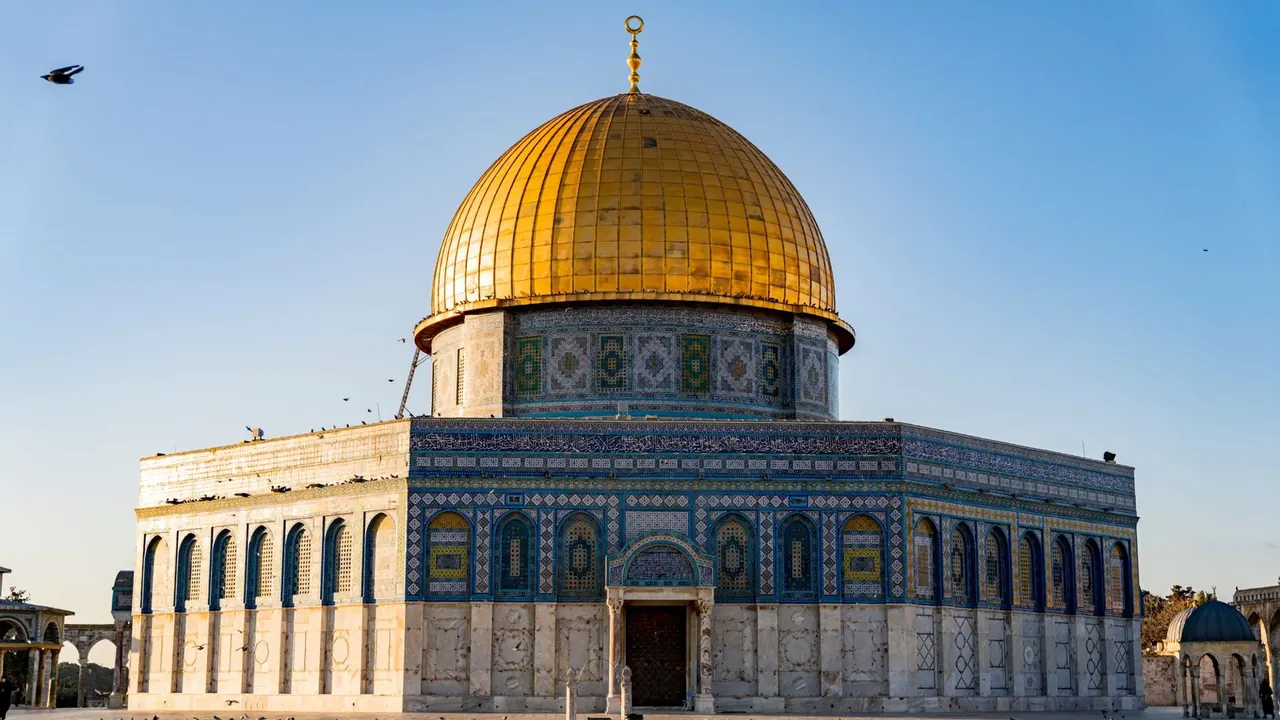
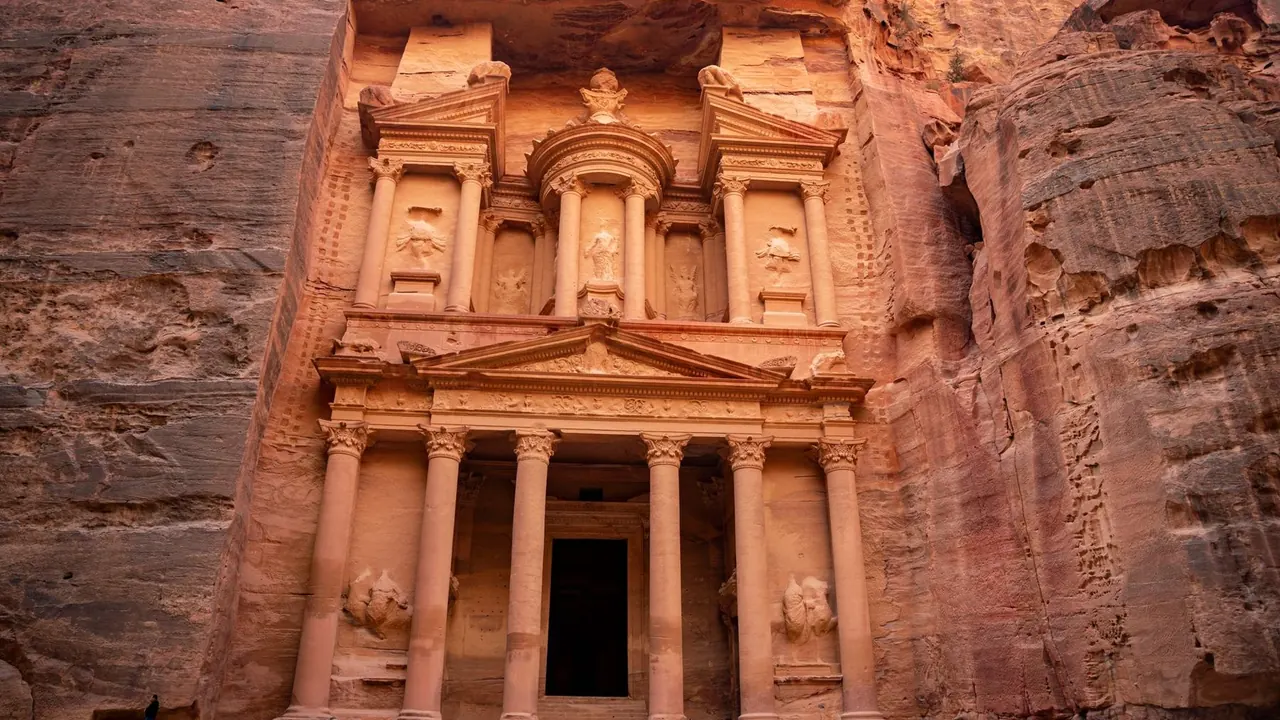
Photos: Jerusalem by Yasir Gürbüz, Pexels License; Petra by Yasir Gürbüz, Pexels License.
Jerusalem or Petra?
Our verdict in twelve categories, each scored against the same fixed benchmark cities, and the climate month by month, so you can choose for your trip.
Choose Jerusalem for
- day trips
- food and drink
- beaches
Jerusalem suits travellers who want a city to settle into for several days: the Old City's holy sites and excavations, the Israel Museum and Yad Vashem, a proper market to eat in, and an easy train or drive to Tel Aviv, Bethlehem or Masada when the intensity gets too much. It is the better base for food, evenings out, families and anyone without a car, though it asks more of the wallet.
Choose Petra for
- prices
- nature and the outdoors
Petra is for the traveller who wants one extraordinary place and the wild country around it, and is happy to walk hard for both. The rock-cut city fills two or three days on foot, Wadi Rum and Dana add desert and mountain, and evenings are early and quiet. Expect little to eat, drink or do in Wadi Musa itself, and plan on a driver or rental car for anything beyond town.
Scoreboard
Twelve categories on one fixed scale from 0 to 100. The shaded stretch is the gap between the two.
Your match
Pick a travel style or drag the sliders, and both match scores follow your weighting.
Wins on day trips and food and drink with your weighting.
Wins on prices and nature and the outdoors with your weighting.
What matters to you?
Category by category
What the scores mean for a trip.
Beaches & swimming
Neither city is a beach destination, but Jerusalem can at least manage a beach day. Tel Aviv's long sandy shore is about an hour away door to door, and the salt-crusted Dead Sea, where you float rather than swim, is an hour's drive downhill. From Petra the only sea is the Red Sea at Aqaba, two hours south, with reefs close to shore. That makes it a separate stop on a Jordan tour rather than an outing, and swimming in Wadi Musa means a hotel pool.
Food & drink
Jerusalem is a far better place to eat. Mahane Yehuda, the Arab hummus counters and ka'ak carts of the Old City, Kurdish kubbeh and Iraqi sabich give it real range. Kosher menus and Shabbat closures in the west are the main things to plan around.
Petra has no food scene of its own, just hotel buffets and roadside restaurants serving mansaf, maqluba and zarb from the underground pit. Its best moments are simpler: sweet sage tea at a stall on the trail, or a Bedouin meal in the hills.
Culture & sights
Both are worth a long journey, but Jerusalem gives more to see. Its Old City stacks the Western Wall, the Holy Sepulchre and the Dome of the Rock over excavations reaching back to the Bronze Age. Outside the walls, the Israel Museum with the Dead Sea Scrolls and Yad Vashem add two major institutions.
Petra is one site, though a vast and astonishing one: the Siq opening onto the Treasury, the Royal Tombs, the colonnaded street and the climb to the Monastery fill two or three days. Once you leave the park and its museum, Wadi Musa has nothing to see, while Jerusalem's history runs through the whole city.
Nightlife
Jerusalem's nights are modest, but they exist. Market stalls at Mahane Yehuda become bars, pubs fill the Nahalat Shiva lanes and the German Colony has its own strip, even if Friday is quiet and clubs are rare. In Petra the evening is a shisha on a terrace and bed before the next day's walking, and a beer at a hotel bar is about as far as it goes.
Nature & outdoors
Petra is the stronger pick for the outdoors, because the landscape is the visit. The sandstone domes and wadis of the Sharah mountains carry trails through Wadi Muthlim and up Jebel Haroun, and the long-distance Jordan Trail passes through. Further out are Dana's juniper slopes with descents into Wadi Feynan, and Wadi Rum's red sand and granite peaks.
Jerusalem's walking is gentler and more of a side dish: pine forest and spring-fed terraces around Sataf and Ein Karem, the Wadi Qelt canyon toward Jericho, and Ein Gedi's oasis or a dawn climb of the Snake Path at Masada.
Day trips
Jerusalem is one of the best bases in the region for days out. Bethlehem is just south, Masada pairs with Qumran by the Dead Sea, and Tel Aviv and old Jaffa are half an hour by train. Caesarea, Acre and the Baha'i gardens in Haifa are within about two hours, though West Bank sites can mean a checkpoint and often a guide.
From Petra the list is short: Shobak castle combined with Dana village, Kerak further up the King's Highway, and Aqaba to the south. Jerash, Madaba and the Dead Sea are too far and belong to a stay in Amman.
Good for families
Jerusalem has more for children: the Biblical Zoo, the aquarium beside it, the hands-on Bloomfield Science Museum and the wade through Hezekiah's Tunnel, even if the Old City's steps defeat a stroller. Petra can thrill older, sturdy children who like scrambling into tombs. But long shadeless walks, the hard climb to the Monastery and nothing made for children in Wadi Musa rule it out for most families with toddlers.
Getting around
Jerusalem's centre is walkable, if hilly. The light rail runs past the Old City walls to Yad Vashem, buses cover the rest and a fast train reaches Tel Aviv and the airport. The weekly gap is Shabbat, when it all stops.
At Petra you cover long distances on foot inside the park, Wadi Musa climbs steeply away from the gate, and there is no local transport to rely on. Wadi Rum, Dana and the castles all need a taxi, a hired driver or a rental car, which is why many visitors see southern Jordan as a road trip.
Shopping & style
Jerusalem gives a shopper far more: bargaining in the Old City souq, hand-painted Armenian ceramics, silver and glass Judaica near Ben Yehuda Street, international brands at Mamilla and spices at Mahane Yehuda. Petra's offer is souvenirs, from Bedouin silver at trail stalls to bottles of coloured sand in town, and the women's cooperatives selling embroidery are where the purchases worth making are.
Affordability
Petra is the lighter stay on the wallet once the entry fee is paid. Wadi Musa has guesthouses and well-priced mid-range hotels, and falafel and shawarma are cheap. Costs climb mainly with hotel buffets, imported drinks and the drivers needed to go further.
Jerusalem is expensive almost everywhere, with hotels, sit-down meals and alcohol well above most of the Mediterranean, especially around the Jewish festivals. Free holy sites, cheap hummus lunches and eating in the Arab neighbourhoods help, but they do not close the gap.
Live music & performing arts
Jerusalem has a real, if small, programme: the Jerusalem Symphony Orchestra, the Jerusalem Theatre, the yearly Israel Festival and summer concerts in the Sultan's Pool below the walls, though most drama is in Hebrew. Petra's one show is Petra by Night, with candles lining the Siq and rababa music before the Treasury, memorable when the crowd keeps quiet. Otherwise there are only hotel dinner shows and songs around a fire at a Bedouin camp.
Wellness & relaxation
Jerusalem is the better choice for unwinding, largely thanks to its neighbour. The Dead Sea resorts with mineral mud and sulphur pools are about an hour away, and the city itself offers the Shabbat hush in the west and quiet gardens on the Mount of Olives. Petra is about effort rather than rest, and a steam and scrub at a Wadi Musa bathhouse is the usual reward for tired legs, with the Dead Sea a long drive north.
When should you go?
Pick your month. The climate figures are measured averages, not a forecast.
Jerusalem in July
Petra in July
Daytime high, °C
Rainfall in the month, mm
Where the figures come from
Jerusalem has no rain gauge within 25 km of the centre, so its rainfall comes from a gridded climate dataset read at the city rather than from a gauge further away.
Petra's temperatures are measured 34 km from the centre, at Ma'An.
Petra's station stands 219 m above the city centre, so the centre is likely a little warmer than the figures say.
Petra has no rain gauge within 25 km of the centre, so its rainfall comes from a gridded climate dataset read at the city rather than from a gauge further away.
Temperature and rainfall are climate normals, averaged over the years shown. Jerusalem: 1991-2020 normals, Jerusalem (1.8 km from centre). Petra: 1991-2020 normals, Ma'An (33.9 km from centre).
Both are at their best in spring and autumn, but for different reasons. Jerusalem's weak season is winter: rain arrives in November and peaks at around 109mm in January, and the stone lanes are cool and often wet. From May to September it is completely dry and hot, around 31°C in August, so sightseeing works best in the morning. For a beach day, the Mediterranean at Tel Aviv is swimmable from late spring and reaches 28°C in late summer. April, May and October are the most comfortable months for walking the city.
Petra is drier and sunnier all year, and its winter rain is light enough to spare most days. It runs hotter than Jerusalem in summer, though, with July and August around 35°C, which makes the long walk to the Monastery and the back trails punishing. Its best months are March to May and October to November, when the days are warm and clear enough for full days on foot.
Which traveller are you?
On an outdoors trip, Petra is the clear choice. The archaeological park is itself a hiking ground of gorges and summits, and the desert valleys of Wadi Rum and the slopes of Dana are within reach for climbing, scrambling and nights camping under the stars.
For a food and nightlife trip, Jerusalem wins easily. Mahane Yehuda turns from market to grills and bars after dark, the Old City has its morning hummus counters and knafeh, and Tel Aviv is a short train ride away. Wadi Musa offers dinner, shisha and an early night.
On a trip on a tight budget, Petra stretches money further, as long as the steep entry fee is softened with a multi-day ticket or a combined pass bought before arriving in Jordan. Beyond the gate prices are moderate, whereas Jerusalem's hotels and restaurants are expensive almost everywhere.
Before you go
| Measure | Jerusalem | Petra |
|---|---|---|
| Official language | Hebrew | Arabic |
| Currency | New Israeli Sheqel (ILS) | Jordanian Dinar (JOD) |
| Sockets | CHM230 V, 50 Hz | BCFGJ230 V, 50 Hz |
| Driving side | Right | Right |
| Time zone | UTC+2, UTC+3 in summer | UTC+3 |
| Emergency number | Police 100, fire 102 | 911 |
| Elevation | 754 m | 850 m |
| Main airport | Ben Gurion International Airport (TLV)42 km from centre111 non-stop destinations | King Hussein International Airport (AQJ)90 km from centre5 non-stop destinations |
By the numbers
| Measure | Jerusalem | Petra |
|---|---|---|
| City population | 1,050,151 | - |
| People per km² | 8,374 | - |
| Museums within 10 km | 69 | 2 |
| UNESCO World Heritage sites within 50 km | 7 | 1 |
| Swim season, months above 21 °C | 7 months | - |
Where else could you go?
Every comparison below shares a destination with this one, so you can follow Jerusalem or Petra somewhere new.