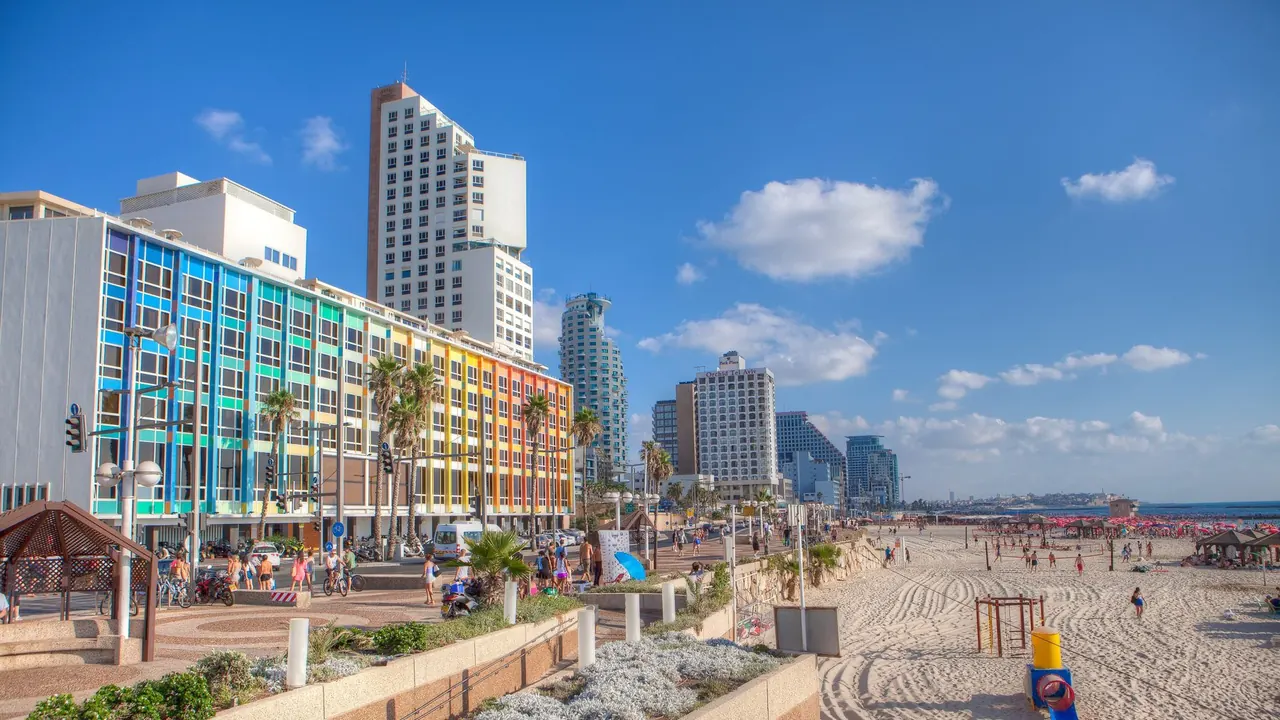
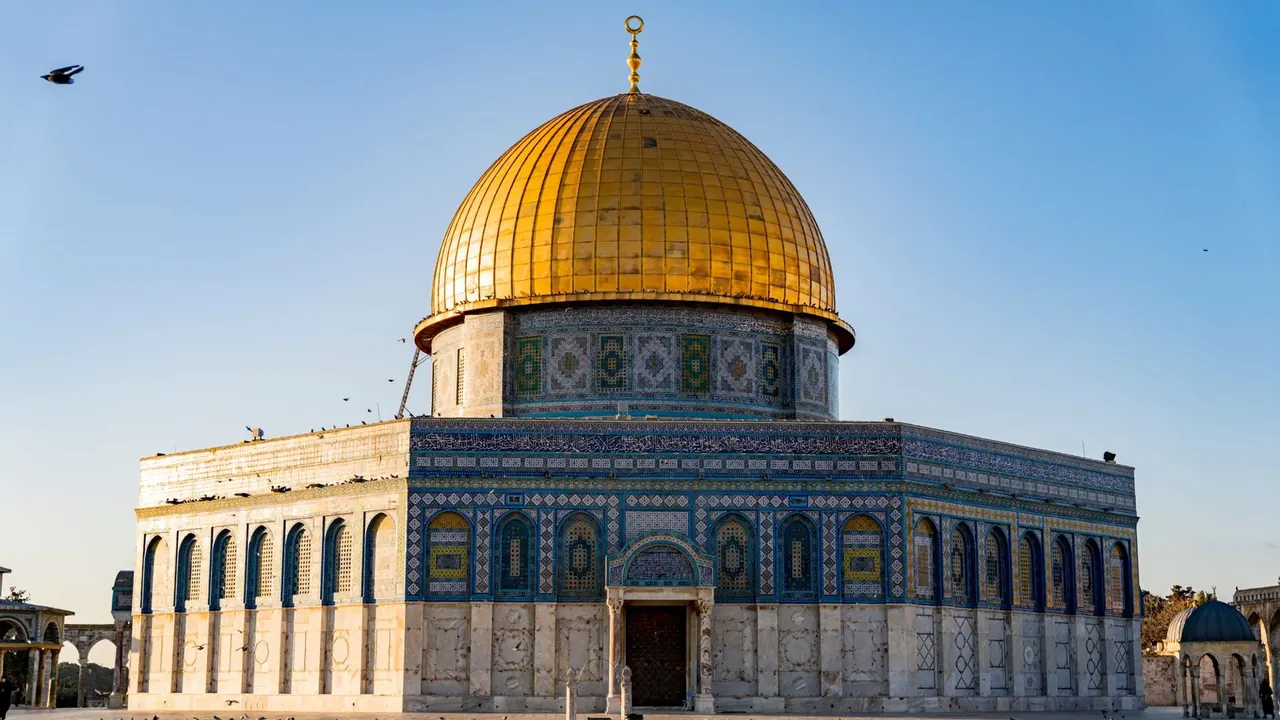
Photos: Tel Aviv by israeltourism, CC BY-SA 2.0, cropped; Jerusalem by Yasir Gürbüz, Pexels License.
Tel Aviv or Jerusalem?
Our verdict in twelve categories, each scored against the same fixed benchmark cities, and the climate month by month, so you can choose for your trip.
Choose Tel Aviv for
- beaches
- nightlife
- live music and the arts
Tel Aviv is the better base for a trip that mixes city and sea. The beach runs the length of the city, and the food goes from hummus counters to chef-driven dining rooms. Bars and clubs stay busy until dawn. Families, food lovers and anyone who wants dance or concerts will be happier here, and Jerusalem's sights are only half an hour away by train.
Choose Jerusalem for
- culture and sights
- nature and the outdoors
- wellness
Choose Jerusalem if the trip is about history and faith you can walk through. The Western Wall, the Holy Sepulchre and the Dome of the Rock sit within the same walled square kilometre, with the Israel Museum and Yad Vashem beyond. The city suits travellers who want several days of serious sightseeing, desert walks and the Dead Sea close by, and who don't mind quiet evenings.
Scoreboard
Twelve categories on one fixed scale from 0 to 100. The shaded stretch is the gap between the two.
Your match
Pick a travel style or drag the sliders, and both match scores follow your weighting.
Wins on beaches and nightlife with your weighting.
Wins on culture and sights and nature and the outdoors with your weighting.
What matters to you?
Category by category
What the scores mean for a trip.
Beaches & swimming
Jerusalem has no beach. A swim means a day trip to the Mediterranean in Tel Aviv, about an hour door to door. The other option is the Dead Sea, with its rocky, salt-crusted shore and water you float in rather than swim.
Tel Aviv is where Jerusalem's visitors go for the sea. Pale sand runs from the old port down to the rocks below Jaffa, within walking distance of most central hotels. Breakwaters and lifeguards make many stretches calm, and locals swim there morning and evening, not just at weekends.
Food & drink
Both cities share the same street-food base of hummus counters, sabich and Iraqi kubbeh. In Jerusalem it centres on Mahane Yehuda and the Arab kitchens of the Old City and East Jerusalem, with ka'ak, knafeh and cardamom coffee. Upmarket restaurants are fewer than you might expect.
Tel Aviv eats with more range. Alongside Carmel Market, the Levinsky streets and Jaffa's fish restaurants, it has a confident chef-driven scene of open kitchens and shared plates. Breakfast is taken seriously and there is a café on every street. Fewer places keep kosher, so meat and dairy often appear on the same menu.
Culture & sights
This is where Jerusalem stands apart. Three thousand years of history are packed inside the Old City walls, from the Western Wall and the Church of the Holy Sepulchre to the tunnels and the City of David below. Beyond the walls are the Mount of Olives, the Israel Museum with the Dead Sea Scrolls, and Yad Vashem. It all needs several days.
Tel Aviv's sights are younger and fewer. They are the Bauhaus streets of the White City, the old stone lanes of Jaffa and Neve Tzedek, and a handful of museums such as ANU and the Tel Aviv Museum of Art. Many visitors to Tel Aviv see the country's great historic sites on a day out to Jerusalem.
Nightlife
Jerusalem's evenings are low-key and end early. After closing, Mahane Yehuda's stalls turn into small bars and grills, and there are pubs around Nahalat Shiva and along Emek Refaim in the German Colony. Students keep a few places busy on weeknights, but clubs are rare, the Old City goes dark early and Shabbat makes Friday night quiet across much of the west.
In Tel Aviv, going out is a large part of the point of a visit. Cocktail and wine bars on Rothschild and around Lilienblum and Allenby spill onto the pavement past midnight, and on Fridays the drinking starts in the afternoon. House and techno play in basements and warehouse spaces in the south, the gay scene is among the most open in the region, and beach bars and Jaffa's courtyards offer quieter evenings. Dress codes barely exist.
Nature & outdoors
Jerusalem has more landscape on its doorstep. To the west are the pine forests and spring-fed trails of the Judean Hills around Sataf and Ein Karem. To the east the land drops into the desert canyon of Wadi Qelt, and Ein Gedi and the dawn climb up Masada are about an hour further on.
Tel Aviv's outdoor life is flat and by the sea: the coastal cycle path, the lawns of Yarkon Park, and surfing, sailing and kitesurfing off the beaches. Jerusalem has none of those watersports, but hills and desert are an hour or more's drive from Tel Aviv.
Day trips
Both cities are well placed, and much of what they can reach is the same: Masada and the Dead Sea, Caesarea, Haifa, Acre, and Galilee at the edge of the range. The difference is in direction. Jerusalem is closer to the desert, to Bethlehem, Jericho and Qumran, though West Bank sites can mean a checkpoint and often a guide.
Tel Aviv faces the coast and the north. Caesarea is under an hour away, the wine hills around Zichron Ya'akov make an easy day, and Jerusalem itself is half an hour by train.
Good for families
Children are welcome in both cities, but Jerusalem is the harder of the two with them. The Biblical Zoo, the aquarium and the Bloomfield Science Museum are good outings, and older children enjoy wading through Hezekiah's Tunnel. Still, the Old City's stepped lanes are useless with a stroller and the holy sites call for quiet.
Tel Aviv is easier day to day. It has calm, lifeguarded beaches, a flat centre and a long car-free promenade for pushchairs. Yarkon Park and the Ramat Gan Safari just east of the city fill the days between swims.
Getting around
In both cities buses and trains stop for Shabbat, so from Friday afternoon to Saturday evening you rely on taxis or your feet. On other days Tel Aviv is easier. Its flat centre runs on foot from the port to Jaffa, and the seafront path, bike-share and cycle lanes make it simple to ride.
Jerusalem's centre is also walkable, but it is hilly, and the Old City is all steps and worn stone. The light rail along Jaffa Road helps most, running past the walls and out to Yad Vashem.
Shopping & style
Shopping in Jerusalem is about crafts and faith. The Old City souq sells olive wood, spices and embroidery, and bargaining is expected. The Armenian Quarter has hand-painted ceramics, and the shops around Ben Yehuda sell silver Judaica. Mamilla has the international brands.
Tel Aviv offers more for anyone interested in clothes and design. Local designers and jewellers line Dizengoff, Sheinkin and Neve Tzedek, the Nahalat Binyamin crafts market and Jaffa's flea market add handmade and vintage finds, and the malls cover the chains. Neither city has much luxury shopping.
Affordability
Neither city is cheap, but Jerusalem costs somewhat less. Many of the holy sites are free, and eating in the Arab neighbourhoods and at Mahane Yehuda keeps meals cheap. Hotel prices jump during the Jewish festivals and pilgrimage seasons.
Tel Aviv is among the most expensive cities in the Mediterranean. Hotels near the beach cost a lot, and restaurant and cocktail bills match the priciest Western European capitals. Its best savings are free ones: the beach, the promenade and walking the White City.
Live music & performing arts
Jerusalem's stage is respectable but small. It has the Jerusalem Symphony Orchestra, the Jerusalem Theatre, and visiting ensembles in the Old City churches. In summer there are concerts at the Sultan's Pool below the walls, and the Israel Festival is the yearly highlight.
Tel Aviv has most of what Jerusalem lacks: the Israel Philharmonic, the Israeli Opera, Habima and, above all, contemporary dance, with Batsheva and the Suzanne Dellal Centre. Rock, indie and jazz clubs fill the south of the city. In both cities most plays are in Hebrew, though some Tel Aviv productions have English surtitles.
Wellness & relaxation
Neither is a restful city, but Jerusalem is the slightly better place to slow down. The Dead Sea spas are about an hour away, a little closer than from Tel Aviv. The gardens on the Mount of Olives and in the Armenian and Christian compounds are genuinely quiet, and so is West Jerusalem on Shabbat.
Tel Aviv runs louder and faster. Its calm comes from slow mornings on the seafront promenade and from yoga classes. It has no bathing tradition, and its spas are mostly in the big seafront hotels.
When should you go?
Pick your month. The climate figures are measured averages, not a forecast.
Tel Aviv in July
Jerusalem in July
Daytime high, °C
Rainfall in the month, mm
Where the figures come from
Jerusalem has no rain gauge within 25 km of the centre, so its rainfall comes from a gridded climate dataset read at the city rather than from a gauge further away.
Temperature and rainfall are climate normals, averaged over the years shown. Tel Aviv: 1991-2020 normals, Bet Dagan (9.5 km from centre). Jerusalem: 1991-2020 normals, Jerusalem (1.8 km from centre).
Spring and autumn suit both cities best. Jerusalem stands high in the hills, and April and October give comfortable walking weather there. Winter is genuinely cool, with highs around 12°C in January, and almost all the year's rain falls between November and March. Summer is completely dry and hot, so sightseeing is best done early in the day.
Tel Aviv is milder in winter but hotter and more humid in summer, reaching about 32°C in July and August. It is also wetter in midwinter, with about 140mm of rain in January. The sea is warm enough for swimming from May into November and reaches about 28°C in August and September. Late spring and early autumn give beach weather without the worst of the midsummer heat.
Which traveller are you?
For a beach and sun trip, Tel Aviv is the clear choice. Fine sand runs along the whole western edge of the city, a walk from most hotels. From Jerusalem the Mediterranean is an hour away, and at the Dead Sea you float rather than swim.
On a culture and arts trip, Jerusalem is the one to choose. The Old City, the excavations beneath it, the Israel Museum and Yad Vashem fill several days. Tel Aviv has fewer sights, though it is the stronger city for dance and opera.
For a food and nightlife trip, Tel Aviv wins easily. Its chef-led kitchens and markets add range to the street food both cities share, and Thursday nights run until dawn. Jerusalem's evenings centre on one market and a few pubs.
Before you go
| Measure | Tel Aviv | Jerusalem |
|---|---|---|
| Official language | Hebrew | Hebrew |
| Currency | New Israeli Sheqel (ILS) | New Israeli Sheqel (ILS) |
| Sockets | CHM230 V, 50 Hz | CHM230 V, 50 Hz |
| Driving side | Right | Right |
| Time zone | UTC+2, UTC+3 in summer | UTC+2, UTC+3 in summer |
| Emergency number | Police 100, fire 102 | Police 100, fire 102 |
| Elevation | 5 m | 754 m |
| Main airport | Ben Gurion International Airport (TLV)13 km from centre111 non-stop destinations | Ben Gurion International Airport (TLV)42 km from centre111 non-stop destinations |
By the numbers
| Measure | Tel Aviv | Jerusalem |
|---|---|---|
| City population | 467,875 | 1,050,151 |
| People per km² | 8,998 | 8,374 |
| Museums within 10 km | 98 | 69 |
| UNESCO World Heritage sites within 50 km | 2 | 7 |
| Swim season, months above 21 °C | 7 months | 7 months |
Where else could you go?
Every comparison below shares a destination with this one, so you can follow Tel Aviv or Jerusalem somewhere new.