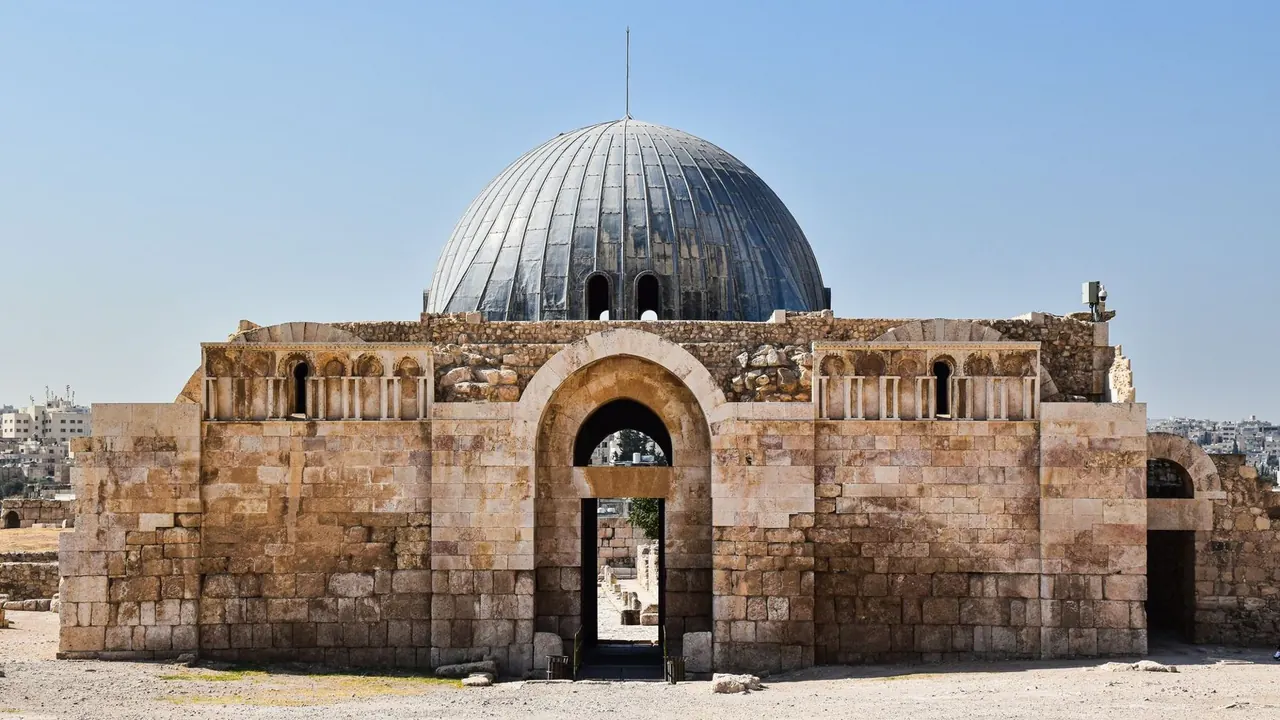
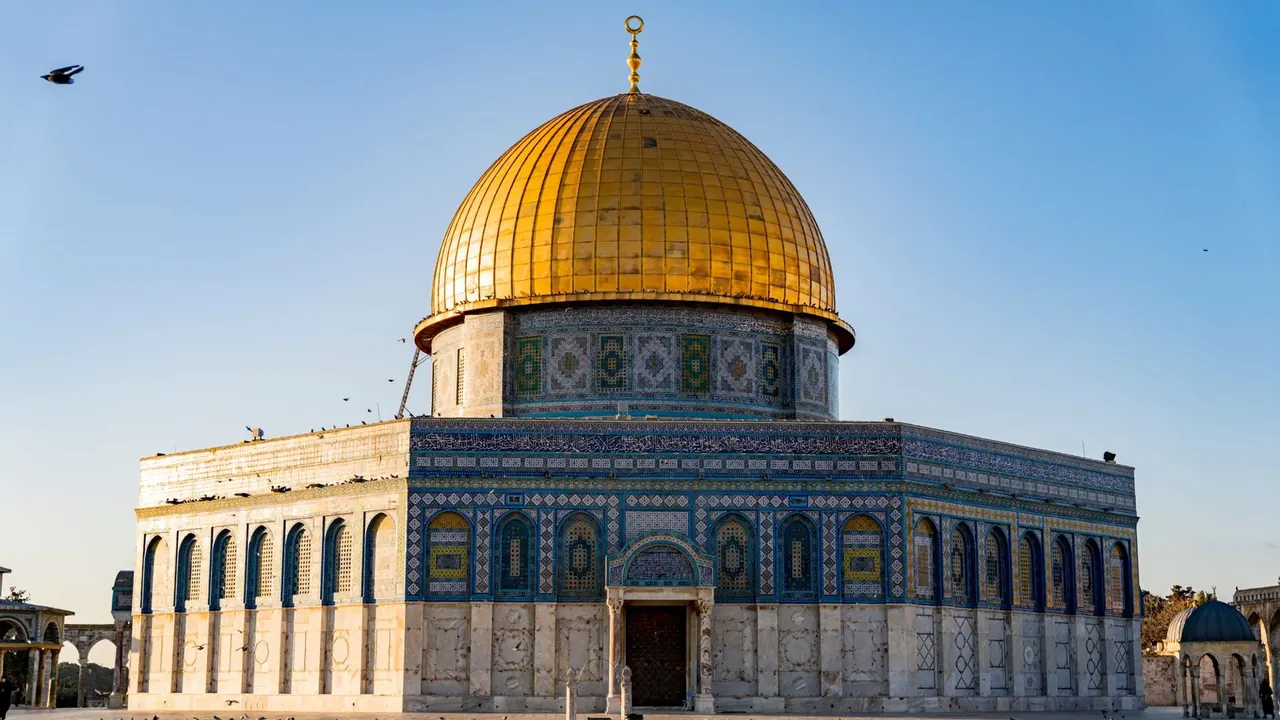
Photos: Amman by AXP Photography, Pexels License; Jerusalem by Yasir Gürbüz, Pexels License.
Amman or Jerusalem?
Our verdict in twelve categories, each scored against the same fixed benchmark cities, and the climate month by month, so you can choose for your trip.
Choose Amman for
- prices
- wellness
Amman suits travellers who want a cheaper base for the region's Roman ruins, desert castles and Dead Sea spas. Jerash, Madaba and the Dead Sea are all an easy drive away. Local food and taxis keep daily costs low, and evenings are spent over tea and shisha on café terraces rather than in bars. It works best as a gateway to Jordan, with two or three days for the city itself.
Choose Jerusalem for
- culture and sights
- getting around
- beaches
Choose Jerusalem if the sights are the main reason for the trip. The walled Old City holds the holy places of three faiths, with excavations beneath it and the Israel Museum and Yad Vashem beyond the walls. That is several full days of history, far more than Amman's Citadel and Roman Theatre offer. Jerusalem is also easier to get around, with a light rail and a fast train to the Tel Aviv coast. It costs a great deal more, though, and much of the city stops for Shabbat each week.
Scoreboard
Twelve categories on one fixed scale from 0 to 100. The shaded stretch is the gap between the two.
Your match
Pick a travel style or drag the sliders, and both match scores follow your weighting.
Wins on prices and wellness with your weighting.
Wins on culture and sights and getting around with your weighting.
What matters to you?
Category by category
What the scores mean for a trip.
Beaches & swimming
Neither city has a shore of its own, and both reach the Dead Sea about an hour downhill, where you float rather than swim. Amman's side has sandy resort beaches with sunbeds. Real sea swimming from Amman means Aqaba on the Red Sea, four hours south, which is a separate trip.
Jerusalem is better placed for a swim. The fast train puts the long Mediterranean beaches of Tel Aviv about an hour away door to door, and the water is warm from late spring into autumn. That makes a proper beach day possible from Jerusalem in a way it is not from Amman.
Food & drink
The two kitchens overlap a great deal, with hummus, falafel, knafeh and cardamom coffee in both, and neither has much of a high-end scene. Amman is strongest at its downtown breakfast counters and bakeries, and for mansaf, the national dish of lamb in yoghurt. Cafés and rooftop terraces are up in Jabal Amman and Weibdeh.
Jerusalem has a wider mix because of its Jewish communities, with Kurdish kubbeh soups, Iraqi sabich and Yemenite breads. Its centre is Mahane Yehuda market, where the stalls turn into grills and bars after dark. Expect kosher menus and closures over Shabbat in the west of the city. The Arab neighbourhoods stay open.
Culture & sights
This is where the two cities differ most. Amman has the Citadel with its views, the Roman Theatre and the Jordan Museum, which make a solid two days. Beyond those, it is mostly modern sprawl.
Jerusalem's walled Old City fits the Western Wall, the Church of the Holy Sepulchre and the Dome of the Rock into about a square kilometre, with Bronze Age excavations underneath. Beyond the walls are the Mount of Olives, the Israel Museum and Yad Vashem. Both cities display Dead Sea Scrolls, but only Jerusalem needs several days for its sights.
Nightlife
Neither is a party city, but Jerusalem has somewhat more to offer. Amman's evenings are mostly spent over shisha and tea in cafés along Rainbow Street. There are a few bars and rooftop lounges in Jabal Amman, Weibdeh and Abdoun, and alcohol largely disappears during Ramadan.
Jerusalem has more of a bar culture. It centres on Mahane Yehuda's stalls after closing and the pubs off Jaffa Road, and students keep a few places busy on weeknights. Friday nights are quiet for Shabbat, and for clubs most people take the train to Tel Aviv.
Nature & outdoors
Amman's best outdoor outings are the Wadi Mujib canyon, where you wade and scramble up a gorge in the warmer months, and the oak and pine woods of Ajloun. Jordan's finest landscapes, at Dana and Wadi Rum, need a night away.
Jerusalem has more variety close at hand. To the west are the pine-covered Judean Hills, with spring-fed walks around Sataf and Ein Karem. To the east the land drops into the Judean Desert and the Wadi Qelt canyon, and further down are Ein Gedi's waterfalls and ibex.
Day trips
Both are excellent bases, and the difference is in what you go to see. From Amman the outings are mostly ancient ruins reached by hired driver or car: Roman Jerash under an hour north, the Madaba mosaic map, Mount Nebo, the desert castles and Kerak.
Jerusalem's range mixes biblical sites with the coast. Bethlehem is next door, Masada and Qumran are above the Dead Sea, and Jaffa, Caesarea and Acre are along the Mediterranean, with some reachable by train. West Bank sites from Jerusalem mean crossing a checkpoint, and from Amman, Petra is too far for a day.
Good for families
Children are warmly welcomed in both cities, but Jerusalem gives them more to do. Amman has a children's museum in King Hussein Park and malls with play areas, and floating in the Dead Sea is the best day out.
Jerusalem has the Biblical Zoo, the national aquarium beside it and the hands-on Bloomfield Science Museum. Older children can also walk the ramparts and wade through Hezekiah's Tunnel. Pushchairs struggle in both, on Amman's broken pavements and in the Old City's stepped lanes.
Getting around
Amman spreads across steep hills and valleys and has no metro. Beyond downtown and the stone stairways up to Jabal Amman, visitors use yellow taxis and ride-hailing apps, which are cheap and easy.
Jerusalem is much easier to get around. The Old City, Jaffa Road and Mahane Yehuda are within walking distance of each other, the light rail runs out to Yad Vashem, and a fast train goes to Tel Aviv and the airport. The catch is Shabbat, when public transport stops from Friday afternoon until Saturday evening.
Shopping & style
Both cities are better for crafts than for fashion. In Amman, the best buys are embroidered Palestinian textiles, Hebron glass and Dead Sea cosmetics from the cooperative shops around Rainbow Street, along with spices and the gold souk downtown.
Jerusalem's Old City souq sells olive-wood carvings and embroidery, and you are expected to bargain. It also has two things Amman lacks: hand-painted Armenian ceramics and silver and glass Judaica. Mamilla, below Jaffa Gate, has the international brands.
Affordability
Amman is much the cheaper of the two. Street food, coffee and taxis cost little. Only comfortable hotels, alcohol and the country's headline sites push costs towards European levels.
Jerusalem is expensive, starting with the hotels, especially at festival and pilgrimage times. Restaurants and drinks cost well above most of the Mediterranean. Free holy sites and market lunches help, but a comfortable stay costs far more than in Amman.
Live music & performing arts
There is not much on stage in Amman. The Royal Cultural Centre has occasional concerts, and small venues in Weibdeh put on mostly Arabic-language shows. The highlight of the year is the summer Jerash Festival in the Roman theatres there.
Jerusalem has more to book. It has its own symphony orchestra, the Jerusalem Theatre, the yearly Israel Festival and summer concerts at the Sultan's Pool below the walls. Most plays, however, are in Hebrew.
Wellness & relaxation
Both cities rely on the same Dead Sea about an hour downhill for floating and mud, so the difference is what else is close by. Amman has more ways to unwind. The Ma'in hot springs, where warm water falls through a desert canyon, fit into the same day as the Dead Sea, and back in town a few Turkish-style hammams offer steam, a scrub and a massage between sightseeing days.
Jerusalem has no springs or hammams to match, and in the city itself the treatments are in hotel spas. Its calm comes from the city's own rhythm instead. Each week Shabbat empties the streets of West Jerusalem from Friday evening to Saturday evening, and on any day the gardens of the Armenian and Christian compounds and the Mount of Olives give you a break from the Old City crowds.
When should you go?
Pick your month. The climate figures are measured averages, not a forecast.
Amman in July
Jerusalem in July
Daytime high, °C
Rainfall in the month, mm
Where the figures come from
Amman has no rain gauge within 25 km of the centre, so its rainfall comes from a gridded climate dataset read at the city rather than from a gauge further away.
Amman's sunshine is measured 55 km from the centre, at Mafraq.
Jerusalem has no rain gauge within 25 km of the centre, so its rainfall comes from a gridded climate dataset read at the city rather than from a gauge further away.
Temperature and rainfall are climate normals, averaged over the years shown. Amman: 1994-2020 (sunshine 1991-2020, rainfall 1991-2020) normals, Amman Airport (6 km from centre). Jerusalem: 1991-2020 normals, Jerusalem (1.8 km from centre).
Both cities sit high in the hills and follow the same pattern: a cool, wet winter, a completely dry summer, and the best walking weather in April, May and October. Amman runs a little hotter, with afternoons around 33°C in July and August and long, sunny days, so summer sightseeing there means early starts. Jerusalem stays a degree or two cooler in high summer but is wetter in winter, with about 109mm of rain in January against Amman's 76mm.
If you want a swim on a day trip from Jerusalem, the Mediterranean is warm enough from late spring into November and warmest in August and September, at about 28°C. From December to March both cities are chilly and often wet, better for museums than for long walks between ruins.
Which traveller are you?
On a culture and arts trip, Jerusalem is the clear choice. The Old City's holy sites and excavations, the Israel Museum and Yad Vashem fill several days, and there are concerts and theatre too. Amman's sights take two or three days, and performances there are rare.
On a tight budget, Amman makes your money go much further. Falafel breakfasts, shawarma, coffee and taxis cost little. In Jerusalem, hotels, restaurants and drinks are expensive, and only market lunches and the free holy sites stay cheap.
On a relaxing and wellness trip, Amman has the edge. Its Dead Sea resort spas are an hour downhill, the Ma'in hot springs are close by and the city has Turkish-style hammams. Jerusalem reaches the same shore, but in town it has little beyond hotel spas.
Before you go
| Measure | Amman | Jerusalem |
|---|---|---|
| Official language | Arabic | Hebrew |
| Currency | Jordanian Dinar (JOD) | New Israeli Sheqel (ILS) |
| Sockets | BCFGJ230 V, 50 Hz | CHM230 V, 50 Hz |
| Driving side | Right | Right |
| Time zone | UTC+3 | UTC+2, UTC+3 in summer |
| Emergency number | 911 | Police 100, fire 102 |
| Elevation | 776 m | 754 m |
| Main airport | Queen Alia International Airport (AMM)26 km from centre98 non-stop destinations | Ben Gurion International Airport (TLV)42 km from centre111 non-stop destinations |
By the numbers
| Measure | Amman | Jerusalem |
|---|---|---|
| City population | 4,007,526 | 1,050,151 |
| People per km² | 2,385 | 8,374 |
| Museums within 10 km | 8 | 69 |
| UNESCO World Heritage sites within 50 km | 3 | 7 |
| Swim season, months above 21 °C | - | 7 months |
Where else could you go?
Every comparison below shares a destination with this one, so you can follow Amman or Jerusalem somewhere new.