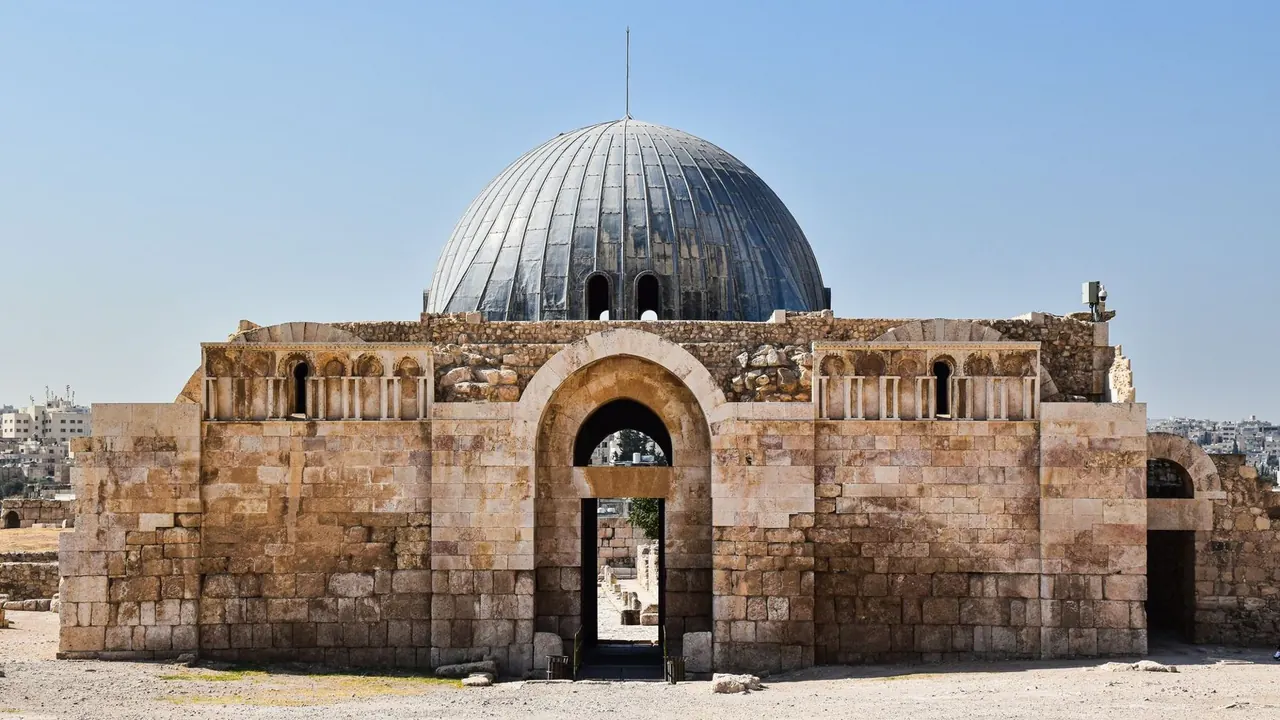
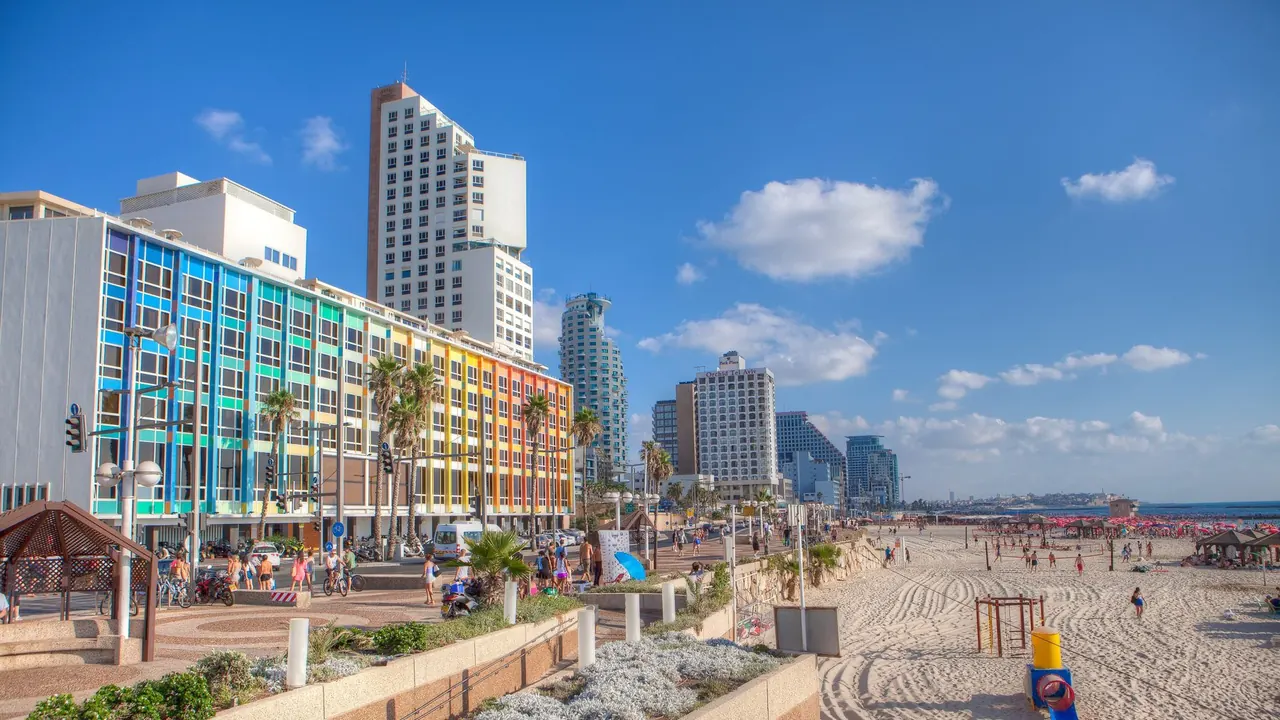
Photos: Amman by AXP Photography, Pexels License; Tel Aviv by israeltourism, CC BY-SA 2.0, cropped.
Amman or Tel Aviv?
Our verdict in twelve categories, each scored against the same fixed benchmark cities, and the climate month by month, so you can choose for your trip.
Choose Amman for
- prices
- wellness
Amman suits a traveller who has come for Jordan's antiquity and wants to see it without spending heavily. Jerash, Madaba, the desert castles and the Dead Sea are all a short drive away, the local food is cheap and good, and evenings pass over tea and shisha rather than cocktails. It works best as a calm, inexpensive base for a few days of ruins rather than as a destination in itself.
Choose Tel Aviv for
- beaches
- nightlife
- live music and the arts
For a trip built around the city itself, Tel Aviv is the stronger choice. The sand begins at the end of the street, restaurants and bars run late and loud, and the flat centre is easy on foot or by bike, with Jerusalem a short train ride away. All of that comes at a steep price, so it rewards travellers with a healthy budget who want beach days and late nights in the same week.
Scoreboard
Twelve categories on one fixed scale from 0 to 100. The shaded stretch is the gap between the two.
Your match
Pick a travel style or drag the sliders, and both match scores follow your weighting.
Wins on prices and wellness with your weighting.
Wins on beaches and nightlife with your weighting.
What matters to you?
Category by category
What the scores mean for a trip.
Beaches & swimming
This is the widest gap between the two. Amman has no shore of its own, only the Dead Sea an hour below, where resort beach clubs offer sunbeds and mud but the brine lets you float rather than swim. Proper sea swimming means a separate trip to Aqaba.
Tel Aviv is a beach city in the full sense, with fine sand running from the old port to the rocks below Jaffa, a walk from most hotels. Lifeguard posts, breakwaters and stretches with their own character, such as the dog beach at Hilton, make the shore part of daily life, from early runs to sunset swims.
Food & drink
Both cities eat from the same Levantine table of hummus, falafel and knafeh, so the gap is in range rather than roots. Amman does the basics simply and cheaply, with downtown breakfast counters, mansaf at family restaurants and café terraces in Weibdeh and Jabal Amman, but its upmarket dining is thin and drinking plays a minor part.
Tel Aviv layers Yemenite, Iraqi and Bukharan home cooking on top, adds a confident chef-led scene of open kitchens and shared plates, and pours good Galilee and Golan wine. Carmel Market and the old bakeries and fish restaurants of Jaffa make grazing easy, though many kitchens close for Shabbat.
Culture & sights
Neither city is a major sightseeing destination, and both leave their country's great heritage to day trips, but the history they show differs in kind. Amman's sights are ancient: the Temple of Hercules and the Umayyad Palace on the Citadel, the Roman Theatre cut into the hillside below, and the Jordan Museum with its Dead Sea Scrolls and 'Ain Ghazal statues.
Tel Aviv's are mostly from the twentieth century. Its draw is the Bauhaus White City along Rothschild Boulevard, alongside Jaffa's old stone quarter, the modern collection at the Tel Aviv Museum of Art and ANU's story of the diaspora. Choose Amman for Roman stones and Tel Aviv for architecture walks.
Nightlife
Amman's evenings are sociable but sober in tone: families and friends linger over shisha and tea on Rainbow Street, and a modest cluster of bars and rooftop lounges sits in Jabal Amman and Abdoun. During Ramadan, alcohol largely disappears.
Tel Aviv goes much further. Cocktail and wine bars around Lilienblum and Allenby spill onto the pavements past midnight, Thursday runs until dawn, and warehouse clubs in the south play house and techno. Its gay scene is among the most open in the region.
Nature & outdoors
Tel Aviv has the more usable outdoor life from day to day, even though the city is flat and built up. The coastal cycle path, surfing, kitesurfing and the lawns and rowing of Yarkon Park are all on the doorstep, with the pine trails of the Carmel ridge an hour north.
Amman has almost no green space and bare summer hillsides, so nature means driving out of town. The rewards are dramatic: the steep drop to the Dead Sea, wading up the sandstone gorge of Wadi Mujib in the warmer months, and spring walks in the oak woods of Ajloun.
Day trips
Both are excellent bases, and both reach the Dead Sea, but the outings feel different. From Amman you see Jordan's ancient past: the colonnaded Roman streets of Jerash, Madaba's mosaic map, Mount Nebo, the frescoed desert bathhouse of Qasr Amra and Kerak's castle, mostly with a hired driver.
From Tel Aviv, Jerusalem's Old City is half an hour away by fast train, and trains also run up the coast to Haifa's Baha'i Gardens and Acre, with Roman Caesarea under an hour away. Shabbat halts that transport on Saturdays, so a Saturday outing needs a car or a tour.
Good for families
Children are warmly welcomed in both cities, and late dinners with toddlers are normal in each. The difference lies in what there is to do. Amman offers a hands-on children's museum in King Hussein Park, malls with play areas and the novelty of floating in the Dead Sea, but steep streets and broken pavements defeat pushchairs.
Tel Aviv has calm, lifeguarded beaches, Luna Park and boating in Yarkon Park, the Ramat Gan Safari and the children's museum in Holon. Its flat centre and seafront promenade are easy with a buggy.
Getting around
Amman is spread over hills and deep valleys, and only the old downtown and the stone stairways up to Weibdeh are walkable. There is no metro, so visitors rely on cheap yellow taxis and ride-hailing apps, and on a driver for trips out of town.
Tel Aviv is flat and compact enough to walk from the old port to Jaffa, with bike-share, e-scooters, a light-rail line and fast intercity trains. Its catch is Shabbat, when most buses and trains stop from Friday afternoon until Saturday night.
Shopping & style
Amman's best buying is craft: embroidered Palestinian textiles, Hebron glass and work from women's cooperatives around Rainbow Street, with downtown souks for spices, coffee and gold. Beyond that, its malls are well stocked but ordinary.
Tel Aviv offers a wider range, with independent Israeli designers on Dizengoff, Sheinkin and in Neve Tzedek, the Nahalat Binyamin crafts market, and Jaffa's flea market surrounded by vintage shops and design studios. Expect to pay considerably more for it.
Affordability
Amman is far easier on the wallet. Street food, coffee and taxis cost little, although mid-range hotels in the western districts, alcohol and the high fees foreigners pay at Jordan's headline sites push costs up.
Tel Aviv is expensive at almost every level, from beach hotels to cocktails to supermarket groceries. Hummus counters, bakeries, fairly priced trains and free beaches help, but a tight budget needs careful planning.
Live music & performing arts
Amman offers little: occasional concerts and Arabic theatre at the Royal Cultural Centre, small and irregular stages in Weibdeh, and the summer Jerash Festival in the ancient theatres. Many visitors leave without seeing a show.
Tel Aviv supports the Israel Philharmonic, the Israeli Opera and Habima, the national theatre, as well as the internationally known Batsheva dance company and the Suzanne Dellal Centre in Neve Tzedek. Most theatre is in Hebrew, but dance, orchestral concerts and the jazz and indie clubs need no translation.
Wellness & relaxation
Both cities rely on the Dead Sea for proper restorative bathing, and Amman is closer to it, about an hour away against an hour and a half from Tel Aviv. The Ma'in hot springs are nearby, and the city itself has Turkish-style hammams for a steam and scrub.
Tel Aviv has no bathing tradition, only hotel spas and day studios, and its week runs loud and fast. Its calm comes instead from the Shabbat quiet, yoga classes and slow mornings on the seafront promenade.
When should you go?
Pick your month. The climate figures are measured averages, not a forecast.
Amman in July
Tel Aviv in July
Daytime high, °C
Rainfall in the month, mm
Where the figures come from
Amman has no rain gauge within 25 km of the centre, so its rainfall comes from a gridded climate dataset read at the city rather than from a gauge further away.
Amman's sunshine is measured 55 km from the centre, at Mafraq.
Temperature and rainfall are climate normals, averaged over the years shown. Amman: 1994-2020 (sunshine 1991-2020, rainfall 1991-2020) normals, Amman Airport (6 km from centre). Tel Aviv: 1991-2020 normals, Bet Dagan (9.5 km from centre).
Amman sits high in the hills, so its seasons are sharper. Winter is cool and wet, with highs around 13°C in January and nearly all the year's rain falling between November and March, which leaves the stone stairways slippery and the ruins chilly. From April the rain stops almost entirely and long sunny days follow, but by July and August afternoons reach 33°C on bare limestone, which is tiring for sightseeing. April, May, late September and October are the comfortable months for walking the Citadel and Jerash.
Tel Aviv is milder in winter but wetter, with about 140mm of rain in January, and its summers are humid rather than dry. The sea decides the best time to go: it is warm enough to swim from May into November and peaks near 28°C in August and September. Spring and autumn suit a mix of beach and street walking, while midsummer is best spent swimming early and going out late.
Which traveller are you?
On a beach and sun trip, Tel Aviv is the only real option. Its whole western edge is pale sand with lifeguards and calm water behind breakwaters. From Amman, the nearest shore is the Dead Sea, an hour's drive away, where you float rather than swim.
For a food and nightlife trip, Tel Aviv wins clearly. Grazing at Carmel Market, crowded chef-led dining rooms and Thursday nights that run until dawn around Rothschild and in the southern techno basements offer far more than Amman's café evenings and low-key bars.
On a trip on a tight budget, Amman is much kinder. Falafel breakfasts, street shawarma and cheap taxis keep daily costs low, and city sights charge little. In Tel Aviv, hotels and sit-down meals cost as much as in Western Europe's priciest capitals.
Before you go
| Measure | Amman | Tel Aviv |
|---|---|---|
| Official language | Arabic | Hebrew |
| Currency | Jordanian Dinar (JOD) | New Israeli Sheqel (ILS) |
| Sockets | BCFGJ230 V, 50 Hz | CHM230 V, 50 Hz |
| Driving side | Right | Right |
| Time zone | UTC+3 | UTC+2, UTC+3 in summer |
| Emergency number | 911 | Police 100, fire 102 |
| Elevation | 776 m | 5 m |
| Main airport | Queen Alia International Airport (AMM)26 km from centre98 non-stop destinations | Ben Gurion International Airport (TLV)13 km from centre111 non-stop destinations |
By the numbers
| Measure | Amman | Tel Aviv |
|---|---|---|
| City population | 4,007,526 | 467,875 |
| People per km² | 2,385 | 8,998 |
| Museums within 10 km | 8 | 98 |
| UNESCO World Heritage sites within 50 km | 3 | 2 |
| Swim season, months above 21 °C | - | 7 months |
Where else could you go?
Every comparison below shares a destination with this one, so you can follow Amman or Tel Aviv somewhere new.