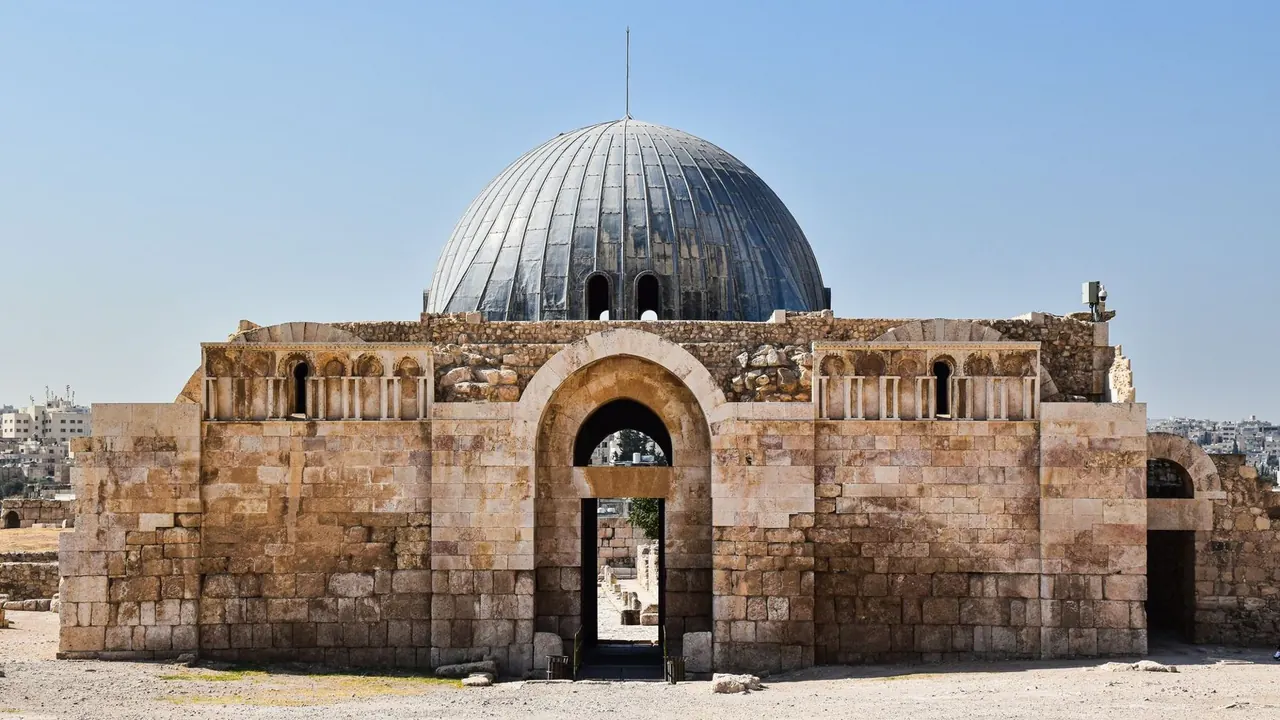
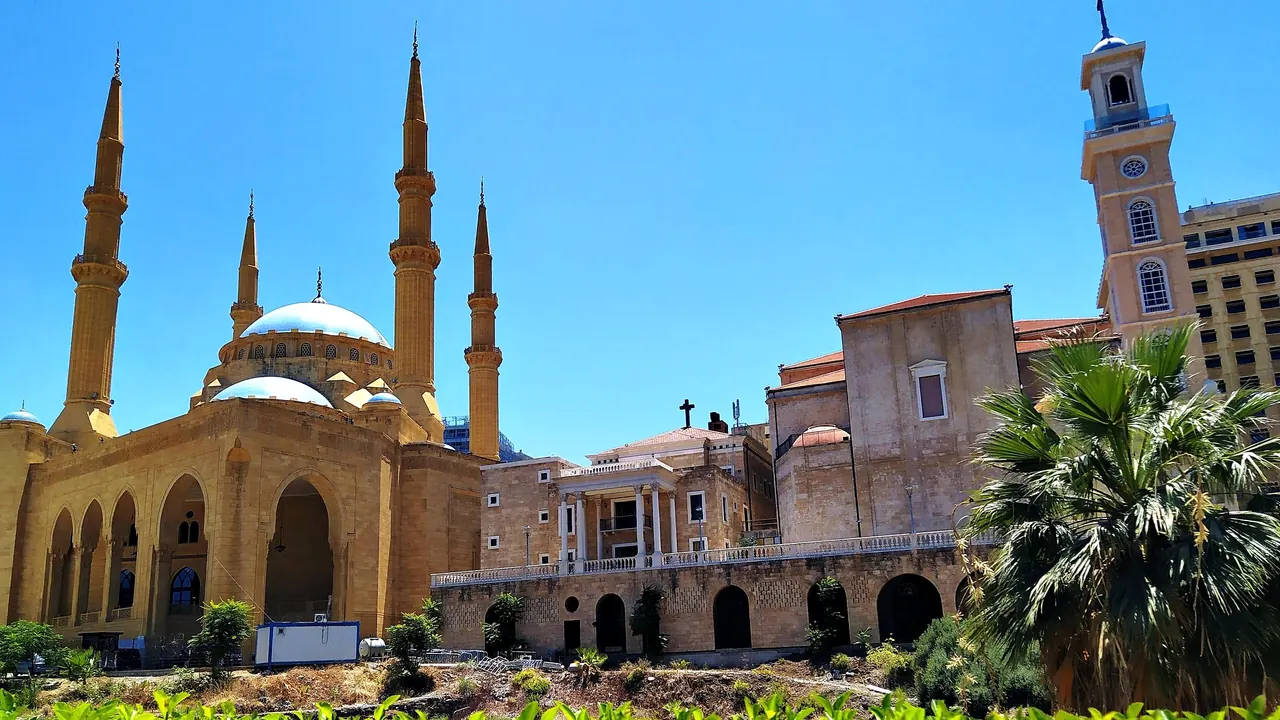
Photos: Amman by AXP Photography, Pexels License; Beirut by Radosław Botev, CC BY 3.0 PL, cropped.
Amman or Beirut?
Our verdict in twelve categories, each scored against the same fixed benchmark cities, and the climate month by month, so you can choose for your trip.
Choose Amman for
- wellness
- prices
- families
Amman is the steadier choice for a heritage trip at a gentler cost. It is a strong base for Jerash, Madaba and the desert castles. The Dead Sea's spas and mineral mud are an hour away for slow afternoons, and local food and taxis cost little. Evenings mean tea and shisha on café terraces rather than late bars, which suits travellers who want quiet nights.
Choose Beirut for
- nightlife
- beaches
- nature and the outdoors
Pick Beirut if the table and the night matter as much as the ruins. Its mezze, Bekaa wine and the bar streets of Mar Mikhael and Gemmayzeh are well beyond anything Amman offers. A warm sea brings beach clubs into a summer stay, and the mountains behind the coast have pine forest, hiking and winter skiing within an hour. Expect to spend more and rest less.
Scoreboard
Twelve categories on one fixed scale from 0 to 100. The shaded stretch is the gap between the two.
Your match
Pick a travel style or drag the sliders, and both match scores follow your weighting.
Wins on wellness and prices with your weighting.
Wins on nightlife and beaches with your weighting.
What matters to you?
Category by category
What the scores mean for a trip.
Beaches & swimming
Amman is a desert hill city with no shore of its own. The nearest water is the Dead Sea, an hour down into the Jordan Valley. It is so salty that you float rather than swim, so it makes an afternoon's experience, not a beach stay. Proper sea swimming means the Red Sea at Aqaba, which is a separate journey to the far south.
Beirut sits on the Mediterranean, and swimming is part of local life through the warm months. The city has its own sand beach, Ramlet al-Baida, but the water there is unreliable, so most locals swim off the Corniche rocks or spend the day at beach clubs with pools. The cleaner water lies along the coast at Byblos and Batroun, so the best swimming means a drive rather than a stroll.
Food & drink
Both cities share the Levantine staples, from manakish and falafel at breakfast to knafeh soaked in syrup. Amman does them cheaply and well in its downtown, and mansaf is its big set-piece meal, but drinking plays a small part and the upmarket restaurants are thin.
Beirut goes much further. The mezze table is the centre of the day, with arak or Bekaa wine beside it. The range runs from Armenian grills in Bourj Hammoud to polished modern Lebanese cooking in Achrafieh and Mar Mikhael, with seafood on the coast and weekend lunches in the mountains.
Culture & sights
Each city takes two or three days, and the difference is in what you see. Amman's sights are ancient and easy to read: the Temple of Hercules and Umayyad Palace on the Citadel, the Roman Theatre cut into the hill below, and the Jordan Museum with its Dead Sea Scrolls.
War broke up much of Beirut's old fabric, so its museums do more of the work: the National Museum has Phoenician sarcophagi and the Sursock Museum shows modern art. The rest is history you meet in the streets, in Gemmayzeh's stairways, the restored Downtown and the bullet-marked buildings.
Nightlife
Amman's evenings are long but calm. They are spent over tea and shisha on Rainbow Street and in the cafés of Jabal Amman, with a handful of bars and rooftop lounges and the odd weekend DJ night. During Ramadan, alcohol largely disappears.
Beirut is built for going out. Mar Mikhael and Gemmayzeh are lined with small bars where the crowd drifts from one door to the next, the clubs by the port run until dawn, and summer adds rooftop venues and beach-club parties. People dress up, and the night starts late.
Nature & outdoors
Amman is surrounded by bare hill country. Its best scenery is the steep drop to the Dead Sea, along with the wading gorge of Wadi Mujib in the warm months and Ajloun's oak woods in spring. Jordan's great landscapes, Dana and Wadi Rum, need nights away.
Beirut has the stronger outdoors because mountains rise straight behind it. Within an hour you can be among pine forests, skiing at Faraya and Mzaar in winter, or walking stretches of the Lebanon Mountain Trail. The Jeita Grotto and paragliding above Jounieh add variety, though traffic slows every outing.
Day trips
Both are first-rate bases, and the difference is in range. Amman's outings are mostly Roman and Byzantine: the colonnaded streets of Jerash less than an hour away, Madaba's mosaic map, Mount Nebo, the frescoed desert castles and Kerak. Petra is too far for a day.
From Beirut a small country gives more variety: Byblos with its Phoenician and Crusader layers, the huge temples of Baalbek with Bekaa wineries on the way, sea castles at Sidon and Tyre, and the Beiteddine palace. Some routes mean an early start and checking local conditions first.
Good for families
Both cities welcome children warmly and neither has much built for them, so the choice comes down to what fills the days. Amman has the children's museum in King Hussein Park, the ruins of Jerash for older children, and floating in the Dead Sea.
In Beirut, family time is spent by the water: on the Corniche with scooters and snacks, and at beach clubs with pools. The Jeita Grotto and the Harissa cable car are easy trips out of town. Pushchairs are hard work in both cities.
Getting around
Amman's problem is its hills. Downtown and the stone stairways up to Jabal Amman and Weibdeh make a slow but rewarding walk. Beyond them the city spreads across deep valleys with patchy pavements, so most journeys are by yellow taxi or ride-hailing app.
In Beirut the trouble lies more in the roads than the hills. The central quarters are compact, so once you are in Hamra, or among the old houses of Gemmayzeh and Mar Mikhael next door, a day or an evening can be spent on foot. Crossing from one quarter to another is harder, with broad roads, few places to cross, kerbs blocked by parked cars and traffic that thickens as the day goes on, so most hops mean an app ride or a shared service taxi. Neither city has a metro, and day trips from either need a driver or a hired car, though in Beirut's traffic most visitors are better off letting someone else drive.
Shopping & style
Amman's best buys are traditional. Downtown has spice souks and a street of gold jewellers, and the craft cooperatives around Rainbow Street sell embroidered textiles, Hebron glass and Dead Sea cosmetics. Its malls are well stocked but not distinctive.
Beirut is more rewarding if you care about style. It is home to couture houses, and Lebanese designers sell fashion, jewellery and furniture in the boutiques of Gemmayzeh, Mar Mikhael and Saifi Village. Bourj Hammoud adds leather workers and fabric sellers. What it lacks is the kind of old market streets Amman still has downtown.
Affordability
Neither is a budget city, but Amman is easier on the wallet. Street breakfasts, shawarma and taxis cost very little. The costs that add up are alcohol, the high fees foreigners pay at the major sites, and private drivers.
Beirut's everyday food is just as cheap. The things it does best, though, such as cocktail bars, clubs, beach clubs and polished restaurants, cost what they would in Southern Europe, and beach-club entrance fees mount up over a summer stay.
Live music & performing arts
Amman has very little on stage. There are occasional concerts at the Royal Cultural Centre, irregular oud and indie nights in Weibdeh, and the summer Jerash Festival in the Roman theatres, and many visitors leave without seeing a performance.
Beirut has more through the year: the Lebanese Philharmonic, small theatres and cabarets in Hamra, and jazz and Arabic fusion in Mar Mikhael. Its summer festivals at Baalbek, Beiteddine and Byblos bring well-known singers to temples, palace courtyards and the seafront.
Wellness & relaxation
Amman is the better place to unwind, mainly because of what lies below it. The Dead Sea's resort spas, with mud and floating, are an hour away, the Ma'in hot springs fall through a desert canyon, and the city itself has a few hammams.
Beirut's hammam tradition has nearly gone, leaving hotel spas and beauty salons in a loud, fast city. Finding calm there means a night in a Shouf village guesthouse or a sunset walk along the Corniche.
When should you go?
Pick your month. The climate figures are measured averages, not a forecast.
Amman in July
Beirut in July
Daytime high, °C
Rainfall in the month, mm
Temperature and rainfall are climate normals, averaged over the years shown. Amman: 1994-2020 (sunshine 1981-2010, rainfall 1981-2010) normals, Amman Airport (6 km from centre). Beirut: 1991-2020 (sunshine 1961-1990) normals, Beyrouth Aeroport (8.3 km from centre).
Amman sits high in dry hill country. Its winters are chilly for walking, around 13°C by day in January, and that is when most of the year's rain falls. From June to September it is completely dry, sunny and hot, reaching 33°C, which makes long afternoons among the ruins tiring. April, May and October are the comfortable months, warm and dry, with reliable sun.
Beirut has milder winters but much wetter ones, with about 178mm of rain in January, so December to February bring many grey days. The beach season runs from June to October, when the sea reaches about 28°C at its warmest, but the summer coast is humid. Late May and October suit both sightseeing and swimming, and in October the sea is still warm.
Which traveller are you?
For a food and nightlife trip, Beirut is the clear pick. Long mezze lunches with arak lead into evenings spent moving between the cocktail bars of Mar Mikhael and Gemmayzeh and clubs that run until dawn. Amman offers mostly cafés, shisha and a few low-key bars.
On a relaxing and wellness trip, Amman makes the better base. The Dead Sea's resort spas, with floating and mineral mud, are an easy half-day away, and the Ma'in hot springs are nearby. Beirut's noise and traffic leave little beyond hotel spas.
For an outdoors trip, Beirut wins because of its mountains. Pine forests and villages are within an hour, the Lebanon Mountain Trail and Qadisha Valley give good hiking, and winter brings skiing at Faraya. Amman's best outings, Wadi Mujib and Ajloun, are fewer and drier.
Before you go
| Measure | Amman | Beirut |
|---|---|---|
| Official language | Arabic | Arabic |
| Currency | Jordanian Dinar (JOD) | Lebanese Pound (LBP) |
| Sockets | BCFGJ230 V, 50 Hz | ABCG220 V, 50 Hz |
| Driving side | Right | Right |
| Time zone | UTC+3 | UTC+2, UTC+3 in summer |
| Emergency number | 911 | Police 112/160, ambulance 140, fire 175 |
| Elevation | 776 m | 0 m |
| Main airport | Queen Alia International Airport (AMM)26 km from centre98 non-stop destinations | Beirut Rafic Hariri International Airport (BEY)8 km from centre54 non-stop destinations |
By the numbers
| Measure | Amman | Beirut |
|---|---|---|
| City population | 4,007,526 | 2,421,354 |
| People per km² | 2,385 | - |
| Museums within 10 km | 8 | 15 |
| UNESCO World Heritage sites within 50 km | 3 | 2 |
| Swim season, months above 21 °C | - | 7 months |
Where else could you go?
Every comparison below shares a destination with this one, so you can follow Amman or Beirut somewhere new.