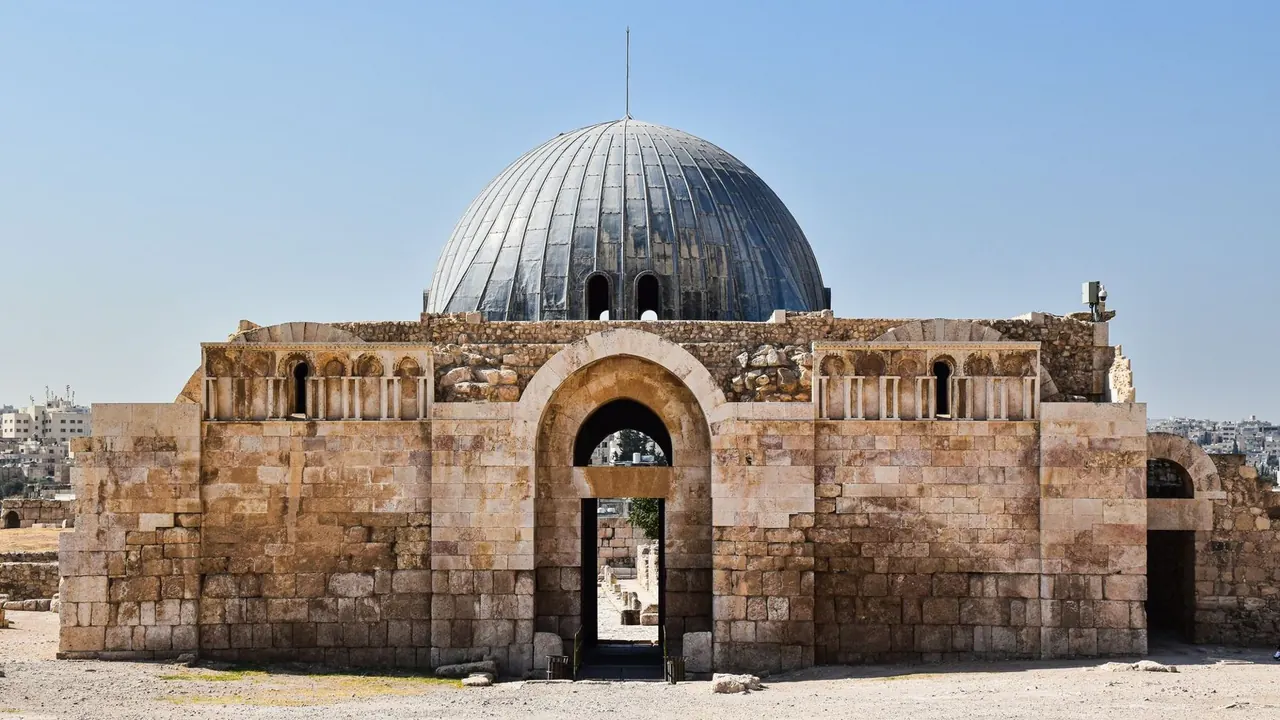
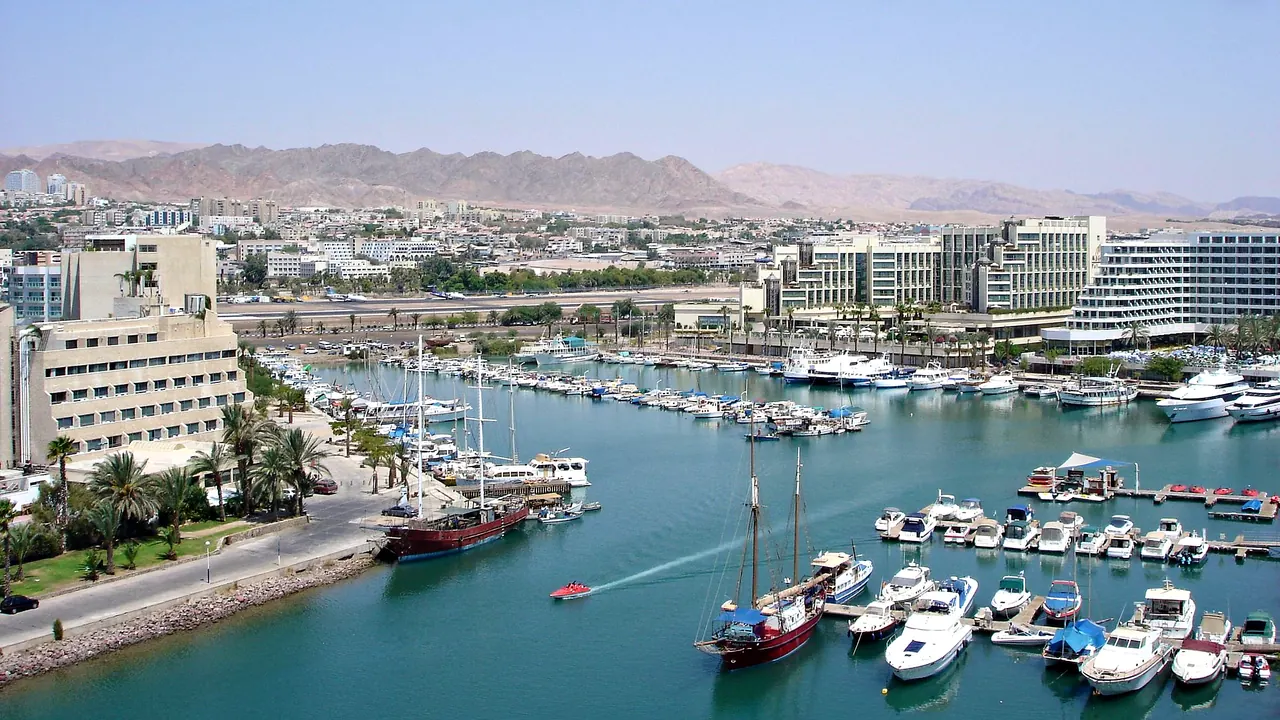
Photos: Amman by AXP Photography, Pexels License; Eilat by Tango7000, Public domain.
Amman or Eilat?
Our verdict in twelve categories, each scored against the same fixed benchmark cities, and the climate month by month, so you can choose for your trip.
Choose Amman for
- culture and sights
- day trips
- prices
Amman suits travellers who want history, good everyday food and a base for exploring. The Citadel and Roman Theatre fill a day in town, and Jerash, Madaba, the desert castles and the Dead Sea are all within reach. Eating locally and getting around by taxi keep costs down. It is a hilly city of taxis and quiet café evenings, and it rewards curiosity more than a lazy week.
Choose Eilat for
- beaches
- families
- nature and the outdoors
For sun, warm sea and a reef you can swim out to from a jetty, Eilat is the clear pick, especially in winter. Families do well with its calm water and hotel pools. Divers have the coral, and hikers have the sandstone canyons set among red granite mountains. The trade-off is resort food, almost no history in town and high costs.
Scoreboard
Twelve categories on one fixed scale from 0 to 100. The shaded stretch is the gap between the two.
Your match
Pick a travel style or drag the sliders, and both match scores follow your weighting.
Too close to call, 1 point apart
Wins on culture and sights and day trips with your weighting.
Wins on beaches and families with your weighting.
What matters to you?
Category by category
What the scores mean for a trip.
Beaches & swimming
Amman is a desert hill city with no shore of its own. Its nearest water is the Dead Sea, an hour downhill, where you float in brine for an afternoon at a resort or beach club. Real sea swimming means the four-hour drive to Aqaba.
Eilat is built around exactly what Amman lacks. North Beach is the sociable town strand, and along the coast road the reef beaches let you snorkel straight off a jetty. The sand is coarse, the shoreline is short and it fills on Israeli school breaks, but the warm, clear sea makes up for it.
Food & drink
Amman eats far better. Falafel, hummus and fuul for breakfast downtown, hot knafeh from the sweet shops and mansaf at a family restaurant make for a real Levantine table, and Jabal Amman and Weibdeh add cafés and modern Arab cooking.
Eilat's meals lean on hotel buffets and promenade restaurants aimed at visitors. The best food there is simple Israeli fare, hummus, skewers and Red Sea fish, but there is no market or local cuisine to explore, so the choice soon runs out.
Culture & sights
Amman has a proper sightseeing programme: the Temple of Hercules and the Umayyad Palace on the Citadel, the Roman Theatre cut into the hillside below, and the Jordan Museum with its Dead Sea Scrolls and 'Ain Ghazal statues. Two or three days cover it well.
Eilat has almost nothing of the kind. It is a young town of hotel towers and malls, and for history you have to go out to the ancient copper workings at Timna or cross the border.
Nightlife
Amman's evenings are social rather than loud. Families and friends linger over shisha and tea, Rainbow Street stays busy late, and a modest bar scene runs through Jabal Amman, Weibdeh and Abdoun. During Ramadan, drinking almost vanishes.
Eilat goes further when the domestic crowds are in. On summer weekends and school breaks the promenade and lagoon fill with bars, beach parties and clubs open past midnight. The music is mainstream pop and dance, and midweek in the quieter months it thins out.
Nature & outdoors
Amman's surroundings are dry hill country. Its highlights are the steep drop to the Dead Sea, the wade-and-scramble canyon at Wadi Mujib in the warmer months and the spring woodland at Ajloun. Dana and Wadi Rum need a night away.
Eilat has more right on its doorstep. Its coral reef is among the most accessible anywhere, with dives off the coast road, and the Eilat Mountains add colourful sandstone canyons such as the Red Canyon below red granite ridges. Timna's sandstone formations and a major spring and autumn bird migration add more. In summer the heat limits hiking to dawn.
Day trips
Amman is an outstanding base. Jerash's Roman streets are under an hour north, Madaba's mosaic map, Mount Nebo and the Baptism Site lie to the south, and Salt, Ajloun, Umm Qais, Kerak and the frescoed desert castles fill more days.
Eilat has one great outing, and oddly it is the one Amman cannot manage comfortably: Petra, reached on a long organised day across the Jordanian border. Beyond that there are Aqaba and Timna, and then the empty Negev.
Good for families
Amman is fond of children, and restaurants will happily seat them late, but little is built for them beyond the children's museum in King Hussein Park. Steep streets defeat pushchairs. Floating in the Dead Sea is the standout day.
Eilat is set up for family vacations. It has calm, warm water without surf, hotel pools and kids' clubs, an underwater observatory where children see the reef through glass, glass-bottom boats and snorkelling off the jetties. Summer middays are too hot for small children, so late autumn to spring suits best.
Getting around
Amman sprawls over hills and valleys, with no metro and patchy pavements. Beyond downtown and the stone stairways up to Jabal Amman and Weibdeh, you rely on cheap taxis and ride-hailing, and on a hired driver for excursions.
Eilat's centre is compact: hotels, North Beach, the promenade and the malls are a short walk apart, and buses or taxis cover the few kilometres to the reef beaches. Timna and the mountain trails need a car or a tour, and in summer midday walking is hard work.
Shopping & style
Neither city is a shopping destination, but they offer different kinds of buying. Amman has character: the downtown spice and gold souks, plus shops around Rainbow Street selling Palestinian embroidery, Hebron glass and craft from women's cooperatives.
Eilat's draw is VAT-free shopping at the chains in its big malls, plus jewellery set with the blue-green Eilat stone. A foreign visitor will find little there that they could not buy at home.
Affordability
Amman is clearly the cheaper stay. Local food, coffee and taxis cost little, though mid-range hotels in the western districts, alcohol, private drivers and the country's main sites ask foreigners for real money.
Eilat is expensive on almost every front. Beachfront hotels are dearest during festivals and school breaks, and diving and tours cost more than at European resorts. The VAT exemption, midweek rates and the hummus counters soften the bill.
Live music & performing arts
Neither is a place for a night at the theatre, but Amman offers more. There are concerts and Arabic theatre at the Royal Cultural Centre, small stages downtown and in Weibdeh for oud and Arab indie bands, and the summer Jerash Festival in the ancient theatres.
Eilat's live entertainment is mostly hotel shows and musicians in the promenade bars. The exceptions are its long-running Red Sea jazz festival and occasional concerts by Israeli stars in season.
Wellness & relaxation
Amman's advantage lies below it. The Dead Sea resort spas, with floating, mineral mud and pools, are an hour away, and the Ma'in hot springs pour into a desert canyon nearby. In town there are hammams, though the city itself is noisy and hilly.
Eilat offers a simpler kind of rest: hotel spas using Dead Sea minerals, pools and gardens, and dependable winter sun. It is peaceful midweek in the quiet months and loud during festival weeks.
When should you go?
Pick your month. The climate figures are measured averages, not a forecast.
Amman in July
Eilat in July
Daytime high, °C
Rainfall in the month, mm
Temperature and rainfall are climate normals, averaged over the years shown. Amman: 1994-2020 (sunshine 1981-2010, rainfall 1981-2010) normals, Amman Airport (6 km from centre). Eilat: 1991-2020 normals, Eilat (0.9 km from centre).
Amman is best in spring and autumn. April, May, September and October are dry and warm without being harsh, which is ideal for climbing to the Citadel and walking the stepped lanes. Summer is reliably dry and very sunny, but highs reach 33°C, which is tiring on the hills. Winter turns cool and wet, and February is the rainiest month at 71mm.
Eilat's best season is the opposite. Summer highs reach 40°C, too hot for anything but the sea and the early mornings. December to February bring days in the low twenties and long sunshine, while Amman is cold and rainy. November and March are warmer, in the high twenties, and still pleasant. The sea never drops below 21°C, so swimming works all year, and rain is almost unknown in any month.
Which traveller are you?
For a beach and sun trip, Eilat wins easily. Its calm, clear Red Sea water stays swimmable through the winter, and the reef beaches south of town put coral a few strokes from the jetty. Amman's nearest water is the Dead Sea, which is for floating, not swimming.
On a culture and arts trip, Amman is the obvious choice. The Citadel, the Roman Theatre and the Jordan Museum fill the days in the city, and Jerash, Madaba and the desert castles lie close by. Eilat has almost no history of its own.
On a tight budget, Amman makes money go much further. Falafel breakfasts, shawarma and taxi rides cost little, and the big costs are mostly the headline sites. Eilat is expensive across the board, from beach hotels to diving, though midweek rooms and hummus counters help.
Before you go
| Measure | Amman | Eilat |
|---|---|---|
| Official language | Arabic | Hebrew |
| Currency | Jordanian Dinar (JOD) | New Israeli Sheqel (ILS) |
| Sockets | BCFGJ230 V, 50 Hz | CHM230 V, 50 Hz |
| Driving side | Right | Right |
| Time zone | UTC+3 | UTC+2, UTC+3 in summer |
| Emergency number | 911 | Police 100, fire 102 |
| Elevation | 776 m | 16 m |
| Main airport | Queen Alia International Airport (AMM)26 km from centre98 non-stop destinations | Ramon International Airport (ETM)20 km from centre2 non-stop destinations |
By the numbers
| Measure | Amman | Eilat |
|---|---|---|
| City population | 4,007,526 | 51,935 |
| People per km² | 2,385 | 612 |
| Museums within 10 km | 8 | 6 |
| UNESCO World Heritage sites within 50 km | 3 | 2 |
| Swim season, months above 21 °C | - | 12 months |
Where else could you go?
Every comparison below shares a destination with this one, so you can follow Amman or Eilat somewhere new.