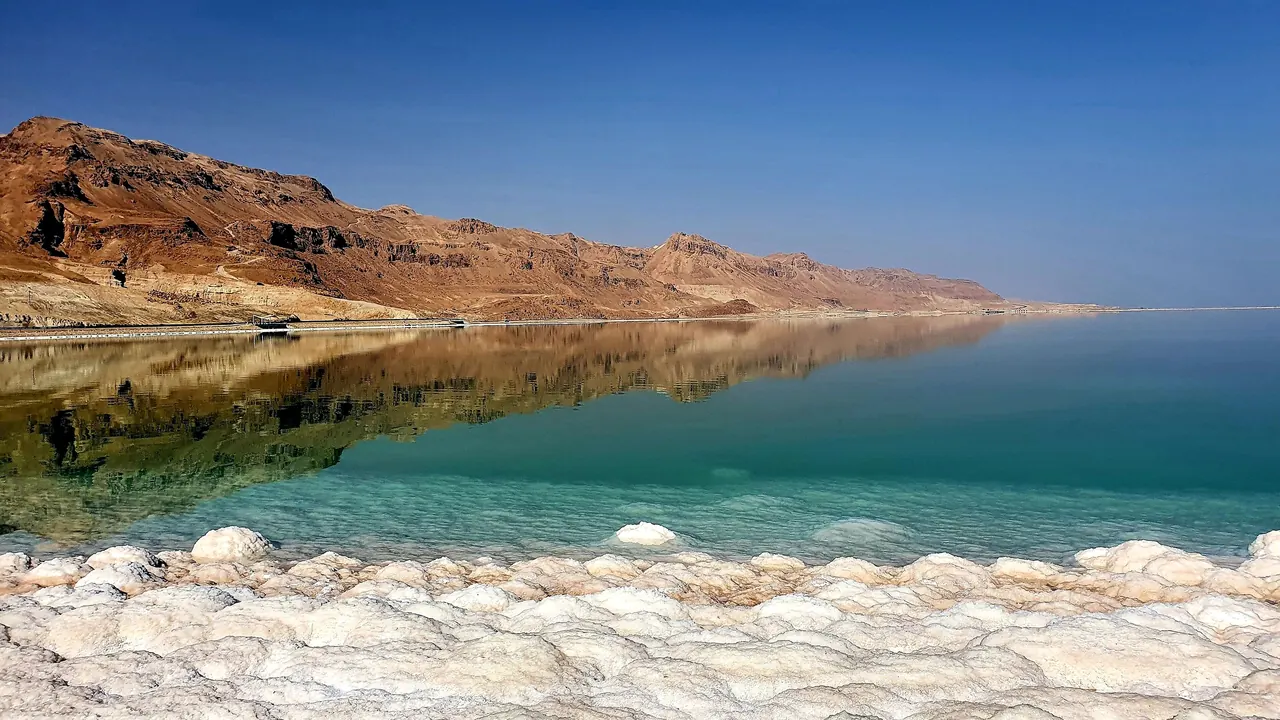
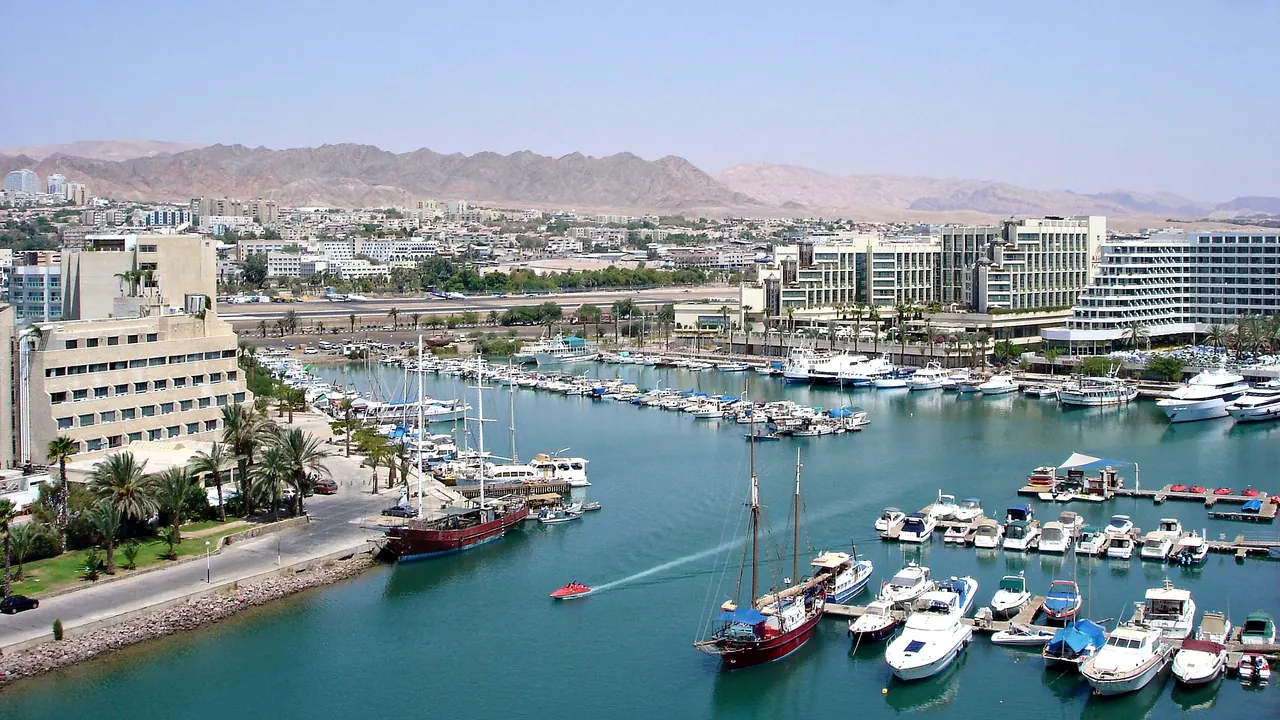
Photos: Dead Sea by Anagoria, CC BY-SA 4.0, cropped; Eilat by Tango7000, Public domain.
Dead Sea or Eilat?
Our verdict in twelve categories, each scored against the same fixed benchmark cities, and the climate month by month, so you can choose for your trip.
Choose Dead Sea for
- wellness
- culture and sights
- day trips
The Dead Sea suits a slow, restorative trip. You spend the days floating in the mineral water, coating yourself in mud and soaking in warm pools at the Ein Bokek spa hotels. A dawn climb at Masada, a walk to the Ein Gedi waterfalls and a day or two in Jerusalem break up the stay. It works best for couples and older travellers who are happy with quiet evenings and will plan their outings by car.
Choose Eilat for
- nightlife
- families
- shopping
Eilat is the better choice if you want sun and sea with more going on. Its Red Sea reef lets you snorkel straight off a jetty, the town is set up for families, and on summer weekends the lagoon and promenade have bars and late nights. There is little history in town, though, and the main cultural outing is the long day to Petra across the Jordanian border.
Scoreboard
Twelve categories on one fixed scale from 0 to 100. The shaded stretch is the gap between the two.
Your match
Pick a travel style or drag the sliders, and both match scores follow your weighting.
Wins on wellness and culture and sights with your weighting.
Wins on nightlife and families with your weighting.
What matters to you?
Category by category
What the scores mean for a trip.
Beaches & swimming
These are two very different kinds of water. At the Dead Sea you float rather than swim, a quarter of an hour at a time, from the hotel beaches at Ein Bokek, and the salt stings any graze and burns the eyes.
Eilat gives you a real sea that is calm, clear and warm enough to swim in through the winter. North Beach has loungers and watersports, and at Coral Beach you can snorkel off a jetty over the reef. The sand is coarse and the short shore gets crowded at weekends, but for actual swimming Eilat is far ahead.
Food & drink
Neither is a food destination, and in both places most meals come from the hotel buffet. Eilat has more to eat outside the hotel: fish restaurants around the marina and promenade, and hummus, shawarma and falafel counters in the older neighbourhoods. The Dead Sea shore has no town at all, only a few grills in the Ein Bokek malls and the kibbutz dining rooms, so a really good meal means a day in Jerusalem.
Culture & sights
History is where the Dead Sea pulls clearly ahead. Masada, Herod's fortress on its mesa above the shore, is a major archaeological site, and you can still see the Roman siege ramp below it. Qumran, the settlement linked to the Dead Sea Scrolls, sits at the northern end.
Eilat is a young port and resort town with almost nothing historic in it. Its nearest heritage is out in the desert at the ancient copper workings or across the border in Jordan.
Nightlife
Eilat has a real night out, at least on summer weekends and in school breaks. Then the promenade and lagoon fill with bars and beach parties, and a few clubs stay open past midnight, though midweek in the quiet months it thins out. At the Dead Sea an evening means a drink in the hotel bar and an early night before a dawn start at Masada.
Nature & outdoors
Both have outstanding desert scenery, but the best of it lies in different places. At the Dead Sea it is on land: the pale Judean cliffs above a turquoise sea, the springs and waterfalls of Nahal David and Nahal Arugot at Ein Gedi with ibex on the rocks, and the salt formations of Mount Sodom.
Eilat's best is underwater, on a coral reef you can reach from the shore, with diving centres all along the coast road. Inland it has the sandstone canyons of the Eilat Mountains, and it lies on a major bird migration route that draws birders in spring and autumn.
Day trips
The Dead Sea has the stronger day out. Jerusalem is about an hour's drive from the northern shore, with the Old City, the Western Wall and the Israel Museum, and it is worth two days on its own. Arad, Beersheba and Mitzpe Ramon fill out the list.
Eilat's one great outing is Petra, reached through the Jordanian border crossing just north of town. It makes a long and tiring day but a remarkable one, and Aqaba is a shorter alternative. On the Israeli side there is Timna, and beyond it the empty Negev cuts Eilat off from the rest of the country.
Good for families
Eilat is built for family vacations, with a calm, warm sea, hotel kids' clubs, glass-bottom boats and an underwater observatory where children see the reef through glass. The Dead Sea mostly suits older children, who enjoy the novelty of floating. The water hurts in eyes and grazes, though, and the best outings there are the short Ein Gedi waterfall trail and the Masada cable car.
Getting around
This is the difference between a town and a stretch of shore. In Eilat the hotels, North Beach, the promenade and the malls are an easy walk apart in the cooler months, and taxis or buses cover the few kilometres south to the reef.
Along the Dead Sea everything depends on Route 90. Masada is about twenty minutes from Ein Bokek and Ein Gedi about forty. Buses run too rarely to plan sightseeing around, so without a car you rely on hotel shuttles and organised tours.
Shopping & style
Eilat is VAT-free, and its malls near the lagoon draw Israelis for fashion, electronics and sportswear, with Eilat stone jewellery as the local speciality. A visitor from abroad will still find little they could not buy at home. At the Dead Sea, shopping comes down to mud, salts and mineral creams in the Ein Bokek malls and factory shops, plus dates from the kibbutzim.
Affordability
Both are expensive places to stay, and hotel rates in both are highest at weekends and during the Jewish festivals. Where they differ is in how you can save.
At the Dead Sea the floating itself costs little on the free public beaches of Ein Bokek, and kibbutz guesthouses and hostels near Ein Gedi and Masada are cheaper than the resort hotels. In Eilat the VAT exemption takes something off meals and shopping, and rooms are cheaper midweek. Self-catering apartments away from the beachfront and meals at falafel stands keep costs down further.
Live music & performing arts
Neither is a place for theatre or concerts, and in both the usual evening show is in the hotel lounge. Eilat has a little more: its long-established jazz festival by the Red Sea, concerts by Israeli performers in summer and at festival times, and musicians in the promenade bars. At the Dead Sea, anyone who wants a proper performance drives up to Jerusalem.
Wellness & relaxation
Wellness is why most people come to the Dead Sea. Floating in the water, black mud and warm sulphur pools have drawn visitors since antiquity, and the filtered sunlight has long brought people with psoriasis. The Ein Bokek hotels are built around heated Dead Sea pools and treatment rooms.
Eilat's hotel spas offer massage, steam rooms and mineral treatments, and its winter sun makes for restful days midweek. It has no bathing culture of its own, though, and in festival weeks and school vacations the crowds make it far noisier.
When should you go?
Pick your month. The climate figures are measured averages, not a forecast.
Dead Sea in July
Eilat in July
Daytime high, °C
Rainfall in the month, mm
Temperature and rainfall are climate normals, averaged over the years shown. Dead Sea: 1991-2020 normals, Ghor El Safi (21.1 km from centre). Eilat: 1991-2020 normals, Eilat (0.9 km from centre).
Both places follow the same desert pattern. From November to March the days are warm and good for walking, with January highs around 22°C. From June to September the heat climbs to around 40°C, so hiking and sightseeing are limited to the first hours after dawn. April and October are at the edges of the comfortable season and are already hot by midday.
The differences show in winter. The Dead Sea gets what little rain falls in the area, a few light showers between December and March, and it has noticeably fewer hours of sunshine in those months. Eilat stays almost completely dry and brighter through the winter. Its sea holds at about 21°C even in February and warms to 28°C in August, so winter swimming is cool but entirely possible.
Which traveller are you?
On a relaxing and wellness trip, the Dead Sea is the clear choice. Floating in the mineral water, black mud and warm sulphur pools are the whole point of a stay there, and the Ein Bokek hotels are built around them. Eilat offers ordinary hotel spas and sunshine.
For a culture and arts trip, choose the Dead Sea. Masada, Qumran and the Ein Gedi synagogue mosaic are all a short drive apart, and Jerusalem is about an hour away. Eilat has almost no history in town, and neither place offers much live performance.
On a family trip with children, Eilat works much better. The sea is calm and warm, children can see the reef from jetties, glass-bottom boats and an underwater observatory, and the hotels run kids' clubs. At the Dead Sea, the stinging water means young children need close watching.
Before you go
| Measure | Dead Sea | Eilat |
|---|---|---|
| Official language | Hebrew | Hebrew |
| Currency | New Israeli Sheqel (ILS) | New Israeli Sheqel (ILS) |
| Sockets | CHM230 V, 50 Hz | CHM230 V, 50 Hz |
| Driving side | Right | Right |
| Time zone | UTC+2, UTC+3 in summer | UTC+2, UTC+3 in summer |
| Emergency number | Police 100, fire 102 | Police 100, fire 102 |
| Elevation | - | 16 m |
| Main airport | Ben Gurion International Airport (TLV)111 non-stop destinations | Ramon International Airport (ETM)20 km from centre2 non-stop destinations |
By the numbers
| Measure | Dead Sea | Eilat |
|---|---|---|
| Population | - | 51,935 |
| People per km² | - | 612 |
| Museums within 10 km | - | 6 |
| UNESCO World Heritage sites within 50 km | - | 2 |
| Swim season, months above 21 °C | - | 12 months |
Where else could you go?
Every comparison below shares a destination with this one, so you can follow Dead Sea or Eilat somewhere new.